The Communist Party of China Central Committee leadership meeting held in Beijing on Thursday has sent a clear signal that the central authorities are preparing timely incremental policies to steer the country's economy toward a new growth trajectory, one led by advanced technology, innovation, and greater structural balance, according to two economists from the National Development and Reform Commission (NDRC).
Sun Xuegong, director of the Decision Advisory Department of the Academy of Macroeconomic Research under the NDRC, and Sheng Lei, deputy director of the State Information Center of the NDRC, shared their insights into the key messages from the politburo meeting on economic work for the second half of 2026 with China Media Group (CMG).
The high-level meeting, which reviewed the current economic landscape, acknowledged both external shocks and domestic pressures but struck a confident tone, noting that the economy is showing new engines of growth and improving structures.
To do a good job in economic work in the second half of the year, the meeting underscored the need to accelerate the economic transition from old growth drivers to new ones.
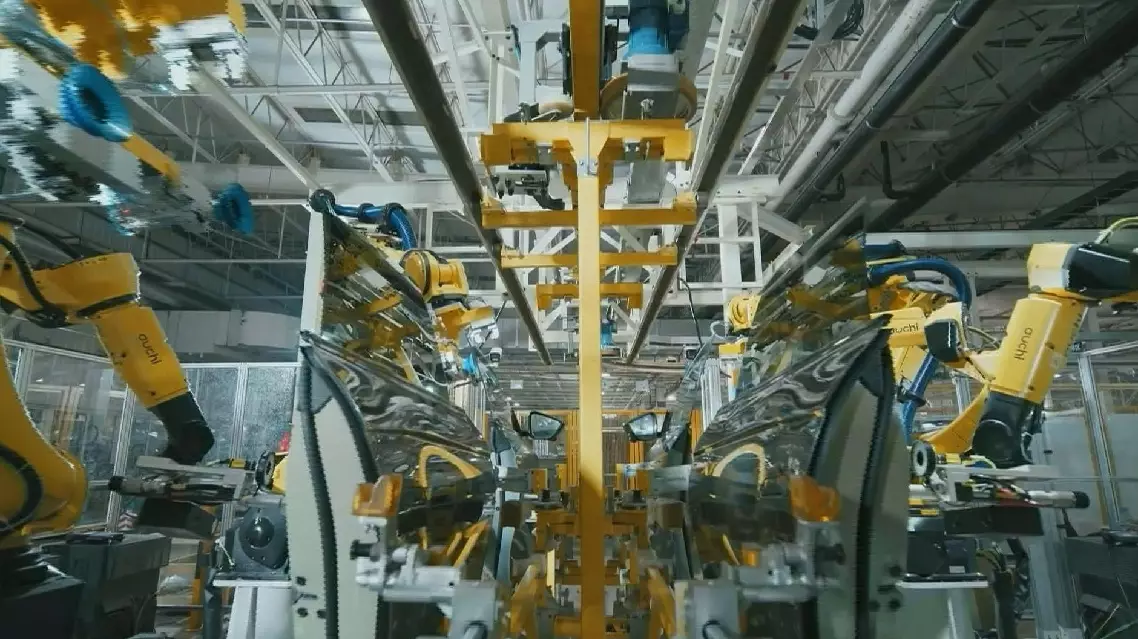
Sun said the meeting highlighted a decisive strategic shift in China's economic structure, with emerging sectors, particularly high-tech manufacturing and artificial intelligence, fast becoming the primary growth engines.
"Statistically speaking, the two emerging industries of high-tech manufacturing and digital product manufacturing in our country now account for about 20 percent of the total industrial output, yet they contribute nearly 50 percent of the Chinese industry's overall growth momentum. This reflects a very positive transformation in China's economic structure," he said.
The politburo reiterated the principle of seeking progress while maintaining stability for the remainder of the year. It said pragmatic and effective incremental policies will be timely introduced, and called for intensified efforts to step up counter-cyclical adjustments.
It is essential to effectively implement a more proactive fiscal policy and an appropriately accommodative monetary policy, according to the meeting. Sun sees this as a strong signal of ample policy reserves and decisive readiness, adding that with considerable room for macroeconomic maneuvering remaining, additional measures will be rolled out in the coming months as conditions warrant.
"On the fiscal policy front, the meeting called for accelerating the pace of fiscal spending and bond utilization. In the first half of the year, the overall rate of fiscal expenditure and the issuance of new local government special-purpose bonds both stood at roughly 47 percent of the annual target, leaving considerable room for further maneuvering in the second half. On the monetary policy side, the meeting also proposed the comprehensive utilization and timely calibration of monetary policy tools. Given that China's current inflation remains at a relatively low level, our monetary policy still has substantial room to operate. Therefore, in the second half of the year, monetary policy can be deployed promptly in response to the evolving circumstances," he explained.
Beyond macroeconomic levers, the meeting stressed the need to expand domestic demand and optimize supply, effectively safeguard and improve people's wellbeing, and enhance development momentum and boost social vitality.
Sheng said the overarching goal is to steer the economy toward a sustained upward trajectory characterized by a shift in growth drivers, as well as structural upgrades and a steady rebound in overall performance.
"This is to promote the economy's sustained development toward 'newness, optimization, and improvement', where 'newness' refers to a shift in growth drivers, 'optimization' points to structural upgrades, and 'improvement' signals a rebound in overall performance. These three interlinked goals provide both strategic guidance and a confidence boost, mapping out a clear roadmap for economic work in the second half of the year," she told CMG.
Economists see policy boost ahead for China's high-tech economic shift