Skip to Content Facebook Feature Image

Shenzhen upgrades cross-border payment to cover currencies of APEC member economies

China

China

China

Shenzhen upgrades cross-border payment to cover currencies of APEC member economies

2026-07-31 16:27 Last Updated At:16:37

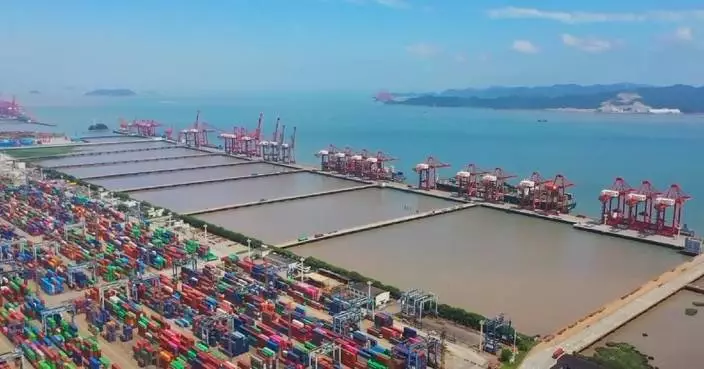
South China's Shenzhen City is streamlining cross-border payments by expanding currency exchange services across all 21 Asia-Pacific Economic Cooperation (APEC) member economies.

As the host of the 2026 APEC, China will hold the 33rd APEC Economic Leaders' Meeting in Shenzhen, Guangdong Province, in November. Approximately 300 APEC-related meetings and events will take place in multiple Chinese cities throughout the year.

At a shopping center in the city, several foreign consumers recently made purchases with their smartphones with help from staff.

"Payment here is really convenient, very easy. I never think about my wallet or something," said Olha, a foreign consumer.

Meanwhile, the city is also expanding the tax refund scenarios.

In Huaqiangbei, one of the world's largest wholesale markets for electronic products, China's first service point that combines tax refund, currency exchange and payment was established. It not only spares foreign customers from running around to multiple places for these services, but also effectively reduces the operational burden on local merchants.

"Tax refund points facilitate a second round of consumption in commercial areas. It also integrates with the lifestyle and catering services of core business districts to maximize the efficiency of refund-upon-purchase and boost domestic consumption and tourism," said Liu Xinhong, product manager of the bank card center at the Industrial and Commercial Bank of China Shenzhen Branch.

By the end of June, the city had more than 2,500 departure tax-free retail stores, with sales exceeding 1 billion yuan (about 139 million U.S. dollars), up 130 percent year over year.

In the first half of 2026, the volume and number of non-cash transactions by overseas visitors in Shenzhen both increased.

Shenzhen upgrades cross-border payment to cover currencies of APEC member economies

Shenzhen upgrades cross-border payment to cover currencies of APEC member economies
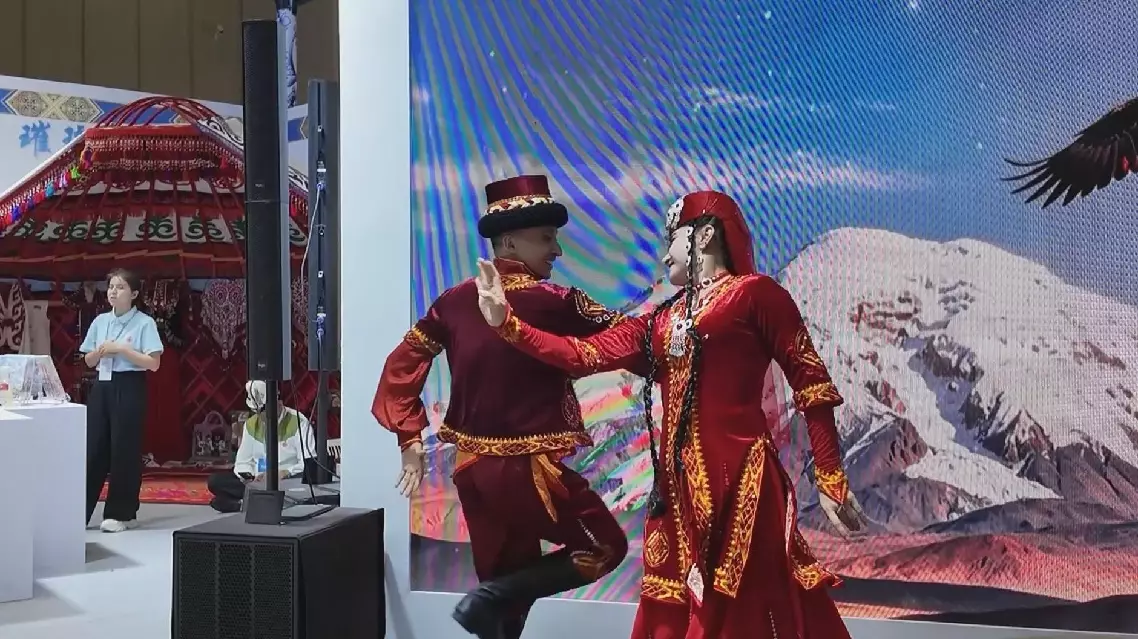
An exhibition on intangible cultural heritage opened on Thursday in Shihezi City, northwest China's Xinjiang Uygur Autonomous Region, showcasing various cultures and resources that other regions across the country provided to Xinjiang’s development.

The exhibition features 651 intangible cultural heritage items, such as jade carving, oil-paper umbrella making and pottery works, along with traditional musical instruments and dance shows.

There are also 549 inheritors, craftsmen and performers from Xinjiang and 31 other Chinese provinces, autonomous regions and municipalities to demonstrate their skills and works on the spot. Workshops and market fairs are organized to allow local residents to learn and experience the art and craft from various regions.

The exhibition -- co-organized by the Ministry of Culture and Tourism and the Xinjiang regional government -- is slated to run through August 3.

China has been implementing the "pairing assistance" programs in Xinjiang since 1997, channeling financial, technical, and human resources from other regions of China to provide targeted assistance for Xinjiang’s development.

Since 2021, the intangible cultural heritage exhibition in support of Xinjiang has been held annually for six consecutive years. A total of 1,999 inheritors of intangible cultural heritage have participated, presenting 1,868 representative items.

The event has been showcasing the achievements of interactive cultural heritage protection and transmission across the country, while serving as a platform for exchanges and interactions among all ethnic groups, according to its organizers.

Exhibition in Xinjiang introduces different regions’ intangible cultural heritage

Exhibition in Xinjiang introduces different regions’ intangible cultural heritage

Recommended Articles