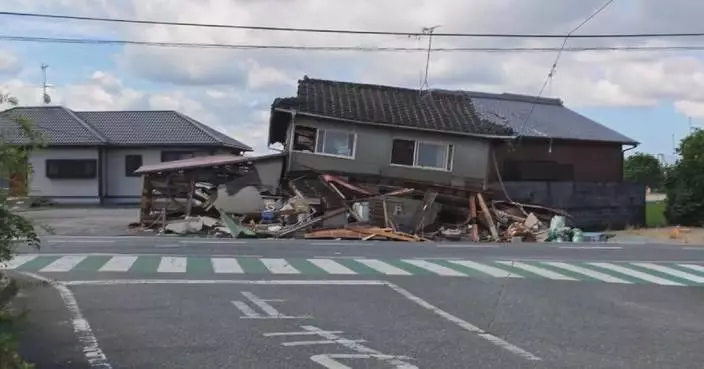
Residents in the earthquake-hit areas of Japan's Kumamoto Prefecture are struggling to maintain basic living conditions amid dangerous buildings, damaged roads, water shortages and power outages.
An earthquake with a magnitude of 7.1 struck Kumamoto Prefecture at 16:27 local time on Tuesday. The death toll from the earthquake has risen to 35, the prefectural government said Friday.
One resident recalled the moment the quake struck.
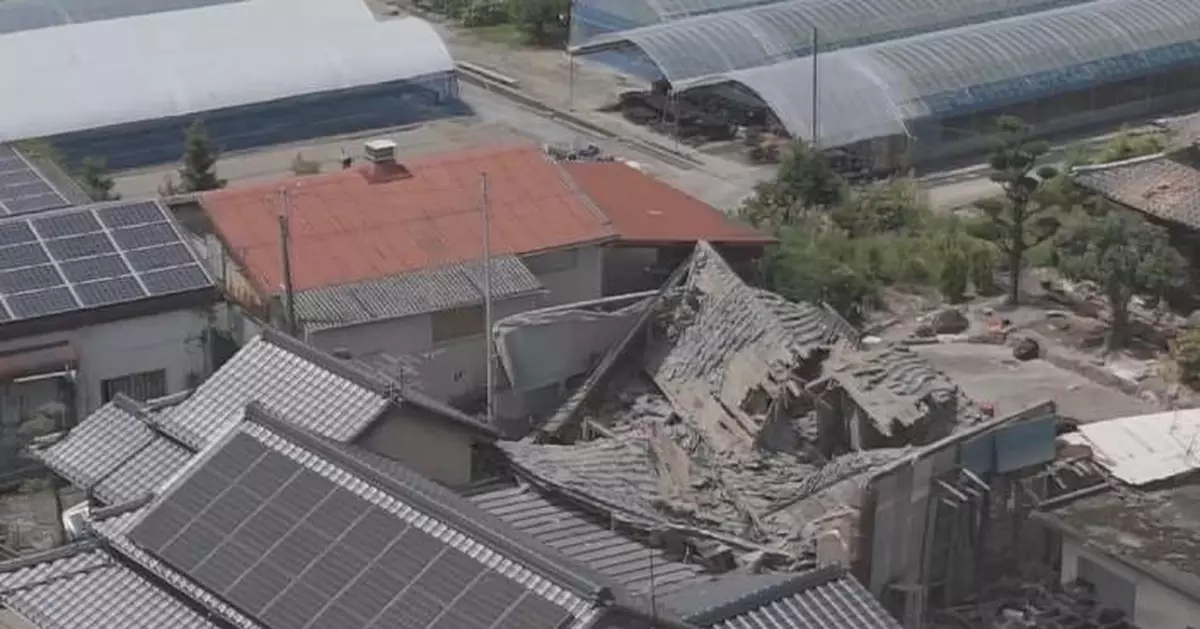
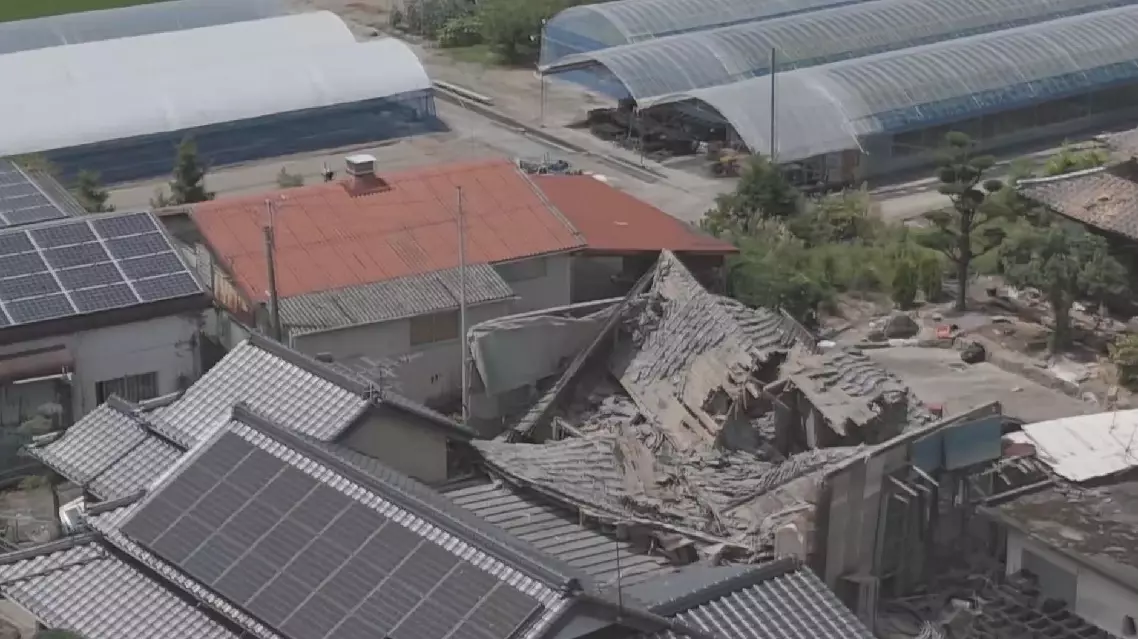
"When the earthquake happened, it first felt like a sudden 'boom' thrusting up from below, followed by several dozen seconds of continuous side-to-side shaking. When the shaking stopped and we came outside, everything had become what you see now. Our house was also reduced to this state, and everything was in complete chaos," he said.
"Our family of three had been living here all along. Now we are worried that it might be dangerous to go back in, so we set up a tent outside and are currently living in the tent," he added.
As of Thursday morning, about 23,000 households were without electricity and some 75,000 households without water, according to the prefecture.
Meanwhile, a dangerous heatwave is expected to continue across wide areas of Japan. Quake-hit areas in Kumamoto Prefecture are among those likely to experience scorching conditions, the weather agency warned Thursday.
For residents already coping with the devastation of the earthquake, the combination of intense heat, water and power shortages and relentless aftershocks has made every hour of recovery more difficult.
"There is no electricity and no water. Most people can't cook. Luckily, our house can still use gas, so we can cook and share food with others. I feel that's somewhat fortunate. At night, it's impossible to sleep well because aftershocks keep happening. Every time one hits, we wake up startled. There's no way to get proper rest. On top of that, the weather is so hot, which makes it even harder to sleep. The fatigue just doesn't go away," another resident said.
Local authorities have assessed damaged buildings and attached colored stickers: red indicates a building is unsafe to enter, while green means it is safe.
"The earthquake is really severe. You can see its impact everywhere. These houses have been marked with green, red, and other colored stickers following the government inspections. A red sticker means it's dangerous to enter the building, while a green sticker means it's basically fine and safe to go in. The weather is so hot, and now with the power out, we can't use the air conditioning. I really don't know what to do," said one Kumamoto resident.
"Electricity is the most important lifeline, and it still hasn't been restored. On top of that, there are problems with food and water. Yesterday, some friends from Kagoshima, Miyazaki, and Kumamoto City came to bring us supplies. Drinking water is very hard to buy right now, but they still managed to gather some and bring it over. Some water isn't for drinking, but it can be used for daily needs like flushing the toilet, so we also distributed it to others," another quake-affected resident said.
"There is an Aeon shopping center up ahead. Everyone used to go there to buy things, but now we can't get there directly. We have to take a long detour on mountain roads, which is really inconvenient," he added.
Kumamoto residents face water, power supply shortages after quake