NEW YORK (AP) — Senior FIFA adviser Carlos Cordeiro, who represented the soccer body on the White House Task Force for the World Cup, resigned Friday in protest at its private equity plan.
“I cannot stand by while FIFA considers selling a stake in the World Cup,” Cordeiro, a former Goldman Sachs banker, said in a statement resigning as adviser to FIFA President Gianni Infantino that urged other senior FIFA staff to speak out.
Cordeiro often joined Infantino on working visits to meet U.S. President Donald Trump at the White House in recent years.
“Let me be clear. I had no involvement in this proposal, and I oppose it unequivocally,” Cordeiro, the former U.S. Soccer Federation president said, calling the $20 billion commercial subsidiary “a bad deal for football.”
“Football has been central to my life, and after more than 35 years in banking, I understand both the value of this asset and the consequences of giving part of it away” he said. “That is why this proposal should be rejected.”
Infantino has proposed spinning off FIFA’s commercial businesses — including World Cups and Club World Cups for men and women — into a $20 billion subsidiary with 20% owned by private investors.
The “anchor investor,” described by FIFA, is a New York-based investment firm created by Joshua Kushner, the younger brother of Trump’s son-in-law Jared Kushner.
“FIFA already has access to extraordinary financial resources. The organization sits on billions of dollars in reserves and no debt,” Cordeiro said, noting FIFA's revenue of $15 billion over the last four years tied to the men's Wold Cup just ended.
“Against that backdrop, selling a permanent stake in football’s most valuable asset to raise $4.2 billion makes little sense. It is mortgaging football’s future without any compelling justification,” he said.
Cordeiro said he shared five years working for FIFA alongside Infantino with “dedicated, principled people who care deeply about the game.”
“I hope they, too, will speak up,” he wrote, “because decisions of this magnitude should be made in the interests of football, not those who stand to profit from it.”
Infantino has been president of FIFA for more than 10 years and had seemed sure to be reelected unopposed next March. FIFA has set a Nov. 18 deadline for challengers to come forward.
AP soccer: https://apnews.com/hub/soccer and AP World Cup coverage
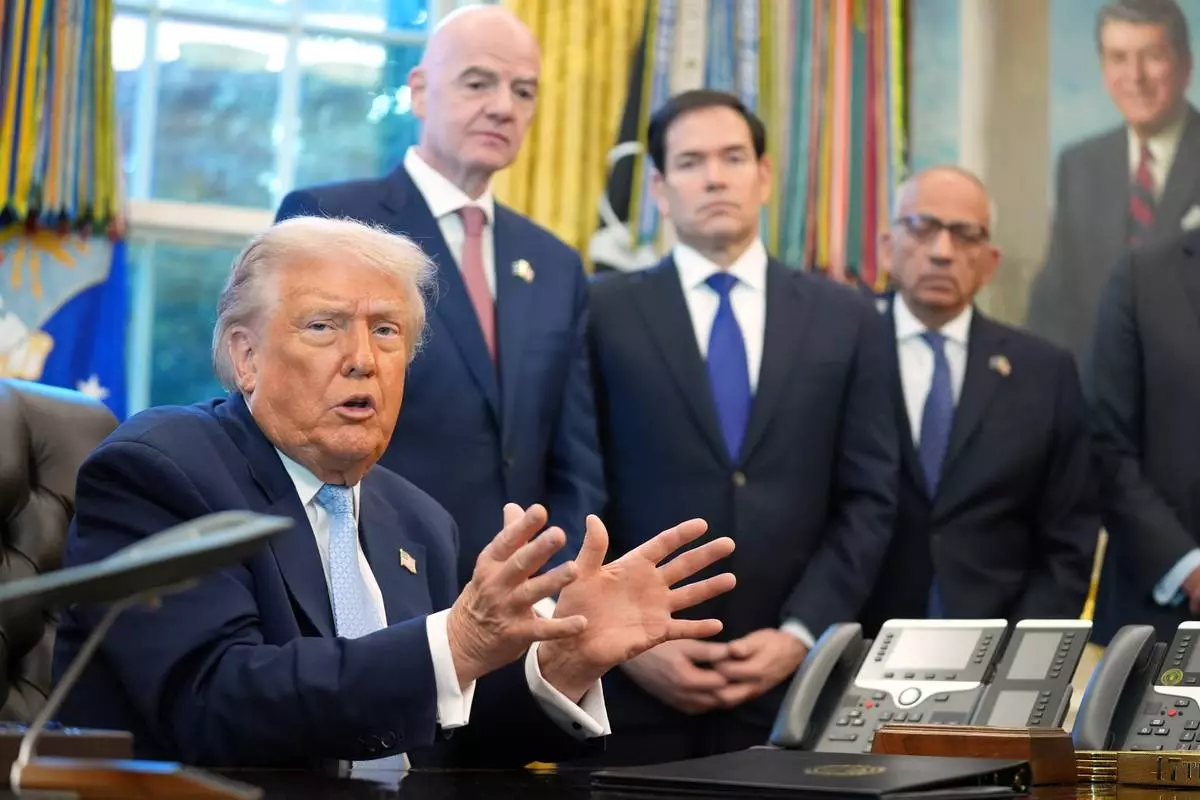
FILE - President Donald Trump answers questions from reporters during a meeting with the White House task force on the 2026 FIFA World Cup in the Oval Office of the White House, Monday, Nov. 17, 2025, in Washington, as FIFA President Gianni Infantino, Secretary of State Marco Rubio and FIFA senior adviser Carlos Cordeiro listen. (AP Photo/Evan Vucci, file)
SANTA CLARA, Calif.--(BUSINESS WIRE)--Jul 31, 2026--
XCENA, providing memory-centric computing solutions for AI infrastructure, today introduced MX1, its production memory lineup built to break through the capacity, utilization and data-movement now limiting AI inference at scale. The company is showcasing MX1 at FMS 2026: The Future of Memory and Storage, being held Aug. 4–6 at the Santa Clara Convention Center.
This press release features multimedia. View the full release here: https://www.businesswire.com/news/home/20260731455701/en/
As generative AI drives larger models, longer context windows and rapidly growing KV cache footprints, memory is emerging as the defining constraint on AI infrastructure. High-bandwidth memory remains costly and capacity-limited, and scaling out with additional servers creates stranded DRAM and rising total cost of ownership. XCENA developed the CXL-based MX1 lineup to give operators a different path - scaling memory as efficiently as they scale compute. Together with Intel Xeon 6 platforms, MX1 solutions showcase how CXL-based memory can help address memory-intensive AI workloads.
"AI performance is no longer limited by compute, it's limited by memory, and MX1 is our answer," said Jin Kim, CEO of XCENA. "By bringing compute to data instead of the other way around, we're giving operators a way to cut the cost, power and complexity of inference at exactly the moment those pressures are peaking. This is the logical evolution of memory for the AI era."
MX1 builds on MX1P, the prototype platform XCENA introduced last year that is currently deployed in proof-of-concept engagements and technical collaborations globally with customers. With this added to the production lineup, XCENA aims to advance current engagements toward production-level evaluation and commercialization discussions with hyperscalers, cloud service providers and enterprise AI infrastructure customers.
The lineup comprises two complementary products:
FMS 2026
At its booth #834, XCENA is showcasing MX1 Compute and MX1 Expand and demonstrating a CXL memory pool of up to 20 TB using memory pooling systems. The company is also presenting a KV cache sharing demonstration showing how AI inference infrastructure can use shared memory resources more efficiently.
At the Intel booth (#820), XCENA is demonstrating a CXL-based memory architecture on the Intel Xeon 6 platform. The demonstration shows how MX1 addresses the growing KV cache requirements of AI inference by offloading KV cache to CXL-attached memory, improving memory scalability and utilization efficiency for AI servers.
“As AI inference scales, efficiently expanding and utilizing memory is becoming increasingly important for hyperscale infrastructure,” said Debendra Das Sharma, Senior Fellow and Chief I/O Architect at Intel. “XCENA’s MX1 demonstrates how CXL-based memory expansion can support KV cache offloading on Intel Xeon 6 platforms to help address memory-intensive AI workloads.”
Technical Sessions
XCENA is presenting two sessions during FMS 2026:
XCENA was named Most Innovative Startup at FMS 2024 and received the Most Innovative Memory Technology award at FMS 2025, earning recognition at the industry’s flagship event for two consecutive years. Building on that momentum, XCENA is expanding proof-of-concept engagements with global customers, advancing commercialization discussions and accelerating its entry into the AI infrastructure memory market.
ABOUT XCENA
XCENA is a memory-centric AI computing company redefining the role of memory in AI infrastructure. Built on the open Compute Express Link (CXL) standard, XCENA develops products that enable memory to be expanded and utilized more efficiently, helping customers improve AI infrastructure performance while reducing latency, power consumption, and total cost of ownership (TCO).
Founded by semiconductor veterans from Samsung Electronics and SK hynix, XCENA combines expertise in semiconductor design with a full-stack software development kit (SDK) to help hyperscalers, cloud providers, and enterprises deploy and optimize AI infrastructure at scale. Headquartered in Seongnam, South Korea, with a U.S. office in Sunnyvale, California, XCENA has raised US$185 million to date, including a US$135 million Series B financing. Learn more at www.xcena.com.
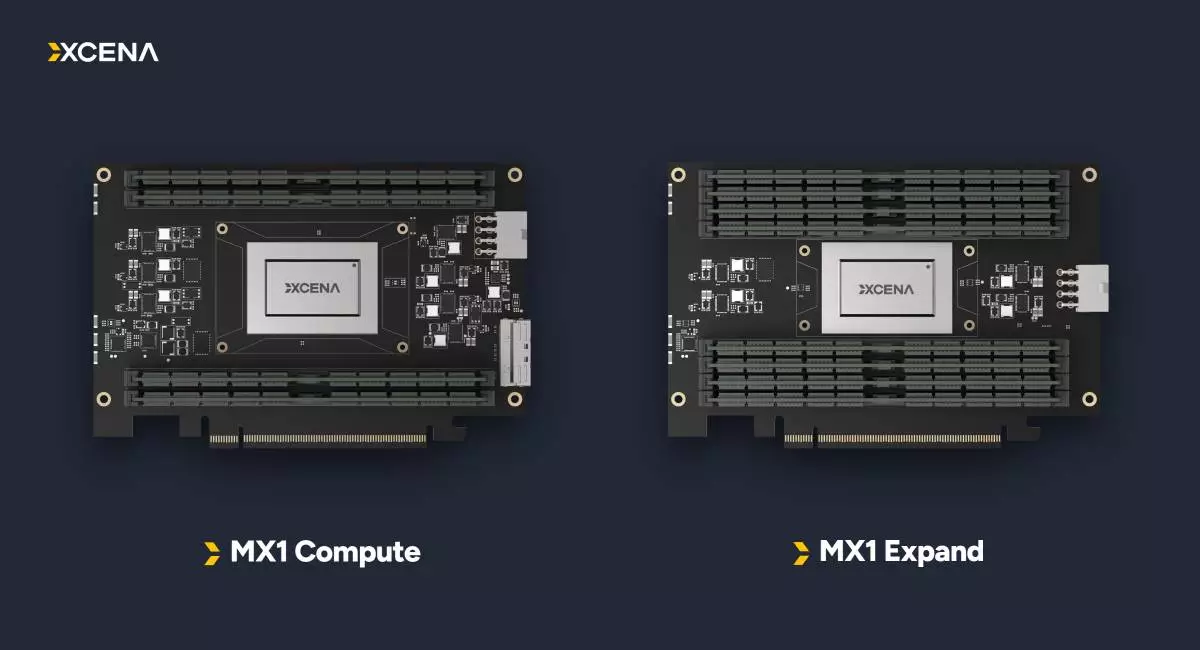
XCENA Unveils MX1 Production Lineup to Accelerate Push Into Hyperscale AI Infrastructure