BANGKOK (AP) — The head of Myanmar’s military-backed government on Friday marked his government’s first 100 days in office with a speech defending his record and outlining a five-year road map for his administration, which faces ongoing conflict and international criticism.
President Min Aung Hlaing, the former army chief who had originally seized power in 2021 from a civilian government, was sworn in as president in April following an election that critics said was designed to entrench the military’s grip on power.
Click to Gallery
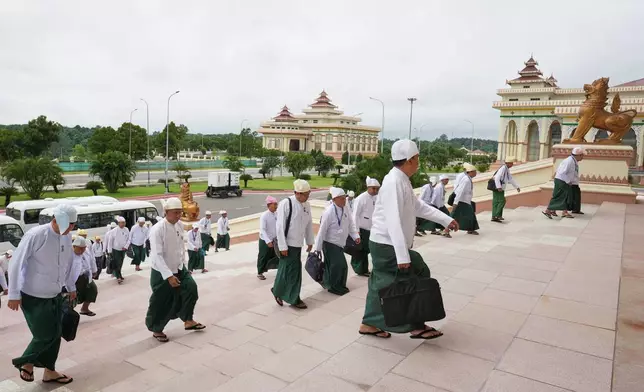
Myanmar’s lawmakers arrive to attend a regular session of the Union Parliament in Naypyitaw, Myanmar, Friday, July 31, 2026. (AP Photo/Aung Shine Oo)
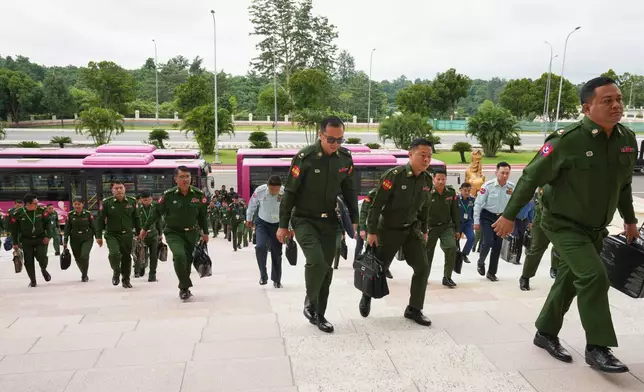
Myanmar's military representatives arrive to attend a regular session of the Union Parliament in Naypyitaw, Myanmar, Friday, July 31, 2026. (AP Photo/Aung Shine Oo)
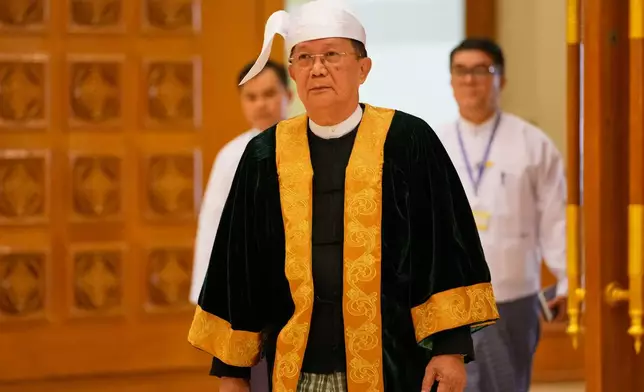
Parliament chairman Aung Lin Dwe, center, arrives to lead a regular session of the Union Parliament in Naypyitaw, Myanmar, Friday, July 31, 2026. (AP Photo/Aung Shine Oo)
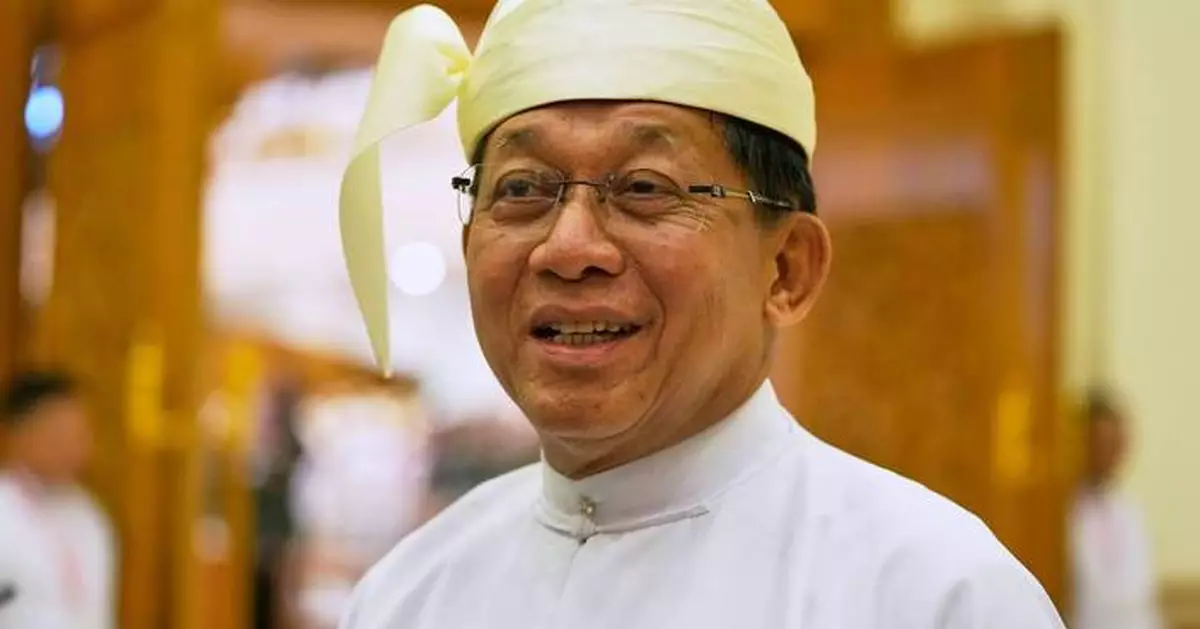
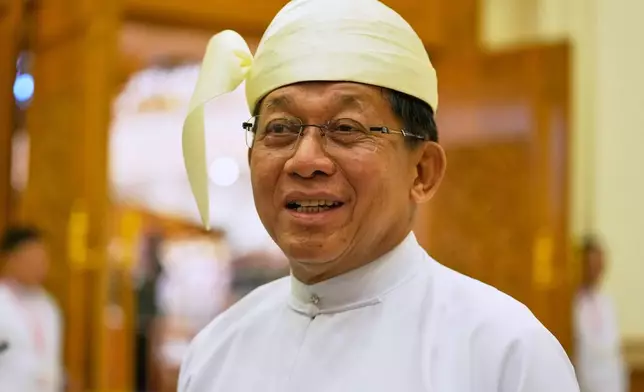
Myanmar President Min Aung Hlaing talks to journalists as he leaves after delivering speech at the Union Parliament in Naypyitaw, Myanmar, Friday, July 31, 2026. (AP Photo/Aung Shine Oo)
Addressing more than 900 lawmakers, officials and military representatives at Parliament in the capital, Naypyitaw, he said his government had laid “important foundations” since taking office by pursuing two priorities — restoring peace and stability and promoting national development.
Min Aung Hlaing said he would spend two years accelerating efforts to build a modern and developed nation based on democracy and a federal system, followed by another three years carrying out build-up at full speed.
He also said special elections would be held in 2027 in constituencies across 102 townships that were unable to vote during the three-phase election held late last year because of armed conflict.
He said the government would continue implementing the military’s conscription law while strengthening the armed forces and police as they fight pro democracy activists and ethnic minority rebels throughout much of the country. He noted that his administration had invited armed groups fighting the military to lay down their weapons and had held talks with 13 ethnic armed groups.
At the same time, Min Aung Hlaing criticized a five-point consensus reached by Southeast Asian leaders in 2021 to end Myanmar’s civil strife, saying it had been issued without the agreement of all member states and that the regional bloc had discriminated against Myanmar. ASEAN had asked Myanmar to immediate end the violence, and dialogue among contending parties to be brokered through an ASEAN special envoy.
He also outlined energy and major infrastructure development plans, saying the government would proceed with 10 power generation projects, including the controversial Myitsone hydropower project, while continuing efforts to build a nuclear power plant. The hydropower project was suspended more than a decade ago after protests over its possible impact on the environment.
Myanmar authorities were also working to combat money laundering, drug trafficking and online scam centres, he said, adding that more than 72,000 foreigners linked to scam operations had been repatriated to 58 countries.
Min Aung Hlaing acknowledged that the departure of large numbers of young Myanmar people was hurting economic development, but did not acknowledge the role of the military’s conscription law, which has been widely cited as one of the key factors behind the outflow of young people.
Nan Lin, a spokesperson of the General Strike Coordination Body, a leading nonviolent activists group, said the speech showed the military’s intention to maintain its grip on power, adding that the country would face worsening hardship under what he described as the junta’s failed policies.
“No meaningful change can be expected from the junta” Nan Lin said. “They will use the conscription law to control young people through fear, and the situation could worsen as they continue to sacrifice young people in order to hold on to power.”
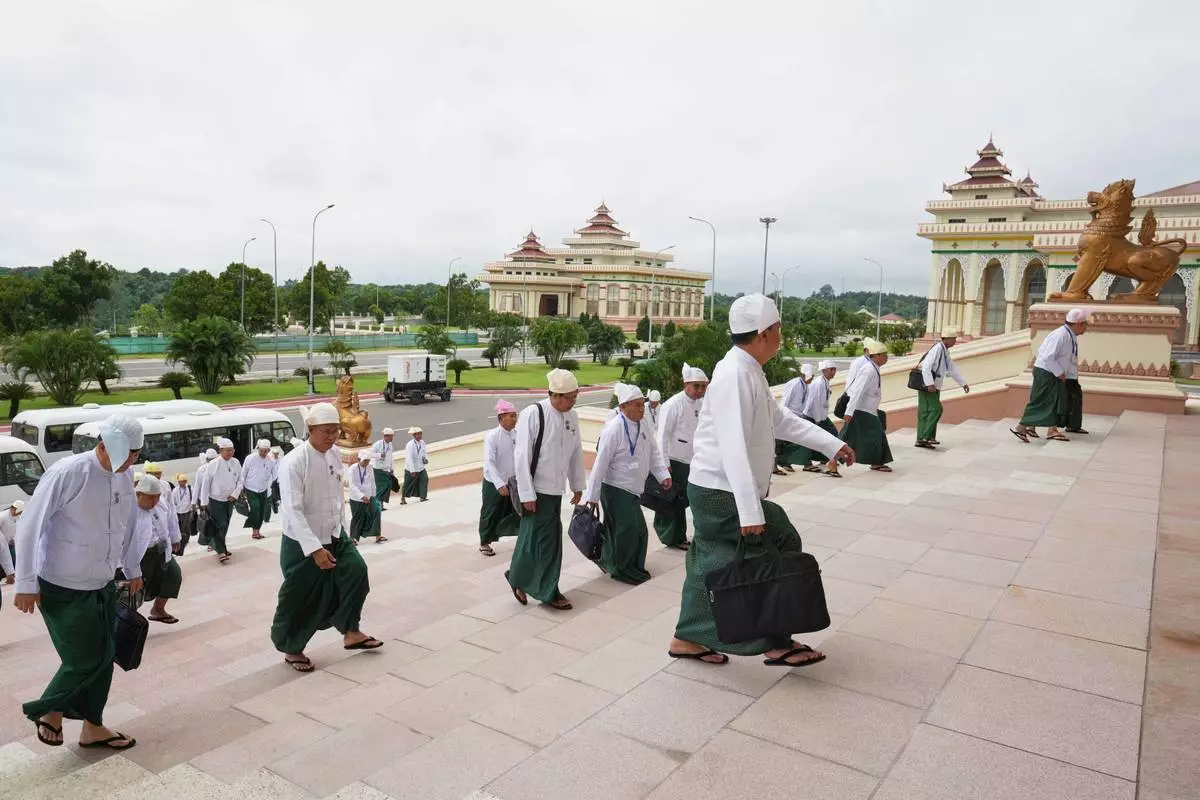
Myanmar’s lawmakers arrive to attend a regular session of the Union Parliament in Naypyitaw, Myanmar, Friday, July 31, 2026. (AP Photo/Aung Shine Oo)
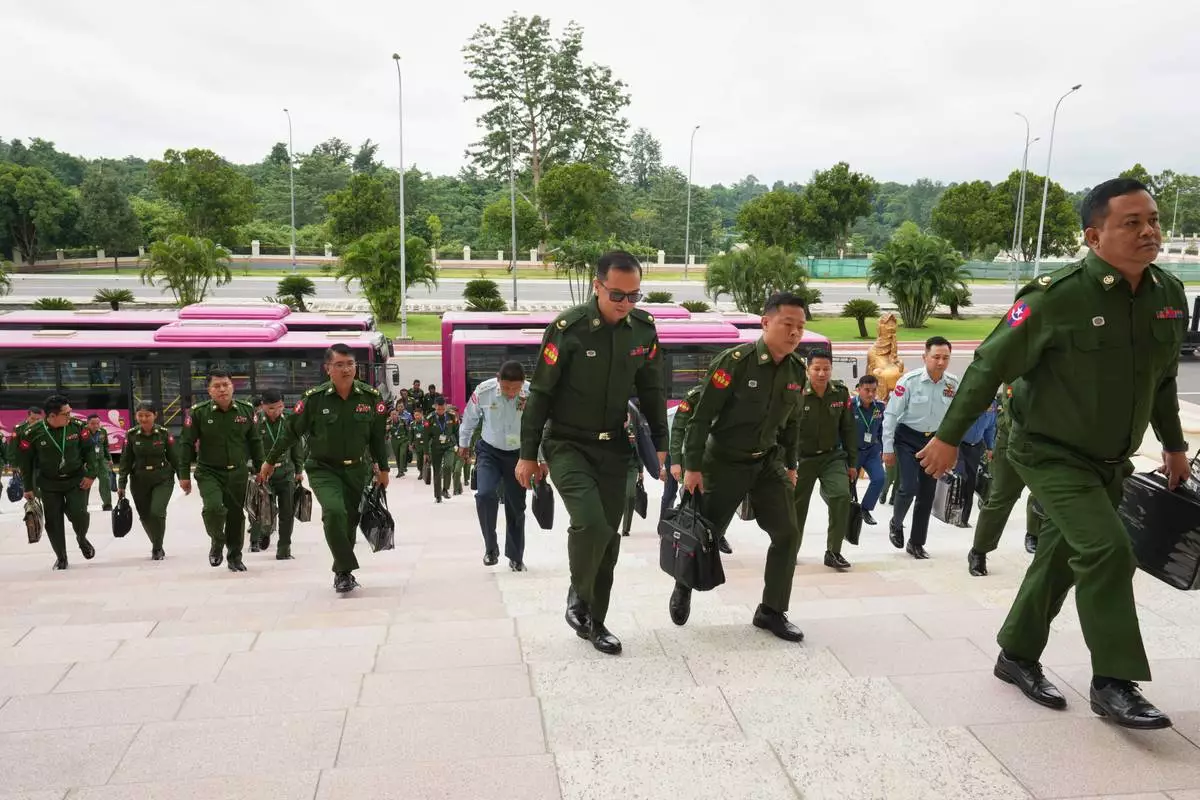
Myanmar's military representatives arrive to attend a regular session of the Union Parliament in Naypyitaw, Myanmar, Friday, July 31, 2026. (AP Photo/Aung Shine Oo)
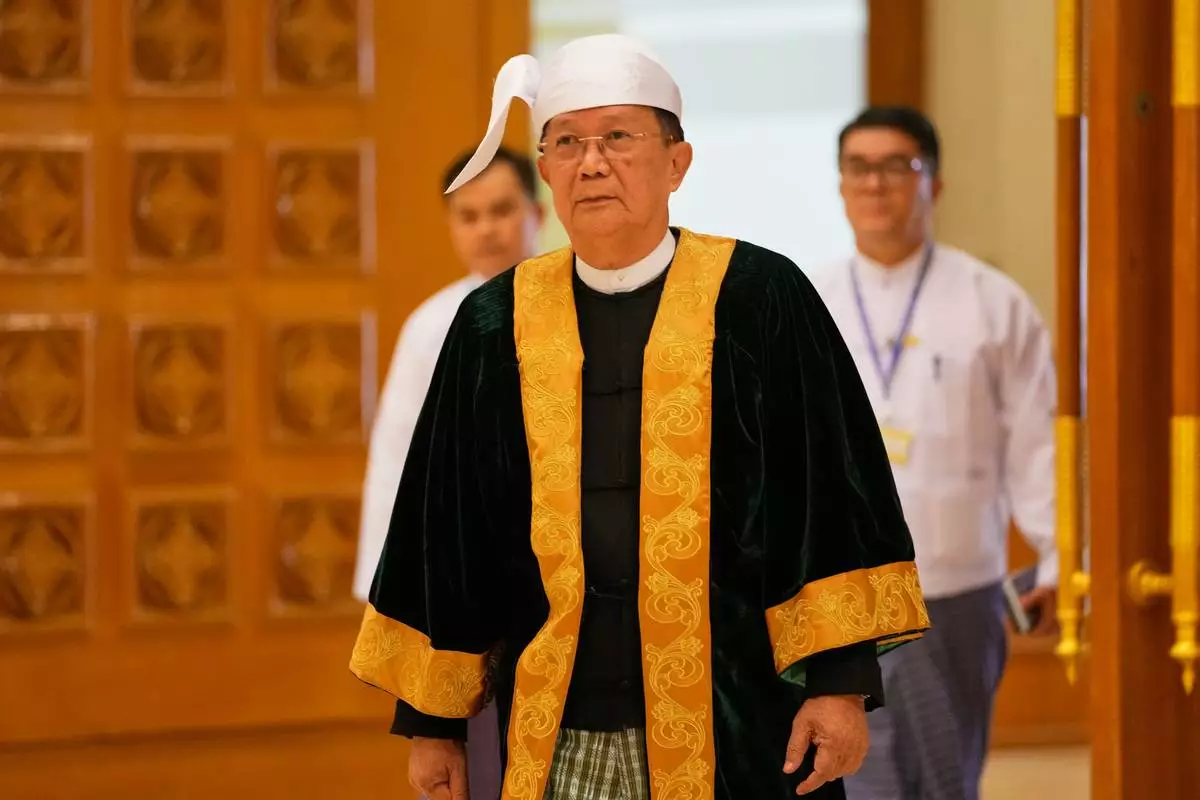
Parliament chairman Aung Lin Dwe, center, arrives to lead a regular session of the Union Parliament in Naypyitaw, Myanmar, Friday, July 31, 2026. (AP Photo/Aung Shine Oo)
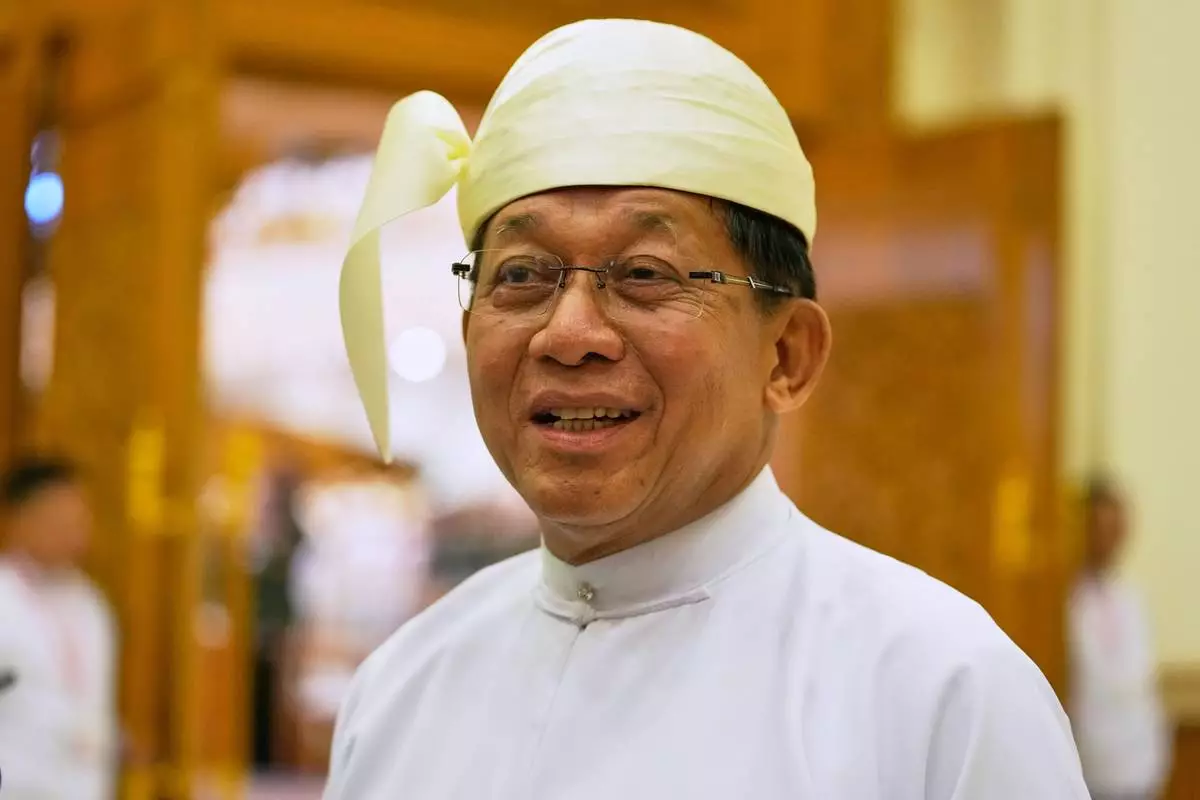
Myanmar President Min Aung Hlaing talks to journalists as he leaves after delivering speech at the Union Parliament in Naypyitaw, Myanmar, Friday, July 31, 2026. (AP Photo/Aung Shine Oo)
JEFFERSON CITY, Mo. (AP) — Over the past several years, Missouri voters have amended the state constitution to create abortion rights, legalize marijuana and sports betting and expand Medicaid healthcare coverage for low-income adults.
None of those initiatives would have passed under a ballot measure getting decided by voters Tuesday.
Missouri's proposed Amendment 4 would make it significantly harder to amend the constitution by requiring citizen initiatives to pass in all eight of the state's diverse congressional districts instead of by a traditional, simple statewide majority. No other state has such a high standard — or has even asked voters to consider it.
“This is a first-of-its-kind,” said Kelly Hall, executive director of the Fairness Project, a national group that backs progressive ballot initiatives like the ones Missouri's Republican lawmakers are hoping to quelch.
“It would be nearly impossible for citizens to participate meaningfully in any sort of direct democracy,” said Hall, who believes other states could try to copy Missouri's proposal.
The Missouri proposal is the culmination of years of attempts by lawmakers in numerous states to raise the bar for citizen-initiated petitions to qualify for the ballot and win voter approval. Some elected officials contend lawmaking is best left to themselves — the people's representatives — because citizen initiatives lack the vetting that comes from the multistep legislative process of public hearings, debates and revisions.
The effort to curtail citizen initiatives on state ballots comes as President Donald Trump pushes for greater restrictions on who can vote and how ballots are cast, asserting the integrity of elections is at stake.
Missouri’s measure “fits into the larger narrative and story around what the future of democracy looks like in the United States,” said Chris Melody Fields Figueredo, executive director of the Ballot Initiative Strategy Center, which supports progressive ballot measures.
About one-third of U.S. states allow people to bypass their legislatures by gathering signatures to place proposed constitutional amendments on the ballot. Several others allow the process for proposed laws.
In most of those states, a simple majority of voters is all that’s needed to approve constitutional amendments. Colorado requires a 55% vote for most measures, and Florida a 60% vote.
Voters in recent years rejected ballot measures to raise the approval threshold for amendments in Arkansas, Ohio and South Dakota. Still, South Dakota lawmakers have placed a proposal for a 60% approval threshold on the November ballot. North Dakota voters will consider a similar measure, and Utah voters will decide on a 60% requirement for citizen-initiated tax increases.
Missouri’s proposal would apply only to citizen initiatives. Constitutional amendments proposed by the Legislature still would need only a statewide majority. No other state has a dual standard like that.
Republican state Rep. Ed Lewis, who sponsored Missouri's measure, said he wants to ensure people in all parts of the state have their voices heard. He said activists funded by out-of-state interest groups have run up large majorities in St. Louis and Kansas City to pass controversial initiatives that failed throughout most of the rest of Missouri.
The abortion, marijuana, sports betting and Medicaid initiatives all were placed on the ballot by petitions between 2020 and 2024 after lawmakers declined to act. All passed with 53% or less of the statewide vote.
Requiring “50% in each of our congressional districts is not a difficult barrier for anything that has a consensus,” Lewis said. But “it is a difficult barrier for either a very conservative or a very liberal initiative petition,” he said.
“If you’re going to change the constitution, shouldn’t it be broadly accepted?” Lewis asked rhetorically.
Amendments to the U.S. Constitution require ratification by three-fourths of the states.
Critics say Missouri's proposed amendment could undercut consensus, because an initiative backed by large margins in seven congressional districts still would fail if opposed by a slim margin in just one district.
“It is an astonishing level of unfairness, and it crushes our notion of one person, one vote and majority rule, which we learned about in school as kids,” said Scott Charton, a spokesperson for the Missouri Realtors campaign committees, which have backed previous initiatives.
Though Amendment 4 was referred to the ballot by Republican lawmakers, people at a recent Republican club meeting in Jefferson City were divided about whether to make it harder for citizens to amend the state constitution.
Rick Kolb said he supports the tougher standards.
“Our country was founded as a republic not a democracy,” he said. When initiatives appear on the ballot, “everybody votes on these things that they haven’t put any thought into it.”
But Jim Bryan said he opposes the amendment, fearing it could allow voters in St. Louis or Kansas City to thwart measures supported by the rest of the state.
“The popular vote is what I want,” he said.
Regardless of the outcome, Tuesday's vote may not be the last on Missouri's citizen initiatives.
The Respect Missouri Voters coalition submitted more than 300,000 petition signatures — currently being verified by election officials — to try to place a constitutional amendment on the November ballot protecting the initiative process. It would reverse the Legislature's amendment by requiring only a statewide majority to pass citizen initiatives. It also would bar the Legislature from increasing the number of signatures needed to qualify for the ballot, shortening the time to do so or imposing other requirements that weaken initiative rights.
The measure also would make it harder for the Legislature to reverse or amend voter-approved initiatives by requiring an 80% vote in both the House and Senate instead of a simple majority. That comes after the Legislature last year repealed a paid sick leave law approved by voters and referred a new constitutional amendment to the November ballot to reverse voter-approved abortion rights.
Supporters insist their measure is nonpartisan, noting that Democratic lawmakers also tried to restrict citizen initiatives before Republicans gained control of the Capitol.
“Politicians in power want all the power in their hands,” said Benjamin Singer, co-founder of Respect Missouri Voters. “They don’t want citizens to have a check on their power.”
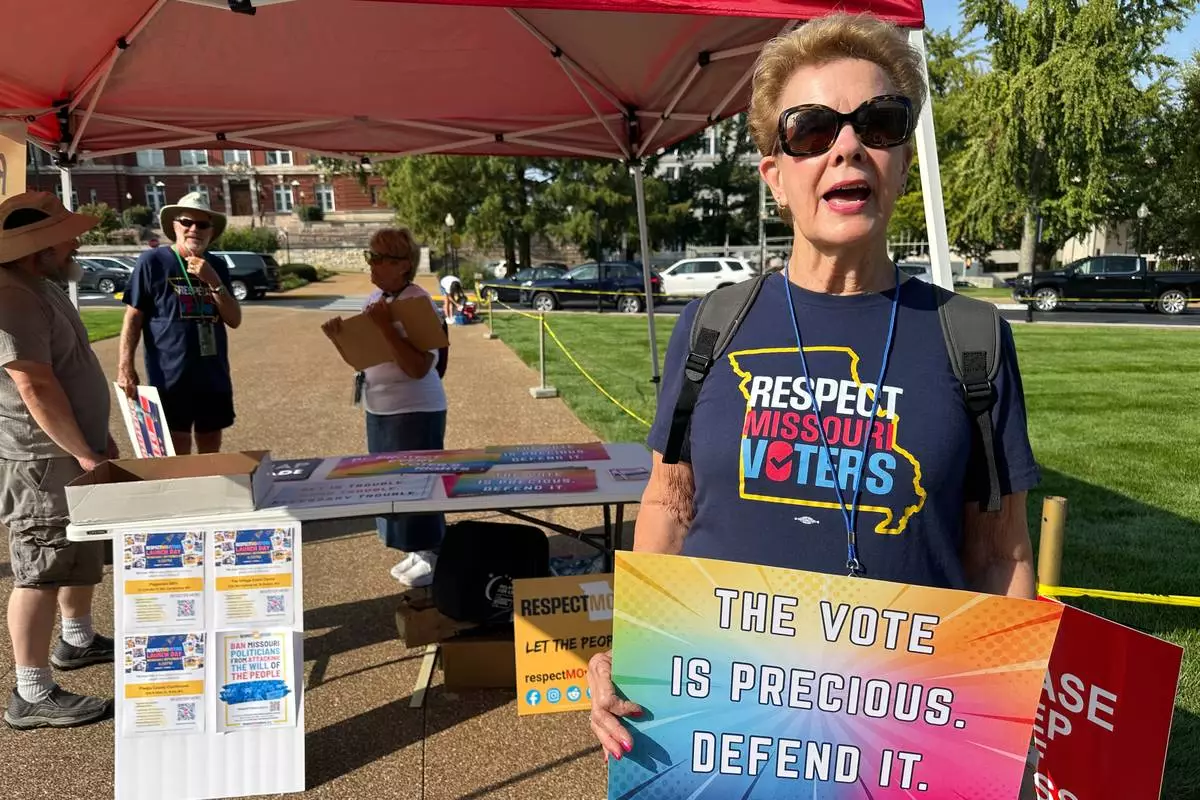
FILE - Liz Kester, a volunteer with the Respect Missouri Voters Coalition, explains her support for a ballot initiative limiting legislative powers while at the Missouri Capitol lawn on Wednesday, Sept. 10, 2025 in Jefferson City, Mo. (AP Photo/David A. Lieb, File)
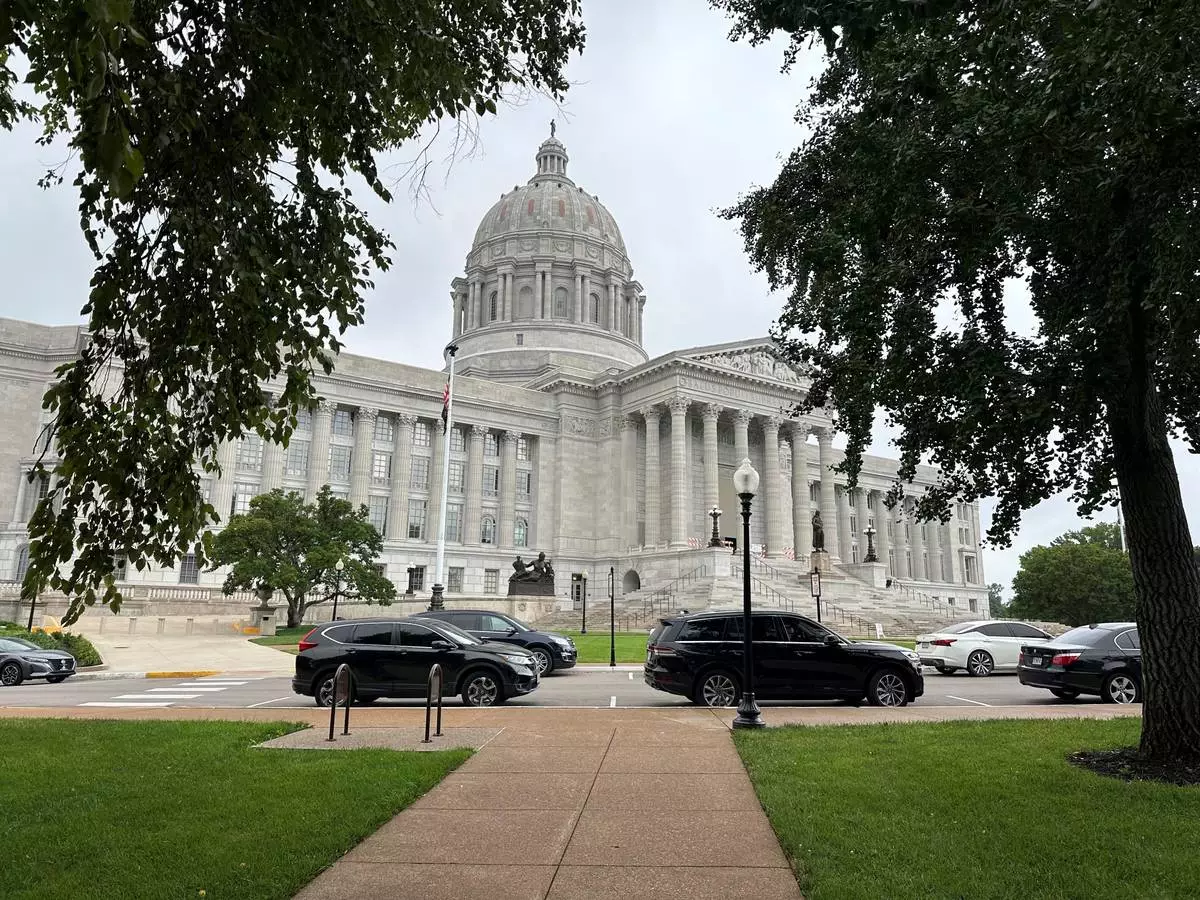
FILE - The Missouri Capitol is shown on Tuesday, Aug. 13, 2024, in Jefferson City, Mo. (AP Photo/David A. Lieb, File)
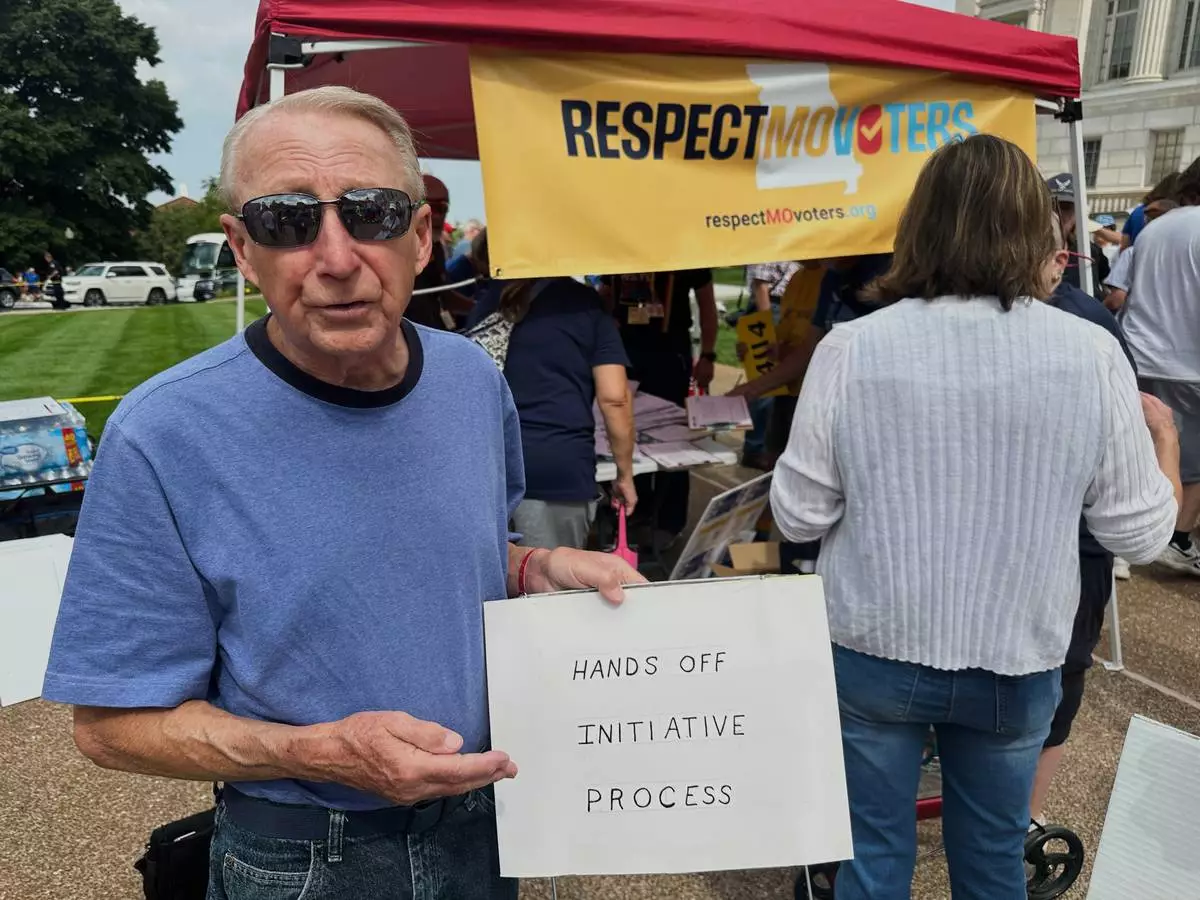
FILE - John Billman, of Columbia, Mo., holds a sign explaining his opposition to a state legislative proposal that would make it harder for voters to approve citizen-initiated constitutional amendments while rallying at the state Capitol in Jefferson City, on Wednesday, Sept. 10, 2025. (AP Photo/David A. Lieb, File)