Skip to Content Facebook Feature Image

Zilliz Announces Milvus 3.0, Making the World's Most Adopted Open-Source Vector Database Lake-Native

Business

Zilliz Announces Milvus 3.0, Making the World's Most Adopted Open-Source Vector Database Lake-Native
Business

Business

Zilliz Announces Milvus 3.0, Making the World's Most Adopted Open-Source Vector Database Lake-Native

2026-08-01 06:20 Last Updated At:06:30

REDWOOD CITY, Calif.--(BUSINESS WIRE)--Jul 31, 2026--

Zilliz, the company behind Milvus, the world’s most widely adopted open-source vector database, recently announced the release of Milvus 3.0, a major architectural update that brings lake-native data access and a more expressive retrieval engine to developers building production AI applications. Milvus 3.0 enables organizations to build and serve production-grade indexes over vector data that remains in object storage and open data formats. It also moves more query and retrieval operations into the engine, expanding Milvus beyond traditional nearest-neighbor search to support richer ranking, aggregation, sparse search, and multi-vector retrieval.

This press release features multimedia. View the full release here: https://www.businesswire.com/news/home/20260731560192/en/

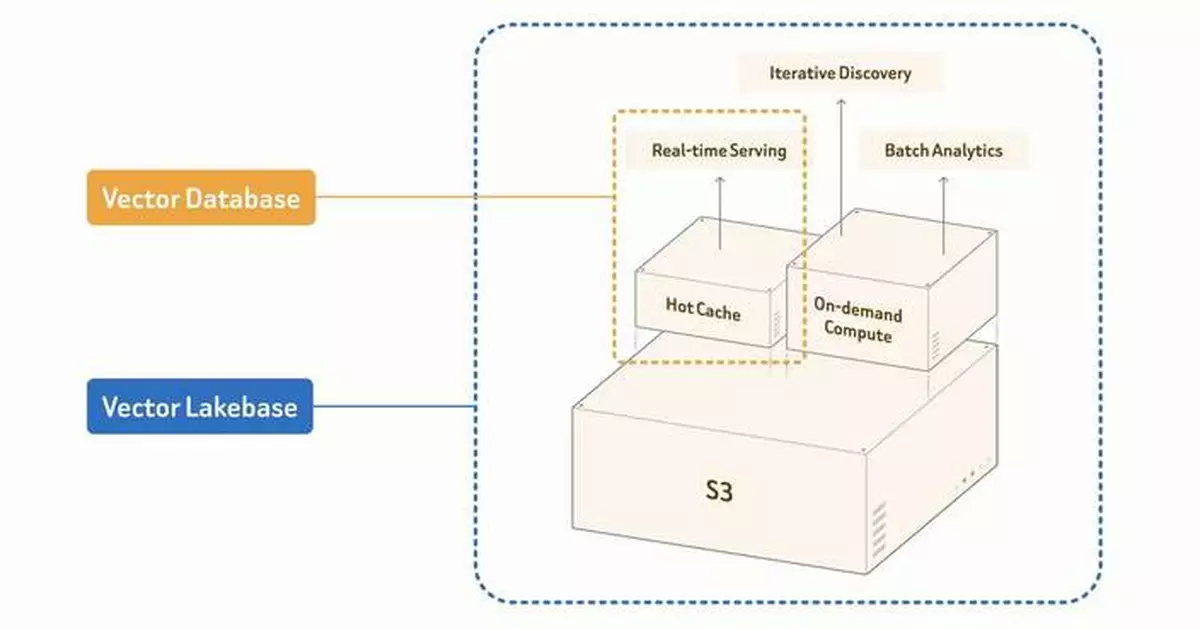
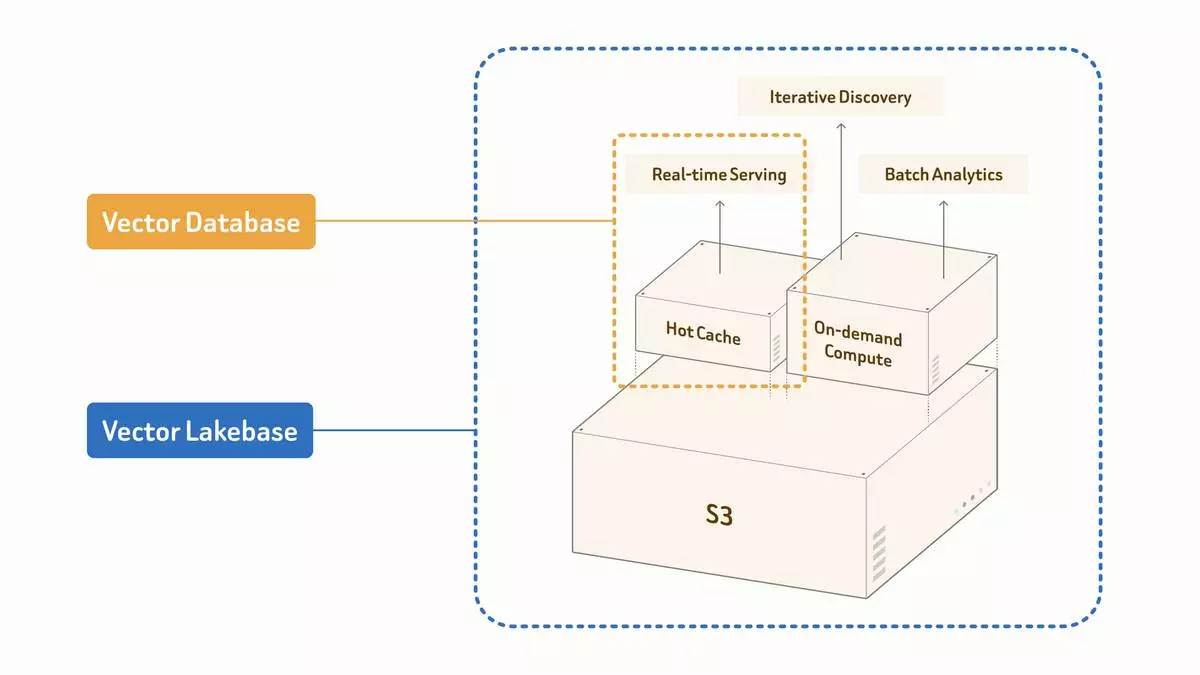
This release also advances the shared technical foundation behind both open-source Milvus and Zilliz Cloud. Developers can deploy Milvus independently, while Zilliz Cloud builds on the Milvus core to deliver a fully managed Vector Lakebase spanning real-time serving, interactive discovery, batch analytics, and AI data operations.

“AI data is becoming larger, richer, and more dynamic, yet the systems used to serve and improve that data have remained fragmented,” said James Luan, Co-founder and CTO of Zilliz. “Milvus 3.0 brings production retrieval closer to where data already lives and gives developers a more expressive engine for modern AI applications. That same foundation powers Zilliz Vector Lakebase, where we extend it with the elasticity, operational simplicity, and enterprise capabilities required to manage AI data at scale.”

Index and Serve Data Where It Already Lives

Production AI systems commonly maintain one copy of data for real-time retrieval and another for offline processing. Moving data between the two introduces additional storage overhead, lengthy exports, synchronization pipelines, and operational complexity.

Milvus 3.0 introduces a lake-native architecture that allows production indexing and retrieval to operate directly over data in object storage.

Together, these capabilities bring online retrieval and offline data improvement closer to a shared data foundation, reducing the need to continually export, duplicate, and reconcile large datasets across separate systems.

A More Expressive Retrieval Engine

Milvus 3.0 also expands retrieval beyond traditional top-K vector search.

New server-side sorting and aggregation, together with faceted search, allow applications to combine semantic relevance with attributes such as freshness, rating, price, category, tenant, and content source. Operations that previously required over-fetching data and processing it in application code can now execute directly within the Milvus engine.

For documents, images, and other entities represented by more than one vector, StructList introduces native multi-vector retrieval. A document can retain vectors for multiple chunks, an image can retain vectors for multiple visual patches, and a product can retain several multimodal representations under a single entity and metadata record. StructList also supports late-interaction retrieval models such as ColBERT and ColPali.

Milvus 3.0 further strengthens sparse and hybrid retrieval with an optimized sparse index that is approximately 3 times smaller while achieving comparable recall in internal testing. Additional enhancements include SINDI for learned-sparse vectors, server-side MinHash generation, nullable vector fields, custom dictionaries for full-text search, and broader support for Faiss-compatible indexes.

“Production applications rarely stop at returning the nearest vectors. They need to sort, group, build facets, and retrieve across multiple representations of the same entity,” saidJames Luan, CTO at Zilliz. “Milvus 3.0 moves more of that work into the engine while redesigning storage for efficient, low-latency access on object storage.”

These capabilities provide a broader retrieval foundation for applications spanning RAG, semantic search, recommendation, multimodal discovery, agent memory, and AI data preparation.

Open-Source and Managed Availability

Milvus 3.0 is available under the Apache 2.0 license and remains a graduated LF AI & Data project. It can be deployed on Kubernetes or Docker, including in air-gapped environments, and supports Amazon S3-compatible object storage, Google Cloud Storage, and Azure Blob Storage.

The release is available initially through the Python, Go, and Node.js SDKs, with Java support planned shortly after release. Developers can read the release notes, follow the quickstart, and access the source code on GitHub. They can also join the Milvus community or speak with project maintainers through Milvus Office Hours.

For organizations that prefer a managed platform, Zilliz Cloud incorporates Milvus 3.0 as its core indexing and retrieval engine and extends it into a fully managed Vector Lakebase. Zilliz Cloud adds elastic compute, interactive discovery, batch analytics, shared indexing, enterprise security and governance, and automated operations across a single copy of AI data.

This gives developers a consistent technology foundation: they can deploy and operate Milvus as an open-source vector database, or use Zilliz Cloud when they need a managed platform that spans real-time retrieval, offline discovery, data processing, and production operations. For more details, see the Milvus 3.0 launch blog.

About Zilliz

Zilliz is a leading AI data infrastructure company and the creator of Milvus, the world’s most widely adopted open-source vector database, with more than 45,000 GitHub stars and over 100 million Docker pulls. Zilliz helps enterprises and AI-native companies make unstructured data searchable, analyzable, and governable—turning text, images, audio, video, and other multimodal data into a strategic asset for production AI.

Zilliz’s technology centers on Milvus and Zilliz Cloud. Milvus is an open-source vector database purpose-built for vector search at massive scale. Powered by Milvus, Zilliz Cloud extends that foundation into a fully managed Vector Lakebase that combines the high-throughput, low-latency serving capabilities of a vector database with the openness, scalability, and economics of a multimodal data lake.

Zilliz supports more than 10,000 enterprises and AI-native companies worldwide, including MiniMax, OpenEvidence, Filevine, Exa, Salesforce, and Read AI.

Headquartered in Redwood Shores, California, Zilliz is backed by leading investors, including Aramco's Prosperity 7 Ventures, Temasek's Pavilion Capital, Hillhouse Capital, 5Y Capital, Yunqi Partners, and Trustbridge Partners. Learn more at Zilliz.com.
Zilliz Announces Milvus 3.0, Making the World's Most Adopted Open-Source Vector Database Lake-Native


Zilliz Announces Milvus 3.0, Making the World's Most Adopted Open-Source Vector Database Lake-Native

MANCHESTER, England (AP) — Britain has a new hub of power: a bland modern office block about 165 miles (260 kilometers) from the prime minister's official London office and residence at 10 Downing St.

The Manchester low-rise is home to “No. 10 North,” the flagship of new Prime Minister Andy Burnham’s pledge to be a different kind of U.K. leader. Burnham was mayor of Greater Manchester before vaulting back into national politics, and one of his first acts was to set up a branch office in the city. It’s both symbol of and engine for his pledge to give local leaders more powers and spread economic growth around the country.

Burnham calls it “a North Pole that balances the South Pole" of Westminster politics in London. Critics have called it a gimmick.

It’s certainly a novelty. While past British leaders have spent weekends in their local constituencies, or at the prime minister’s official Chequers country retreat, none in living memory has had a large-scale office outside London. Burnham plans to work there at least one day a week, alongside a full-time staff of aides, experts and civil servants.

“It’s not another office," Burnham said Friday. "It is a fundamental change to the way the country thinks about growth and investment."

Burnham believes Manchester holds the key to avoiding the fate of Keir Starmer, his predecessor as Labour Party leader and prime minister.

Starmer stepped down in July after two years in office, following missteps, policy U-turns and his failure to get Britain’s sluggish economy growing.

During nine years as Manchester mayor, Burnham was praised standing up to central government on behalf of a proud, battle-scarred northern city that gave birth to the Industrial Revolution, movements for social change and a dynamic music scene. He gained the nickname King of the North for his championing of the city — and his political ambition.

Burnham promoted what has been called “Manchesterism,” a form of business-friendly socialism that involves harnessing private investment for major projects and decentralizing government to give communities more control over housing, transport, training and public services.

The city center boomed during his mayoralty. Skyscrapers sprouted from vacant lots, service industries grew, a thousand coffee shops bloomed and a municipally run network of bright yellow buses and trams crisscrossed the city.

Now Burnham wants to replicate the approach across the country, using No. 10 North as the engine room for redistributing wealth and economic opportunities to areas blighted by shuttered industries, lost jobs and an exodus of young people.

In a first step, Burnham announced Friday that mayors will get to keep a greater share of income and business tax revenue from their areas, calling it the “biggest transfer of power, funding and responsibility from Westminster in a generation.”

Many of the details haven’t been announced, however, including how much new money mayors will be getting.

Rob Ford, professor of political science at the University of Manchester, said Burnham’s bold early moves suggest “he does mean business in terms of changing the overall mechanics of government.”

“We have one of the most centralized countries out of all developed democracies in terms of how much money and decision-making power gets hoovered into the center, how little there is for the provinces to do,” Ford said. “He does seem quite determined to change that, but that’s a huge job.”

Burnham's critics point out that Manchester’s boom hasn't spread to all its outskirts, and the anti-immigration party Reform UK has been a beneficiary of voters’ discontent.

It’s envisioned that No. 10 North will eventually get a brand-new headquarters as part of an inner-city redevelopment project. For now, it shares a building with a chain pub, a civic register office and a branch of the cyberintelligence agency GCHQ.

It’s very different to cramped, stuffy 10 Downing St, a 350-year-old townhouse awkwardly converted into the hub of a government that has grown too big for it.

Supporters say No. 10 North is already a breath of fresh air. Rose Marley, chief executive of Cooperatives UK, an umbrella group for member-owned businesses, felt the difference when she was invited to a meeting there.

“It was so refreshing that it wasn’t us having to travel to London all the time,” she said. “Westminster might start realizing how bad the trains are and how much it costs when they have to come back the other way.”

Marley, who advised Burnham when he was mayor, likens the impact to when the BBC moved production of some programs to Salford in Greater Manchester.

“For the first time ever, the likes of me were asked onto the BBC sofa,” she said. “It meant voices like mine started to appear on the sofa and a diversity of thinking started to be heard.

“The voices that are furthest away from what you’re saying and what you believe, that’s when you need to listen the most," she said. "Westminster really does need to listen to all the parts of the country.”

Most Mancunians are proud of their city, and many support the idea of it getting more control over its own affairs.

“I think it makes sense,” said Sam Turner, a nursing lecturer. “Because the north is very different to the south, there are different house values, there’s different land values, with different salaries.”

But Ford says Burnham will need to show that he is giving power to all parts of the country, not just Manchester.

“You could go to Liverpool down the road, or Leeds, or Sheffield and they’ll say, ‘Well, you know, an office in Manchester isn’t necessarily an office for us,’” Ford said. “So that’s an argument he still has to win.”

Lesley Lebbon, visiting Manchester from Newmarket in eastern England, said No. 10 North is “a start,” but that other regions need attention, too. She’d like to see “more No. 10s, maybe an East and a West No. 10.”

Still, “I like the idea of what No. 10 North represents,” she said. “I think any progress has got to be better than no progress.”

Britain's Prime Minister Andy Burnham, third left, holds a National Economic Council meeting at No 10 North at Heron House in Manchester, England. Friday July 24, 2026. (Christopher Furlong/Pool Photo via AP)

Britain's Prime Minister Andy Burnham, third left, holds a National Economic Council meeting at No 10 North at Heron House in Manchester, England. Friday July 24, 2026. (Christopher Furlong/Pool Photo via AP)

Britain's Prime Minister Andy Burnham holds a National Economic Council meeting at No 10 North at Heron House in Manchester, England. Friday July 24, 2026. (Christopher Furlong/Pool Photo via AP)

Britain's Prime Minister Andy Burnham holds a National Economic Council meeting at No 10 North at Heron House in Manchester, England. Friday July 24, 2026. (Christopher Furlong/Pool Photo via AP)

Britain's Prime Minister Andy Burnham during a visit to a family center in Sheffield, England, Friday, July 31, 2026. (Annabel Lee-Ellis/Pool Photo via AP)

Britain's Prime Minister Andy Burnham during a visit to a family center in Sheffield, England, Friday, July 31, 2026. (Annabel Lee-Ellis/Pool Photo via AP)

Britain's Prime Minister Andy Burnham arrives to hold a National Economic Council meeting at No 10 North at Heron House in Manchester, England. Friday July 24, 2026. (Christopher Furlong/Pool Photo via AP)

Britain's Prime Minister Andy Burnham arrives to hold a National Economic Council meeting at No 10 North at Heron House in Manchester, England. Friday July 24, 2026. (Christopher Furlong/Pool Photo via AP)

Recommended Articles