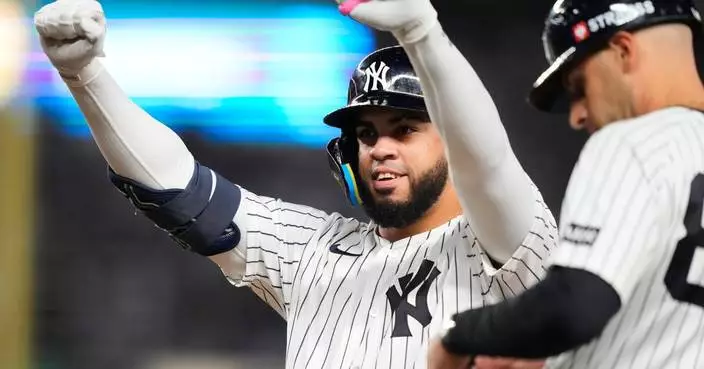
GENEVA (AP) — FIFA President Gianni Infantino is abandoning his divisive plan to sell World Cup profits to private equity after receiving pushback from all corners of the soccer world.
Infantino’s decision came after his senior adviser who sat on a White House panel resigned and Asia’s soccer body joined Europe and North America in opposing it.
“Having listened carefully to all the views, it has become clear that the project has created divisions of a nature that, regardless of the level of support, are no longer in the interest of the objective set out in the first place,” Infantino said in a statement early Saturday. “Our purpose has always been — and will always be — to unite and improve. As a result, this proposal will not proceed.”
Infantino had proposed creating a $20 billion company to run the World Cup with private investors including the Kushner family, but drew backlash that grew every day since Tuesday's announcement.
UEFA’s 55-member nations agreed to boycott the World Cup and all other FIFA competitions over Infantino’s plan on Thursday. North America’s CONCACAF and the Asian Football Confederation also said they opposed the plan.
“Some things are simply too important to sell,” UEFA said in a statement. “The FIFA World Cup belongs to football. It always will. And so long as Europe has a voice, it will never be for sale.”
Infantino’s senior adviser, Carlos Cordeiro, a former Goldman Sachs banker who represented the soccer body on the White House Task Force for the World Cup, resigned on Friday and urged other senior FIFA staff to speak out.
“I cannot stand by while FIFA considers selling a stake in the World Cup,” Cordeiro said in a statement, just hours after FIFA insisted: “Nobody is selling football.”
Hours later, FIFA chief operating officer Kevin Lamour issued a statement to The Associated Press, saying FIFA staff were deceived by Infantino's lack of openness in planning the sale over recent months and that the project must not continue.
“It is the project of one person,” Lamour, a longtime colleague of Infantino at both FIFA and European soccer body UEFA, wrote. “Not only must this project not go ahead … but the time has now come for football political leaders to ask themselves the right questions and make the right decisions.”
Infantino has proposed spinning off FIFA’s commercial businesses — including World Cups and Club World Cups for men and women — into a $20 billion subsidiary with 20% owned by private investors.
The “anchor investor,” described by FIFA, is a New York-based investment firm created by Joshua Kushner, the younger brother of U.S. President Donald Trump’s son-in-law, Jared Kushner.
The next FIFA competition is the Women’s Under-20 World Cup starting Sept. 5 in Poland — which UEFA members said they would boycott.
The misstep could prove costly for Infantino, particularly after the interventions by Lamour and Cordeiro.
Reelected unopposed in 2019 and 2023, Infantino is allowed one more four-year term under FIFA statutes. The deadline for the next presidential contest is Nov. 18, exactly four months ahead of the vote in Rabat, Morocco, where FIFA has its African headquarters.
Infantino's job seemed secured despite long-term unease with his style and previous attempts to force through unpopular projects, but could become more tenuous with the failed private equity proposal.
AP Sports Writer John Marshall contributed from Phoenix.
AP soccer: https://apnews.com/hub/soccer and AP World Cup coverage

FILE - UEFA's deputy general secretary Kevin Lamour, centre, looks on as he stands next to UEFA President Aleksander Ceferin, right, prior to the start of a Group F match between Turkey and Georgia at the Euro 2024 soccer tournament in Dortmund, Germany, Tuesday, June 18, 2024. K(AP Photo/Alessandra Tarantino, File)

FILE - President Donald Trump holds up a red card during a meeting with FIFA president Gianni Infantino, center, and United States Soccer Federation president Carlos Cordeiro, left, in the Oval Office of the White House, Aug. 28, 2018, in Washington. (AP Photo/Evan Vucci, File)

FILE - Asia Football Confederation President Salman Bin Ibrahim Al-Khalifa, left, poses with FIFA President Gianni Infantino during an inauguration ceremony for the new building of the Asia Football Confederation in Kuala Lumpur, Malaysia Tuesday, Oct. 30, 2018. (AP Photo/Vincent Thian, File)
NASHVILLE, Tenn. (AP) — Tennessee officials were unable to put Christa Gail Pike to death Wednesday for a 1995 murder after administering two doses of a lethal drug. A death penalty expert said it was an unprecedented failure.
Pike was alive and loudly snoring after the attempted lethal injection and taken by ambulance from the prison, her attorneys said.
“We have not been informed as to her condition,” Pike's attorneys said in a statement.
Pike, 50, had been scheduled for execution at 10 a.m. Wednesday for the killing she committed at age 18 and would have been the first woman executed in Tennessee in more than 200 years. An appeals court stopped the lethal injection just an hour before it was to start and hours later the U.S. Supreme Court overturned that stay.
Officials gave Pike two doses of pentobarbital, her attorneys said in court filings late Wednesday. Robin M. Maher, executive director of the Death Penalty Information Center, said what Pike experienced is “singular and unparalleled.”
Seven other people have survived medical problems due to the execution team's failure to access a vein to administer lethal injection drugs, but no one has stayed alive after receiving the drugs used in such executions, she said.
Pike’s attorneys said: “We take no pleasure in being right, but the concerns raised by Ms. Pike proved to be true: difficult vein access, blown veins, degraded pentobarbital, no emergency medical care available when things inevitably go wrong, all under a protocol that remains veiled in secrecy.”
Media witnesses observing from a separate room said officials raised curtains to the execution chamber at 7:27 p.m., showing Pike strapped to a gurney.
Pike remained awake and at one point raised her head and asked prison officials if her arm was supposed to feel that way. It was not clear what she was referencing.
By 8:26 p.m., execution witnesses reported that the second dose of pentobarbital had been administered.
Pike continued to be heard snoring behind the closed curtain until the microphone was cut off at 8:53 p.m. At that time there was an announcement to escort media witnesses out of the area.
Tennessee Department of Correction spokesperson Dorinda Carter told media witnesses she was unable to immediately provide information about what happened.
Lawyers for Pike filed an emergency motion late Wednesday to the U.S. Supreme Court seeking to immediately halt and stay the execution, saying she was in “unnecessary agony” and it was violating her right to be executed free of cruel and unusual punishment. They also filed motions in the Sixth Circuit court and district court.
The motion also asserted that the Department of Correction should begin lifesaving measures. “Failure to provide such care constitutes deliberate indifference to legitimate, serious medical needs.”
Pike and her boyfriend were convicted of the fatal stabbing and beating in 1995 of 19-year-old Colleen Slemmer, their classmate at a job training facility in Knoxville. The case garnered widespread attention in part because of a pentagram that was carved on Slemmer’s body and other elements of the crime stoked fears of Satan worship during the “satanic panic” of the 1980s and 1990s.
It was the second time this year that Tennessee has been unable to carry out an execution: In May state officials called off the lethal injection of Tony Carruthers, who was convicted of kidnapping and killing three people in 1994, after executioners tried and failed for over an hour to place an IV to administer pentobarbital.
Pike was initially scheduled to be put to death in the morning, and witnesses had gathered at the Riverbend Maximum Security Institution in Nashville when the 6th Circuit U.S. Court of Appeals voted 2-1 to issue a stay. That court said a delay was needed to consider whether Pike’s allegations of childhood sexual abuse were fully considered at her sentencing.
The attorney general’s office appealed to the Supreme Court, saying that halting the execution at the last moment traumatized Slemmer’s family and rewarded “abusive delay tactics” by Pike’s attorneys.
Later in the day, the high court cleared the way for the execution to proceed. The conservative majority did not explain their order, while the three liberal members signed a dissent that said Pike’s claims deserved a closer look.
Pike does not deny committing the killing, but her supporters argue that the state should consider her age at the time, her mental illness and her allegations of severe sexual abuse.
“It is inconceivable that in the 21st century, the criminal justice system is poised to execute a survivor of rape and child sexual abuse whose jury never had the opportunity to consider those facts in weighing the defendant’s moral culpability,” her attorneys wrote in a filing.
As the execution date drew near, debate renewed over the death penalty for young offenders.
Assistant Federal Defender Stephen Ferrell said Pike’s death sentence is an outlier because other 18-year-olds in Tennessee have had such sentences vacated.
After the killing, Pike was diagnosed with bipolar disorder and post-traumatic stress disorder. In her clemency petition, she said she only wanted to fight Slemmer but killed her in a frenzied attack when she couldn’t “put the brakes on.”
“I was a mentally ill 18-year-old kid. It took me numerous years to even realize the gravity of what I’d done. Even more to accept how many lives I affected. I took the life of someone’s child, sister, friend. It sickens me now to think I had the ability to commit such a crime,” Pike said in a statement.
Slemmer’s mother said she wants the lethal injection to go forward, saying she has waited decades to see Pike’s sentence carried out.
“Every time I think about it, I think about Colleen feeling that pain and trying to get up and run,” May Martinez told The Associated Press in a telephone interview on Saturday.
Martinez said a group helped raise money so she and her husband could travel from Florida to witness the execution.
“Not a day goes by, or a minute goes by that I do not think about Colleen. Holidays are the worst,” she said, noting that her daughter would have turned 51 in September.
The killing rocked the city of Knoxville. Prosecutors said Pike, fearing Slemmer was trying to steal her boyfriend, lured her to a wooded area on Jan. 12, 1995. Pike cut Slemmer with a box cutter and beat her with a large chunk of asphalt. Shipp, Pike’s boyfriend, has admitted that he was the one who carved a pentagram, a star-shaped symbol associated with Satan, into her body.
Shipp was 17 when the crime happened and received a sentence of life in prison with the possibility of parole. Pike was the only one sentenced to death.
Since the Supreme Court reinstated the death penalty in 1976, 18 women have been put to death, representing about 1% of all executions, according to the Death Penalty Information Center.
Pike would have been the 30th person executed in the U.S. this year after Florida carried out an execution on Tuesday.
Tennessee announced in 2024 that it was switching from a three-drug series for lethal injections to the single drug pentobarbital. That came more than two years after the state abruptly halted the execution of Oscar Smith and acknowledged that it had failed to ensure its lethal injection drugs were tested properly.
This story has been updated to correct that Pike had been scheduled for execution at 10 a.m. local time, not 11 a.m.
Associated Press writers Jeffrey Collins in Columbia, South Carolina, Ed White in Detroit and Hallie Golden in Seattle contributed.

Emergency vehicles arrive at Riverbend Maximum Security Institution after the execution of Christa Pike was halted Wednesday, Sept. 30, 2026, in Nashville, Tenn. (AP Photo/George Walker IV)

May Martinez, left, mother of murder victim Colleen Slemmer, walks out of Riverbend Maximum Security Institution during a stay of the planned execution of Christa Pike, Wednesday, Sept. 30, 2026, in Nashville, Tenn. (AP Photo/George Walker IV)
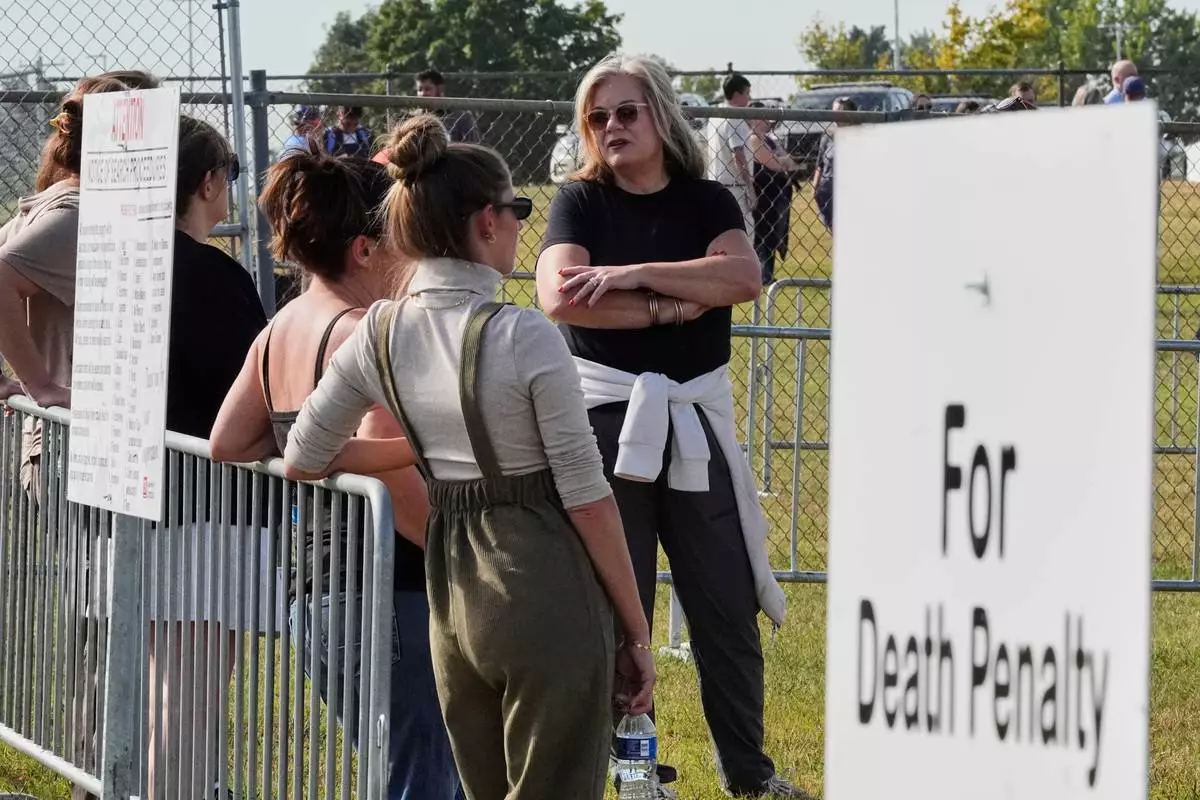
Leslie Brown, right, stands with others in the area reserved for people in favor to the death penalty outside Riverbend Maximum Security Institution before the planned execution of Christa Pike, Wednesday, Sept. 30, 2026, in Nashville, Tenn. (AP Photo/George Walker IV)

Kathleen Walter prays in the area reserved for people opposed to the death penalty outside Riverbend Maximum Security Institution before the planned execution of Christa Pike, Wednesday, Sept. 30, 2026, in Nashville, Tenn. (AP Photo/George Walker IV)
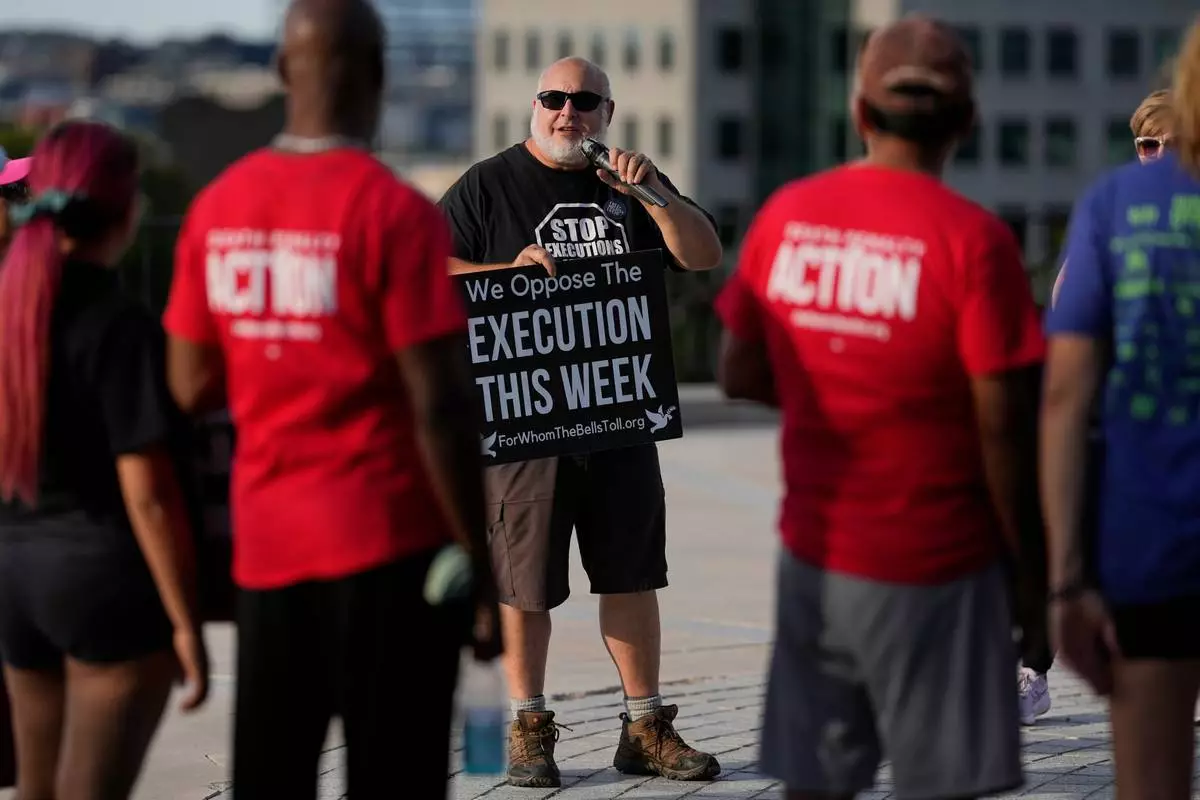
Abraham Bonowitz speaks during a March 4 Mercy protest against the death penalty at the Tennessee State Capitol, Sunday, Sept. 27, 2026, in Nashville, Tenn. ahead of the Sept. 30th scheduled execution of Christa Pike. (AP Photo/George Walker IV)

Alonzo Hughes participates in a March 4 Mercy protest against the death penalty at the Tennessee State Capitol, Sunday, Sept. 27, 2026, in Nashville, Tenn. ahead of the Sept. 30th scheduled execution of Christa Pike. (AP Photo/George Walker IV)

In this image from video provided by WBIR-TV, Christa Pike cries after being sentenced to death on March 30, 1996 in Knoxville, Tenn. (WBIR-TV via AP)
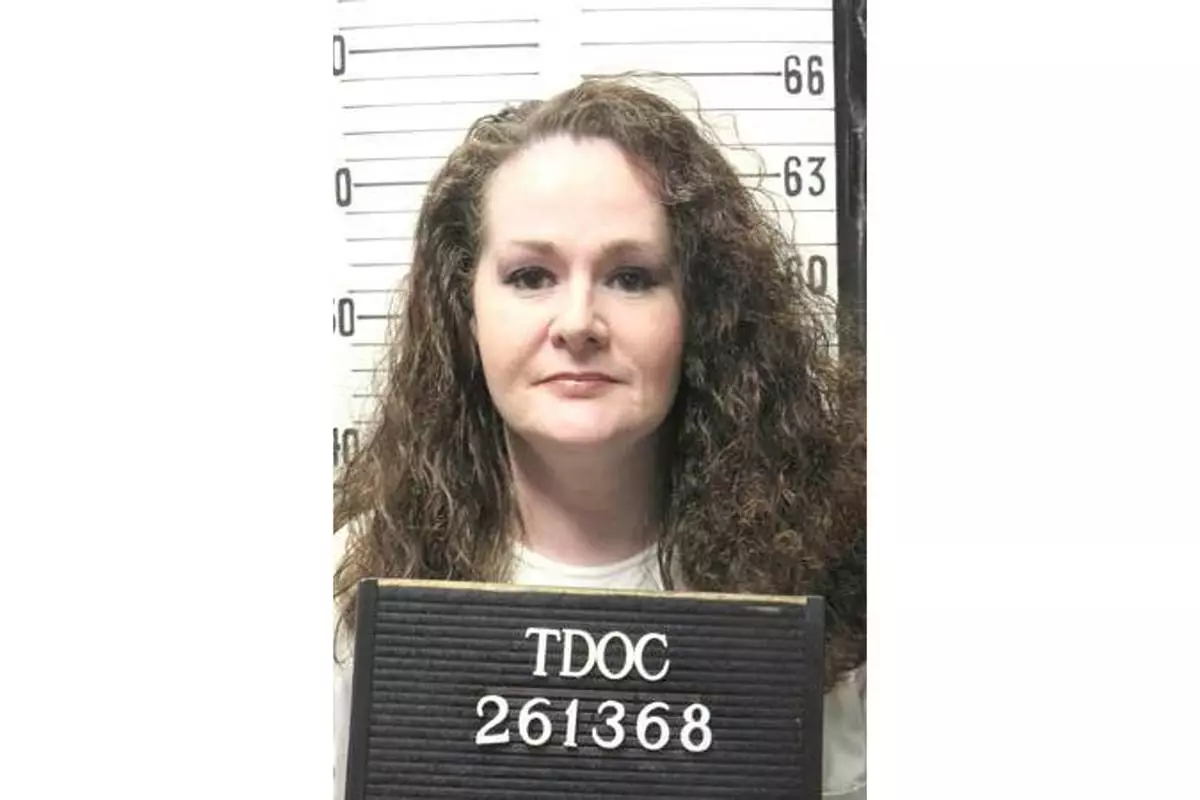
This photo provided by the Tennessee Department of Correction shows Christa Pike on Jan. 12, 2023. (TDOC via AP)