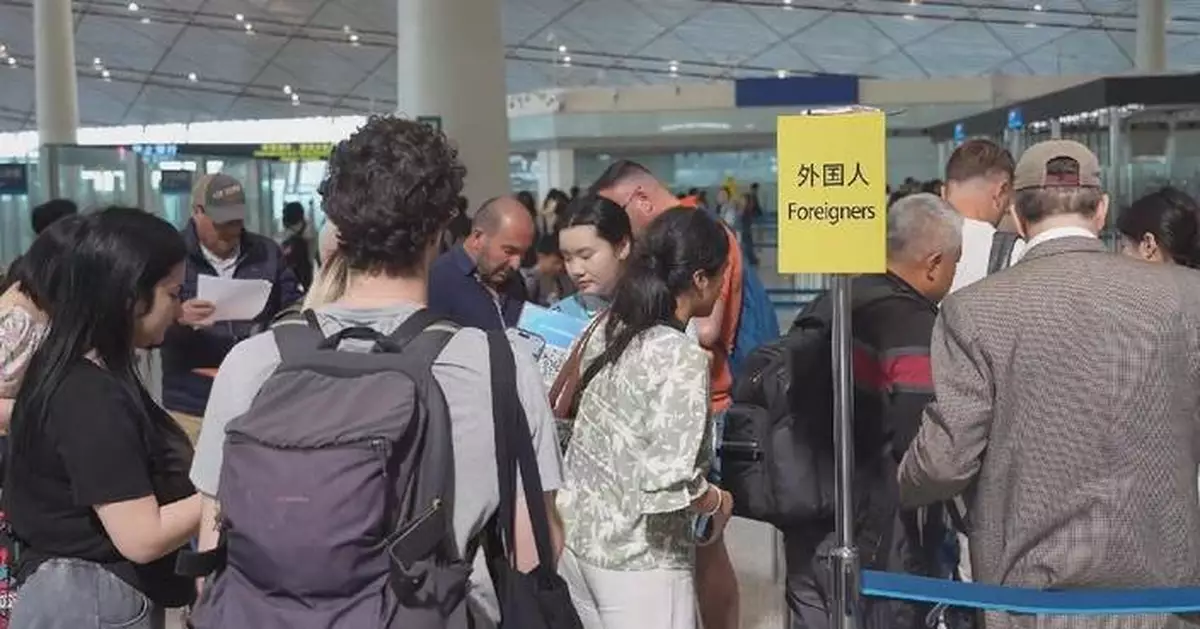
Visa-free policies, smooth digital payments, multilingual services and internationally integrated transport networks are working together to further facilitate overseas visitors' travel to China.
China's inbound tourism market is heating up this summer, with overseas travelers venturing beyond first- and second-tier cities into smaller, culturally rich third- and fourth-tier destinations. They have moved from quick sightseeing and photo-taking to immerse them deeper in cultural engagements.
Passenger traffic at Beijing Capital International Airport and Beijing Daxing International Airport has surged noticeably this summer. In July alone, the two airports recorded over 600,000 inbound and outbound foreign travelers, a year-on-year increase of 31 percent.
Thanks to continuously optimized visa-free transit policies, international visitors can embark on a hassle-free cultural exploration from the moment they step off the plane. Both airports in Beijing have opened up dedicated processing zones and clearance channels for "one-stop" visa-free transits.
The Chinese capital has rolled out a new all-in-one digital service platform, "GO BEIJING" or "Enter Beijing," designed to remove common hassles for overseas travelers from language barriers and payment headaches to navigating local services. It supports 16 languages and offers 39 kinds of services, including admission booking, hotel reservations and ride-hailing.
"I'm very excited to travel China for three weeks, starting in Beijing, going through Shanxi Province to Xi'an and then through to Shanghai. And I think the visa free policy makes it a lot easier for me as a traveler. I don't have to fill out a lot of paperwork and pay a fee. It just allows me to explore China without having to deal with any of that hassle. And yeah, it makes my life a lot easier," said a tourist from Australia.
Beyond streamlined entry, convenient payment options have also left a strong impression on foreign visitors. Approximately 18,000 key businesses across Beijing now accept foreign bank cards.
"We use a lot of Alipay and I was surprised that we can order, for example, meals in the restaurant by Alipay. It's a good solution and it saves time," said a visitor from Poland.
In a cultural exchange, international students from more than 20 countries, including Canada, Australia, Argentina and Brazil, visited Beijing's Shougang Park, gaining firsthand insight into the park's transformation from an industrial steel complex into an innovative urban hub.
The Temple of Heaven, a UNESCO World Heritage Site and centerpiece of Beijing's Central Axis, continues to draw large numbers of foreign tourists, captivated by the 15th-century Chinese artisans' craftsmanship and ingenuity.
Convenient travel services boost China's tourism