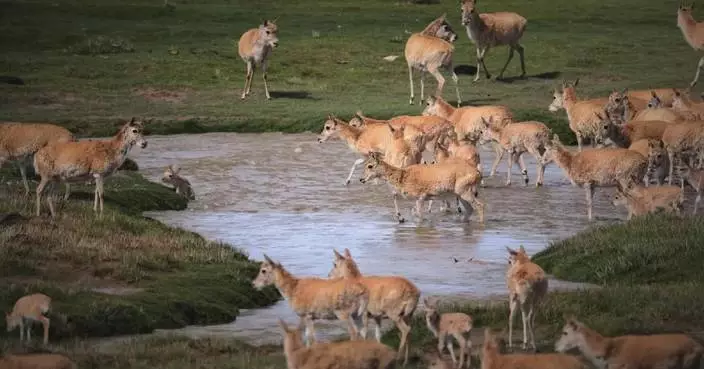
Newborns of Tibetan antelopes under China's first-class state protection have demonstrated the tenacious resilience of life in braving survival challenges in Hoh Xil, a UNESCO natural heritage site in northwestern Qinghai Province.
Situated at an average altitude of 4,800 meters, Zonag Lake in Hoh Xil on the Qinghai-Xizang Plateau is a core birth site for Tibetan antelopes. Around May each year, tens of thousands of pregnant Tibetan antelopes begin their migration to Zonag Lake to give birth, and depart with their offspring in around late July.
For the newborn Tibetan antelopes, life is a challenge from the very start. With the oxygen level just half of that on plains as well as fast changes of weather, Zonag Lake prompted the newborn babies to gain the abilities of standing up and walking to nurse around 10 minutes after birth.
In addition, their natural enemies including wolves and bears were always there to ambush them, and the slow-moving ones often became the primary targets.
Each animal species is an integral link in the food chain in Hoh Xil, where greater ecological conservation efforts have made the population of Tibetan antelopes rebound from under 20,000 to more than 70,000, while the numbers of natural enemies are stable to maintain a healthy ecosystem.
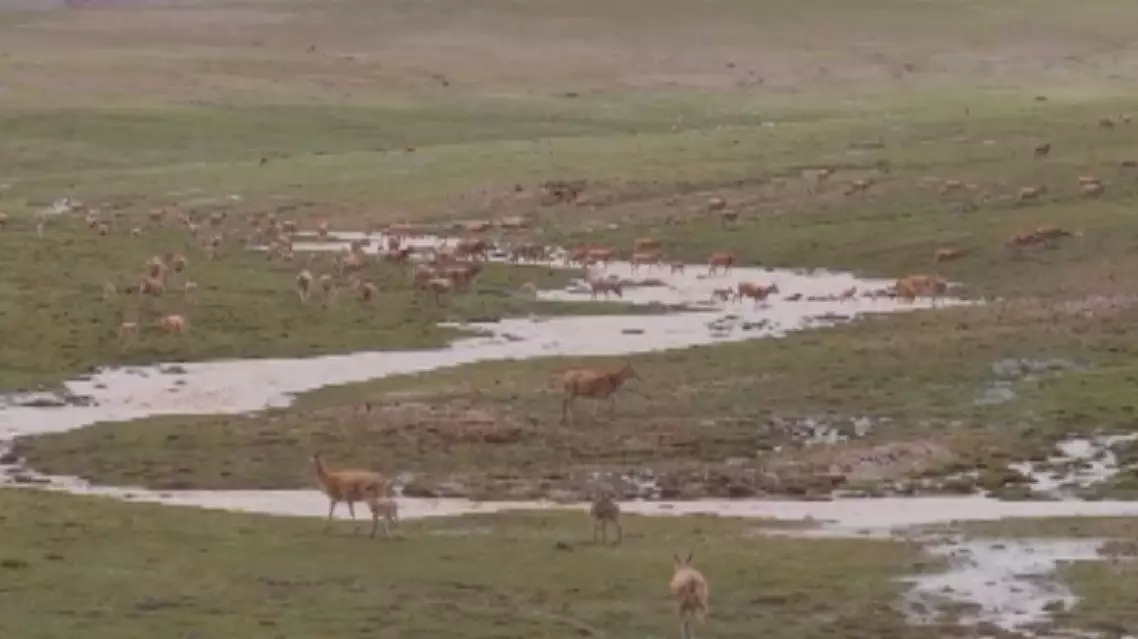
Newborn Tibetan antelopes brave survival challenges in UNESCO-listed Hoh Xil