U.S. President Donald Trump said on Saturday that he has agreed to hold off fresh attacks against Iran.
"We have just been asked by Iran, and other Middle Eastern Countries, to hold off any attack in that the perimeters of a deal has been agreed to," Trump said in a post on Truth Social.
"This would include the Immediate, Complete, and Total OPENING OF THE HORMUZ STRAIT, and an end to Iran's nuclear threat," he added.
Trump also warned that his decision is "subject to being able to rapidly make a DEAL."
Meanwhile, Israeli media quoted Israeli officials as saying on Saturday that Trump was closer than ever to approving a major strike on Iran, while Washington would not involve Israel in the initial attack.
In a statement issued on Saturday, Iran's Foreign Ministry said that Iran will continue along the path of resistance and steadfastness until the complete eradication of the enemy's hostile actions.
In the statement, Iran's Foreign Ministry accused the United States of continuing to violate the terms of the U.S.-Iran memorandum of understanding signed on June 18, maintaining a maritime blockade on Iranian ports and commercial vessels, launching savage attacks across Iran, intensifying economic pressure and illegal threats, and persistently engaging in aggression against Iran.
In their response, Iran's armed forces have continued their defensive strikes with full force.
Ali Abdollahi, chief commander of Iran's main military command Khatam al-Anbiya Central Headquarters, warned countries in the region on Saturday that the United States is "pursuing a path of widespread escalation in the regional war" and no country should serve as the defensive shield of the United States.
Abdollahi said that the United States is using "capital, wealth, vital infrastructure, and strategic resources of countries in the region as a defensive shield for its worn-out army," while simultaneously shifting the costs of conflict onto countries in the region and strengthening Israel's war machine and security measures.
Iran's Islamic Revolution Guard Corps (IRGC) posted on Saturday that it is in a state of high alert and is ready to deal with any large-scale confrontation.
The IRGC also claimed that it has strengthened reconnaissance and surveillance, and will expand the range of regional deterrence, including supporting and protecting the "resistance fronts".
Also on Saturday, Iranian Foreign Minister Seyed Abbas Araghchi warned the United States against taking any "adventurous" actions during separate phone conversations with Pakistan's Chief of Army Staff Asim Munir and Turkish Foreign Minister Hakan Fidan. They exchanged views on the latest developments of the situation in the region.
Araghchi told Munir and Fidan that Iran is fully prepared to safeguard its national sovereignty, territorial integrity and national security, and would respond decisively to any act of aggression.
In talks with Saudi Foreign Minister Prince Faisal bin Farhan Al Saud, Araghchi warned that any hostile U.S. or Israeli action, as well as any regional support for it, would draw a firm, proportionate response from Iran's armed forces.
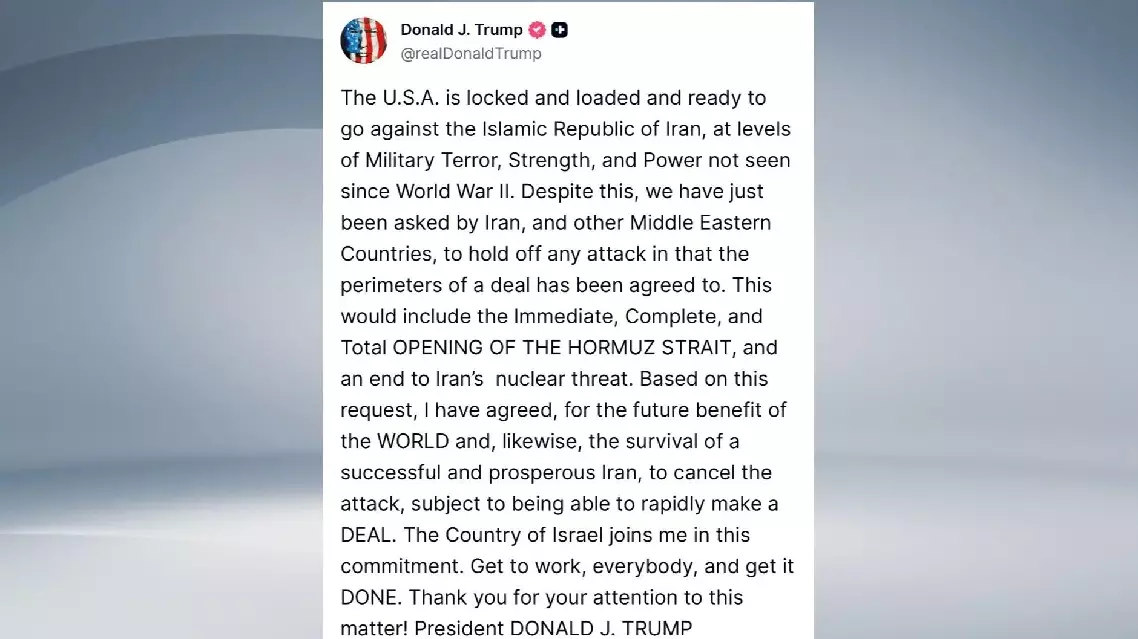
Trump says US to hold off fresh attacks on Iran