Skip to Content Facebook Feature Image

Chinese astronauts continue experiments for advancing space farming

China

China

China

Chinese astronauts continue experiments for advancing space farming

2026-08-02 16:50 Last Updated At:20:47

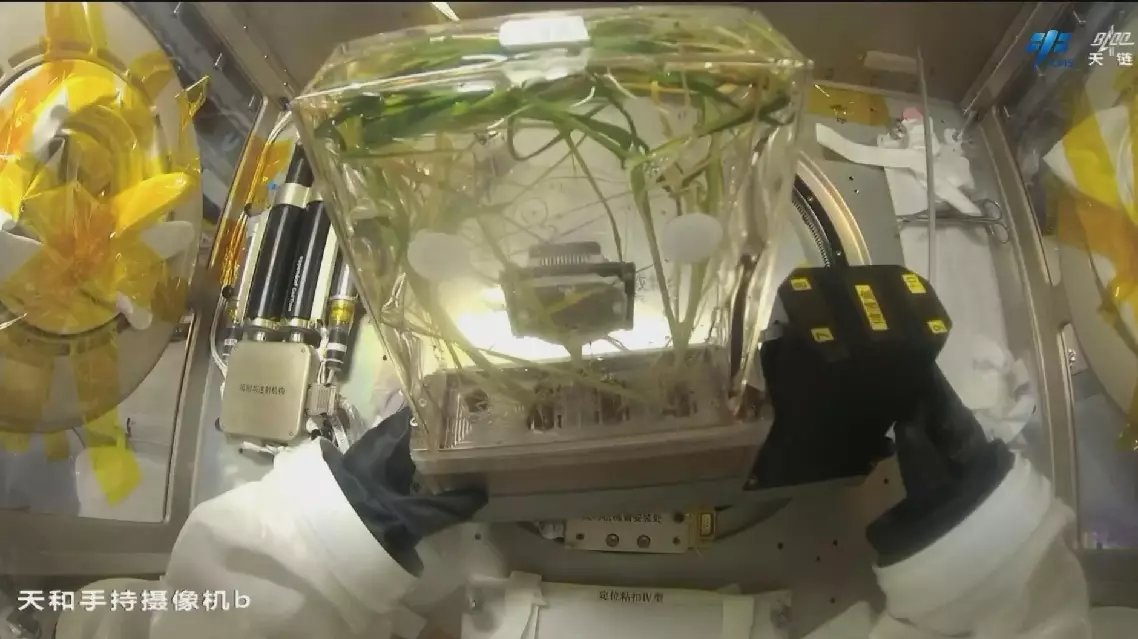
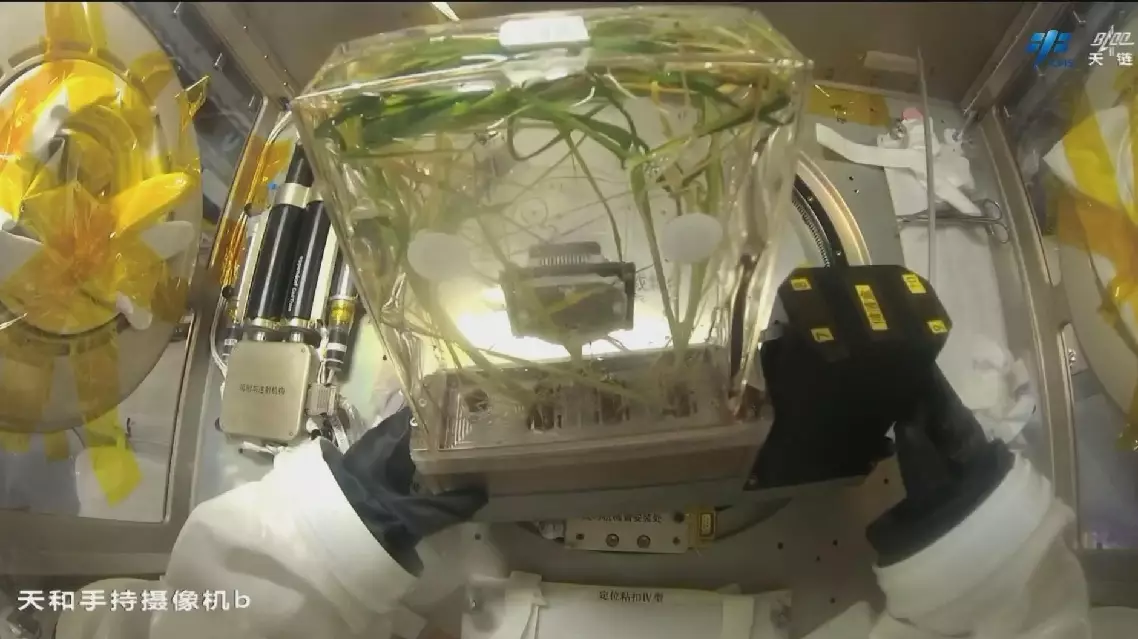
The Shenzhou-23 crew onboard China's space station has completed a comparative experiment on two distinct propagation modes of rice to promote space farming.

The experiment is expected to provide theoretical support for in-space cultivation of grain without requiring any resupply from Earth. It will contribute to providing life-support materials for astronauts on future deep-space exploration missions.

In 2022, astronauts aboard China's space station harvested an initial batch of 59 space-grown rice seeds, which were generated from six rice seeds sent from Earth following a 120-day in-orbit cultivation period.

The rice seeds carried into space aboard the Shenzhou-23 spaceship, which was launched May 24 this year, belong to a Chinese japonica rice strain characterized by strong environmental adaptability and growth cycle of three to four months.

One group consists of conventional seeds that have never left Earth, while the other batch were selected from descendants of the initial batch of space-grown seeds following three generations of ground breeding.

The experiment set four cultivation units, with six mutually backup seeds sown in each unit.

These four units were further divided into two groups, with seeds in each group subjected to two distinct rice propagation modes.

One group adopted sexual propagation, which means that after the seeds mature, rice panicles will be collected and transferred into new culture boxes for second-generation planting.

This is designed to investigate whether seeds with previous space exposure possess stronger adaptability to the space environment compared with the seeds that have never traveled to orbit.

The other group adopted rice ratooning, meaning that after the rice matures, only the stubbles are retained, and new tillers will sprout from the basal auxiliary buds left on the stubble.

This aims to compare differences in adaptability between vegetative propagation and sexual propagation in space environment.

In addition, stem and leaf samples of the experimental rice plants will be transported back to Earth for further research into viable production modes of space farming.

China launched the Shenzhou-23 crewed spaceship on May 24, sending astronauts Zhu Yangzhu, Zhang Zhiyuan and Li Jiaying into space.

The mission is notable for including a one-year in-orbit stay experiment, which will provide crucial data for future long-duration space exploration.
Chinese astronauts continue experiments for advancing space farming
Chinese astronauts continue experiments for advancing space farming


Chinese astronauts continue experiments for advancing space farming
Chinese astronauts continue experiments for advancing space farming

Fueled by expanded visa waiver policies and improved visitor services, Shanghai's inbound tourism is surging this summer.

Beyond shopping, growing numbers of international visitors are embracing the "China Chic" trend, exploring revitalized historic landmarks and time-honored brands to experience the city's rich cultural heritage and modern evolution.

Along Nanjing Road, the century-old eyewear brand Wu Liangcai Optical has partnered with the Shanghai Museum’s summer exhibition, Ancient Civilizations of the Americas.

Its nearly 1,000-square-meter flagship store has been transformed into a vibrant cultural destination, blending retail with art to attract overseas visitors.

"So I think the idea is very nice, like to put the whole kind of traditional Maya into merchandise, it's very interesting. And I think the design is very nice as well. I think it's the first time I ever taste corn ice cream, and it's very nice, delicate, not too sweet, very good. See the culture, the food, the people, I think that's the most interesting thing. So, I think I would expect in China, in a city like Shanghai to see all the cultures, to see all the things," said James, a visitor from Britain.

Nearby, a historic building on the Bund is hosting an immersive Song Dynasty (960-1279) exhibition, combining classical paintings, life-sized sets, and dynamic light installations to offer international visitors a deeper appreciation of China's cultural heritage.

"The most I like was the Sun Wukong, because it's one of the most famous in the international places. Yeah, I really like how the Chinese they can put all the products, they can make art with the culture, and then they can spread in the world. Also, the foreigners they can enjoy about the books, the stories about China, and I really like it so much," said Torres, a Chilean visitor.

These innovative cultural attractions are encouraging visitors to stay longer and explore the city more extensively.

In the first half of 2026, Shanghai received over 5 million inbound overnight visitors, marking a 31 percent increase compared with the same period last year.

Fresh cultural experiences boost Shanghai's inbound tourism

Fresh cultural experiences boost Shanghai's inbound tourism

Recommended Articles