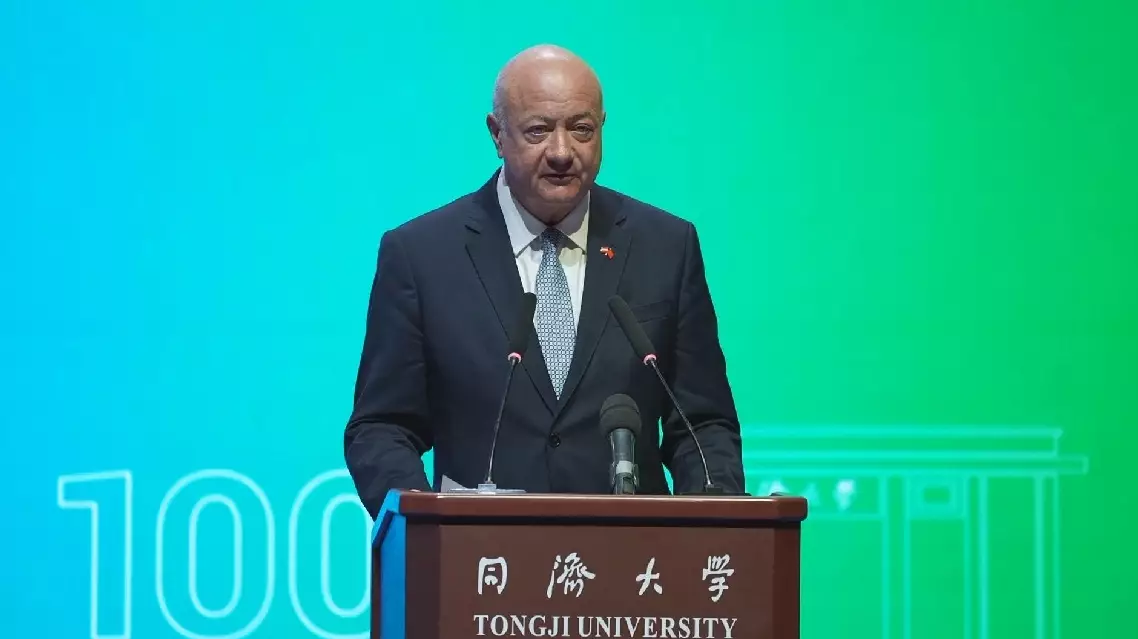
Austrian Chancellor Christian Stocker visited Tongji University in Shanghai on Wednesday, before attending the opening ceremony of the ninth China International Import Expo (CIIE) in the city on Thursday.
Stocker is paying an official visit to China until Saturday at the invitation of Chinese Premier Li Qiang.
While delivering a speech at the Tongji University, he put scientific research and higher education cooperation in the spotlight.
"Austria and China will build the future together, bringing mutual benefits to both countries. This requires courage, confidence and long-term commitment," said the Austrian chancellor, noting that Austria will be a trustworthy partner to China in opening a new chapter for cooperation.
At a panel discussion, participants from both countries discussed the future of science and engineering.
Recent exchanges between the Tongji University and Austrian universities focused on joint research, student mobility and the growing role of artificial intelligence in engineering education.
"This year marks the 55th anniversary of [the establishment of] diplomatic ties between China and Austria, and 100 years [the 100th year] since Professor Hans List began teaching at the Tongji University. These two milestones invite us to look back at history. The longstanding friendship between Chinese and Austrian engineers is a vivid example of China's openness to the world," said Wan Gang, honorary president of the China Association for Science and Technology.
In 1926, Hans List began teaching at the Tongji University, helping train China's first generation of internal combustion engine specialists. A century later, his family donated historical archives and a statue of him to the university.
There has been close cooperation between the Tongji University and AVL List GmbH, which was founded by Hans List and is one of the world's leading mobility technology companies for engineering, simulation, and testing in the automotive industry.
A century ago, Austria brought some of its most advanced engineering technologies to China. Today, the two countries are building on that legacy, strengthening their friendship and partnership, and driving a new wave of innovation together.
Austrian chancellor visits Tongji University in Shanghai
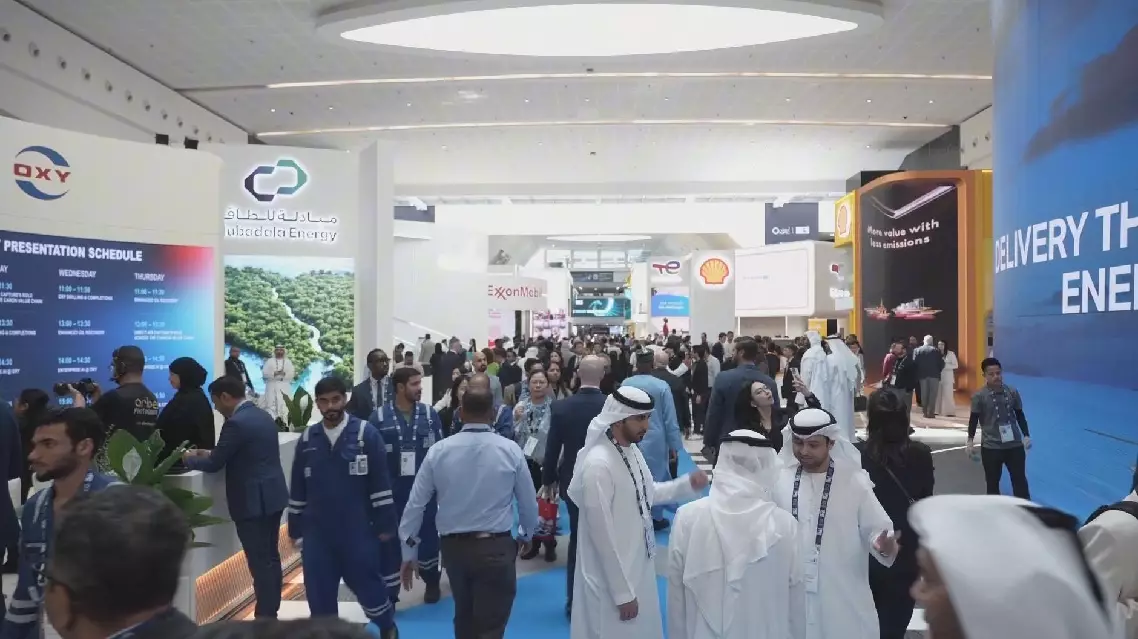
The Abu Dhabi International Petroleum Exhibition and Conference (ADIPEC) 2026 opened Monday in the United Arab Emirates capital, aimed at tackling energy security and supply chain resilience following months of Strait of Hormuz shipping disruptions.
Running through Thursday, this year's edition is the largest in its history, drawing more than 2,250 companies from around the world to showcase their latest innovations, technologies and solutions driving the energy transition.
It is also taking place against the backdrop of unprecedented turmoil in global energy logistics. Since U.S.-Israeli military operations against Iran began in late February, traffic through the Strait of Hormuz -- the strategic waterway through which roughly one-fifth of global oil and liquefied natural gas normally passes -- has been severely constrained.
Amid the uncertainties, ADIPEC 2026 has brought together government officials, industry heavyweights, investors and technology leaders worldwide to advance the decisions, projects and partnerships that will expand global supply, strengthen competitiveness, and shape the next era of energy.
Khamis Al Mazrouei, CEO of Sharjah National Oil Corporation in the UAE, said ADIPEC provides global energy companies with an opportunity to exchange experience, assess the current situation, and jointly address common challenges.
"This exhibition, it's the summit for the whole industry and always it comes with a topic that is relevant for the existing situation and it [carries] foresight for the future. For example, this year talks about resilience because of this energy crisis and the disruption of supply. So, we are here to talk and discuss options and the strategies that reduce the disruption and improve resilience [for] the future. At the same time, it gives you foresight of the future," he said.
Al Mazrouei said his company is building an energy pipeline corridor to ports on the Gulf of Oman, bypassing the Strait of Hormuz to enable direct crude and fuel exports to the Indian Ocean.
"We are offering or working to offer an energy corridor that bypasses the Strait of Hormuz, so we can offload energy products through a corridor of a pipeline and get it to the customers. This is one of the offering we are offering or would like to be happy to offer to customers across the world on how we can reduce the risk of closure of Strait of Hormuz," he said.
Launch in 1984, ADIPEC has now grown into the largest and most influential professional exhibition in the Middle East.
Middle East's premier energy exhibition opens in Abu Dhabi, focusing on supply chain resilience