China's artificial intelligence (AI) industry is scaling new heights, driven by explosive enterprise adoption and a booming embodied intelligence sector, according to an industry report released on Wednesday.
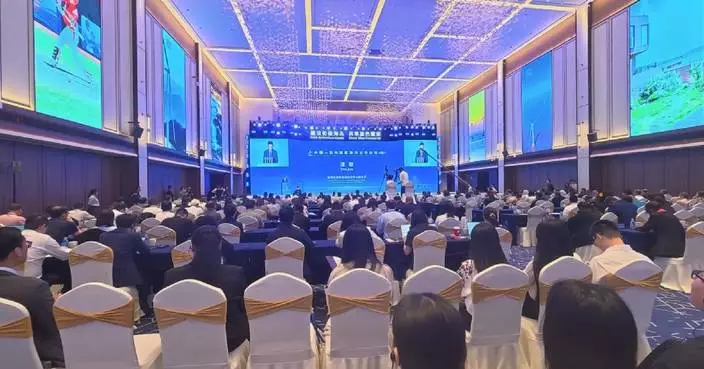
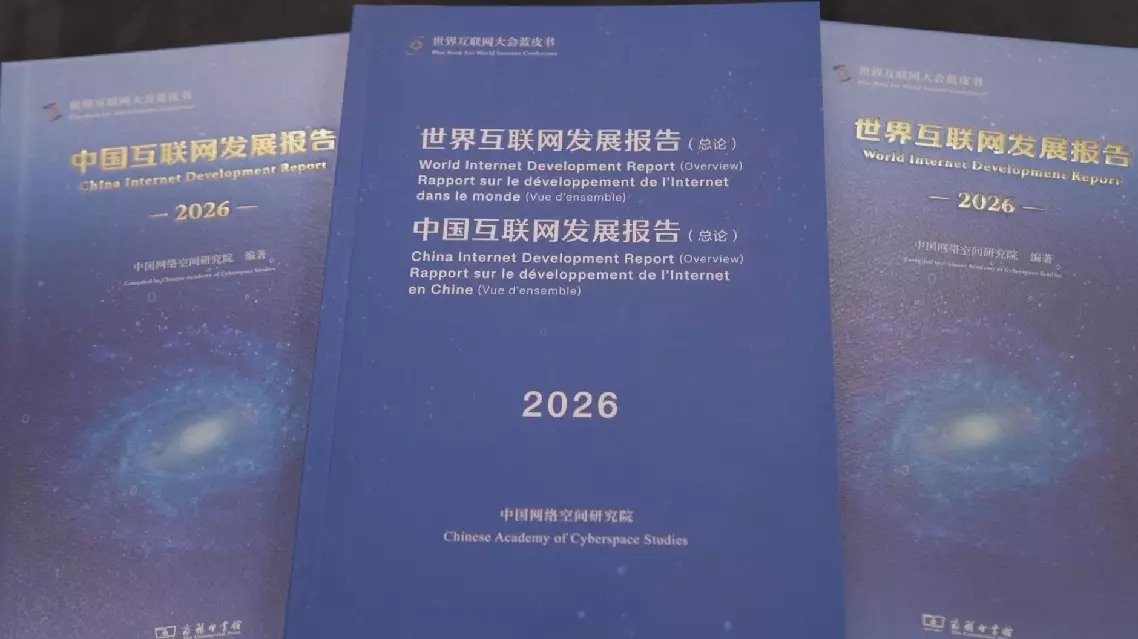
China's embodied intelligence market was worth approximately 915 billion yuan (around 137.13 billion U.S. dollars) in 2025, up 20.4 percent year on year, according to the China Internet Development Report 2026 released by the Chinese Academy of Cyberspace Studies at the ongoing 2026 World Internet Conference (WIC) Wuzhen Summit in Wuzhen, east China's Zhejiang Province.
The report noted that China's AI agent market had expanded swiftly, with the country's enterprise AI agent market reaching 21.2 billion yuan (3.18 billion U.S. dollars) in 2025.
By June 2026, a total of 924 generative AI services had completed official filings, alongside 573 generative AI applications or functional registrations, the report said.
Driven by widespread adoption, China's daily average token call volume skyrocketed to 140 trillion in March 2026, marking a more than 1,000-fold increase over a two-year span, according to the report.
The report also noted that China's external exchanges and cooperation in cyberspace have deepened, earning broad international alignment and amplifying its global influence and leadership in digital governance.
Commenting on these trends, Chen Baihui, vice chairman of the WIC E-commerce Specialized Committee, emphasized the transformative power of openness, citing the theme of the summit "Open Source and Openness, Joint Contribution and Shared Benefits -- Jointly Building a Community with a Shared Future in Cyberspace."
"'Open Source and Openness' lowers technological barriers and usage costs, enabling small and medium-sized enterprises in developing countries to access and afford AI. 'Joint Contribution and Shared Benefits' promote communication in data protection, human resources development, and regulatory coordination, reducing friction costs in cross-border applications. 'Open Source and Openness, Joint Contribution and Shared Benefits' are not just technical philosophies, but critical opportunities to narrow the digital divide and help developing countries boost productivity and integrate into the global digital economy," Chen said.
The Chinese Academy of Cyberspace Studies also issued the World Internet Development Report 2026 on the same day, highlighting rapid advances in AI technology worldwide.
A new wave of scientific and industrial revolution is accelerating, with global AI transitioning from quantitative accumulation to qualitative leaps while expanding deeper into the physical world and scientific research, said the report, projecting that AI will contribute 22.3 trillion U.S. dollars to the global economy by 2030, accounting for 3.7 percent of global GDP that year.
Meanwhile, the report also warned that regional imbalances are intensifying, with AI developments inadvertently widening the digital divide and creating a new "intelligence gap" among countries.
Addressing these global governance challenges, Cyrus Hodes, co-founder of AI Safety Connect, highly commented on China's proactive approach to international collaboration and guardrails.
"China is calling for global governance mechanism, China is calling for regulation, China is implementing regulations. So, really, China is leading the way there and China is open to have a global discussion there. So, I'm hoping that other countries will listen to that call, will sit at the table and will look at cooperation mechanism toward the development and deployment of this AI systems. So, capacity building is not only to teach the rest of the world how you can use this system, but also to bring safety guardrails and safety education around that," he said.
The two reports have been released annually since 2017 as outcomes of the WIC Wuzhen Summit.
The 2026 summit has gathered roughly 1,800 delegates from 138 countries and regions as openness and shared innovation will remain the central theme. The event runs through Thursday. The WIC was established as an international organization headquartered in Beijing in 2022.
China's AI industry scales new heights amid tech boom: report