The mass influx of migrants into Spain's North African enclave of Ceuta has reversed just as quickly, with tens of thousands who crossed the border now returning to Morocco.
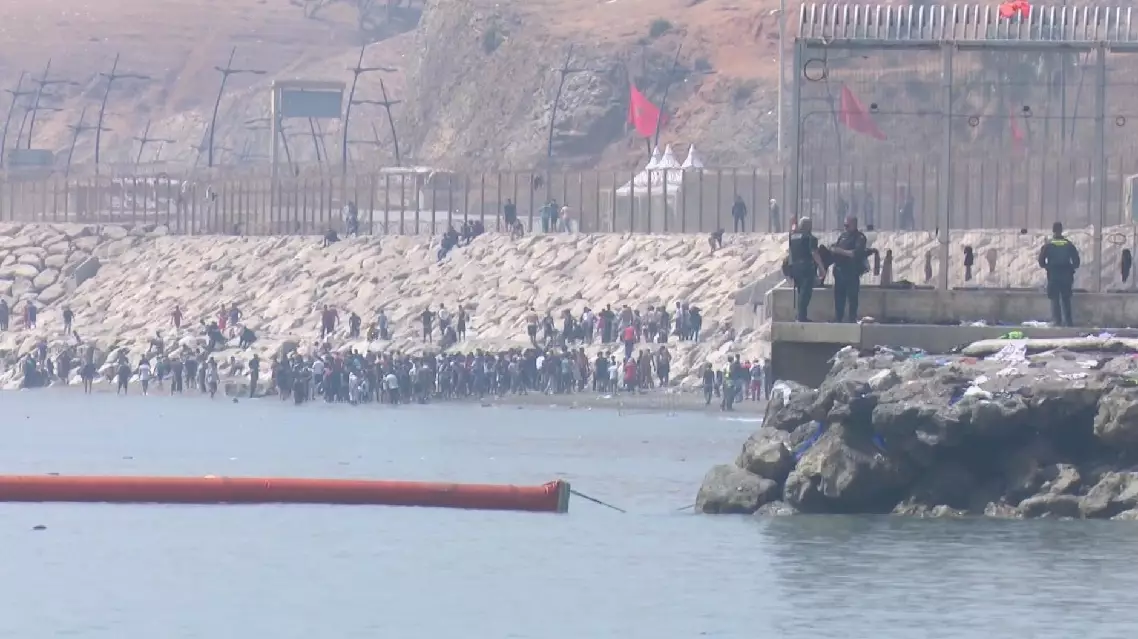
At the Tarajal border crossing, hundreds pass by every few minutes. The initial joy of reaching European soil through the border has given way to despair. Dozens have lost their lives.
The latest influx saw more than 50,000 undocumented migrants enter Ceuta, many by swimming around the Tarajal border crossing or using makeshift flotation devices. At least 67 people died during the crossings, with the death toll expected to rise as search and recovery operations continue.
Iman is injured, and she lost daughters in the chaos swimming at sea.
"I'm here with my son, but I don't know where my daughters are, their names are Aya and Malak, I don't know where they are," Iman cried.
By Aug. 1, more than 48,000 migrants had returned to Morocco. None were allowed to travel onward to mainland Spain under Ceuta's special Schengen arrangements, and authorities said the immediate pressure at the border had largely eased.
Spain has since reinforced security by installing a new floating maritime barrier along Ceuta's breakwater. The 500-meter inflatable barrier is designed to prevent migrants from bypassing land border controls by sea.
At the same time, Madrid and Rabat have intensified cooperation on returns and law enforcement while stepping up efforts against migrant-smuggling networks.
Moroccan authorities said they had arrested 70 people suspected of organizing or participating in violence linked to the mass crossing.
Ceuta is one of Spain's two exclaves on the North African coast, alongside Melilla. Although geographically located in Africa, it forms part of the EU's external border. Its location has long made it one of Europe's most sensitive migration gateways. For years, undocumented migrants have attempted to reach the enclave by climbing border fences or swimming around coastal barriers before trying to continue to mainland Spain and other parts of Europe.
Spain and Morocco have expanded cooperation in recent years on border control, migrant returns and efforts to combat human trafficking and smuggling networks.
Mass migrant influx to Ceuta turns into swift exodus back to Morocco