Maryland lawmakers will kick off a special session Monday to consider a first step in a partisan redistricting initiative that could help Democrats pick up an additional U.S. House seat by 2028.
The General Assembly will begin debate on a proposed constitutional amendment intended to give Democrats greater latitude to draw congressional maps favoring their party, which currently represents seven of the state's eight House districts. The proposal would have to be approved by voters before lawmakers could begin considering new district lines.
Deep blue Maryland’s move, which the state's minority Republicans have called a blatant power grab, is the latest turn in the national battle over redistricting, which kicked off a year ago and has reshaped the U.S. House map ahead of this year’s midterms.
Democratic state Senate President Bill Ferguson blocked a different redistricting initiative earlier this year that could have put new maps in place before the fall elections, worried the move could backfire upon judicial review. But he has said his views shifted after the U.S. Supreme Court weakened the Voting Rights Act in late April. That decision offered new grounds for Republicans to swiftly reconfigure districts in Southern states with large minority populations that have elected Democrats, moves that Ferguson called “painful” to watch.
“It felt like the unwinding of any type of democratic norms in the blink of an eye,” Ferguson said in an interview.
Maryland's lone Republican representative in Congress is Rep. Andy Harris, chairperson of the House Freedom Caucus. Harris' 1st District is centered on the mostly rural Eastern Shore, part of a scenic peninsula separated from the rest of the state by the Chesapeake Bay.
In 2021, lawmakers tried to remake the maps in a way that made Harris' district more competitive for a Democrat to win, drawing in communities across the bay. But a judge struck down those districts in 2022, calling them a “product of extreme partisan gerrymandering.”
In light of that decision and in hopes of avoiding future adverse legal rulings, lawmakers will consider legislation to amend the state constitution to make clear that the parameters the judge cited — including that districts be compact in form and have regard given to “natural boundaries” — apply only to General Assembly districts, not congressional ones.
If approved by a three-fifths vote of both chambers, the amendment would go before voters in the Nov. 3 general election. If approved there, lawmakers could revisit the congressional maps for the 2028 election cycle under the constitution’s new guidance.
In advance of the special session, Republicans criticized the move by Democrats and raised concerns about limits set on testimony for the special session.
“We are very concerned with the significant limitations on witnesses, and the reality that any bill hearing is obviously intended to be a brief and meaningless formality,” House Minority Leader Jason Buckel said in a statement.
Harris, in an interview, said the “gerrymandering that this constitutional amendment sets up” would break up areas of common interest into districts predominated by urban and suburban areas, disenfranchising rural voters. Such a move would “of course” face a court challenge, he said.
Gov. Wes Moore, a Democrat who has expressed frustration over lawmakers' refusal to redistrict earlier this year, cast the move as an urgent necessity in light of Republican moves elsewhere. The proposal currently before lawmakers will ultimately give voters, not “party bosses” the final say, he said.
“And if the people determine that there’s nothing to do, then there’s nothing to do. But if the people determine that we move, we move,” he said in an interview as he became chair of the National Governors Association.
Maryland’s special session is part of a new phase in a national redistricting battle that began a year ago, when President Donald Trump urged Republican-led states to redraw congressional districts to help the party hold on to its slim House majority in the midterm elections. Republicans think they could win as many as 16 additional seats from new House maps enacted in eight states — Texas, Missouri, North Carolina, Ohio, Florida, Tennessee, Louisiana and Alabama. Democrats, whose counterattack faced several setbacks, think they could win up to six additional seats from new districts in California and Utah.
Now some states, such as Maryland and New York, are taking steps to redraw congressional districts ahead of the 2028 elections. New York’s Democratic-led Legislature has approved a proposed constitutional amendment to authorize mid-decade redistricting, repeal prohibitions on partisan gerrymandering and make it easier for lawmakers to bypass an independent redistricting commission in the future. The measure needs another round of legislative approval next year before it can appear on a statewide ballot.
Associated Press reporters David A. Lieb in Jefferson City, Missouri, and Steven Sloan in Oklahoma City contributed to this report.
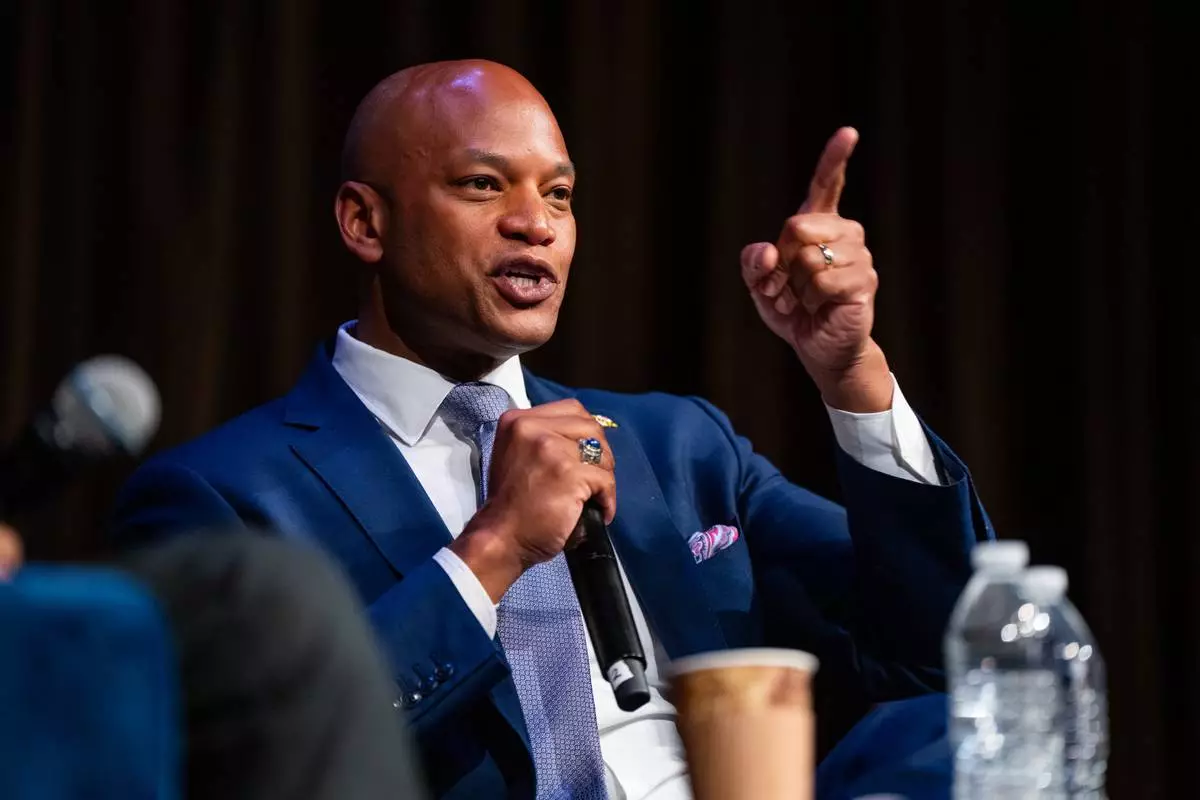
FILE - Wes Moore, governor of Maryland, speaks during the National Action Network (NAN) Convention in New York, April 9, 2026. (AP Photo/Angelina Katsanis, File)
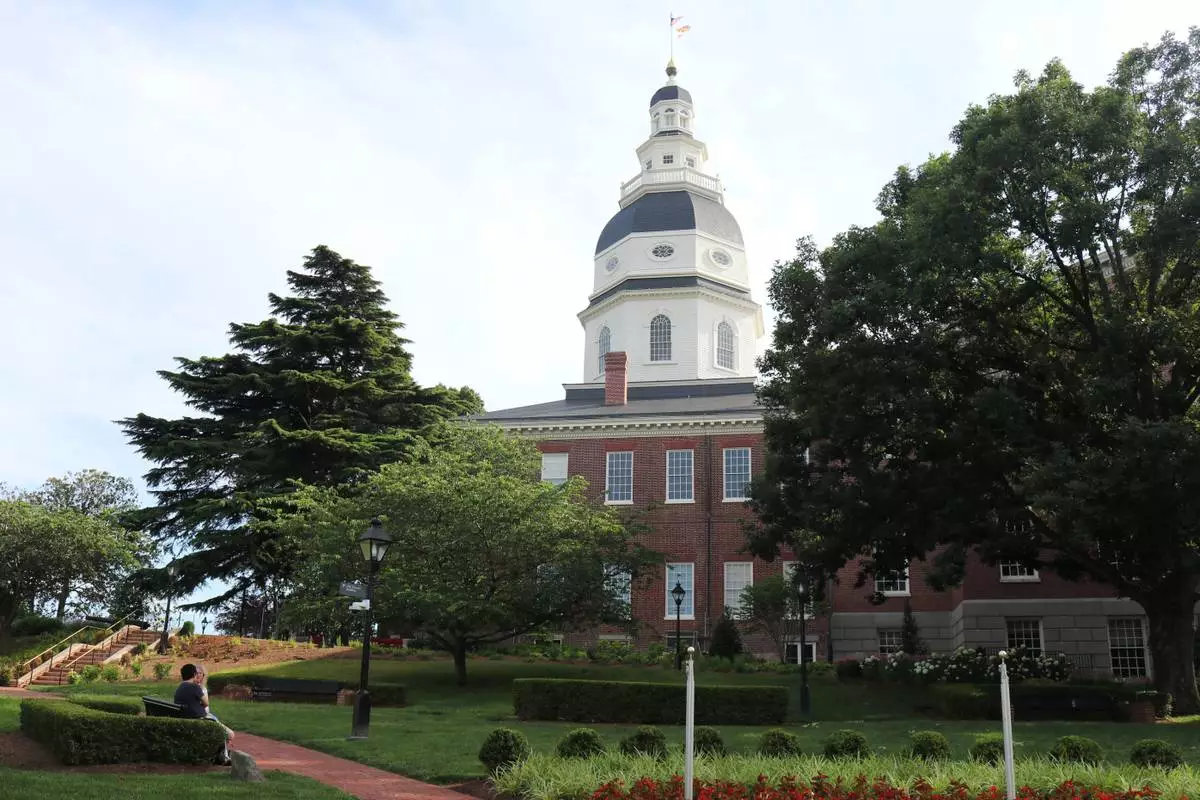
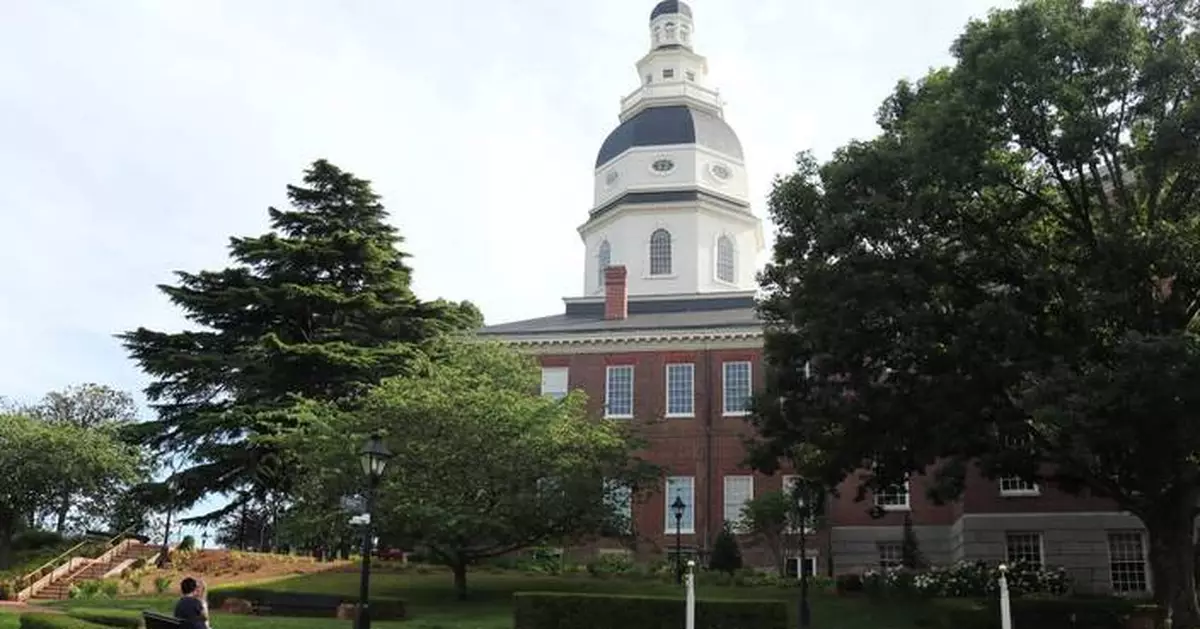
FILE - The Maryland State House in Annapolis, Md., June 13, 2026. (AP Photo/Robert Yoon, File)
WASHINGTON (AP) — Acting Attorney General Todd Blanche issued a formal order late Sunday terminating President Donald Trump’s $1.8 billion “anti-weaponization fund” to compensate his political allies, a move that follows weeks of negotiations with two Republican senators who were blocking his nomination to become attorney general.
A spokeswoman for Texas Sen. John Cornyn, one of the senators holding up Blanche’s nomination, confirmed the deal, which comes ahead of a Tuesday confirmation vote for Blanche’s nomination in the Senate Judiciary Committee. The other GOP senator, North Carolina Sen. Thom Tillis, did not have immediate comment.
Blanche said at a June hearing that the fund would not move forward amid bipartisan outrage over the possibility that those considered for payouts could include violent rioters who attacked police at the U.S. Capitol on Jan. 6, 2021. But Cornyn and Tillis, both members of the Judiciary panel, have said they wanted to see the promise in writing before they endorsed Blanche's nomination — especially as Trump continued to express support for the idea.
In a statement, Blanche said the order came after “good faith discussions.”
“My team and I have met with committee members and Senators over the past several weeks and addressed any concerns or outstanding questions," Blanche said.
In a statement accompanying the order, the Justice Department said that “although the Acting Attorney General has repeatedly advised Congress through testimony, including under oath, as well as in written responses, that the Fund is not moving forward, and the Department has repeatedly represented to district courts that the Fund is not moving forward, today’s Order officially rescinds the May 18, 2026 Order.”
Since the settlement of the president's lawsuit against the IRS was announced, “No Members were appointed; no funds were transferred; no process for receiving claims was established; no claims were paid,” the order says. “This order establishes, beyond any doubt, that there is no Fund.”
The document released by Blanche on Sunday night also limits the scope of another provision of the settlement that provided broad immunity for Trump and members of his family from tax audits.
The deal clarifies that the tax audit immunity agreement “applies only retroactively” to claims open at the time of the settlement and does not protect the president from examination of future tax filings.
Cornyn, who lost reelection this year after Trump endorsed his primary opponent, and Tillis, who is retiring when his term ends in January, have blocked Blanche's nomination as many of their GOP colleagues have criticized the fund.
The Judiciary Committee postponed a vote on Blanche’s nomination that had been scheduled for Thursday morning after Tillis and Cornyn said they needed more from the administration before they could provide the necessary votes.
The two senators have repeatedly said the Justice Department seemed interested in reaching an agreement, but the White House wouldn’t budge even to aid the confirmation of Trump’s loyal former personal attorney, who has aggressively pursued the administration’s priorities as acting attorney general.
“I think as far as Blanche and the Department of Justice, we were pretty much on the same page,” Cornyn said Thursday. “But then when the president got wind of it, he wasn’t willing to go along with it.”
Blanche, who served as Trump’s defense lawyer in his criminal cases, entered the Justice Department last year as deputy attorney general. He was elevated to the top post after Pam Bondi was fired in April by Trump, who was frustrated by her failure to successfully prosecute his political enemies.
Though Blanche insisted he wasn’t auditioning for the permanent job, he has moved aggressively to pursue the Trump administration’s agenda and accelerate investigations into the president’s perceived foes.
The two sides have been negotiating for weeks, but Trump has said repeatedly during the talks that he thinks the fund should go forward and threatened to move forward with it if Blanche was not confirmed.
After the Thursday vote was delayed, Trump said in a social media post that he might pull Blanche’s nomination and resubmit it after Cornyn and Tillis leave office next year.
On Sunday evening, Trump said that people who had faced charges from the Jan. 6, 2021, attack on the Capitol and could have benefitted from the fund had “their lives destroyed.”
“This would be a reimbursement for the pain that they suffered,” Trump said. “A lot of people like it.”
On Friday, Trump’s attorneys notified a court they would appeal a judge’s scathing ruling that characterized the settlement of the president’s lawsuit against the IRS as an improper exercise in self-dealing. The judge in her order last month referred one of Trump’s attorneys for potential disciplinary action and criticized Blanche’s involvement in the settlement, given his prior representation of Trump.
Blanche has said he disagrees “with the judge’s insinuations” about him. Justice Department lawyers had previously written in court papers that the fund was not moving forward but they refused a judge’s request to have Blanche and other administration officials file a declaration under penalty of perjury that the administration would not take any further action to create the fund.
The Justice Department said the court’s demands were “unnecessary.”
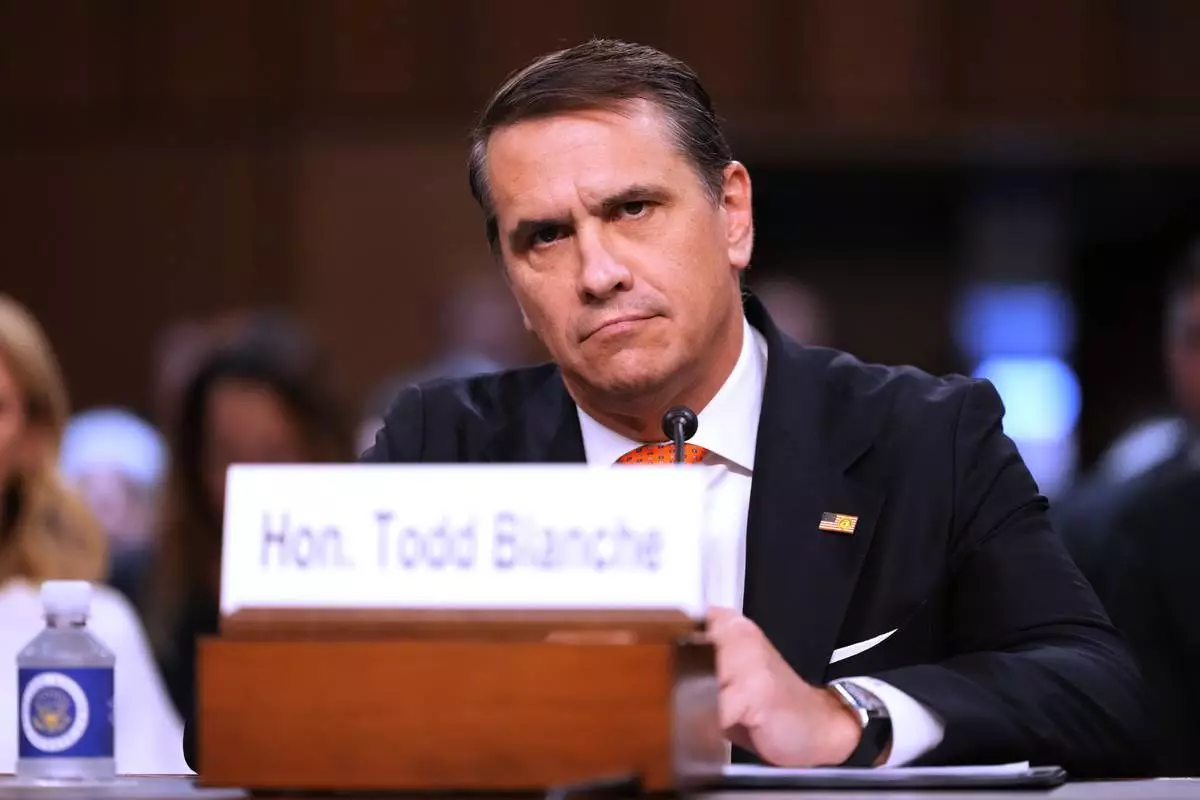
FILE - Acting Attorney General Todd Blanche appears before the Senate Judiciary Committee on Capitol Hill in Washington, July 15, 2026. (AP Photo/Mark Schiefelbein, File)