The central parity rate of the Chinese currency renminbi, or the yuan, weakened 4 pips to 6.7898 against the U.S. dollar Monday, according to the China Foreign Exchange Trade System.
In China's spot foreign exchange market, the yuan is allowed to rise or fall by 2 percent from the central parity rate each trading day.
The central parity rate of the yuan against the U.S. dollar is based on a weighted average of prices offered by market makers before the opening of the interbank market each business day.
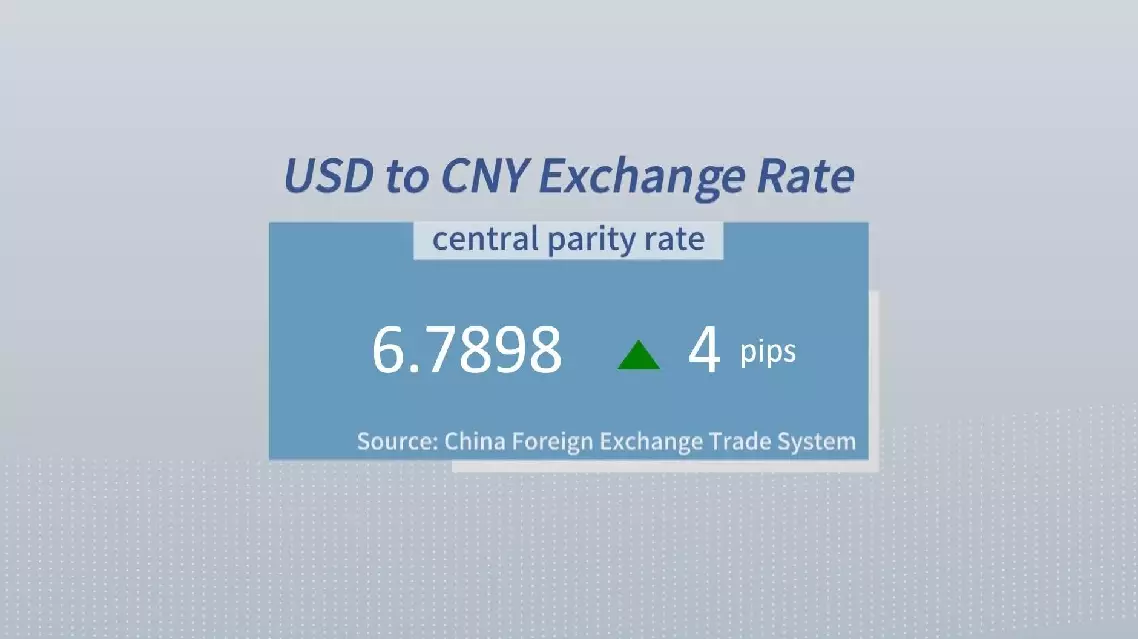
Chinese yuan weakens to 6.7898 against USD Monday
As floodwaters from Typhoon Maysak receded, the jasmine fields of China's "jasmine capital" Hengzhou in Guangxi Zhuang Autonomous Region sprang back to life, with the local flower market welcoming its peak buying season.
In early July, the typhoon drenched the region with storm and flood, inundating nearly 60 percent of Hengzhou's jasmine plantations, totaling around 100,000 mu (about 6,700 hectares).
Government relief and company support have spurred a swift recovery, with farmers once again hauling freshly picked jasmine blossoms into Hengzhou's Shijing trading market.
The current harvest is the first post-disaster flush from the less-damaged fields. Though yields are lower, having flowers to sell cheered local farmers up.
"My home was flooded for around four or five days. The government helped, and the whole jasmine chain has been rebuilt by now," said farmer Li Yeji.
As the jasmine market entered its peak procurement window, tight supply drove prices to 82 yuan (about 12 U.S. dollars) per kilogram, which is twice the usual rate.
"If growers see plenty of tea companies still buying, it gives them a real boost," said Chen Hongfei, marketing director at a local agritech firm.
"We can get through this. At these prices, we are definitely happy," local farmer Zhou Ailian went straight forward.
From the business side, tea merchant Lin Yongjian, who has worked in Hengzhou for years, saw his daily flower intake plunge to 30 percent of normal levels. He has juggled production schedules to fulfill orders while paying more to reassure growers.
"We raised prices early on to restore growers' confidence, and handed out free medicine and fertilizer to affected farmers. We are doing everything to help them recover and improve flower quality," he said.
With more farmers back in the fields, the daily trading volume at the Hengzhou jasmine market has climbed to roughly 400,000 kilograms.
"The new-style tea beverage industry currently has a large jasmine demand. As the weather improves and temperatures rise, we are fully confident about the jasmine production ahead," said Luo Yuzhen, head of the local flower tea association.
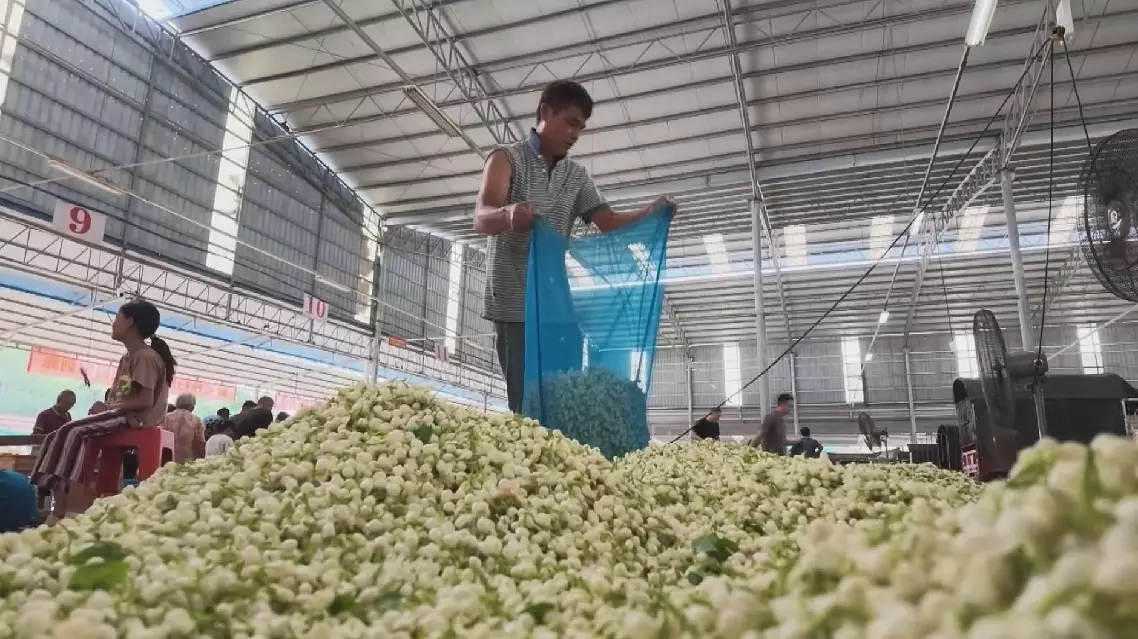
Typhoon‑hit jasmine industry in Guangxi rebounds as farmers return to fields
Typhoon‑hit jasmine industry in Guangxi rebounds as farmers return to fields