Skip to Content Facebook Feature Image

China's inclusive agriculture lending rises 7.55 pct by end-June

China

China

China

China's inclusive agriculture lending rises 7.55 pct by end-June

2026-08-03 16:02 Last Updated At:16:37

China's banks expanded credit support for rural industries and households in the first half of the year, as borrowing costs declined and local governments introduced new measures to support sectors including marine aquaculture.

Outstanding inclusive agriculture-related loans stood at 14.99 trillion yuan, or more than 2.2 trillion U.S. dollars, at the end of June, up 7.55 percent from a year earlier, data from the National Financial Regulatory Administration showed.

The average interest rate on newly issued loans in the category was 4.02 percent in the first half, down 0.36 percentage points from a year earlier.

Agricultural Bank of China said its outstanding loans to rural industries rose 18.1 percent in the first half as it expanded financing for locally distinctive industries.

China Development Bank issued 25.9 billion yuan, or about 3.8 billion U.S. dollars, in agricultural loans in the first half, up 111 percent from a year earlier. The policy bank focused on high-standard farmland, modern agricultural facilities and state farms, aiming to strengthen agricultural production capacity and improve efficiency.

At the provincial level, authorities in south China's Guangdong Province and the east China provinces of Fujian and Shandong have introduced policies this year to expand financial support for marine ranching and the broader marine economy, including aquaculture.

"We have introduced a targeted 20-point policy on marine finance and 10 measures for marine ranching to address a range of issues, including obstacles to financing and registration, as well as the sector's specialized requirements," said Cao Guangqun, deputy director-general of the Guangdong financial regulatory authority.

The National Financial Regulatory Administration has called on large and medium-sized banks to expand agricultural supply-chain finance, reach more first-time borrowers and, in line with regulations, provide greater support for loan extensions and renewals for agriculture-related businesses and rural households.

China's inclusive agriculture lending rises 7.55 pct by end-June

China's inclusive agriculture lending rises 7.55 pct by end-June

China's inclusive agriculture lending rises 7.55 pct by end-June

China's inclusive agriculture lending rises 7.55 pct by end-June

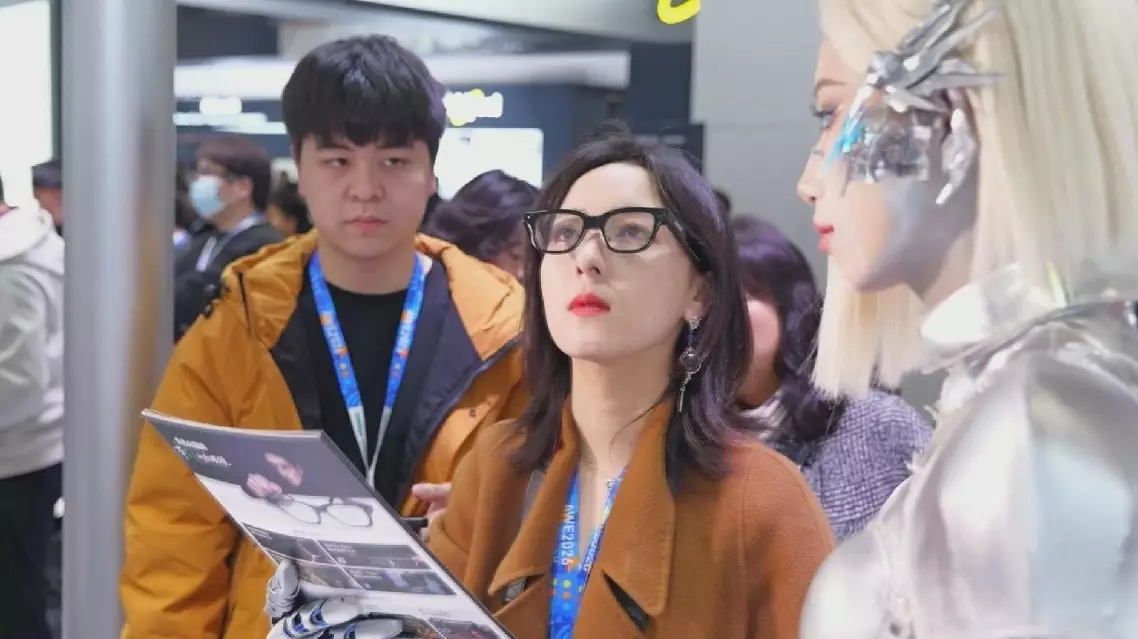
Chinese artificial intelligence (AI) smart‑glasses are breaking into the global mainstream, reshaping how consumers interact with AI in daily life and signaling the country's growing edge in wearable AI hardware.

China shipped 2.46 million smart glasses in 2025, up 87.1 percent year on year. Chinese brands accounted for 23 percent of global shipments, according to International Data Corporation (IDC).

Industry leaders see the surge as more than numbers, with Rokid's founder predicting smart glasses will become the defining AI device for everyday users.

"Smart glasses or AI glasses will be the most popular AI terminal devices to the end user in the AI era. So, I think it's going to get more popular, so maybe in the coming three to five years everybody will put AI glasses on," said Zhu Mingming, founder and CEO of Rokid, a Hangzhou-based technology company specializing in Augmented Reality(AR)and AI hardware.

The rise of multimodal AI is giving smart glasses new momentum. They have become tools for translation, navigation, note-taking, photography, entertainment, and even real-time assistance.

And in scenarios that demand richer visual experiences, AR glasses or AI-powered AR glasses are becoming portals for work, entertainment, communication, and spatial computing.

"This product is our current high-end Xreal One Pro series, and below it there is the Xreal One S. Both products are based on our self-developed optical engine technology and also incorporate the spatial computing chip we just mentioned," said Yang Shiqi, marketing director of Xreal.

China's smart-glasses industry has built a strong hardware foundation, with lighter designs and AI now standard. The diversity of smart glasses is shaping the future of the industry, according to a tech influencer.

"There are like XR glasses, AR glasses, AI glasses, MR (Mixed Reality) glasses. So these are completely different types of glasses and I will use them in different scenarios. I think AI definitely pushed a lot of buttons for a lot of brands, that's the future," said Wang Hongcheng, a tech influencer.

Chinese tech firms push smart‑glasses worldwide, reshaping consumer AI experience

Chinese tech firms push smart‑glasses worldwide, reshaping consumer AI experience

Recommended Articles