The Hong Kong Exchanges and Clearing Limited (HKEX) officially launched five-year renminbi (RMB) treasury bond futures on Monday.
As the only treasury bond futures available in the offshore market, the product is designed to meet the growing demand from overseas investors for interest rate risk management and trading.
The launch marks an important step in advancing Hong Kong's role as an offshore RMB business hub and risk management center.
HKEX launches 5-year RMB treasury bond futures
HKEX launches 5-year RMB treasury bond futures
Sweltering summer heat, dwindling rainfall and aging irrigation facilities have left vast farmlands parched across Syria, further straining agricultural production amid fuel and power shortages that have crippled timely crop watering.
The Food and Agriculture Organization of the United Nations noted that the persistent drought has seriously affected agricultural production and food security in Syria.
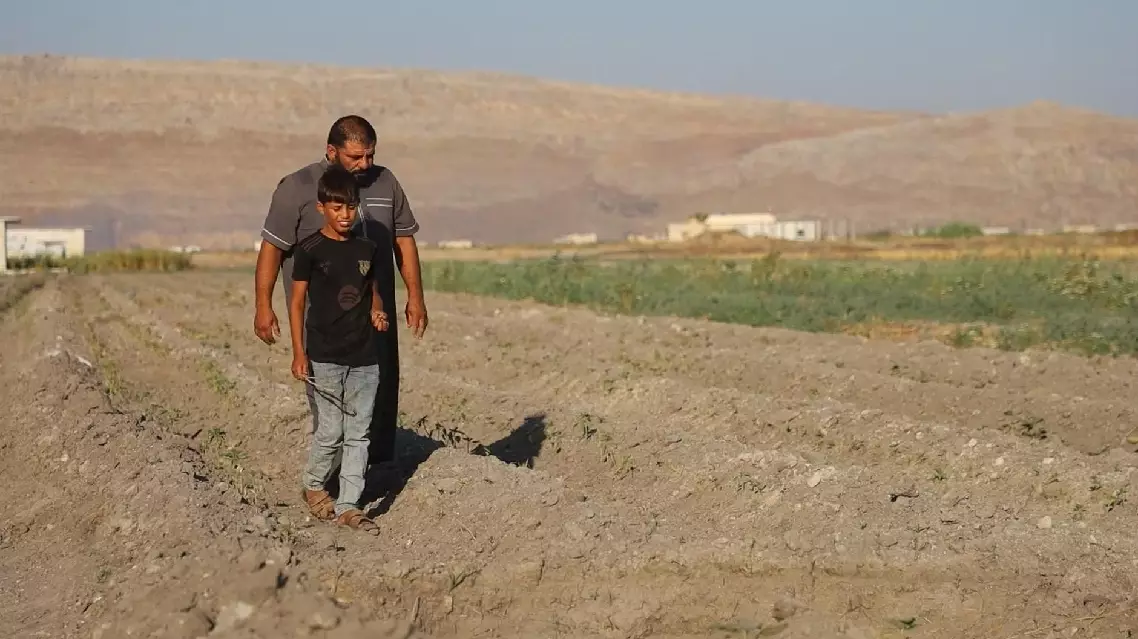
Northwest Syria's Idlib Governorate has seen vast stretches of land lose their former greenery.
Irrigation canals are nearly dry, exposing cracked soil, while crops have turned yellow and withered from water shortages.
Idlib Governorate was once one of Syria's key agricultural production areas, where rivers and multiple dams were used for irrigation, with wheat, cotton, sugar beets and olives among the main crops.
In recent years, the constant war has damaged a large number of water infrastructure facilities, while extreme heat and reduced rainfall have further aggravated the agricultural crisis.
"Our land is desertified. The harvest this year is not good, and the land is barren. As you can see, there is no water, not even drinking water. In the past, dams used to supply water to farmland, but now there is no water. The irrigation facilities have been destroyed and the land has become desert," said Ahmad Jamil Abbas, a local farmer.
Al-Ghab Plain in Idlib was once one of Syria's key grain-producing areas, but today, farmers are struggling to sustain production.
"In the past, water was delivered to our land to irrigate farmland through canals from Rastan Dam, Mahardah Dam and Al-Ashary canal. However, after the irrigation water was cut off, farmers in Al-Ghab area began to suffer from drought, and the land became desert. This used to be one of the best agricultural areas. Last year, I relied on wells for irrigating my land, but the cost was too high to recover," said Nasir Hussein, another local farmer.
Agriculture is a key pillar of Syria's economy, with millions of people relying on farming for their livelihoods.
However, data from the United Nations show that currently only about 40 percent of Syria's farmland is under normal cultivation, with Idlib and Aleppo among the regions hardest hit by drought.
Heat, drought, aging facilities compound Syria's agricultural woes