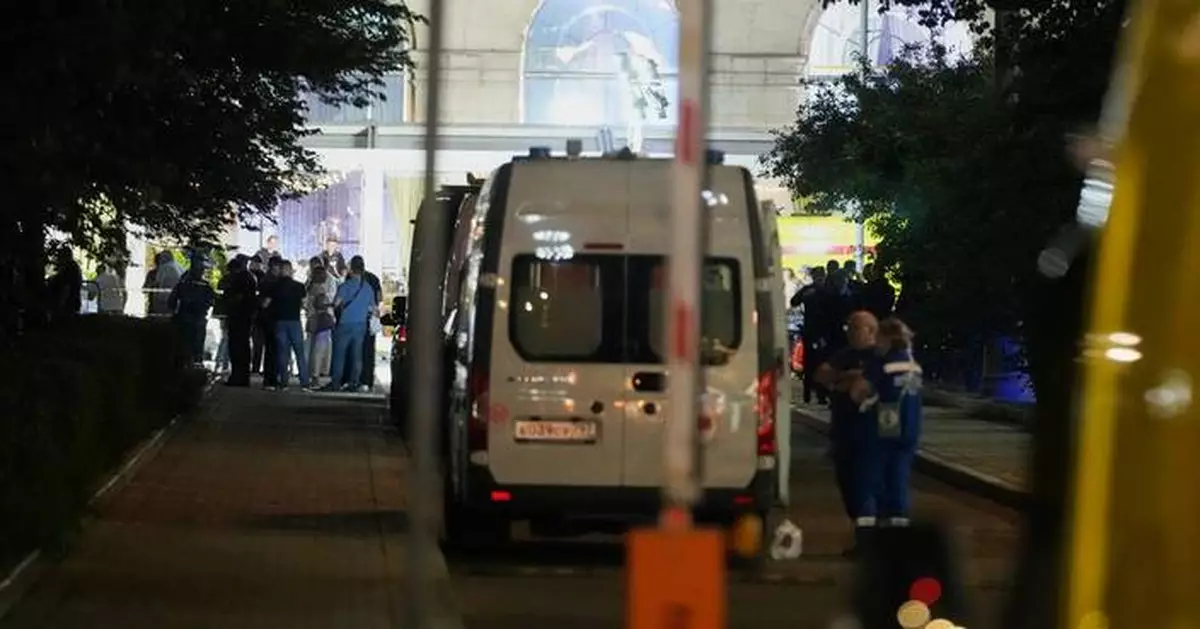
MOSCOW (AP) — The Russian Embassy in Rome on Monday blamed Ukraine for a deadly weekend bombing at a Moscow restaurant, describing it as an attempt to intimidate the Italian community in Russia.
The embassy said “Kyiv terrorists” wanted to “scare the Italians working in Russia and to show them that they too are in the crosshairs and could become the scoundrels' next victims.”
It said the Saturday night attack on the Balzi Rossi restaurant killed five and injured 19, adding that its Italian chef and his staff were unhurt only thanks to a Russian security guard's “vigilance and selfless dedication to his professional duty.”
There was no immediate comment from Ukrainian authorities.
The National Anti-Terrorism Committee, which coordinates various security agencies, initially reported a lower death toll in a statement issued shortly after the attack. It said the bomb killed three people, including a woman who carried the explosive device into the restaurant, a guard who stopped her, and a guest inside. It said 21 others were injured when the bomb detonated near the restaurant's entrance.
The committee didn’t say who was the target or name the mastermind.
Moscow Mayor Sergei Sobyanin on Sunday described the bombing as a “brutal terrorist act,” but did not say who was responsible for the blast at the upscale restaurant, which is located on the ground floor of a high-rise apartment building that is one of seven skyscrapers in the city that date to the era of Soviet dictator Josef Stalin.
The Russian Foreign Ministry reposted the embassy statement without comment. It did not respond to a request for comment or explain the higher death toll.
Several Russian media outlets claimed the bombing targeted a Russian general who was celebrating his birthday at the restaurant. Some claimed that the general was Col.-Gen. Alexander Chaiko, who led the troops that made a botched attempt to storm the Ukrainian capital in 2022 and recently was appointed the chief of Russia's aerospace forces. The claims could not be independently verified.
The business daily Kommersant reported that the bomb, hidden in a gift box, was probably detonated remotely and the woman carrying it could have been unaware of the content. Kommersant said the bomb contained about 1 kilogram (2.2 pounds) of explosives and contained metal balls for lethality.
Russian authorities have blamed Kyiv for a series of bombings and other attacks against senior military officials after Moscow sent troops into Ukraine in February 2022. Earlier this year, Russia’s Federal Security Service said authorities would tighten security around senior military and government officials following the attacks.
In February, Lt. Gen. Vladimir Alexeyev, the deputy head of the GRU military intelligence service, was shot three times at a Moscow apartment building, but survived. Ukraine denied its involvement.
In December, a car bomb killed Lt. Gen. Fanil Sarvarov, head of the Operational Training Directorate of the Russian Armed Forces’ General Staff, in southern Moscow. Ukraine refrained from comment.
In April 2025, another car bomb that Moscow blamed on Kyiv killed Lt. Gen. Yaroslav Moskalik, a deputy head of the main operational department in Russia’s General Staff. Ukraine didn't claim the attack but hinted at its involvement.
And in December 2024, a bomb hidden in a scooter killed Lt. Gen. Igor Kirillov, who headed the Russian military’s nuclear, biological and chemical protection forces, one of the few attacks Ukraine openly acknowledged.
Among other prominent victims of bombing attacks in Russia were Daria Dugina, the daughter of influential nationalist thinker Aleksandr Dugin, and Vladlen Tatarsky, a well-known pro-Kremlin military blogger. Kyiv denied involvement in the attack on Dugina, and remained coy about the attack on Tatarsky.
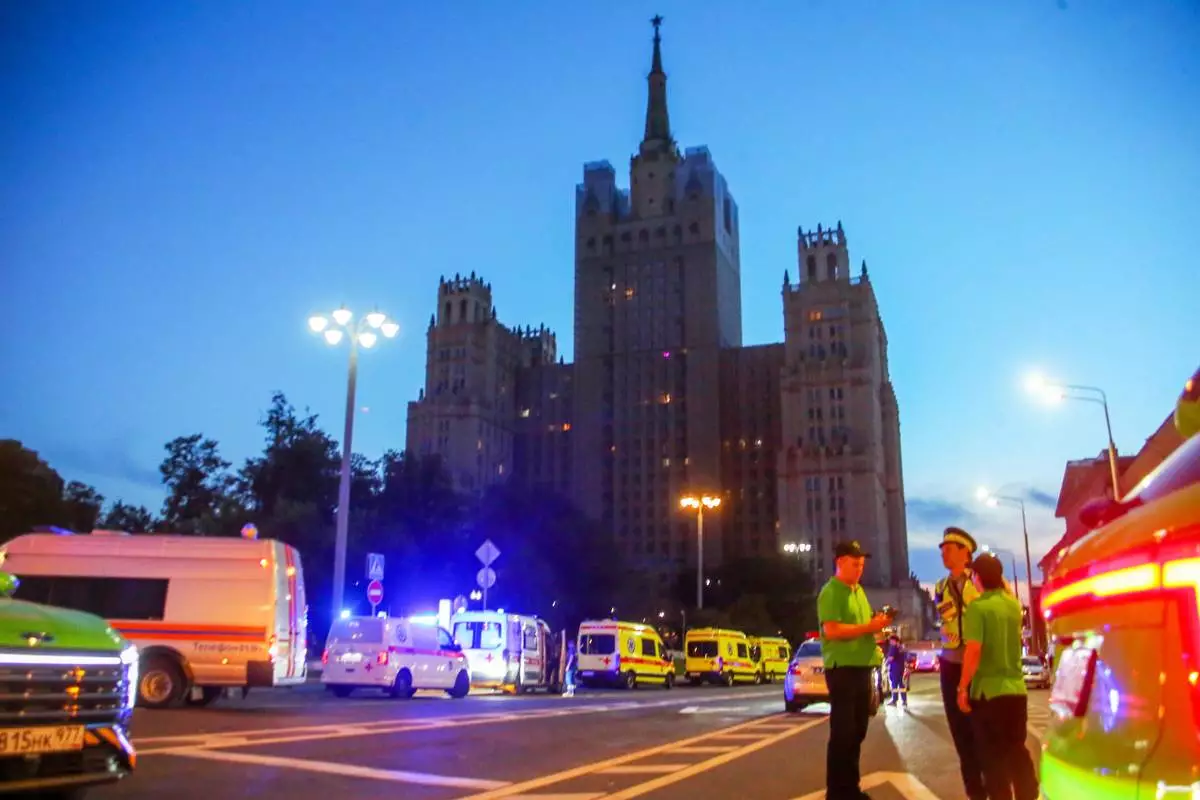
Emergency vehicles are parked in an area near a deadly explosion at a restaurant in Moscow, Saturday, Aug. 1, 2026. (Sergei Vedyashkin/Moscow News Agency via AP)
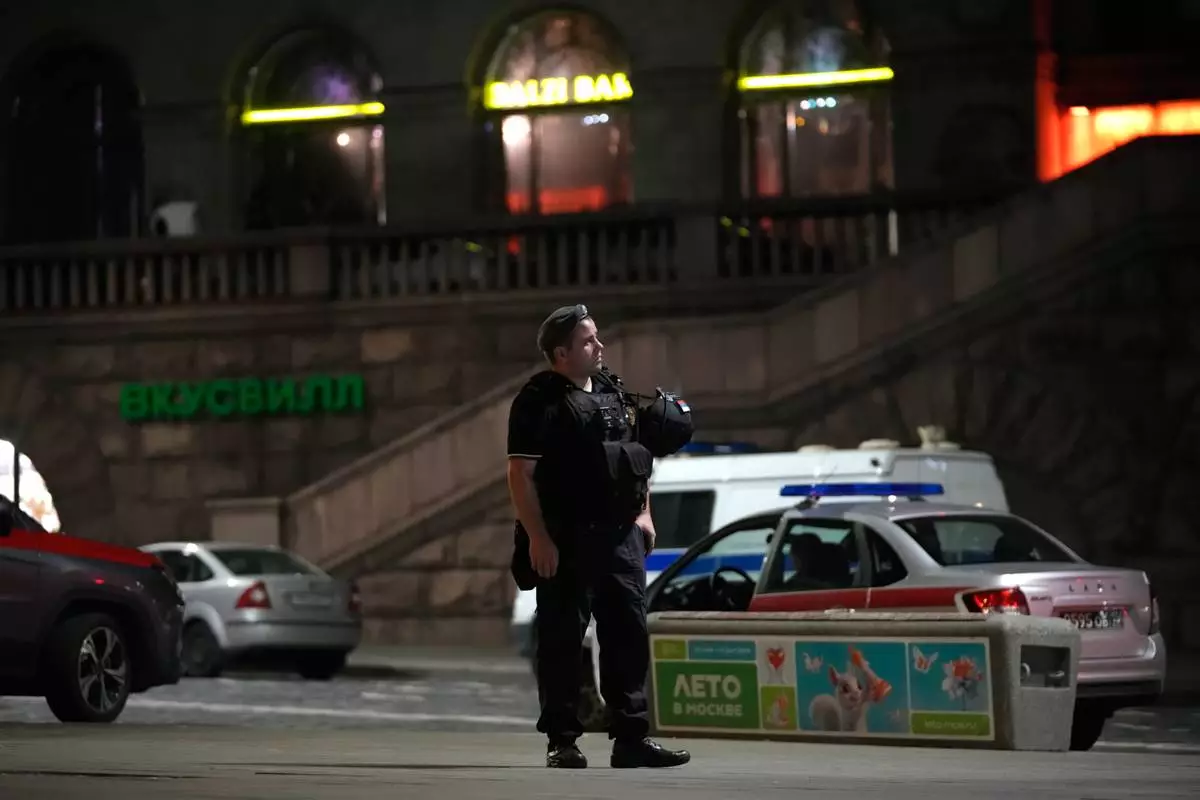
A policeman stands near the site where an improvised explosive device detonated at a restaurant in central Moscow, Saturday, Aug. 1, 2026. (AP Photo/Pavel Bednyakov)
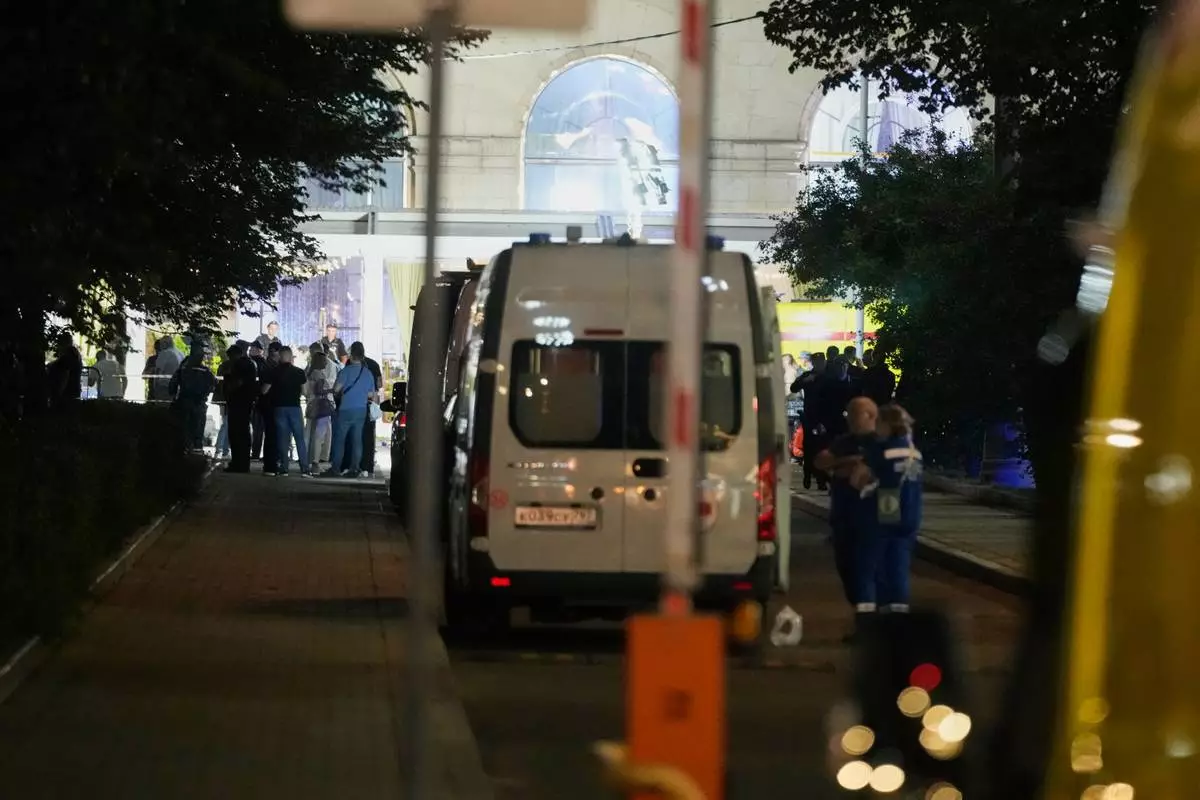
Ambulances and special services vehicles are parked near the site where an improvised explosive device detonated at a restaurant in central Moscow, Saturday, Aug. 1, 2026. (AP Photo/Pavel Bednyakov)
WASHINGTON (AP) — Two Republican senators who threatened to block acting Attorney General Todd Blanche's bid to lead the Justice Department said Monday that they will vote to advance his nomination, ending an impasse over plans to create a fund to compensate allies of President Donald Trump.
The statement from Republican Sens. John Cornyn and Thom Tillis came after Blanche issued an order late Sunday formally rescinding the $1.8 billion “Anti-Weaponization Fund” to compensate people who believe they were unfairly prosecuted by the Justice Department.
Cornyn and Tillis, whose votes Blanche needs to advance through the Senate Judiciary Committee on Tuesday, had said they would not endorse his nomination without written confirmation that the fund is dead.
“We want to express our gratitude to Mr. Blanche and his staff for working with us on this, and we look forward to voting to advance his nomination out of the Senate Judiciary Committee soon," Cornyn and Tillis, who are not returning to the Senate next year, said in a statement.
Blanche said at a June hearing that the Justice Department would not move forward with the fund as he faced bipartisan outrage over the possibility that violent rioters who attacked police at the U.S. Capitol on Jan. 6, 2021, could be considered for payments. But skeptical lawmakers said they were concerned that it could be revived without a commitment in writing, especially because Trump has continued to defend the idea.
In a statement accompanying the order Sunday, the Justice Department said that “although the Acting Attorney General has repeatedly advised Congress through testimony, including under oath, as well as in written responses, that the Fund is not moving forward, and the Department has repeatedly represented to district courts that the Fund is not moving forward, today’s Order officially rescinds the May 18, 2026 Order.”
Since the settlement of the president's lawsuit against the IRS was announced, “No Members were appointed; no funds were transferred; no process for receiving claims was established; no claims were paid,” the order says. “This order establishes, beyond any doubt, that there is no Fund.”
The document released by Blanche on Sunday night also limits the scope of another provision of the settlement that provided broad immunity for Trump and members of his family from tax audits.
The deal clarifies that the tax audit immunity agreement “applies by its terms only retroactively” to claims open at the time of the settlement and does not protect the president from examination of future tax filings.
Cornyn, who lost reelection this year after Trump endorsed his primary opponent, and Tillis, who is retiring when his term ends in January, have blocked Blanche's nomination as many of their GOP colleagues have criticized the fund.
The Judiciary Committee postponed a vote on Blanche’s nomination that had been scheduled for Thursday morning after Tillis and Cornyn said they needed more from the administration before they could provide the necessary votes.
The two senators have repeatedly said the Justice Department seemed interested in reaching an agreement, but the White House wouldn’t budge even to aid the confirmation of Trump’s loyal former personal attorney, who has aggressively pursued the administration’s priorities as acting attorney general.
“I think as far as Blanche and the Department of Justice, we were pretty much on the same page,” Cornyn said Thursday. “But then when the president got wind of it, he wasn’t willing to go along with it.”
Blanche, who served as Trump’s defense lawyer in his criminal cases, entered the Justice Department last year as deputy attorney general. He was elevated to the top post after Pam Bondi was fired in April by Trump, who was frustrated by her failure to successfully prosecute his political enemies.
Though Blanche insisted he wasn’t auditioning for the permanent job, he has moved aggressively to pursue the Trump administration’s agenda and accelerate investigations into the president’s perceived foes.
The two sides have been negotiating for weeks, but Trump has said repeatedly during the talks that he thinks the fund should go forward and threatened to move forward with it if Blanche was not confirmed.
After the Thursday vote was delayed, Trump said in a social media post that he might pull Blanche’s nomination and resubmit it after Cornyn and Tillis leave office next year.
On Sunday evening, Trump said that people who had faced charges from the Jan. 6, 2021, attack on the Capitol and could have benefited from the fund had “their lives destroyed.”
“This would be a reimbursement for the pain that they suffered,” Trump said. “A lot of people like it.”
On Friday, Trump’s attorneys notified a court they would appeal a judge’s scathing ruling that characterized the settlement of the president’s lawsuit against the IRS as an improper exercise in self-dealing. The judge in her order last month referred one of Trump’s attorneys for potential disciplinary action and criticized Blanche’s involvement in the settlement, given his prior representation of Trump.
Blanche has said he disagrees “with the judge’s insinuations” about him. Justice Department lawyers had previously written in court papers that the fund was not moving forward but they refused a judge’s request to have Blanche and other administration officials file a declaration under penalty of perjury that the administration would not take any further action to create the fund.
The Justice Department said the court’s demands were “unnecessary.”
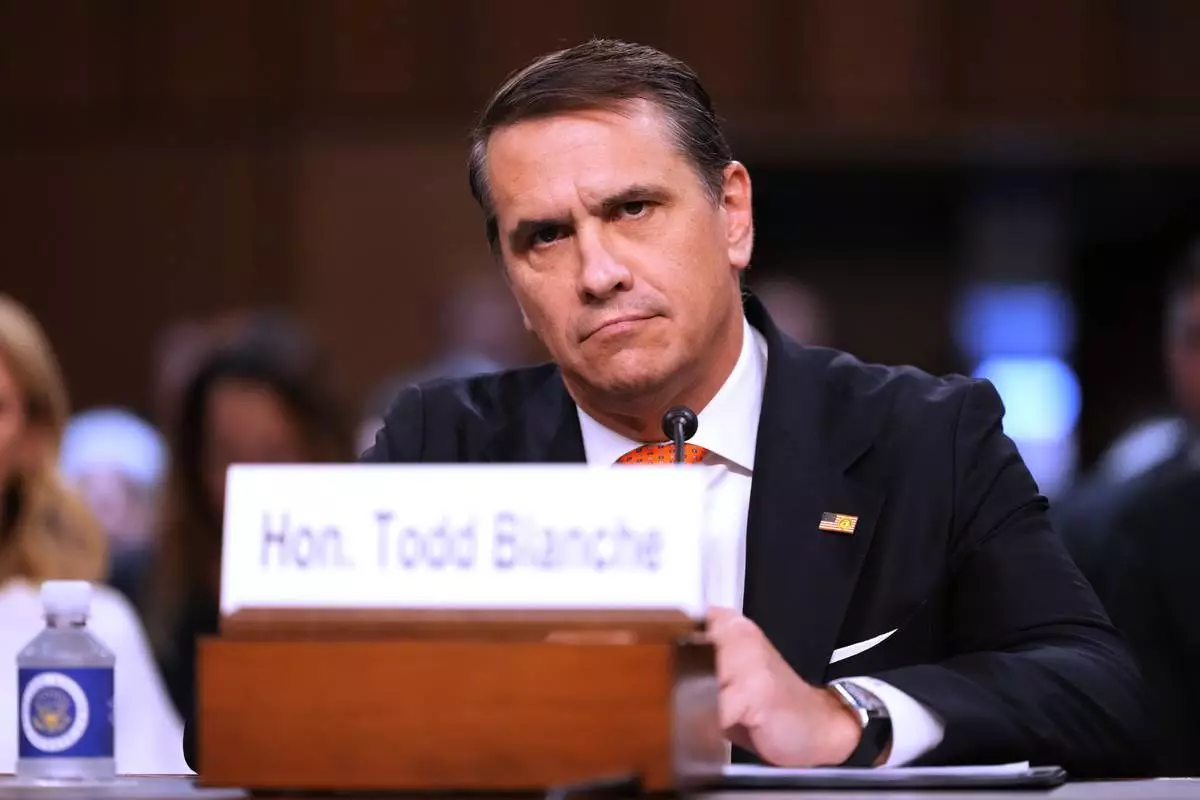
FILE - Acting Attorney General Todd Blanche appears before the Senate Judiciary Committee on Capitol Hill in Washington, July 15, 2026. (AP Photo/Mark Schiefelbein, File)