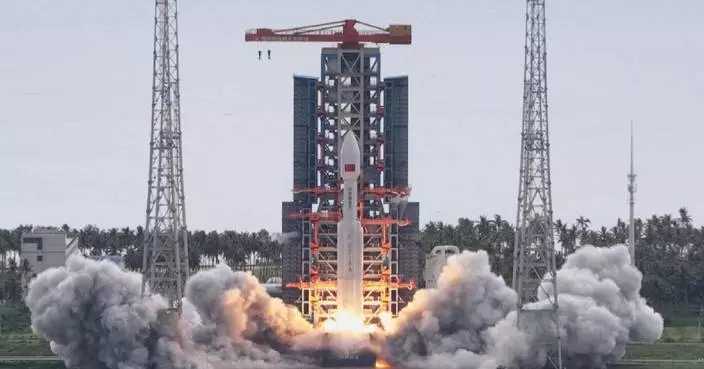
The approach of Typhoon Dolphin, the 13th typhoon of 2026, has prompted east China's Fujian and Zhejiang provinces to postpone the opening of their fishing seasons, as authorities rush to bring vessels back to port and secure coastal communities ahead of the storm's arrival.
The typhoon was located roughly 1,500 kilometers east of Naha, Okinawa, at 11:00 on Tuesday, with wind speeds reaching 48 meters per second around its eye. Forecasters expect it to head west at 20 to 25 km per hour, with little fluctuation in strength.
According to the National Meteorological Center (NMC), the typhoon is expected to impact fishing grounds off Fujian and surrounding waters from Thursday.
The early fishing season in the East China Sea, scheduled to start at noon on Wednesday, has therefore been delayed.
The early fishing season allows specially licensed vessels using gillnets and three other types of gear to be the first to go out to sea.
Fujian authorities have instructed these boats to return to port or move south of latitude of 41.3 degrees north by noon on Wednesday ahead of the storm. Fujian-registered ships operating outside provincial waters are required to follow the typhoon protocols of their host regions.
Zhejiang Province followed suit on Monday, with its marine economy authorities announcing a similar delay to the start of the specially licensed fishing season, which had been set for Wednesday.
As gale-force winds of up to Force 10 are expected to lash the East China Sea fishing grounds from Thursday, staff of the fishery authorities in Putuo District, Zhoushan, have been going from port to port, urging fishermen to stay ashore and inspecting vessels to ensure they are storm-ready.

China's coastal provinces delay fishing season as Typhoon Dolphin approaches
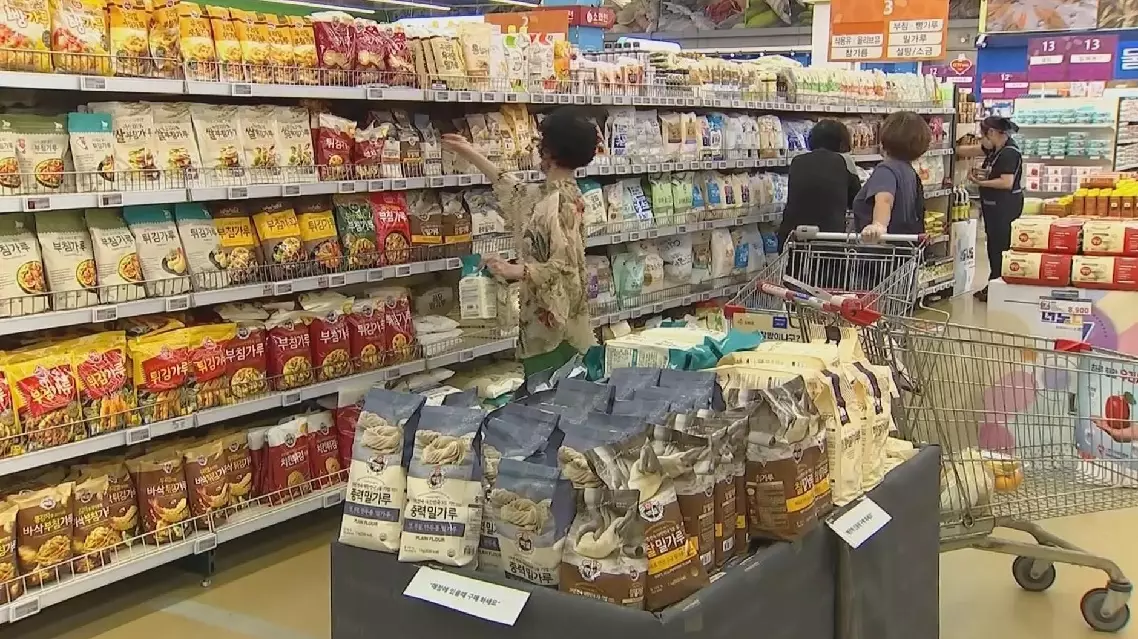
The Republic of Korea (ROK)'s consumer price inflation eased in July, breaking a multi-month accelerating trend amid stabilizing energy prices and lower farm goods prices, statistical ministry data showed Tuesday.
The consumer price index (CPI) rose 2.8 percent in July from a year earlier, falling below 3.0 percent in three months, according to the Ministry of Data and Statistics.
It marked a noticeable deceleration from 3.2 percent in June, after accelerating from 2.0 percent in February to 2.2 percent in March, 2.6 percent in April and 3.1 percent in May.
Headline inflation, however, stayed above the central bank's mid-term inflation target of 2 percent for 11 straight months since September 2025.
The Bank of Korea raised its benchmark interest rate by 25 basis points to 2.75 percent in July, turning toward monetary tightening in about three and a half years since January 2023.
Oil products price gained 15.5 percent last month, after spiking 24.7 percent in the previous month. The price lifted overall inflation by 0.60 percentage points.
Price for gasoline and diesel jumped 12.6 percent and 21.5 percent each, while computer price shot up 25.1 percent amid soaring semiconductor price. Price for industrial products, including oil products and processed food, advanced 3.7 percent in July compared to the same month last year, slower than an expansion of 4.4 percent in the previous month.
Processed food price added 1.0 percent in July from a year earlier, faster than a growth of 0.9 percent in the previous month.
Price for agricultural, livestock and fishery products climbed 0.9 percent in July from a year earlier, after picking up 3.2 percent in June.
Agricultural products price slipped 2.2 percent last month, turning downward from an increase of 1.1 percent in the prior month. Those for livestock and fishery products swelled 4.4 percent and 3.9 percent each.
Rice price mounted 7.9 percent, but those for napa cabbage, watermelon, spinach, cucumber and zucchini retreated in double figures. Those for beef, imported beef, pork, egg and mackerel increased in single digits.
Price for electricity, natural gas and tap water was up 0.4 percent in July on a yearly basis.
City gas charge and waterworks fee added in single digits, but heating cost dipped 0.2 percent.
Services price surged 2.6 percent last month, hiking up the headline inflation by 1.46 percentage points.
Public service price rose 1.4 percent, while private service price, including eating-out costs, expanded 3.5 percent.
The eating-out expense gained 2.6 percent, and the private service price excluding the dining-out cost jumped 4.1 percent.
Affected by a spike in fuel surcharges from rising oil prices, international airfares soared 21.7 percent last month.
Housing rent, including Jeonse and monthly rent, was up 1.1 percent in July from a year earlier.
Jeonse is the country's unique contract between two households where a landlord grants two-year residential rights to a tenant, who in turn lends a certain amount of money, or a deposit, to the landlord.
The livelihood items index, which gauges prices for daily necessities, climbed 2.5 percent, while the fresh food index, which measures prices for fish, shellfish, fruit and vegetables, declined 2.3 percent.
Demand-side inflationary pressure lingered. Core consumer price index, which excludes volatile agricultural and oil products, appreciated 2.5 percent last month.
The OECD-method core price, excluding volatile food and energy costs, went up 2.6 percent in the cited month.
ROK's consumer price inflation eases to 2.8 pct in July