Skip to Content Facebook Feature Image

Unmanned operations, smart technologies reshaping PLA for modern battlefield: documentary

China

China

China

Unmanned operations, smart technologies reshaping PLA for modern battlefield: documentary

2026-08-04 17:29 Last Updated At:23:37

Unmanned operations and smart technologies are reshaping China's army for the modern battlefield, according to an episode of CMG's six-part documentary, The Road to Victory, released on Tuesday to mark the 99th anniversary of the founding of the Chinese People's Liberation Army (PLA).

In the latest episode of the documentary, Li Zhengwei with an Air Force aviation brigade of the PLA Southern Theater Command, said that the PLA has transitioned from a homeland air-defense focus to an offensive-defensive posture, now leveraging unmanned warfare and proactive situational awareness to expand operational roles beyond the limited missions of joint exercises.

"For many years, our weapons and equipment were developed primarily for homeland air defense. Today, we have evolved from a purely defensive force into one capable of both offense and defense operations. We can now proactively detect even the slightest changes around us, and those changes provide crucial guidance for every operation that follows," said Li.

"Unmanned warfare is reshaping the battlefield and transforming traditional combat. From situational awareness to precision strikes, unmanned warfare is steadily moving to the forefront of combat operations. In previous joint exercises, our missions have been relatively limited, leaving our operational capabilities underutilized," Li said.

Li emphasized that joint operations must be embedded from headquarters to frontline units through unmanned and intelligent technologies, creating a feedback loop that enhances specialization and combat effectiveness against formidable adversaries.

"Having worked in joint operational command organizations for a decade, and now at the forefront of new-domain and new-quality force development, I have come to realize that for joint operations to go deeper and become more effective, officers in relevant positions must bring joint operational thinking from headquarters to frontline units for building our armed forces. We must fully harness the advantages of unmanned and intelligent technologies, turning unmanned aerial vehicles (UAVs) into a key factor in defeating formidable adversaries," Li said.

"My experience in joint operations has given me a clear understanding of which units can best utilize the intelligence we collect, and how a positive feedback loop can drive them toward greater specialization and enhanced capabilities," Li said.

No longer mere reconnaissance platforms, unmanned aerial vehicles (UAVs) operate in deep coordination with the PLA Rocket Force, Navy and Army. They connect the dots between spotting a target and hitting it, collecting and making sense of large volumes of sensor data to support joint operations across the services, turning intelligence into a battlefield edge.

"The precise operational requirements of different services are becoming deeply integrated with the vast intelligence data collected by UAVs. The potential of intelligent technologies is gradually being transformed into real combat effectiveness. Joint operational experience is gradually instilling new equipment with a joint operational mindset," Li said.

"We have become a new source of target information for the Rocket Force, a new channel of situational awareness for the Navy, and a new source of support for the Army's long-range firepower. The precise operational requirements of different services are becoming deeply integrated with the vast amounts of intelligence data collected by the UAVs. As drones are increasingly integrated into joint operations, faster data processing and smarter algorithms are unlocking more possibilities for unmanned warfare," Li said.

The Road to Victory premiered on July 30 on CCTV-1 (CCTV General Channel) ahead of China's Army Day, which falls on Aug 1 each year.
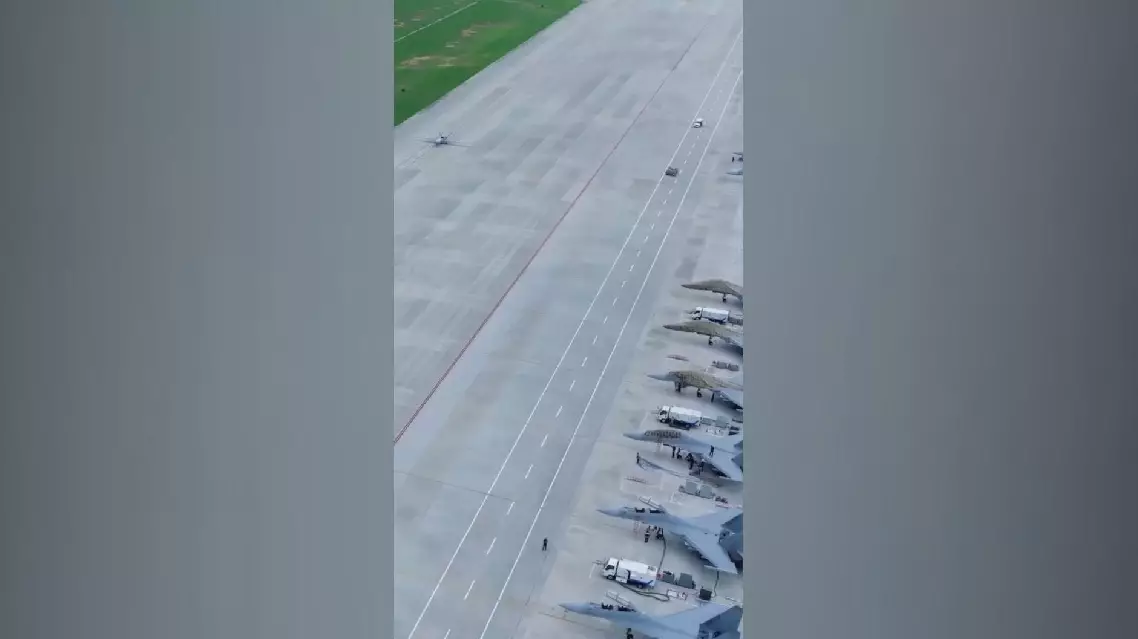
Unmanned operations, smart technologies reshaping PLA for modern battlefield: documentary

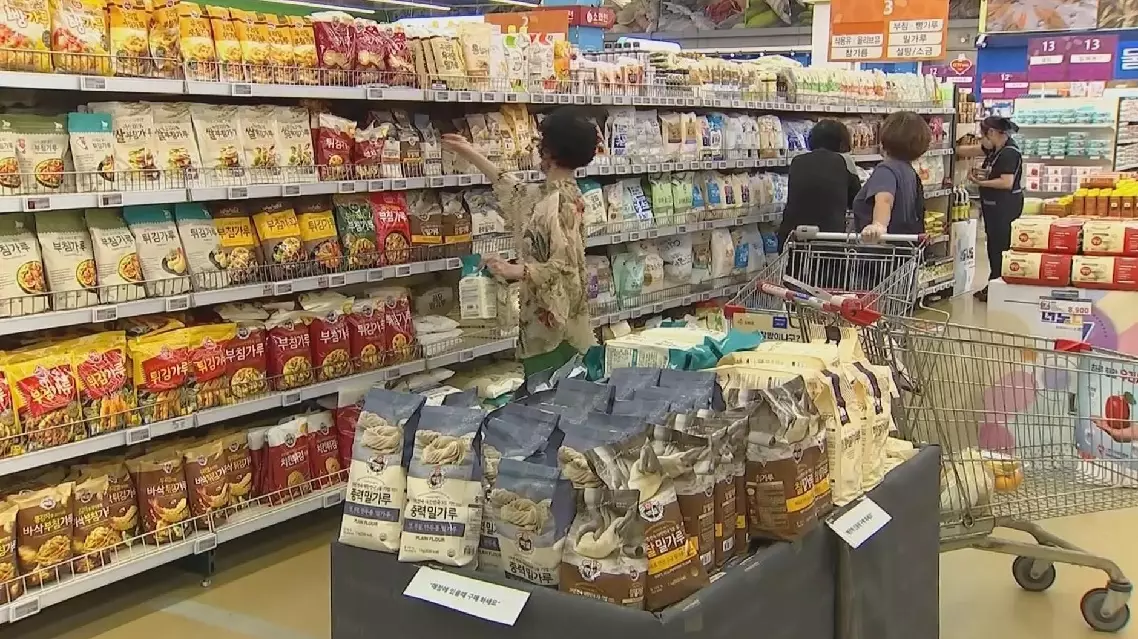
Unmanned operations, smart technologies reshaping PLA for modern battlefield: documentary
The Republic of Korea (ROK)'s consumer price inflation eased in July, breaking a multi-month accelerating trend amid stabilizing energy prices and lower farm goods prices, statistical ministry data showed Tuesday.

The consumer price index (CPI) rose 2.8 percent in July from a year earlier, falling below 3.0 percent in three months, according to the Ministry of Data and Statistics.

It marked a noticeable deceleration from 3.2 percent in June, after accelerating from 2.0 percent in February to 2.2 percent in March, 2.6 percent in April and 3.1 percent in May.

Headline inflation, however, stayed above the central bank's mid-term inflation target of 2 percent for 11 straight months since September 2025.

The Bank of Korea raised its benchmark interest rate by 25 basis points to 2.75 percent in July, turning toward monetary tightening in about three and a half years since January 2023.

Oil products price gained 15.5 percent last month, after spiking 24.7 percent in the previous month. The price lifted overall inflation by 0.60 percentage points.

Price for gasoline and diesel jumped 12.6 percent and 21.5 percent each, while computer price shot up 25.1 percent amid soaring semiconductor price. Price for industrial products, including oil products and processed food, advanced 3.7 percent in July compared to the same month last year, slower than an expansion of 4.4 percent in the previous month.

Processed food price added 1.0 percent in July from a year earlier, faster than a growth of 0.9 percent in the previous month.

Price for agricultural, livestock and fishery products climbed 0.9 percent in July from a year earlier, after picking up 3.2 percent in June.

Agricultural products price slipped 2.2 percent last month, turning downward from an increase of 1.1 percent in the prior month. Those for livestock and fishery products swelled 4.4 percent and 3.9 percent each.

Rice price mounted 7.9 percent, but those for napa cabbage, watermelon, spinach, cucumber and zucchini retreated in double figures. Those for beef, imported beef, pork, egg and mackerel increased in single digits.

Price for electricity, natural gas and tap water was up 0.4 percent in July on a yearly basis.

City gas charge and waterworks fee added in single digits, but heating cost dipped 0.2 percent.

Services price surged 2.6 percent last month, hiking up the headline inflation by 1.46 percentage points.

Public service price rose 1.4 percent, while private service price, including eating-out costs, expanded 3.5 percent.

The eating-out expense gained 2.6 percent, and the private service price excluding the dining-out cost jumped 4.1 percent.

Affected by a spike in fuel surcharges from rising oil prices, international airfares soared 21.7 percent last month.

Housing rent, including Jeonse and monthly rent, was up 1.1 percent in July from a year earlier.

Jeonse is the country's unique contract between two households where a landlord grants two-year residential rights to a tenant, who in turn lends a certain amount of money, or a deposit, to the landlord.

The livelihood items index, which gauges prices for daily necessities, climbed 2.5 percent, while the fresh food index, which measures prices for fish, shellfish, fruit and vegetables, declined 2.3 percent.

Demand-side inflationary pressure lingered. Core consumer price index, which excludes volatile agricultural and oil products, appreciated 2.5 percent last month.

The OECD-method core price, excluding volatile food and energy costs, went up 2.6 percent in the cited month.

ROK's consumer price inflation eases to 2.8 pct in July

ROK's consumer price inflation eases to 2.8 pct in July

Recommended Articles