WASHINGTON (AP) — U.S. job openings fell slightly in June, but the labor market continued to show resilience in the face of an economic shock from fighting in Iran and the closure of the Strait of Hormuz.
Employers posted 7.36 million vacancies in June, down from 7.54 million in May, the Labor Department said Tuesday. The numbers were in line with economist expectations. Openings rose by 97,000 at warehouse, transportation and utility companies and 39,000 at federal government agencies. Openings dropped at wholesalers and manufacturers of nondurable goods.
Layoffs were little-changed at 1.8 million, and the number of people quitting their jobs — a sign of confidence in their prospects — rose slightly.
The gross number of people hired — before subtracting those who quit or lost their jobs — rose slightly 5.3 million. But hiring is weaker than it was in the jobs boom that followed pandemic lockdowns. Then, gross monthly hiring often topped 6 million.
Still, the U.S. job market has remained sturdy despite a surge in energy prices caused by the conflict in Iran, rebounding from a 2025 slump. Before the war in Iran, roughly 15 million barrels of Persian Gulf oil were shipped each day through the Strait of Hormuz. The strait borders Iran, which has fired on ships attempting to transit the passage.
So far this year, companies, government agencies and nonprofits have added an average 92,000 jobs a month. That is up from fewer than 10,000 a month last year — fewest outside a recession since 2002 — as employers held off on hiring because of high interest rates and uncertainty caused by President Donald Trump’s unpredictable economic policies.
When the Labor Department releases its jobs report for July on Friday, it is expected to show job gains of 100,000, up from 57,000 in June. The unemployment rate is expected to have remained at a low 4.2%, according to a survey of forecasters by the data firm FactSet.
In years past, 100,000 new jobs a month would have been mediocre. But Trump’s immigration crackdown and the ongoing retirements of baby boomers mean that fewer people are competing for work. So the economy doesn’t need as many new jobs as it once did to keep the unemployment rate from rising. In fact, some economists believe the “break-even″ rate could be nearly as low as zero jobs.

FILE - A now hiring sign is seen in front of an auto body shop in Chicago, June 25, 2026. (AP Photo/Nam Y. Huh, file)
If you’re looking to plant a rare flower with a storied past that’s had a well-known song written about it, edelweiss will check all your boxes.
My mother grew up in northeastern Italy, just over the Austrian border near the Alps, where edelweiss grow wild along steep rocky ledges. When I was a child, she told me stories about the elusive white flowers, and about local legends of young men dying after climbing and falling from the cliffs while trying to pick edelweiss for their beloveds.
I know that’s pretty dark territory for a gardening column to veer into — and probably for a child’s bedtime story, too — but the good news is you can try growing the star-shaped, velvety flowers without risking life, limb or nightmares.
Edelweiss (Leontopodium alpinum), which translates as “noble white” from German, has some very specific requirements endemic to its native range: alkaline rocky or sandy soil that drains well, low soil fertility, full sunlight and cold winter temperatures. If you can replicate those — and you likely can in the lower-humidity areas of horticultural zones 4-7, you can grow edelweiss. The plant gives bonus points to gardeners at high elevations.
Sow seeds outdoors in late fall to provide the stratification — or winter chill — that they require for germination. Or plant pre-chilled seeds in early spring (the package label will tell you whether seeds have been stratified). Either way, press the seeds into the soil to ensure contact, but don’t bury them. They will sprout in spring and begin blooming in spring and summer of their second year.
Alternatively, you can purchase starter plants, if you can find them, for transplanting into the garden right after the last frost date in spring. They should bloom after planting.
Water the plants regularly throughout their first year as their roots become established. After that, they will seldom need supplemental watering.
The plants, which can survive temperatures as low as minus 20 degrees Fahrenheit, thrive in barren, nutrient-poor soil, so don’t fertilize them unless they’re growing in a container, and even then, only minimally.
Even if you never grow edelweiss, chances are you’ve made its acquaintance through its namesake song by Rodgers and Hammerstein in the 1965 movie “The Sound of Music,” which cemented it into pop culture.
“Blossom of snow, may you bloom and grow,” the song says.
And, despite luring young men to attempt foolish feats of bravery, the tiny flower has inspired generations of gardeners, hikers and movie lovers.
Jessica Damiano writes weekly gardening columns for The Associated Press. She publishes the Weekly Dirt Newsletter. Sign up here for weekly gardening tips and advice.
For more AP gardening stories, go to https://apnews.com/hub/gardening.
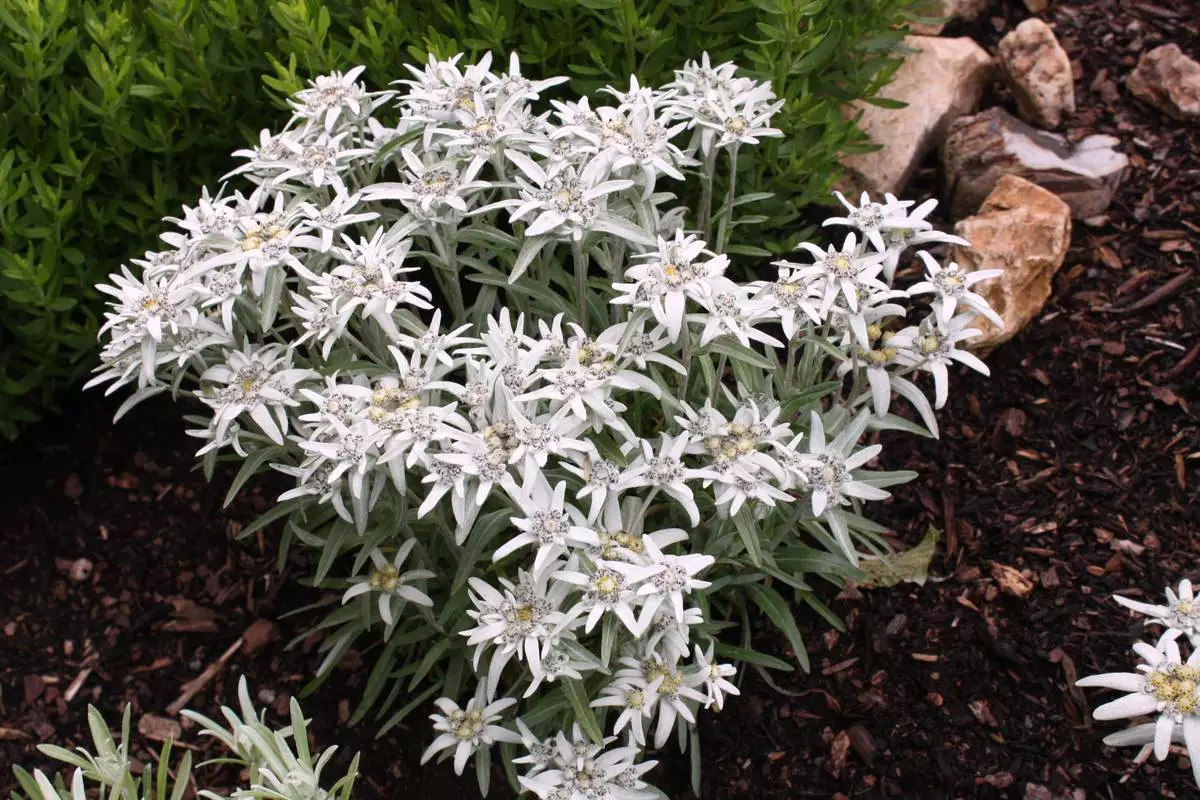
This image provided by Edelweiss Perennials shows an edelweiss plant in bloom. (Edelweiss Perennials via AP)
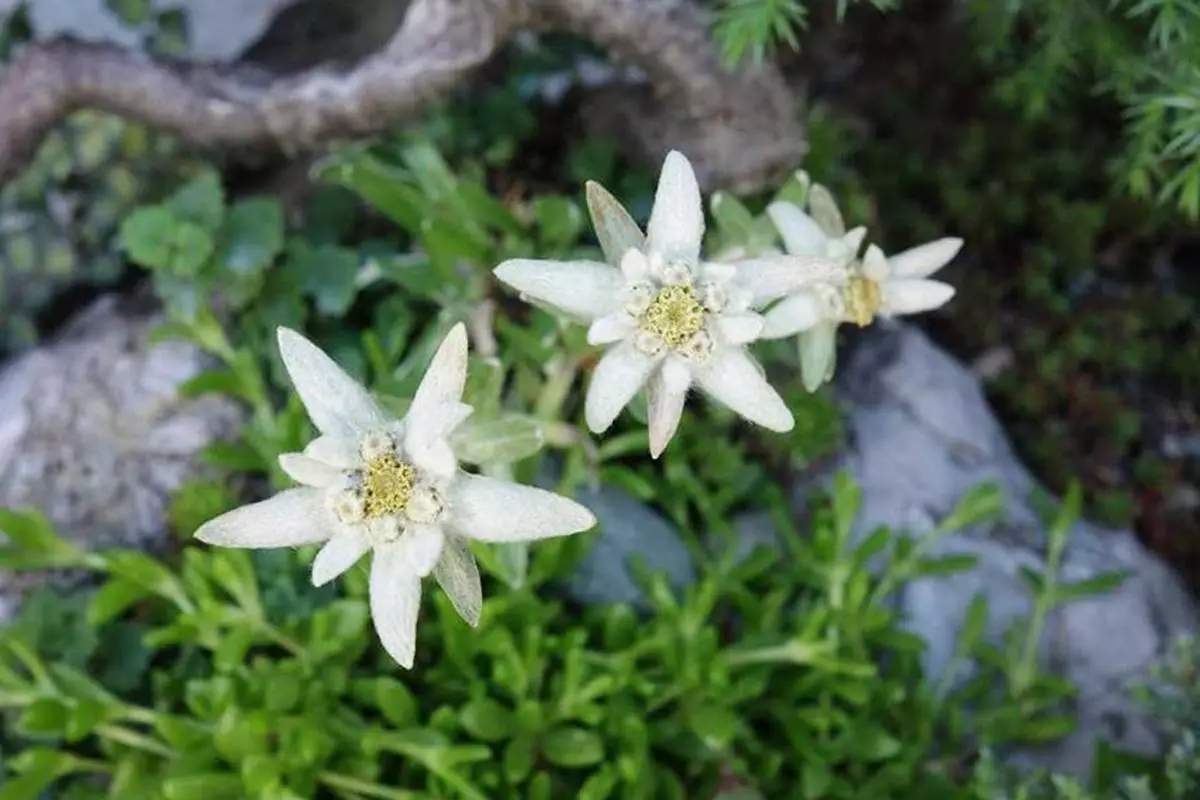
This undated image provided by the Missouri Botanical Garden shows flowers blooming on an edelweiss plant. (Missouri Botanical Garden via AP)