Skip to Content Facebook Feature Image

Kidney patients in Gaza face grueling ordeal as medical supplies dwindle
China

China

China

Kidney patients in Gaza face grueling ordeal as medical supplies dwindle

2026-08-05 17:34 Last Updated At:22:17

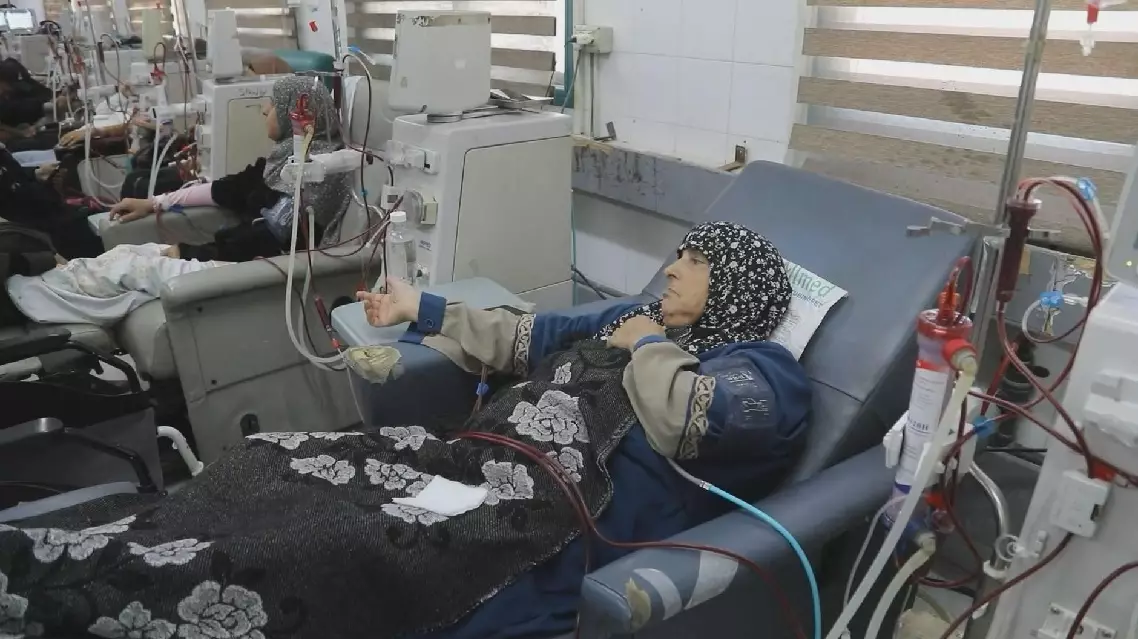
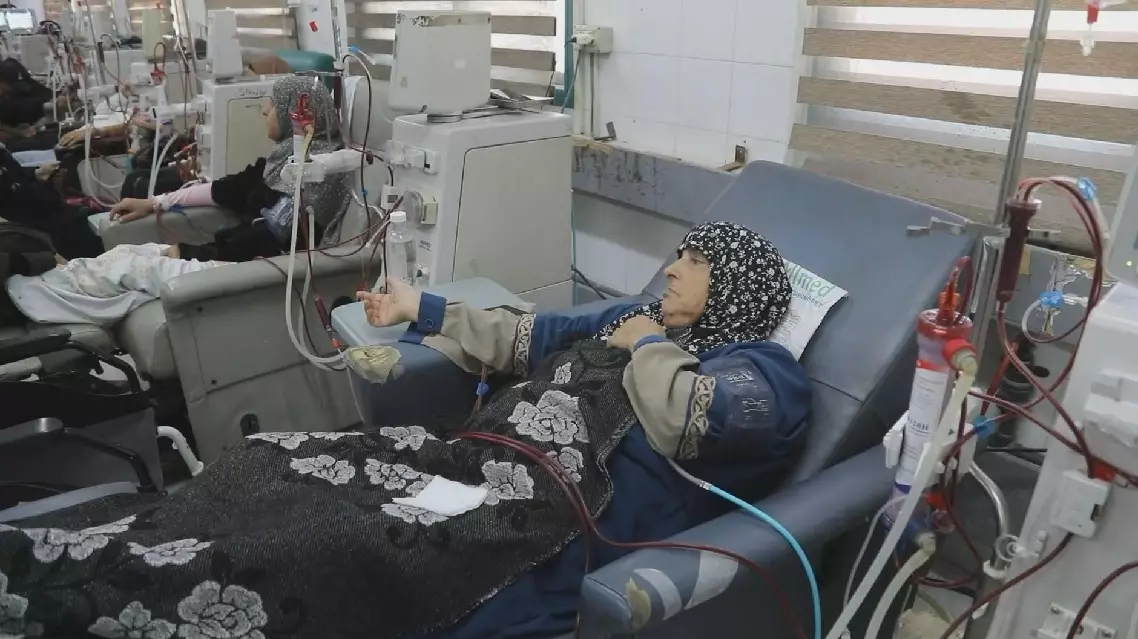
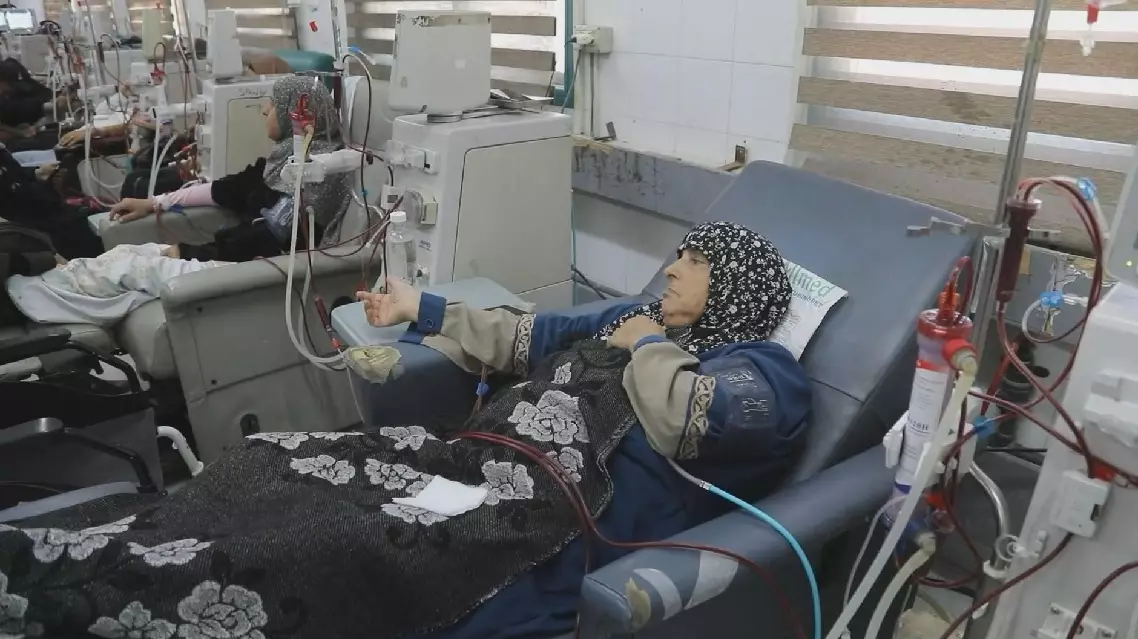
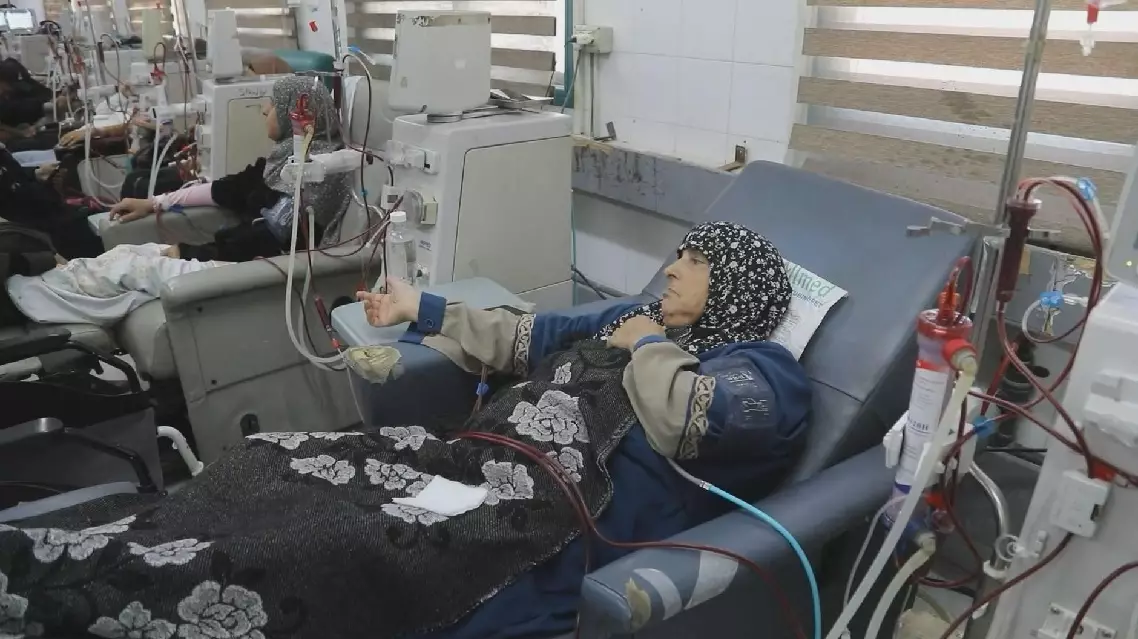
Patients suffering from kidney diseases in the Gaza Strip are facing an increasingly arduous journey to reach hospital to receive life-saving dialysis, with scarce transportation and damaged roads making the trip a regular ordeal, while the enclave's healthcare system struggles to cope amid severe medicine shortages.

For thousands of kidney patients in Gaza, every dialysis session is far more than a routine medical appointment. It is another difficult struggle for survival within a healthcare system which is under immense strain and desperately trying to keep essential services running.

More Images
Kidney patients in Gaza face grueling ordeal as medical supplies dwindle

Kidney patients in Gaza face grueling ordeal as medical supplies dwindle
Kidney patients in Gaza face grueling ordeal as medical supplies dwindle
Kidney patients in Gaza face grueling ordeal as medical supplies dwindle

Kidney patients in Gaza face grueling ordeal as medical supplies dwindle

Kidney patients in Gaza face grueling ordeal as medical supplies dwindle

Kidney patients in Gaza face grueling ordeal as medical supplies dwindle
Kidney patients in Gaza face grueling ordeal as medical supplies dwindle

Three times a week, wheelchair-bound Ataf Abu Tahoun relies on her son to push her through the rubble-lined streets to the Al-Shifa Hospital in Gaza.

For her, the bumpy and uncomfortable quest to receive essential treatment is another painful but necessary undertaking, adding to the burden of her illness.

"I need dialysis, but I can't find transportation to Al-Shifa Hospital. It's difficult both going and coming back because most of the roads are damaged. I face many challenges, and my son suffers a lot pushing my wheelchair," said Ataf Abu Tahoun.

Inside Al-Shifa's dialysis unit, patients may share the same illness but face different hardships.

"I have to walk long distances to get here. It causes severe pain in my legs, but I have no other choice. Life is extremely difficult for kidney patients, especially during summer, with transportation and living conditions getting worse," said Mohammed Ghanem, another kidney patient.

While simply making it to the clinic is already daunting enough, the under-equipped facilities and limited medical supplies they find once they get there represents a whole other challenge amid a wider crisis.

According to Gaza's Health Ministry, shortages of essential kidney medications have reached a staggering 46 percent. Hospitals across the territory are desperately lacking basic medicines, medical equipment and vital spare parts for power generators.

"We are facing severe shortages of medicines, especially the injections used to treat anemia in kidney patients. The most effective and widely used injections available to us were Chinese made. Since they became unavailable, many patients have had to receive blood transfusions once or twice a month instead. We are also facing shortages of medications for kidney transplant patients," said Hossam Joudeh, a nephrologist at the Al-Shifa Hospital.

The World Health Organization (WHO) has warned that the ongoing damage to health facilities and strict restrictions on the entry of medical supplies are severely disrupting care, putting an already vulnerable population at growing risk.

Kidney patients in Gaza face grueling ordeal as medical supplies dwindle

Kidney patients in Gaza face grueling ordeal as medical supplies dwindle

Kidney patients in Gaza face grueling ordeal as medical supplies dwindle

Kidney patients in Gaza face grueling ordeal as medical supplies dwindle

Kidney patients in Gaza face grueling ordeal as medical supplies dwindle
Kidney patients in Gaza face grueling ordeal as medical supplies dwindle

Kidney patients in Gaza face grueling ordeal as medical supplies dwindle

Kidney patients in Gaza face grueling ordeal as medical supplies dwindle

The unique operating mechanism of Zhejiang Lab, characterized by extensive consultation, joint contribution, and shared benefits, has successfully attracted private investment to fuel its space computing development, according to Wang Jian, director of the lab.

Zhejiang Lab is a research institution in the space computing domain based in Hangzhou, east China's Zhejiang Province. It focuses on frontier technology and represents a formidable force.

The 2026 World Artificial Intelligence Conference has just concluded late July in Shanghai, with space computing power emerging as one of the hottest topics. How can artificial intelligence be sent from the ground into space?

Wang, also an academician of the Chinese Academy of Engineering, has proposed the "Three-Body Computing Constellation" project, with the goal of deploying 1,000 general-purpose computing satellites by 2032, making AI accessible to every corner of the globe as ubiquitously as water and electricity.

On May 14, 2025, the first batch of 12 computing satellites of the "Three-Body Computing Constellation" successfully entered orbit. However, back in 2023 when Wang first proposed the concept of a computing constellation, no one in the international community had publicly raised such an idea.

The computing constellation was named "Three-Body." Wang explained that it was not a reference to writer Liu Cixin's sci-fi novel, but rather to Newton's "three-body problem", where the addition of a third celestial body makes precise calculation impossible. From its very inception, the project was destined to be something no single person could accomplish alone.

Zhejiang Lab is supported by Zhejiang Province, yet launching over 1,000 satellites would require at least 20 to 30 billion yuan (around 2.9 to 4.4 billion US dollars). Instead of seeking government financial support, Wang chose to pioneer a unique "extensive consultation, joint contribution, shared benefits, and common development" model at the lab, binding together a group of private enterprises in what appeared to be a relatively "loose" partnership.

"In the [space] industry, the biggest fear is that everyone becomes too loosely organized. That is why the command structure is very strict, isn't it? If you talk nonsense, no one will follow you. That's why we emphasize extensive consultation, joint contribution, and shared benefits. I would say consultation is the most important. People often want to skip consultation and jump straight to contribution and sharing, some even want to skip everything and go directly to sharing. Without proper consultation, there should be no contribution; without proper contribution, there should be no talk of sharing. You know it's difficult, but if you're willing to go all in, there's still a chance to make it happen. But if you're hesitant, if you're opportunistic, thinking you'll jump in only if it seems feasible and profitable, then no one will follow you," said Wang.

Unique operating mechanism of Zhejiang Lab attracts private investment for space computing development

Unique operating mechanism of Zhejiang Lab attracts private investment for space computing development

Recommended Articles