ATLANTA (AP) — House Democrats are adding a dozen Republican-held seats to their list of targets for the November midterms, expanding the national campaign map to districts Donald Trump won easily less than two years ago.
The move brings the Democratic Congressional Campaign Committee's list of targets to 58, an ambitious list that reflects Trump's diminished standing with the electorate and Democrats' belief that they can capitalize on voters' frustrations over the economy, the war in Iran and the chaotic nature of the Republican president's second administration.
Click to Gallery
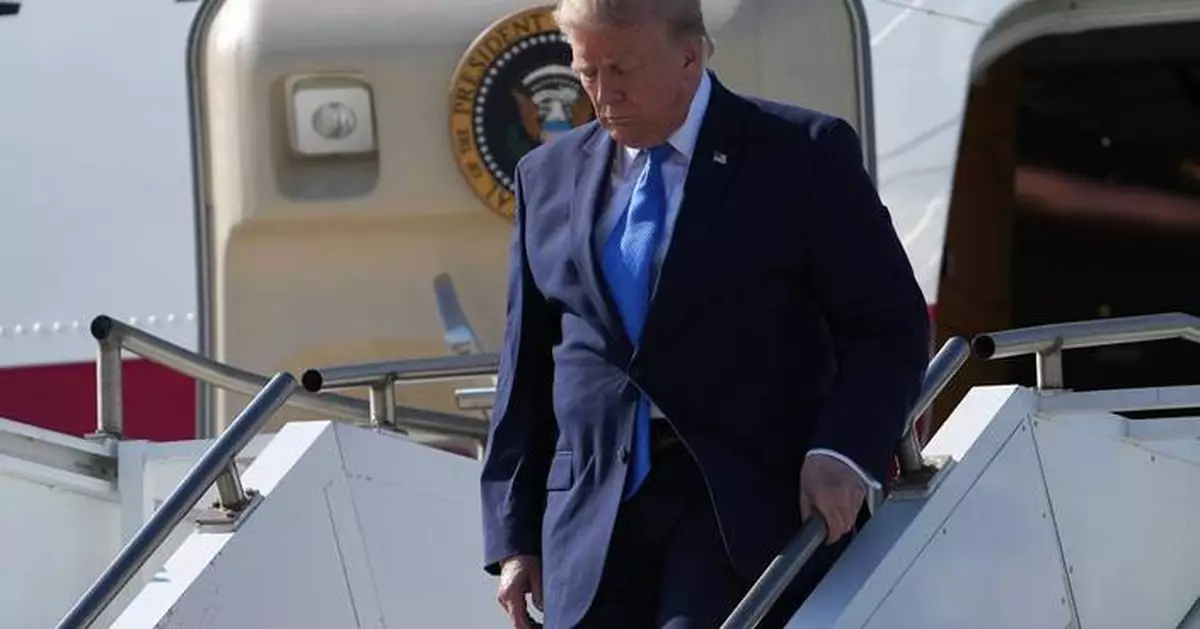
President Donald Trump arrives on Air Force One at Harry Reid International Airport in Las Vegas, Tuesday, Aug. 4, 2026. (AP Photo/Mark Schiefelbein)

President Donald Trump waves as he walks from Marine One to Air Force One, at Joint Base Andrews, Md., Tuesday, Aug. 4, 2026. (AP Photo/Luis M. Alvarez)

President Donald Trump arrives on Air Force One at Harry Reid International Airport in Las Vegas, Tuesday, Aug. 4, 2026. (AP Photo/Mark Schiefelbein)
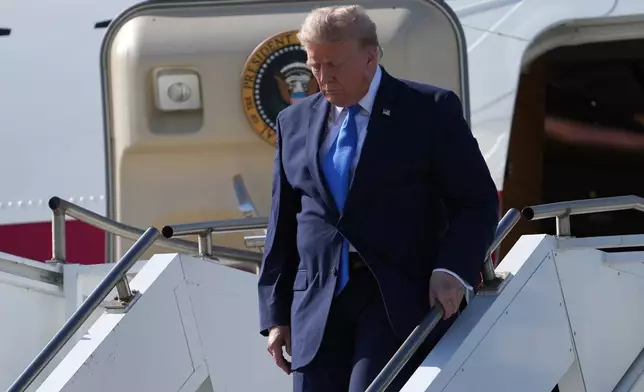
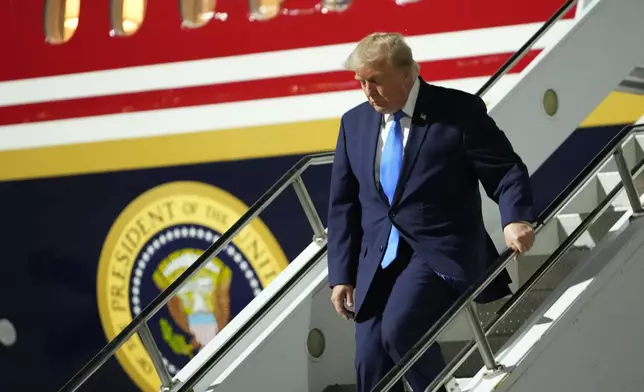
President Donald Trump arrives on Air Force One, Tuesday, Aug. 4, 2026, at Los Angeles International Airport in Los Angeles. (AP Photo/Mark Schiefelbein)
“MAGA Republicans who historically have considered themselves ‘safe’ have let down the people they were elected to represent, passing disastrous policies that are crushing working families and our communities,” DCCC Chair Suzan DelBene said in a statement.
The expansion spans from GOP-held districts in swing states like Nevada to those in Republican strongholds Indiana, Arkansas and Tennessee and Democratic-dominated New York. The list includes DelBene's counterpart at the National Republican Congressional Committee, Rep. Richard Hudson of North Carolina. The targets include other incumbents and some open seats.
Democrats need just a handful of seats to erase Republicans' narrow majority and control the chamber for the final two years of Trump's tenure. Republicans lost a net of 40 House seats in the 2018 midterms during Trump’s first presidency.
Here's a look at some notable new Democratic targets:
— NORTH CAROLINA 9TH: It's notable for Democrats to target House Republicans' campaign chairman. Trump won the district by 15 percentage points in 2024 against the Democrats' presidential candidate, Vice President Kamala Harris. But Democratic Attorney General Josh Stein carried it in the same election cycle in his successful campaign for governor. Democrats note that since 2020, the district has gained 15,000 Black voters, who tend to vote for Democrats. The Democratic nominee is Richard Ojeda, who ran for Congress in West Virginia in 2018. He lost but got 44% of the vote in a district where Democrat Hillary Clinton got only 24% in the 2016 presidential election against Trump.
— ARKANSAS 2ND: Democrat Chris Jones, the party's 2022 governor's race nominee, is trying to unseat six-term Rep. French Hill in a district that once elected moderate Democrats. Trump won the district by 16 percentage points. The electorate is about 20% Black and has a growing Asian and Latino population. Democrats point to the March primary turnout, when Democratic ballots outnumbered Republican ballots for the first time since the 2018 primaries.
— FLORIDA 12TH: Held by Republican Rep. Gus Bilirakis, this is one of the districts affected by Republicans' gerrymandering efforts after the U.S. Supreme Court's decision gutting a Voting Rights Act provision that protected minority voting strength. But as part of the GOP redraw, Bilirakis' Tampa Bay area district became more Democratic and about 14% less white, according to the DCCC's analysis. Democrats will choose a nominee this month, but Washington party leaders are looking to Darren McAuley, a former Air Force surgeon, as the potential challenger.
— NEW YORK 21ST: Trump won this district by about 21 percentage points in 2024, but not long after that he pulled Rep. Elise Stefanik's nomination for U.N. ambassador because Republicans did not want to risk the seat with their narrow House majority. Stefanik, who launched a 2026 campaign for New York governor but dropped out of that race, is not seeking reelection to Congress. Now it's an open-seat battle between Republican Anthony Constantino, a Trump-aligned businessman who is self-funding his campaign, and Democrat Blake Gendebien, a dairy farmer. The district has been represented by a Republican since 2015, but Democrat Barack Obama won it twice in presidential contests.
Follow the AP’s coverage of the 2026 election at https://apnews.com/projects/elections-2026/.
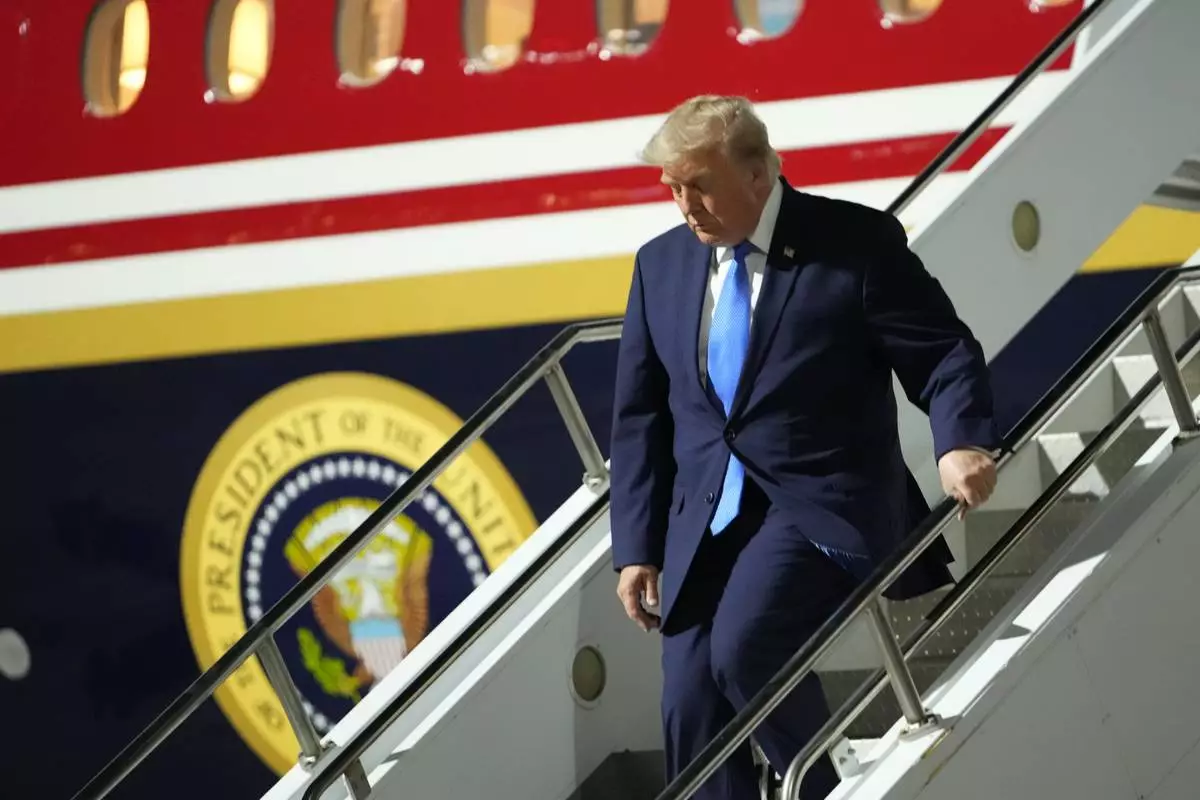
President Donald Trump arrives on Air Force One at Harry Reid International Airport in Las Vegas, Tuesday, Aug. 4, 2026. (AP Photo/Mark Schiefelbein)

President Donald Trump waves as he walks from Marine One to Air Force One, at Joint Base Andrews, Md., Tuesday, Aug. 4, 2026. (AP Photo/Luis M. Alvarez)

President Donald Trump arrives on Air Force One at Harry Reid International Airport in Las Vegas, Tuesday, Aug. 4, 2026. (AP Photo/Mark Schiefelbein)
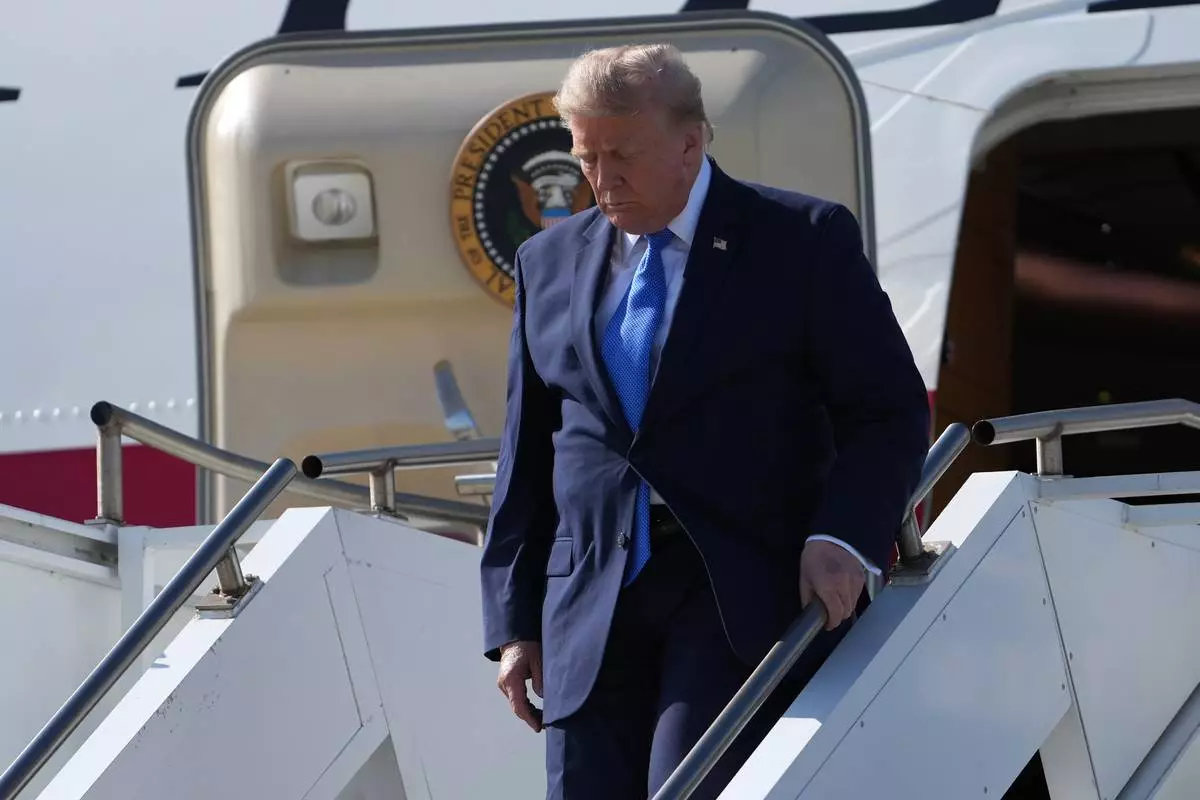
President Donald Trump arrives on Air Force One, Tuesday, Aug. 4, 2026, at Los Angeles International Airport in Los Angeles. (AP Photo/Mark Schiefelbein)