Tokyo stocks closed higher on Wednesday, with the benchmark Nikkei stock index jumping more than 3 percent, as artificial intelligence- and semiconductor-related shares rallied on expectations of demand growth.
Market sentiment was also boosted by hopes that the United States and Iran could soon reach a deal to reopen the Strait of Hormuz.
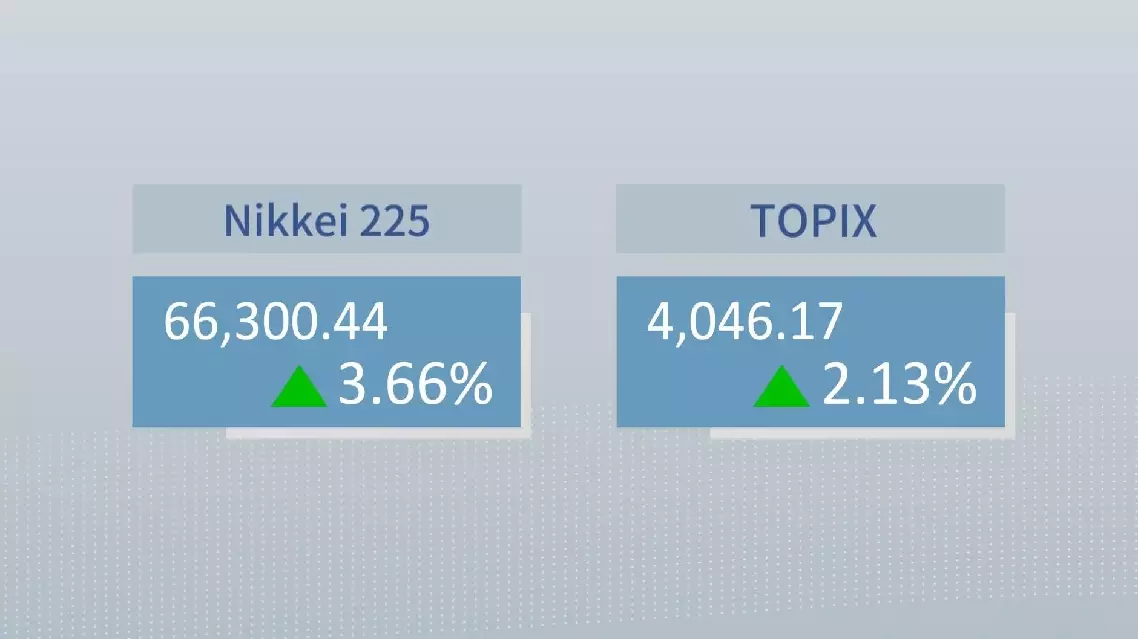
The 225-issue Nikkei Stock Average ended up 2,342.91 points, or 3.66 percent, from Tuesday at 66,300.44.
The broader Topix index, meanwhile, finished 84.39 points, or 2.13 percent, higher at 4,046.17.
On the top-tier Prime Market, nonferrous metal, information and communication, and glass and ceramics product issues were notable gainers.
Stocks rose, tracking overnight gains on Wall Street after U.S. Treasury Secretary Scott Bessent said the United States and Iran could reach a deal soon to reopen the Strait of Hormuz. The remarks sent West Texas Intermediate crude oil futures down to near 75 U.S. dollars per barrel.
AI- and chip-related shares advanced, buoyed by strong earnings reports from major U.S. and Japanese companies, analysts said.
Tokyo stocks end higher on AI optimism, hopes for U.S.-Iran deal
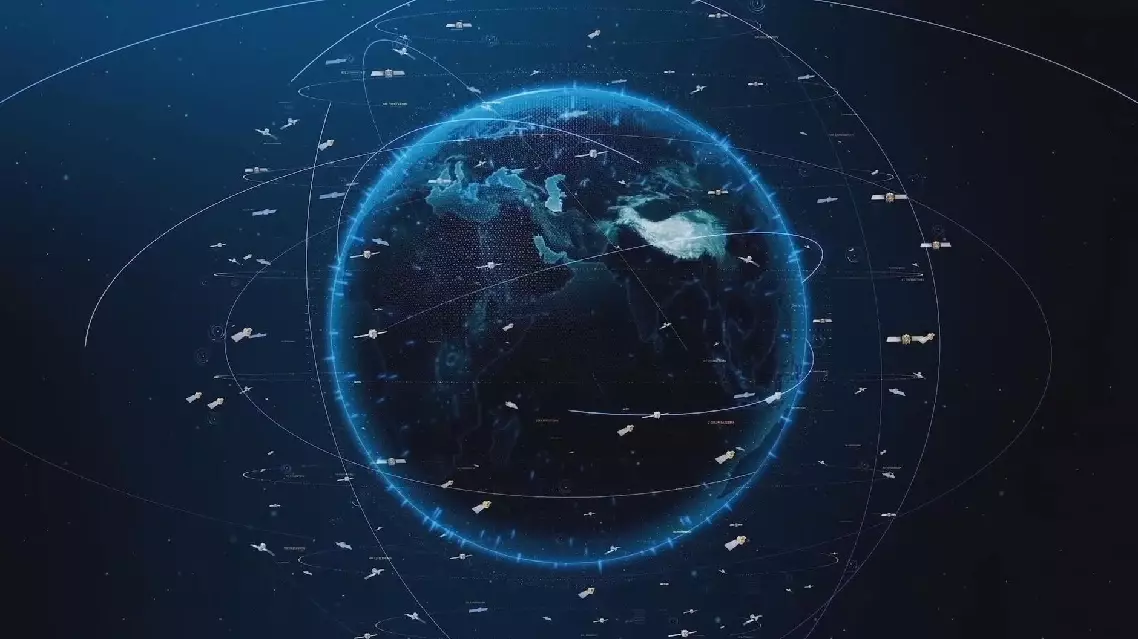
A space network consisting of 1,000 satellites is expected to be completed in 2032 by China.
This is one of the key steps in the "Three-Body Computing Constellation" project launched by Zhejiang Lab, aiming to send AI into space to achieve in-orbit data processing.
In the space computing domain, Zhejiang Lab, a research institution based in Hangzhou, east China's Zhejiang Province, and focused on frontier technology, represents a formidable force.
Wang Jian, director of Zhejiang Lab, explained in an interview with China Media Group (CMG) why the target was set at 1,000 satellites.
"First, you need to ensure sufficient computing power. Second, interconnectivity is crucial. Without a certain density among satellites, fault tolerance will be very poor. It's similar to cloud computing. If you have 10,000 machines, it wouldn't matter if two or three break down," said Wang.
According to Wang, the 1,000 satellites could form a tight network, which will significantly improve the using effect.
"The logic is simple: satellites are usable in principle, but they can't be used when they're not overhead when you need them. So what does a constellation of 1,000 satellites mean? It means that if the orbits are well designed, we can guarantee that anywhere on Earth, there will always be a satellite overhead within three minutes -- thus solving the problem of timeliness," Wang explained.
China to launch 1,000 satellites by 2032 for space network