As Shanghai enters the summer holiday season, international passenger traffic at Shanghai Hongqiao International Airport surged 3.5 percent month on month in July, cemented the city's status as one of China's top destinations for global travelers.
The airport, a key gateway to China's eastern metropolis, handled 314,000 entry-exit passenger trips in July alone. To cope with the influx, Hongqiao Port has introduced a series of measures.
"Since the start of the summer travel rush, Hongqiao Port has seen rounds of travel peaks. In July, 314,000 passengers went through entry-exit procedures at Hongqiao Port, up 3.5 percent from the previous month. Hongqiao Border Inspection Station runs a real-time passenger-flow analysis system. It works closely with the airport and airlines to keep track of flight updates, and instruct to open and close inspection lanes flexibly and shift staff around to adapt to passenger flows," said Zhang Yin, leader of Hongqiao Immigration Inspection Station Duty Team Three.
The station also operates fast-track lanes and multilingual volunteer team for those in need, the officer said.
"Besides, special priority lanes are always available at inspection points to support elderly, sick, disabled, pregnant, and other underprivileged travelers for smooth customs clearance. Our 'Hongxing' Volunteer Team also stands ready on-site to provide multilingual assistance for people in need, and safeguard an orderly and smooth customs operation," Zhang added.
The bustling scene at Hongqiao mirrors a broader tourism surge across the city. According to Shanghai General Station of Immigration Inspection, in July alone, Shanghai's border authorities processed 467,000 foreign arrivals, a nearly 20 percent increase from the same month last year. Of those, 296,000 entered under the expanded visa-free policies.
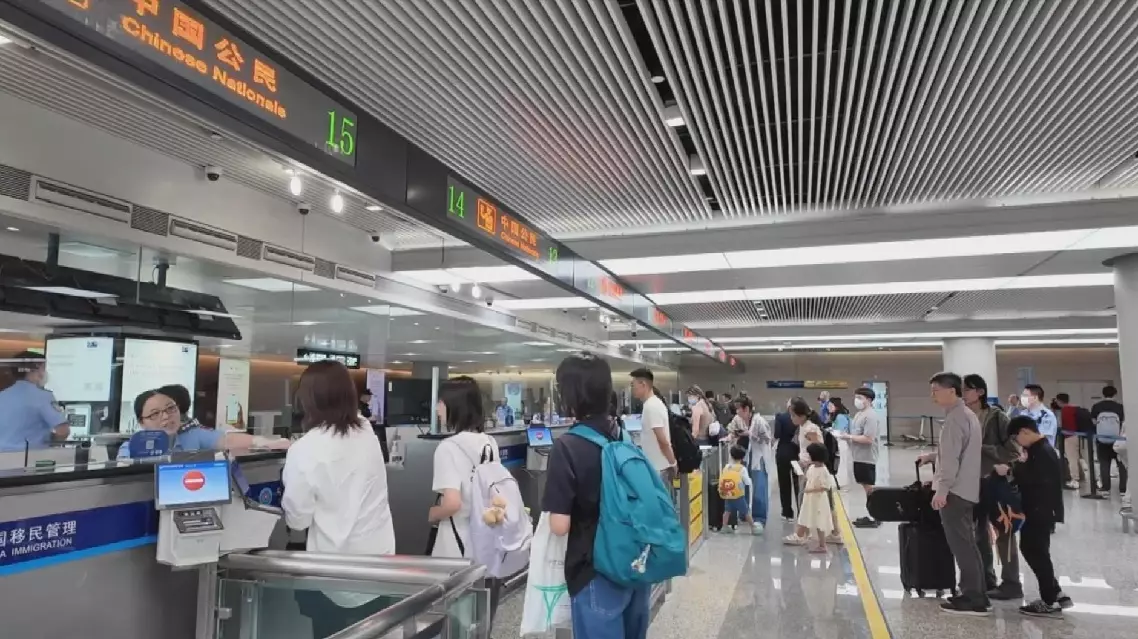
Shanghai Hongqiao Airport sees summer travel boom as global visitors flock in
A former politician in Japan's Kagoshima Prefecture has sounded the alarm over the country's accelerating military buildup, cautioning that the incumbent government is leading the nation toward a dangerous precipice.
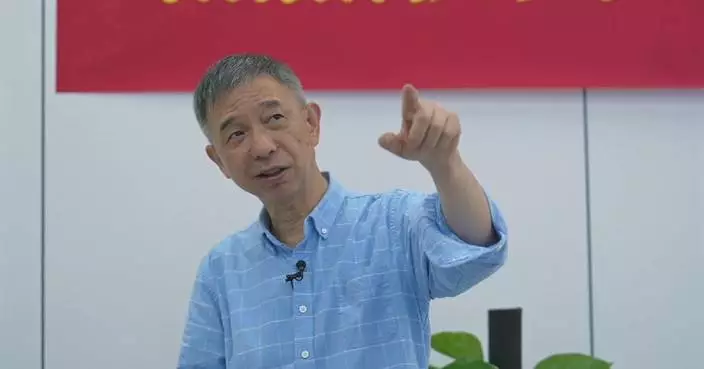
At 77 years old, Mashima Yukinori has spent his entire life in Kagoshima Prefecture, first as an educator, then as a city councilor in Kanoya, and always as a peace activist.
As Japan accelerates its military expansion and deepens its defense cooperation with the United States, Yukinori feels a greater sense of crisis than ever before. He warns that Japan is drifting away from its postwar pacifist identity and has fears that today's young people in the country are once again being groomed for war.
"The paramount principle we must uphold is that war must never be waged. Our predecessors - the teachers of the war era - sent their own students to the frontlines with great enthusiasm. This is the history we bear. It is upon a deep and earnest reckoning with that history that we swore an oath to never again send our students to war. That oath was the very impetus behind my involvement in the labor movement upon entering the workforce. Since then, I have continued to engage in such social activism, and it remains, to this day, the most significant and essential endeavor of my life," Yukinori told China Media Group (CMG) on Monday.
After joining a labor union during his time as a school administrator, Yukinori dedicated himself to promoting peace education through the union. Later, as a city councilor, he opposed joint military drills between Japan and the U.S., a stance he has held for decades.
Today, his focus has turned to Japan's shifting security policies. He believes the country's defense spending surge in recent years has strayed far from the path of peaceful development.
"In my view, defense expenditures should be constrained to the minimum level required for self-defense purposes, while social welfare budgets should be expanded. This is what we most desire. The public's foremost expectation of the political establishment is to feel secure in their daily lives, and that, above all, should be the fundamental purpose of governance," Yukinori said.
Yukinori said his concerns are rooted in the tangible developments on the doorstep of his home city.
In June, the U.S. military, for the first time, deployed its Typhon medium-range missile system at the Kanoya Air Base of the Japan Maritime Self-Defense Force for the U.S.-led Valiant Shield 2026 exercise, with plans to keep the system there for the joint Japan-U.S. Orient Shield exercise slated for September.
Yukinori said this move will not only pull Kanoya further into the regional military deployment, but also risks hollowing out Japan's pacifist Constitution.
"To my mind, introducing these weapons into Japan is a constitutional violation, because they are weapons of war, pure and simple. The deployment of these weapons within Japan itself is premised on war. Launching missiles against another nation cannot by any definition be characterized as defensive. Missiles are, by their very nature, offensive instruments. That is why I believe that permitting such weapons to enter Japan is fundamentally erroneous," he said.
Beyond military deployments, Yukinori is increasingly alarmed by the shifts in Japan's education and public discourse.
He has sharply criticized the Ministry of Defense's distribution of a children's version of its annual Defense White Paper to elementary schools across the country in recent years. Yukinori said the booklet not only stokes a sense of crisis but also functions as de facto recruitment propaganda for the Self-Defense Forces.
"Isn't this tantamount to preparing our children for the battlefield in the years ahead? By creating such textbooks and having the children read them, aren't we telling them, 'You should accept war and be willing to fight'? This is absolutely unacceptable. It violates the Constitution and it is also something we must never do. Yet Japan today is gradually fostering a social environment in which such practices are enabled. That is a very unfortunate development," Yukinori said.
"We must stop this trend and make it clear to the international community that our nation will not wage war. I believe that is the most important and fundamental prerequisite for building peace. Therefore, to truly 'never send our children to war,' we must first build a nation that does not premise itself on war," he said.
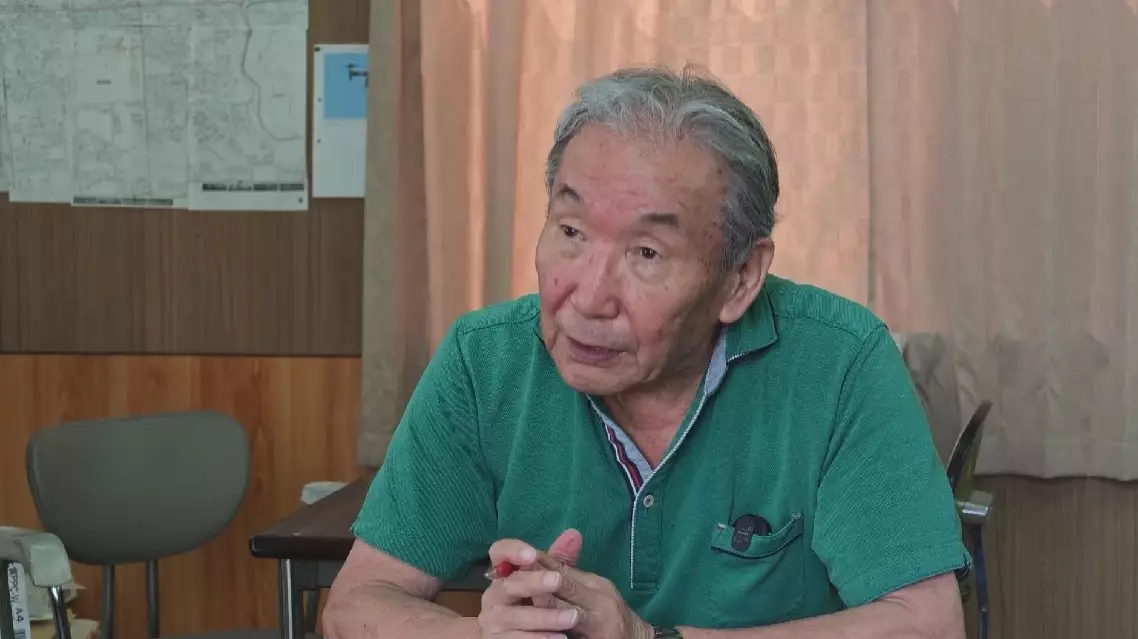
'Never send our students to war again': Kagoshima peace activist sounds alarm over Japan's military buildup