Skip to Content Facebook Feature Image

Yellow Card Secures $40 Million in Strategic Equity Funding to Further Global Expansion

Business

Yellow Card Secures $40 Million in Strategic Equity Funding to Further Global Expansion
Business

Business

Yellow Card Secures $40 Million in Strategic Equity Funding to Further Global Expansion

2026-08-06 02:04 Last Updated At:02:10

ATLANTA--(BUSINESS WIRE)--Aug 5, 2026--

Yellow Card, a leading global stablecoin infrastructure provider, today announced the successful closing of a $40 million strategic funding round, with investment from SC Ventures by Standard Chartered, Sony Innovation Fund, Polychain Capital, Blockchain Capital, and additional strategic investors. The funding will scale Global USD Accounts, Yellow Card's end-to-end dollar account for businesses, and expand the stablecoin rails connecting it to markets worldwide. This brings Yellow Card's total financing to over $120 million in equity financing.

This press release features multimedia. View the full release here: https://www.businesswire.com/news/home/20260805749230/en/

“Stablecoins are here to stay, but their adoption will depend on robust infrastructure and clear real-world utility. Yellow Card is building those rails for businesses across Africa, enabling them to access and move value efficiently across markets. We believe YC is well positioned to scale across Africa and beyond and look forward to supporting its next phase of growth,” said Alex Manson, CEO of SC Ventures.

The investment from Sony Innovation Fund reflects growing institutional interest in stablecoins for payments globally and will allow Yellow Card to deepen its reach in Asia-Pacific.

“Sony Innovation Fund is actively investing across the web3 technology stack, and we are excited to back Yellow Card as it builds the stablecoin infrastructure layer that emerging markets need to move money faster, more reliably, and at global scale,” said Austin Noronha, Managing Director, Sony Ventures-US. “By combining robust APIs, deep local fiat rails, institutional-grade security, and a strong regulatory-first approach, Yellow Card is making stablecoin-powered payments practical for banks, fintechs, and enterprises. As the company rapidly expands beyond Africa into broader emerging markets across LATAM, EMEA, and APAC, we look forward to supporting its vision of becoming a trusted bridge between traditional finance and the next generation of digital money.”

“This investment is a vote of confidence in what we've spent years building: the infrastructure that lets global businesses move money without a traditional correspondent banking. But the bigger opportunity now is connecting banks themselves to stablecoin rails. When institutions plug into this infrastructure, they're not just modernizing payments, they're unlocking dollar access for millions of businesses that traditional correspondent banking has left behind. Money should move at the speed and convenience of the internet, and increasingly, banks want to move with it,” said Chris Maurice, CEO and Co-Founder of Yellow Card.

The financing will help deliver Global USD Accounts to more businesses, giving them a single account to hold U.S. dollars, hold and swap stablecoins, manage treasury, and collect and disburse local currencies on domestic rails in over 50 countries. The accounts run on infrastructure Yellow Card has operated for years, and the new funding deepens the company's presence in Latin America and Asia Pacific, and expands the local payment rails and currency coverage needed to scale globally. Global USD Accounts are already used and trusted by many of Yellow Card's customers, including Visa and Western Union.

Yellow Card has facilitated over $10 billion in transactions across its network. The company supports more than 50 currencies, and holds relevant licenses, authorizations and registrations in 22 jurisdictions across North America, Europe, and Africa. Strategic partnerships with Visa, Mastercard, PayPal, and Coinbase have positioned the company as an infrastructure layer for global payments players.

About Yellow Card

Yellow Card is a leading global stablecoin infrastructure provider, enabling banks, fintechs, and multinational businesses to access US dollars, manage treasury, and move money across borders. Supporting more than 50 currencies, Yellow Card combines global reach with deep emerging markets coverage, and is trusted by customers including Visa and Western Union. For more information, visit yellowcard.io.

Yellow Card Secures $40 Million in Strategic Equity Funding to Further Global Expansion

Yellow Card Secures $40 Million in Strategic Equity Funding to Further Global Expansion
CEDAR CREST, N.M. (AP) — The state of New Mexico sued the Department of Justice and Acting Attorney General Todd Blanche on Wednesday, saying the federal government blocked the state's ability to investigate the sex crimes of financier Jeffrey Epstein at a ranch there.

The lawsuit filed in federal court in Washington, D.C., said the Justice Department and Blanche stonewalled New Mexico Attorney General Raúl Torrez’s criminal investigation into Epstein and others, taking steps that “actively harms victims and undermines the public interest.”

The lawsuit, which seeks judicial intervention to force the federal government to turn over relevant materials to New Mexico's investigators, was filed on the same day that New Mexico is releasing a report showing its preliminary findings from an ongoing probe into Epstein and his ranch.

Torrez and his senior prosecutors “have faced sustained resistance” to the kind of information-sharing that had occurred in the past between state and federal investigators, the lawsuit said.

A message seeking comment from the Justice Department on Wednesday was not immediately returned.

The lawsuit said the Justice Department insisted that information requests be formal and rejected them after they were made.

As a result, the lawsuit added, the Justice Department and Blanche were hiding information about Epstein and his co-conspirators when New Mexico is one of the few jurisdictions that may still be able to hold Epstein's associates accountable or “provide some sense of justice to survivors.”

At a news conference, Torrez said his office has made 10 separate requests for key information and has been ignored or denied.

“We have heard repeatedly they will cooperate and what our team has experienced is anything but cooperation,” Torrez said in a video conference call with reporters.

“Todd Blanche today with a stroke of a pen could grant us the access that he claimed,” Torrez said. “Instead they have decided to stonewall, to obstruct and to frankly conceal for whatever reason.”

Epstein took his own life in a federal jail in New York City in August 2019 after he was denied bail on sex trafficking charges lodged against him when he was arrested a month earlier.

His former girlfriend and close associate, Ghislaine Maxwell, is serving a 20-year prison sentence after she was convicted in 2021 of sex trafficking charges at a trial in Manhattan, where some of the witness testimony alleged that Epstein and Maxwell had sexually abused women at the New Mexico ranch.

Epstein purchased his sprawling estate in Stanley, New Mexico, a sparsely populated ranching community about 30 miles (48 kilometers) south of Santa Fe, in 1993 from former Democratic Gov. Bruce King and built a hilltop mansion with a private airstrip and helipad.

The property was sold by Epstein’s estate in 2023 to the family of Don Huffines, a Republican who was recently appointed state comptroller in Texas. In a February social media post on X, Huffines said the property has been renamed San Rafael Ranch after a saint associated with healing and that his family plans to operate a Christian retreat there.

In December, the Justice Department started releasing investigative records pertaining to Epstein and Maxwell in accordance with the Epstein Files Transparency Act.

Complaints quickly arose about shoddy redactions and too many sealed materials from accusers and members of Congress who fought to pass the transparency act. Records that were released, including photographs, interview transcripts, call logs, court records and other documents, were either already public or heavily blacked out, and many lacked necessary context.

AP writer Larry Neumeister in New York and Jeffrey Collins in Columbia, South Carolina, contributed to this report.

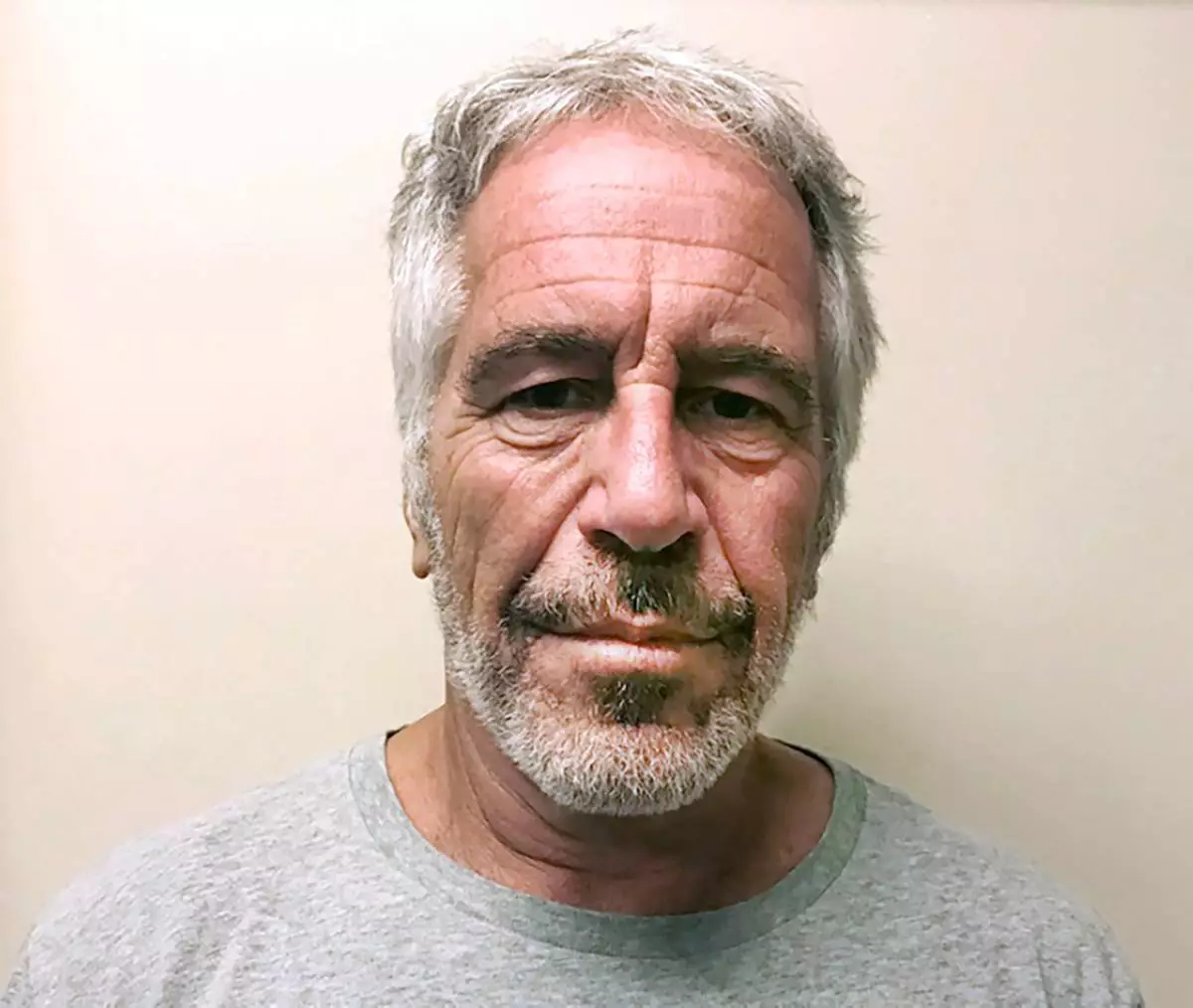
FILE — This photo provided by the New York State Sex Offender Registry shows Jeffrey Epstein on March 28, 2017. (New York State Sex Offender Registry via AP, File)

FILE — This photo provided by the New York State Sex Offender Registry shows Jeffrey Epstein on March 28, 2017. (New York State Sex Offender Registry via AP, File)

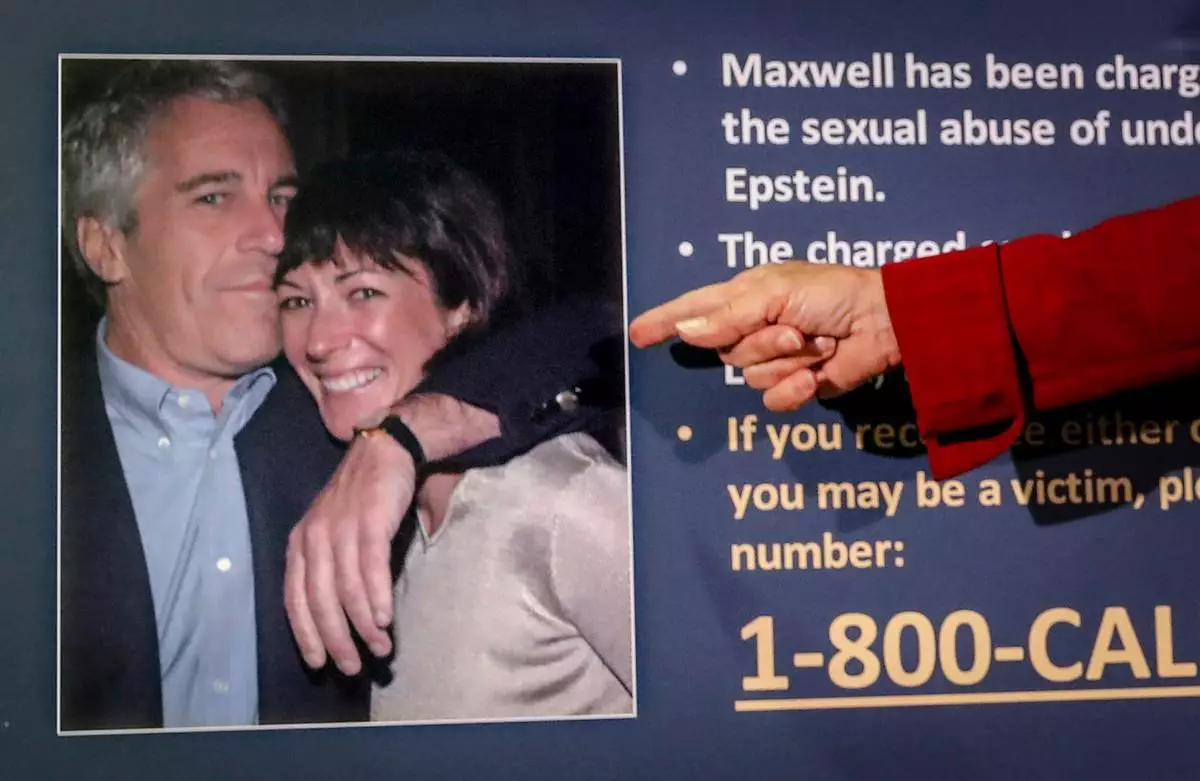
FILE - Audrey Strauss, acting U.S. attorney for the Southern District of New York, points to a photo of Jeffrey Epstein and Ghislaine Maxwell during a news conference in New York on July 2, 2020. (AP Photo/John Minchillo, File)

FILE - Audrey Strauss, acting U.S. attorney for the Southern District of New York, points to a photo of Jeffrey Epstein and Ghislaine Maxwell during a news conference in New York on July 2, 2020. (AP Photo/John Minchillo, File)

Recommended Articles