Iran and Oman are close to finalizing an agreement on new arrangements for commercial shipping through the Strait of Hormuz, under which the temporary northern and southern routes will be replaced by a new single route passing through Iran's territorial waters for two to four months, said a senior Iranian diplomat.
In an interview with the official news agency IRNA published Wednesday, Iranian Deputy Foreign Minister for Legal and International Affairs Kazem Gharibabadi said the two sides had reached in-principle agreement on almost all relevant issues, including the entry and exit route map, following more than three weeks of consultations.
Iranian Foreign Ministry Spokesman Esmaeil Baghaei on Tuesday described the ongoing talks between Iran and Oman as "positive" at both technical and political levels, with a focus on designating safe routes for vessels' passage through the Strait of Hormuz.
According to him, the two countries have reached consensus on the geographic coordinates of the proposed routes through the Strait and are now finalizing a joint statement.
However, Kazem Gharibabadi pointed out that the potential agreement did not mean that the strait would be reopened completely.
He emphasized that the terms of navigation in the Strait must be determined exclusively by Iran and Oman, and that Tehran would firmly reject any outside interference.
Gharibabadi rejected U.S. claims of negotiations with Iran, saying Tehran had received messages from Washington expressing readiness to return to commitments under the peace memorandum of understanding (MoU) signed between the two sides in June.
According to the deputy minister, the United States sent a message to Iran four to five days after the outbreak of the latest round of hostilities, proposing negotiations to address the issue.
Meanwhile, an informed source close to the Iranian negotiating team told the semi-official Fars news agency that the reopening of the strait hinges on tangible U.S. implementation of its commitments, adding that the U.S. Treasury Department's removal of sanctions on an Iraqi airline on Wednesday was unrelated to the Iran-U.S. MoU.
Iran tightened its control over the Strait of Hormuz on Feb. 28, barring safe passage of vessels belonging to or affiliated with Israel and the United States, following their joint launch of strikes on Iranian territory.
The U.S. military launched multiple waves of strikes against Iranian targets last month, saying they were in response to Iranian attacks on vessels in the strait and aimed at "degrading Iran's ability to threaten commercial shipping."
Iran responded with missile and drone attacks targeting U.S. military bases and facilities in the region.

Iran, Oman close to finalizing deal on new Hormuz Strait shipping arrangements: Iran's deputy foreign minister

Iran, Oman close to finalizing deal on new Hormuz Strait shipping arrangements: Iran's deputy foreign minister
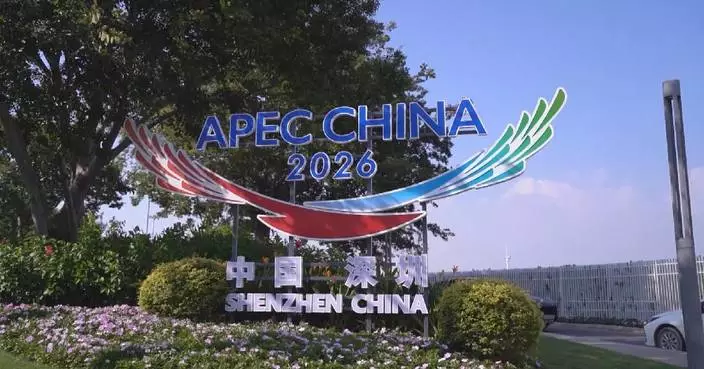
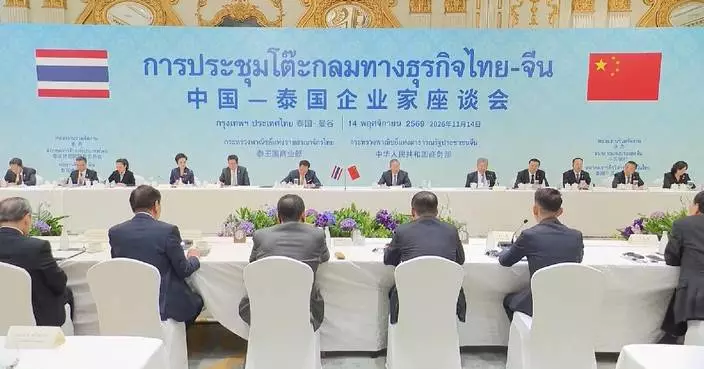
The fourth meeting of the APEC Business Advisory Council (ABAC) opened on Saturday in Shenzhen City in south China's Guangdong Province, drawing members who underscored China's expanding leadership in driving trade integration, green energy and multilateral cooperation across the Asia-Pacific.
The three-day meeting has gathered more than 60 representatives from 21 APEC economies, along with nearly 200 experts and accompanying staff, according to the organizer, the China Council for the Promotion of International Trade (CCPIT).
As global trade faces mounting economic headwinds and shifts toward sustainability, international business leaders pointed to China's technological advancements as a crucial catalyst for regional development.
Kasemsit Pathomsak, a Thai representative on ABAC, APEC's private-sector advisory body, highlighted China's contributions to green technology.
"China has played a very important role all along, especially when it comes to the renewable and green initiatives, with solar production, green technology, EVs. China has been very forefront in innovating and bringing this technology to the masses. I think it's very important to try help the world to try and become more green and affordable, to try transition to this green technology," said Pathomsak.
Members also highlighted APEC's vital platform for bilateral and multilateral engagement, fostering commercial bridges across diverse markets.
"As one of the economies that's in APEC, China, as we all acknowledge, is a very important trade partner in this region in both bilateral and multilateral opportunities. For Canada, we see that it is very important for us to establish a proper conduit of opportunities where we can grow together and understand the risks where we have to be clear about where we can and cannot go together. So, we think that APEC is an excellent opportunity where the public sector and the private sector, which I represent, would be able to engage in a deeper conversation on this," said Joseph Fung, an ABAC member from Canada.
Meanwhile, Francisco Suarez Hernandez, an ABAC member from Mexico, praised China's logistical and organizational leadership in hosting the meeting.
"It's really important and China hosting this event is the best example of leading. I think creating a bridge between Mexico, next year Vietnam, and this year China is going to be a great example. We actually hosted ABAC II (Second meeting of APEC Business Advisory Council) this year in Mexico. So, I know the effort," he said.
Founded in November 1995, ABAC is the only non-governmental body with an official advisory role in the APEC Economic Leaders' Meeting, engaging in a formal dialogue and submitting annual policy recommendation reports to APEC leaders.
After the ABAC meeting, Shenzhen will host the 2026 APEC CEO Summit on Nov 17 to 18, drawing the region's top business and government leaders to chart a course for Asia-Pacific prosperity.
This is the third time China has hosted APEC meetings, and the first in 12 years.
Working with other member economies under the theme of "Building an Asia-Pacific Community to Prosper Together," China has focused on three priorities, namely openness, innovation and cooperation, and has hosted more than 300 meetings and events across the country during the year.

ABAC members laud China's role in Asia-Pacific economic integration