The strengthening El Nino could push an additional 49 million people into acute food insecurity across some of the world's most vulnerable regions by the end of 2027, the World Food Programme (WFP) warned on Wednesday.
Based on an analysis of 45 countries deemed vulnerable to the adverse effects of the climate phenomenon, the WFP estimates in its latest report that the number of people facing acute food insecurity could rise to 274 million, an increase of 22 percent, by the end of next year.
Parts of Central America and Southern Africa are expected to bear the brunt of climate extremes, although significant impacts are also forecast in Eastern Africa and South and Southeast Asia, the U.N. agency said.
El Nino is a global climate "amplifier" that alters the probability of regional extreme weather events such as heatwaves, droughts and heavy rainfall. It is characterized by the warming of sea surface temperatures in the central and eastern equatorial Pacific Ocean.
The climate pattern typically occurs every two to seven years and lasts about nine to 12 months. It influences temperature and rainfall patterns across different regions of the world and generally has a warming effect on global climate.
According to the WFP, although El Nino is expected to peak between September and December, its impact on future harvest cycles will extend through 2027.
Since May, the agency said it has activated anticipatory response measures in South Sudan, Chad, Mauritania, Uganda, Guatemala and El Salvador, delivering more than 14 million U.S. dollars in pre-disaster assistance to half a million people.
The WFP and the Food and Agriculture Organization (FAO) have issued a joint appeal for increased funding to help vulnerable communities prepare for El Nino and protect lives, livelihoods and food security before conditions escalate into humanitarian crises.
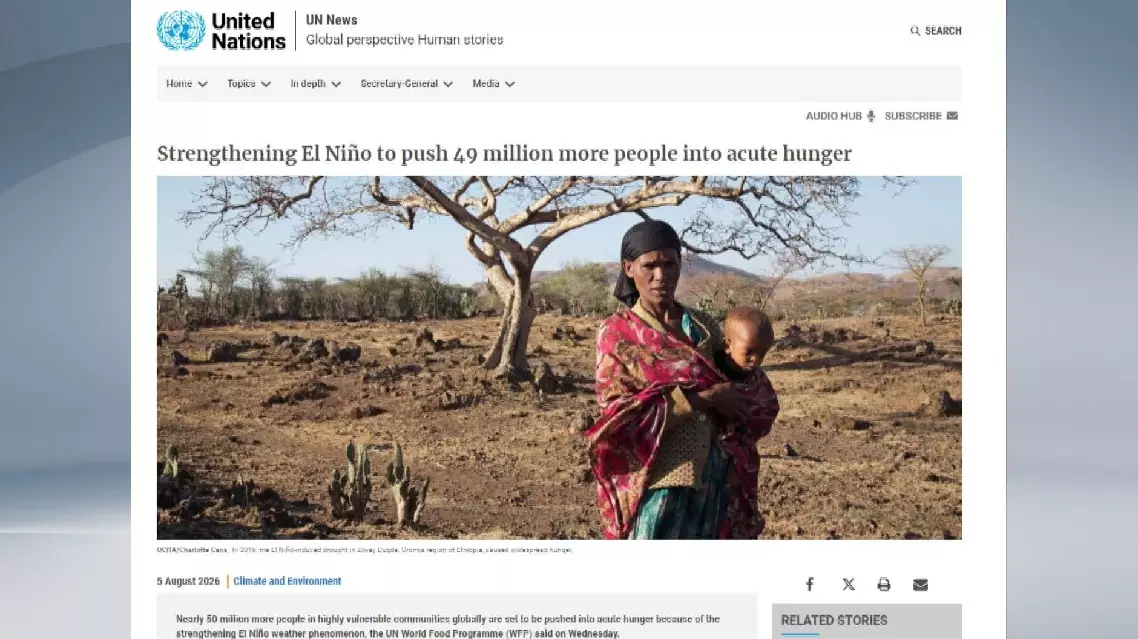
WFP warns El Nino could push 49 million more people into acute hunger