Skip to Content Facebook Feature Image

Senate confirms Hamilton to lead FEMA and clears more than 70 other Trump nominees

News

Senate confirms Hamilton to lead FEMA and clears more than 70 other Trump nominees
News

News

Senate confirms Hamilton to lead FEMA and clears more than 70 other Trump nominees

2026-08-08 02:14 Last Updated At:02:20

The Senate on Friday confirmed Cameron Hamilton as head of the Federal Emergency Management Agency, returning the former Navy SEAL to the embattled agency he led temporarily last year only to be fired after he publicly opposed eliminating it.

Hamilton was among a group of 74 nominations approved by the Senate, including President Donald Trump's pick to lead the Transportation Security Administration, David Cummins, and his choice for ambassador to Brazil, Daniel Perez.

Upon his swearing in, Hamilton will take over an agency whose future has been uncertain since Trump threatened to get rid of it days into his second term. Hamilton's nomination signaled that Trump may be moving on from that idea, but his Republican administration is still promising drastic changes in how the government handles disasters.

Hamilton will have to shepherd that overhaul while stabilizing an agency of more than 20,000 employees recovering from Kristi Noem's chaotic tenure as Department of Homeland Security secretary, during which FEMA saw mass staff departures, disruptions to grant programs and delays of disaster aid.

While her successor, former Oklahoma Sen. Markwayne Mullin, has worked to reverse some of the upheaval, Democrats are accusing Trump of politicizing disaster relief. Trump has approved 80% of disaster requests from Republican governors but only about 60% from Democratic governors, a July analysis by The Associated Press found.

In his June hearing before a Senate committee, Hamilton pledged to advocate for FEMA and its workforce while promising to ensure FEMA is “objective, is fair and reasonable, follows the law, and is consistent in the approach to how we adjudicate and process claims and requests for disasters.”

He also maintained that the agency is burdened by bureaucracy and cannot be expected to respond to every disaster. “We would need to strike a new balance to encourage cost reasonableness and cost savings,” he said.

Hamilton had limited emergency management experience before Trump named him FEMA's temporary leader in January 2025. Formerly a critic of the agency, Hamilton has said he came to appreciate FEMA's mission. His tenure proved short after he broke with Noem and other DHS officials over FEMA's future.

“I do not believe it is in the best interest of the American people to eliminate the Federal Emergency Management Agency,” Hamilton told a House panel in May 2025. He was fired the next day.

His stand drew admiration among some emergency management professionals.

“It tells you exactly who he is and how he will lead when the pressure is highest and the easy answer is the wrong one,” Pete Gaynor, FEMA administrator in Trump's first term, said in a statement supporting Hamilton's confirmation.

The National Emergency Management Association said it welcomes Hamilton as the FEMA administrator.

Still, some FEMA staffers have remained wary of Hamilton’s role in controversial decisions last year like canceling a multibillion-dollar resilience grant program.

Hamilton will take over in the middle of a busy summer disaster season that has already brought destructive wildfires and dangerous flooding and as FEMA manages more than 1,000 open disaster declarations. He will be FEMA’s first permanent administrator in Trump’s second term, overseeing an agency eager for stability.

More than 4,300 employees separated from FEMA in the 2025 budget year, more than 1,500 through voluntary reductions, resulting in a “loss of institutional knowledge and experienced personnel,” according to a Government Accountability Office report.

Since replacing Noem in March, Mullin has rehired for some eliminated positions and rescinded a rule that any expense greater than $100,000 needed to be approved by the secretary’s office — a requirement that backlogged billions of dollars in disaster aid.

But DHS has also introduced policies stirring up new controversy. Twenty-five states and the District of Columbia sued the Trump administration last month over new election security requirements in FEMA counterterrorism grants to states.

The Trump administration and lawmakers are advocating for sweeping changes to federal disaster response. At a meeting of governors last weekend, Mullin called FEMA “bloated.”

“The biggest reform you’re going to see is more responsibility is going to go back to your states,” Mullin said, with “FEMA there for worst of the worst, not every storm.”

In May, a Trump-appointed FEMA Review Council recommended major changes to how the federal government supports states, tribes and territories during disasters. That could speed assistance but might reduce how much and how often FEMA helps. Many of the suggested changes require congressional action.

Gaynor told the AP he expects that Hamilton will work quickly to make changes within his authority. “I think his biggest priority in general is making the whole recovery system simpler for disaster survivors, for states and locals to navigate, to make it less of mystery, and cut out red tape,” Gaynor said.

Other nominees confirmed included Cummins as head of the Transportation Security Administration, an agency also facing persistent challenges, particularly after this year’s record partial government shutdown left TSA employees working for weeks without pay. The funding lapse prompted thousands of officers to call out of work and about 1,100 to quit.

Cummins is a former senior vice president at the government contractor Serco, which runs air traffic control towers at 60 American airports. He is taking over as the Trump administration seeks to expand private airport screening and cut thousands of TSA jobs.

The Senate also confirmed Perez, a close friend of Secretary of State Marco Rubio and a former speaker of Florida’s House of Representatives, to be the next U.S. ambassador to Brazil.

Perez has been central to an ongoing diplomatic dispute between the Trump administration and the government of Brazilian President Luiz Inácio Lula da Silva.

Earlier this week, the State Department said the Brazilian government’s refusal to accept Perez’s appointment was a main reason for its decision to revoke the visa of Brazil’s ambassador to the United States. International diplomatic protocols demand that host countries approve any foreign ambassadors before they can take their posts.

Associated Press writers Rio Yamat in Las Vegas; Josh Funk in Omaha, Neb.; and Matthew Lee in Washington contributed to this report.
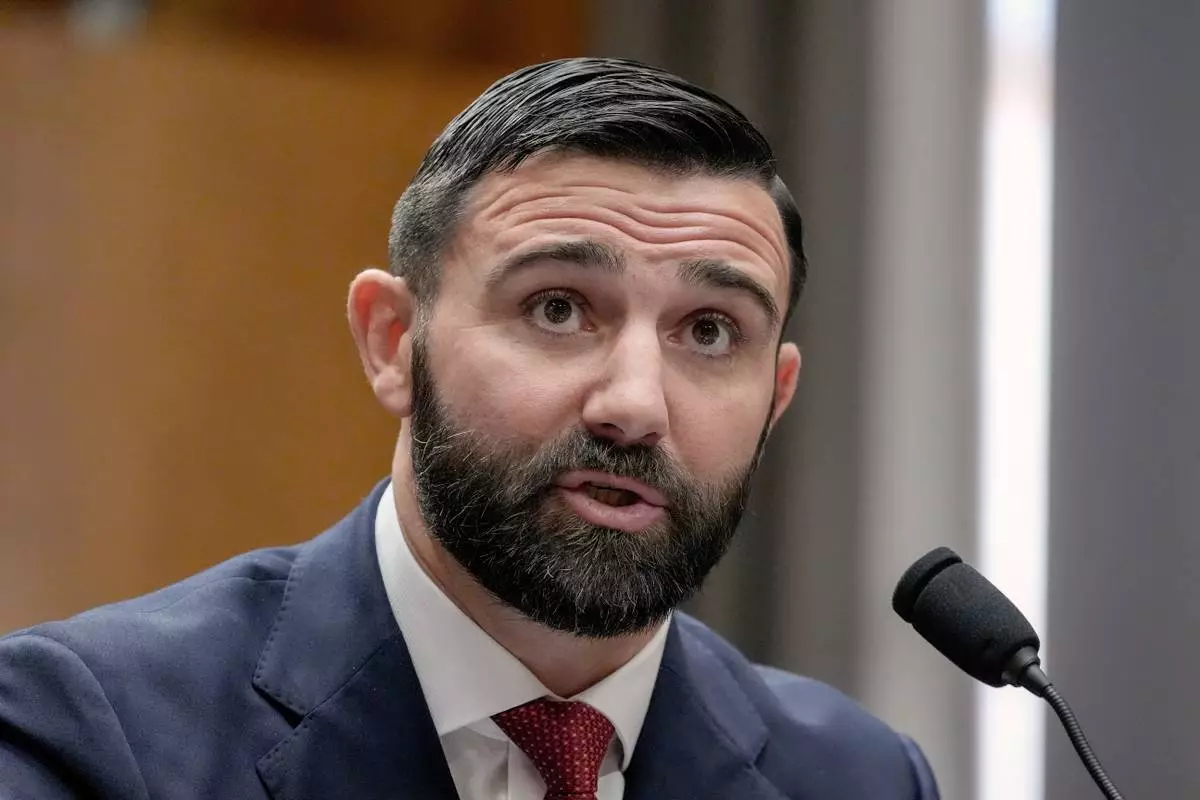
FILE - Cameron Hamilton testifies during a hearing to examine his nomination to be Administrator of the Federal Emergency Management Agency, June 17, 2026, on Capitol Hill in Washington. (AP Photo/Mariam Zuhaib, File)

FILE - Cameron Hamilton testifies during a hearing to examine his nomination to be Administrator of the Federal Emergency Management Agency, June 17, 2026, on Capitol Hill in Washington. (AP Photo/Mariam Zuhaib, File)
NEW YORK (AP) — Stocks rose on Wall Street Friday and Treasury yields fell after the government reported that employers unexpectedly cut 23,000 jobs last month.

The S&P 500 rose 0.5% and is hovering around the record it set on Tuesday. The Dow Jones Industrial Average rose 80 points, or 0.2%, as of 2:04 p.m. Eastern time. The Nasdaq composite rose 1%. Every major index is on track for weekly gains.

Technology stocks, with their big market values, did much of the heavy lifting for the broader market. They are often the heaviest weights determining the market’s direction. Nvidia jumped 1.4% and Broadcom rose 1%.

The bond market reacted more strongly to the weaker signal on the job market, which can be seen as allowing the Federal Reserve more time before raising interest rates to fight inflation.

The yield on the 10-year Treasury fell to 4.65% from 4.67% just prior to the jobs update. It was as low as 4.60% before recovering a bit.

The yield on the two-year Treasury, which more closely tracks expectations for Fed action on interest rates, fell to 4.20% from 4.22% prior to the report's release. It was as low as 4.15% before edging back up.

“Although the stock market is likely to welcome the dovish implications of the report, investors should be wary of the future growth potential of an economy where fewer people are working,” said Peter Graf, chief investment officer at Amova Asset Management Americas, in a research note.

Overall, the report paints a dimmer picture of the jobs market, which has been one of the brighter areas of the economy amid rising inflation and worries about household spending. It included a revision to the figures for June and May that involved slashing a combined 103,000 jobs from payrolls for those months.

The Fed has been holding interest rates steady amid worries about hotter inflation, fueled by a rise in oil prices because of the U.S. war with Iran. Wall Street expects at least one rate increase by the end of the year, with forecasts shifting for the next meeting. Expectations for a rate cut in September are down to 44%, from 55% on Thursday and from 67% a week ago, according to CME FedWatch.

A weakening jobs market could make matters more complicated for the Fed, which has to balance supporting job growth with fighting inflation. Raising interest rates can help tame inflation by slowing economic growth. A weaker jobs market, though, could become even shakier under higher interest rates as businesses find it more difficult to expand under increased borrowing rates.

Businesses, and Wall Street, prefer lower interest rates because it can help boost investments. That might bolster a weakened jobs market, but it could worsen already stubborn inflation.

Wall Street will get several important inflation updates next week. The most closely watched will be the consumer price index, or CPI, which measures costs for consumers. Wall Street expects it to show that inflation in July rose at a 3.4% rate, which would be a slight easing from the 3.5% rise in June. Interest rates have held stubbornly above 3% for most of the year.

“Today’s weak payrolls print may ease the pressure on the Fed to raise rates at its September meeting, but next week’s inflation data will still likely be the deciding factor,” said Ellen Zentner, chief economic strategist for Morgan Stanley Wealth Management, in a research note.

The jobs report caps a week dominated mostly by corporate earnings and concerns about the ongoing U.S. war with Iran.

Corporate earnings for the second quarter are on track for the strongest growth since 2021. Nearly 90% of companies in the S&P 500 have reported their results and analysts expect profit growth of 50% overall. That has helped allay some concerns on Wall Street about whether big gains for stocks in 2026 are justified. Strong profits help support those gains in stock values.

It was a light day for earnings as companies near the close of the latest round of reports.

Airbnb jumped 15.5% following the vacation-rental company's report late Thursday that showed stronger profit and revenue for its most recent quarter than analysts expected.

Oil prices gained ground. The price of Brent crude, the international standard, rose 1.1% to $83.38 a barrel.

Rising oil prices have been behind hotter inflation. Prices were as high as $113 per barrel at one point during the now five-month U.S. war with Iran. That raised prices for gasoline and shipping for a wide range of products. The U.S. and Iran have both said they are working on deals that could reopen the Strait of Hormuz, where a fifth of the world's oil and natural gas once passed through.

Markets in Europe gained ground and markets in Asia were mixed.

Associated Press Business Writer Elaine Kurtenbach contributed to this report.

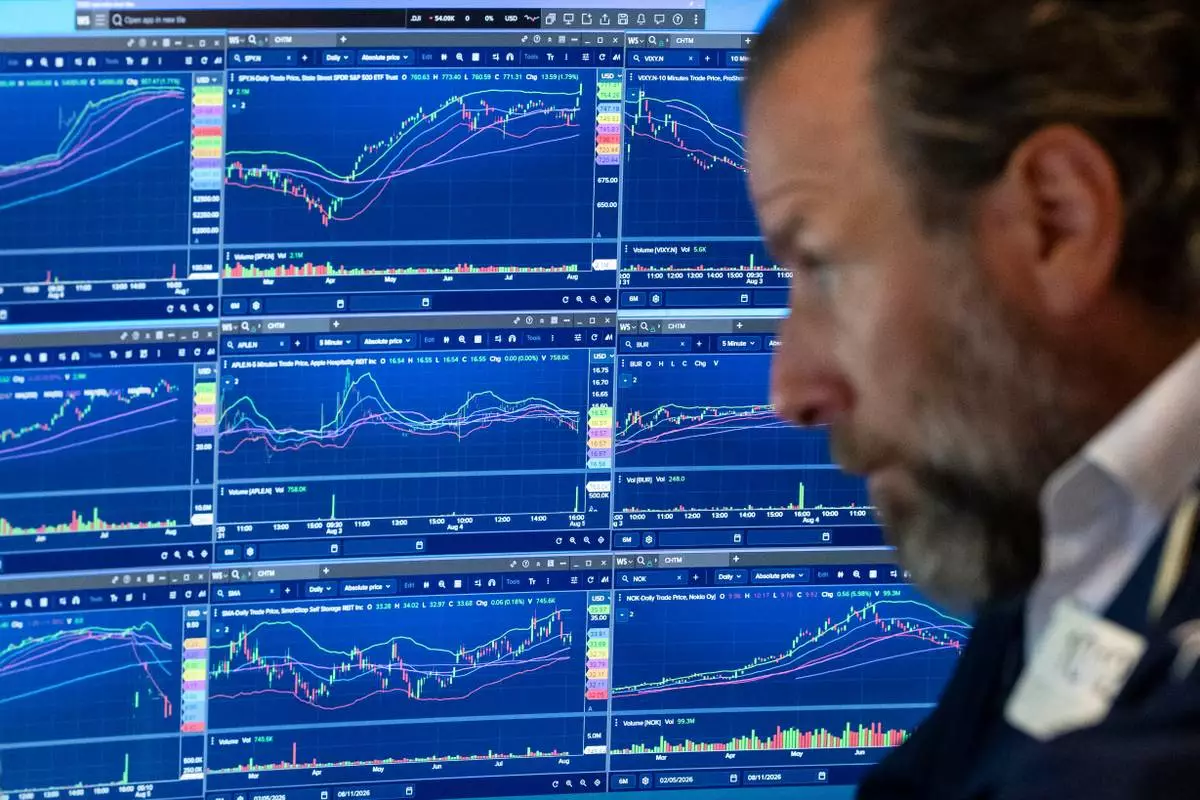
Specialist Michael Pistillo works on the floor of the New York Stock Exchange, Wednesday, Aug.. 5, 2026, in New York. (AP Photo/Yuki Iwamura)

Specialist Michael Pistillo works on the floor of the New York Stock Exchange, Wednesday, Aug.. 5, 2026, in New York. (AP Photo/Yuki Iwamura)

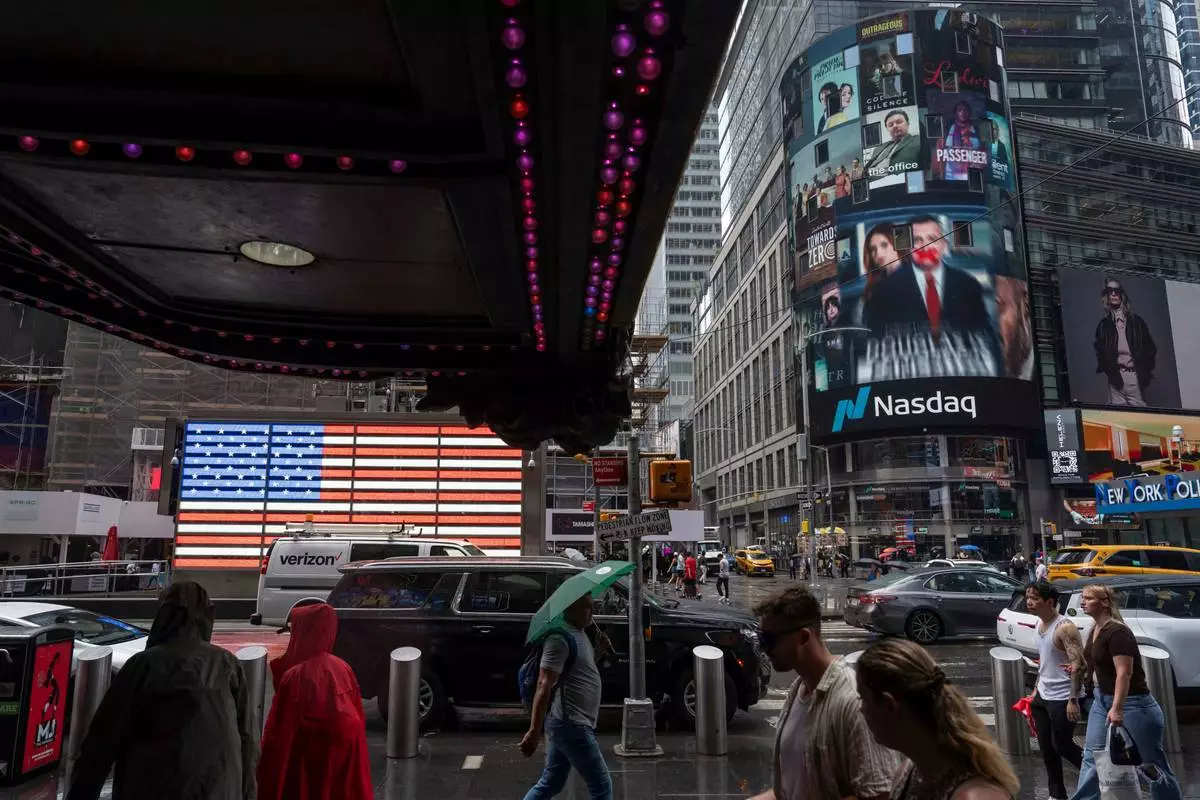
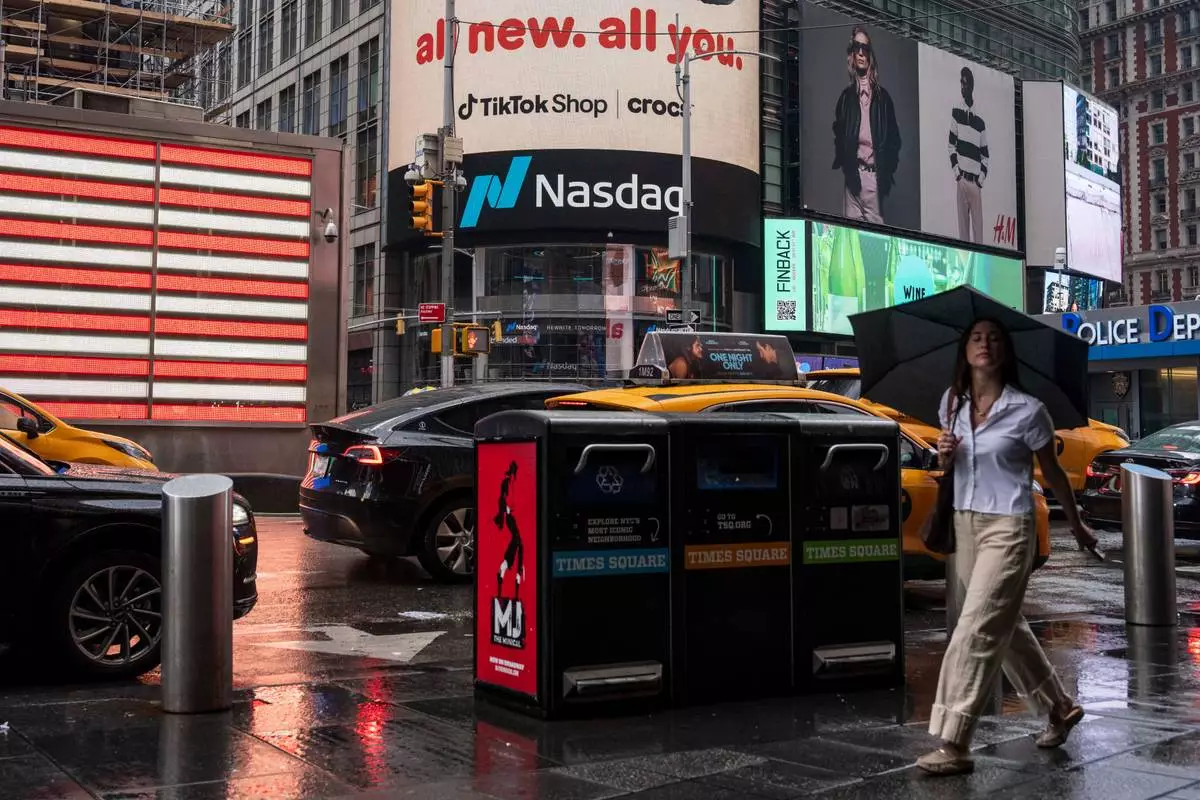
People walk past the Nasdaq MarketSite, Thursday, Aug. 6, 2026, in New York. (AP Photo/Yuki Iwamura)

People walk past the Nasdaq MarketSite, Thursday, Aug. 6, 2026, in New York. (AP Photo/Yuki Iwamura)

People walk past the Nasdaq MarketSite, Thursday, Aug. 6, 2026, in New York. (AP Photo/Yuki Iwamura)

People walk past the Nasdaq MarketSite, Thursday, Aug. 6, 2026, in New York. (AP Photo/Yuki Iwamura)

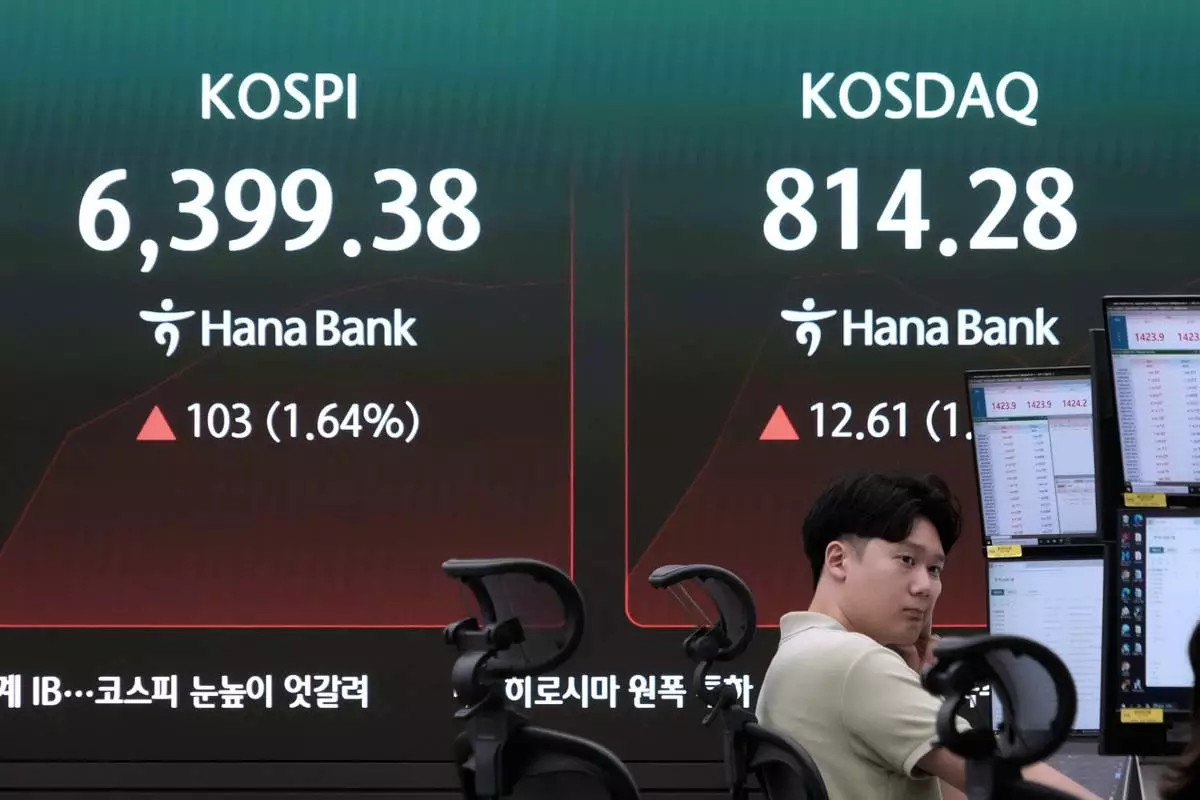
A currency trader watches monitors near a screen showing the Korea Composite Stock Price Index (KOSPI) at the foreign exchange dealing room of the Hana Bank headquarters in Seoul, South Korea, Friday, Aug. 7, 2026. (AP Photo/Ahn Young-joon)

A currency trader watches monitors near a screen showing the Korea Composite Stock Price Index (KOSPI) at the foreign exchange dealing room of the Hana Bank headquarters in Seoul, South Korea, Friday, Aug. 7, 2026. (AP Photo/Ahn Young-joon)

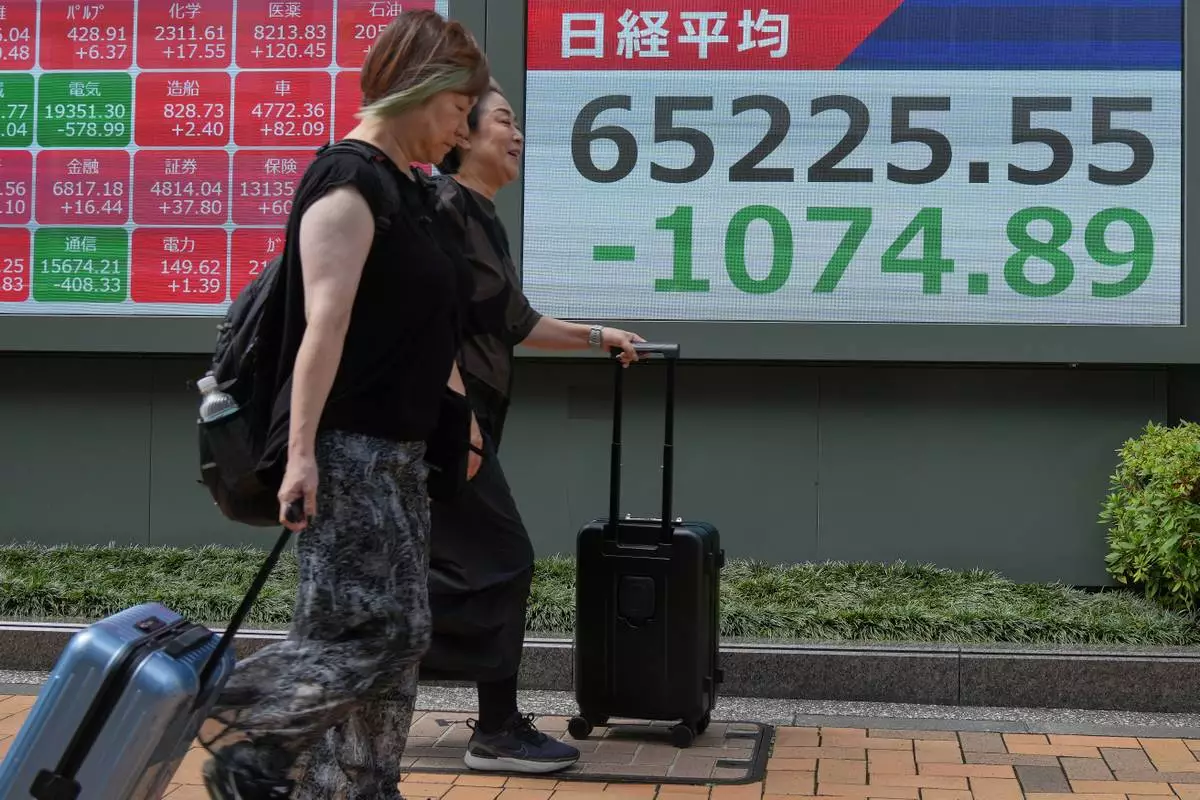
People walk past an electronic board showing Japan's Nikkei index at a securities firm Thursday, Aug. 6, 2026, in Tokyo. (AP Photo/Eugene Hoshiko)

People walk past an electronic board showing Japan's Nikkei index at a securities firm Thursday, Aug. 6, 2026, in Tokyo. (AP Photo/Eugene Hoshiko)

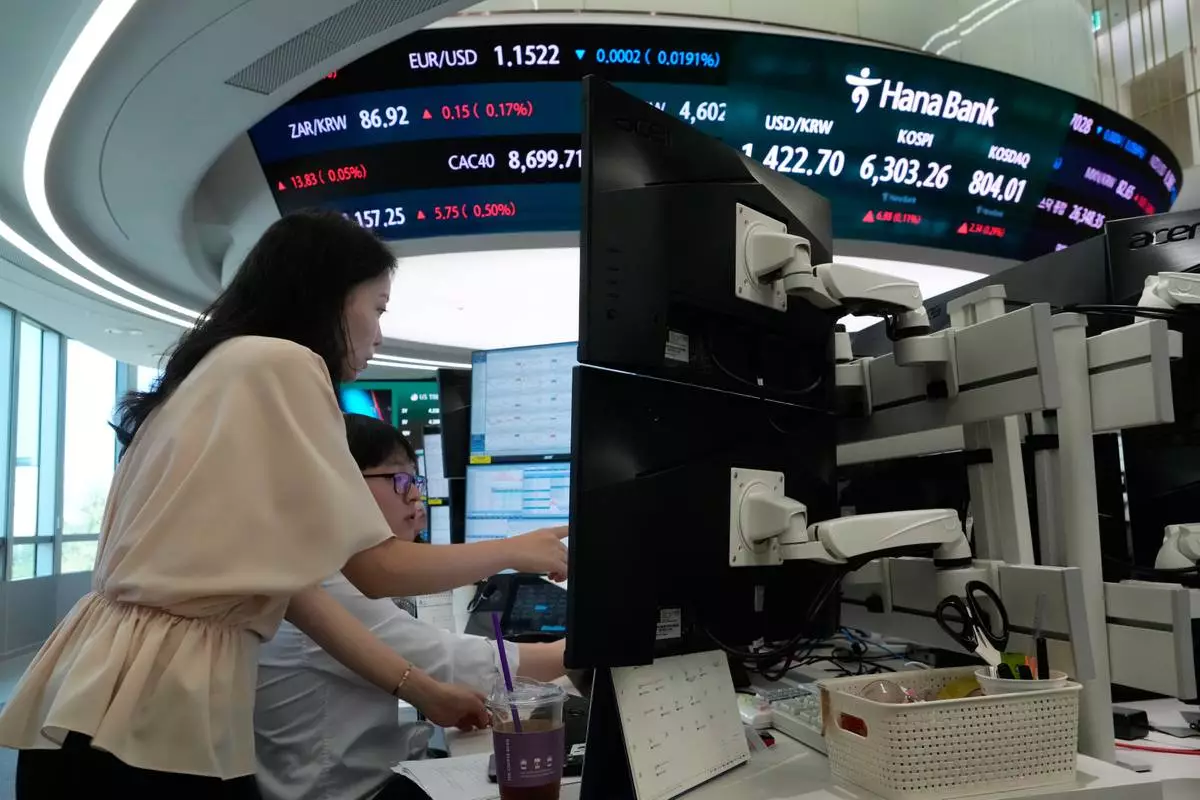
Currency traders watch monitors at the foreign exchange dealing room of the Hana Bank headquarters in Seoul, South Korea, Friday, Aug. 7, 2026. (AP Photo/Ahn Young-joon)

Currency traders watch monitors at the foreign exchange dealing room of the Hana Bank headquarters in Seoul, South Korea, Friday, Aug. 7, 2026. (AP Photo/Ahn Young-joon)

Recommended Articles