ABBOTSFORD, Colúmbia Britânica--(BUSINESS WIRE)--ago 7, 2026--
A Coulson Aviation Canada, divisão canadense da Coulson Aviation, adquiriu 10 aeronaves C-130H Hercules anteriormente pertencentes à Força Aérea Real Canadense (RCAF) do governo do Canadá.
Este comunicado de imprensa inclui multimédia. Veja o comunicado completo aqui: https://www.businesswire.com/news/home/20260807611044/pt/
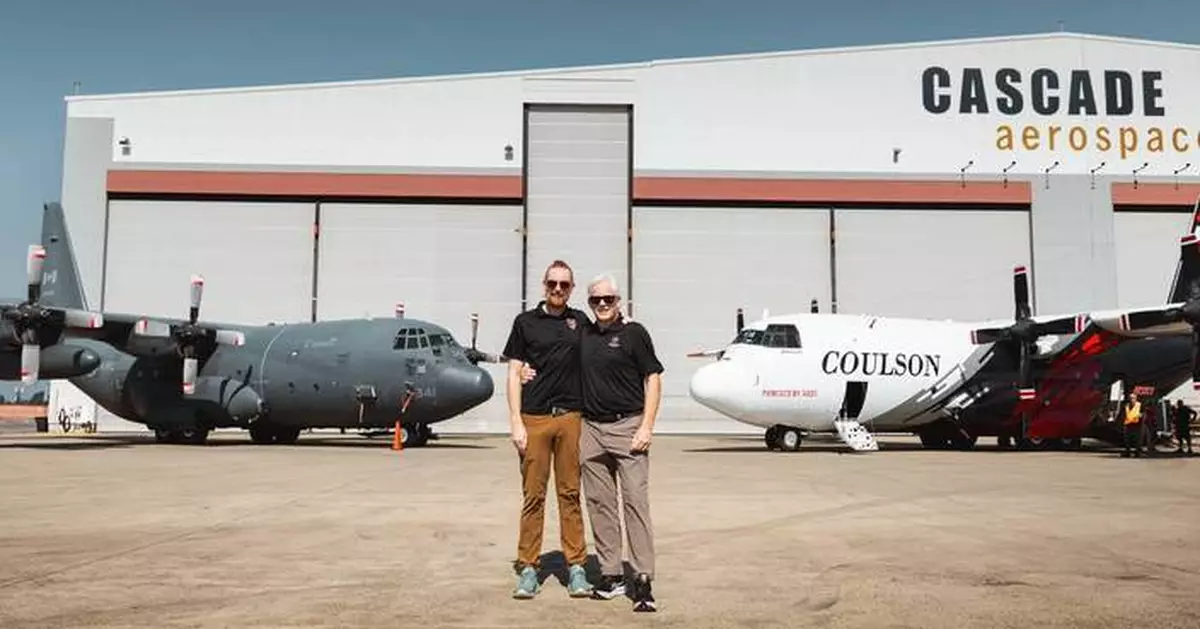
Com a aquisição, a frota global de C-130H da Coulson dobrou, passando de 10 para 20 aeronaves. Com isso, sua divisão canadense ganhou a capacidade necessária para construir a maior e mais avançada frota de aeronaves-tanque C-130 do mundo.
O programa será liderado pela Coulson Aviation Canada e suas equipes de engenharia, fabricação, manutenção e operações, localizadas na Colúmbia Britânica.
“Essas aeronaves serviram ao Canadá por décadas, e gostaríamos de prestar homenagem aos homens e às mulheres da Força Aérea Real Canadense (RCAF) que as operaram com excepcional profissionalismo ao longo de todo o seu período de serviço”, afirmou Wayne Coulson, CEO da Coulson Aviation Canada.
Por muitos anos, o CC-130H prestou serviços de transporte aéreo tático, busca e resgate, operações no Ártico, resposta a desastres, missões humanitárias e destacamentos internacionais ao Canadá.
O país vem enfrentando temporadas de incêndios florestais mais longas e complexas, com focos de incêndio maiores e mais intensos, o que impõe exigências crescentes aos bombeiros e às agências responsáveis. Esse ambiente em constante mudança exige aeronaves que cheguem rapidamente aos focos de incêndio, lancem grandes quantidades de retardante de forma controlada e mantenham as operações durante temporadas de incêndio cada vez mais exigentes.
A aquisição se baseia no programa C-130H existente da Coulson, bem como em sua experiência com a modificação, a certificação, a operação e a manutenção da aeronave como avião-tanque.
As aeronaves-tanque C-130H da Coulson em operação são equipadas com o sistema proprietário da empresa para lançamento de retardante, o RADS-XXL. Cada aeronave pode transportar até 4.000 galões americanos — ou mais de 15.000 litros — de água ou retardante de incêndio.
O sistema RADS-XXL oferece às tripulações controle preciso sobre a quantidade e o nível de cobertura de cada lançamento. Sua alta vazão, combinada à carga útil, à velocidade, ao alcance e à capacidade do C-130 de operar em pistas mais curtas, torna a aeronave adequada tanto para o ataque inicial rápido quanto para a resposta sustentada a incêndios florestais.
“Os bombeiros em terra precisam de aeronaves no ar que cheguem rapidamente ao local, transportem uma carga significativa e possam continuar operando”, afirmou Coulson. “Essas aeronaves multiplicarão a atual capacidade de resposta inicial aos incêndios florestais em operação no Canadá.”
A Coulson Aviation Canada dá suporte a todo o programa de aeronaves-tanque C-130, incluindo engenharia, certificação, fabricação, modificação, manutenção, treinamento e operações de voo.
Com a aquisição, espera-se ampliar as oportunidades de trabalho qualificado no Canadá nas áreas de engenharia aeronáutica, fabricação, manutenção, operações de voo e treinamento técnico.
O anúncio foi feito na Cascade Aerospace, em Abbotsford, onde estão localizadas várias das antigas aeronaves da RCAF.
A Coulson levou também o Tanker 131, um de seus aviões-tanque C-130H em operação, para Abbotsford, com o objetivo de demonstrar a capacidade do Hercules em sua próxima função. Durante o Abbotsford International Airshow, o Tanker 131 realizará um lançamento demonstrativo, apresentando as capacidades do sistema de avião-tanque RADS-XXL de 4.000 galões da Coulson.
Sobre a Coulson Aviation Canada
A Coulson Aviation Canada é a divisão canadense da Coulson Aviation, empresa global de aviação de capital familiar sediada em Port Alberni, na Colúmbia Britânica.
A Coulson é a maior empresa privada de combate aéreo a incêndios do mundo, com mais de 60 anos de experiência em aviação e mais de quatro décadas de experiência específica nesse tipo de operação.
A empresa opera uma frota mista com mais de 60 aeronaves de asa fixa e rotativa, apoiando agências governamentais na América do Norte, América do Sul e Austrália.
A Coulson projeta, fabrica, certifica, opera e oferece suporte aos seus próprios sistemas de combate aéreo a incêndios, incluindo a família de sistemas de lançamento de retardante RADS. Essa abordagem integrada permite que a Coulson melhore continuamente a segurança, a precisão e a eficácia de suas aeronaves e tecnologias de combate a incêndios.
O texto no idioma original deste anúncio é a versão oficial autorizada. As traduções são fornecidas apenas como uma facilidade e devem se referir ao texto no idioma original, que é a única versão do texto que tem efeito legal.
Ver a versão original em businesswire.com:https://www.businesswire.com/news/home/20260807611044/pt/
CONTACT: Grace Nakazawa
grace@the-aml.com
KEYWORD: NORTH AMERICA EUROPE AUSTRALIA AUSTRALIA/OCEANIA CANADA
INDUSTRY KEYWORD: AIR TRANSPORT AEROSPACE MANUFACTURING
SOURCE: Coulson Aviation
Copyright Business Wire 2026.
PUB: 08/07/2026 05:57 PM/DISC: 08/07/2026 05:57 PM
http://www.businesswire.com/news/home/20260807611044/pt
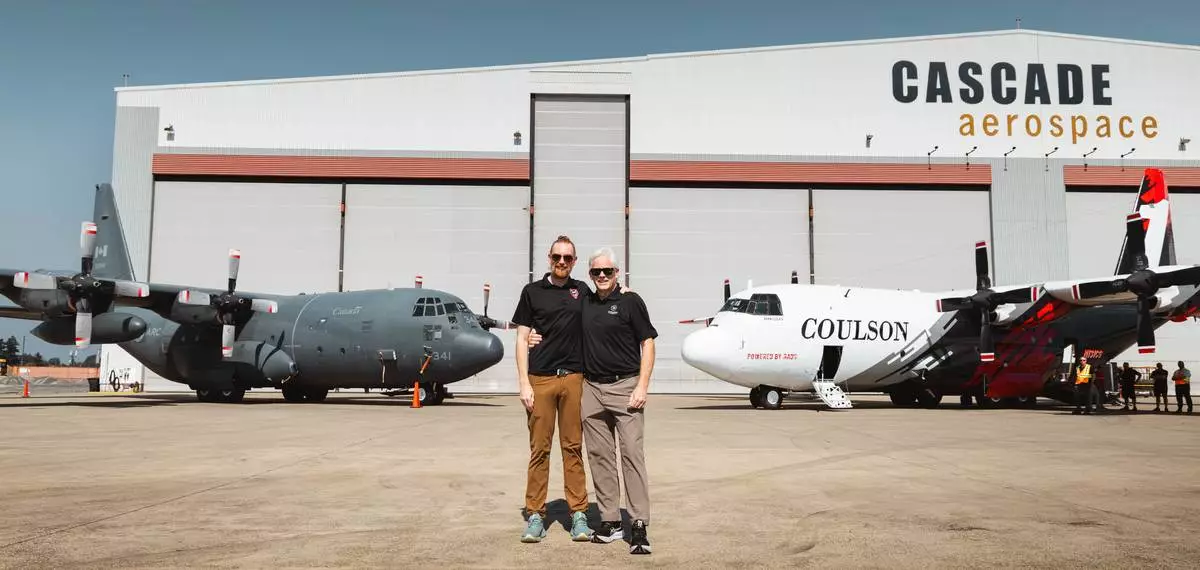
Britton Coulson, left, and Wayne Coulson stand in front of one of 10 former Royal Canadian Air Force CC-130H Hercules aircraft recently acquired by Coulson Aviation from the Government of Canada. At right is a Coulson C-130H outfitted for aerial firefighting with the company’s proprietary RADS-XXL retardant delivery system, capable of carrying up to 4,000 U.S. gallons, or more than 15,000 litres, of water or fire retardant. The acquisition doubles Coulson’s global C-130H fleet to 20 aircraft, expanding its capacity to build the world’s largest C-130 airtanker fleet.
UNITED NATIONS (AP) — U.N. Secretary-General Antonio Guterres is pleading for “a world built on interdependence” as he makes his final address to the General Assembly gathering of world leaders.
The U.N. leader has long implored leaders not to give up on cooperation and shared decision-making in the face of accelerating global challenges and increasing great-powers competition. Tuesday’s message took on additional urgency because he leaves office at the end of this year.
“The fault lines in our world are widening,” he said, citing geopolitical divides, wars, climate change and artificial intelligence. But instead of letting the future continue to veer toward fragmentation, transactionalism and mistrust, he called for “a world built on interdependence – and sustained by a dense web of economic, political, social and technological connections.”
THIS IS A BREAKING NEWS UPDATE. AP's earlier story follows below.
With wars raging,temperatures rising and artificial intelligence encroaching, leaders from across the planet converge at the United Nations on Tuesday to address each other and the world, airing their hopes, plans and grievances as the world body’s chief addresses them for the final time.
The annual high-level gathering at the U.N. General Assembly will be consumed with wars in Iran, Gaza, Ukraine,Sudan, Congo and Myanmar and a persisting question: Can the leaders do anything to end them?
And what can they do about the relentless rise of global warming threatening the future of the planet, the growing inequalities within and among nations, and shocks to the global economy as blocked shipping routes and supply chains increase the cost of living and slow growth?
The future of the United Nations will also definitely be on the agenda. At 81, its powers are still the victorious nations from World War II, not the 21st century’s major global players. The U.N.’s 193 member nations have agreed to a wide-ranging reform package that includes updating key institutions such as the powerful U.N. Security Council, where the U.S., Russia, China, Britain and France hold inordinate sway because of their veto power. Reform, however, is easier said than implemented.
Behind the scenes, there will be speculation about who will lead the United Nations next. Secretary-General Antonio Guterres’ second five-year term ends Dec. 31 and no clear successor has emerged.
There is still no question that the U.N. remains the key gathering place for its 193 member nations and their leaders. Some 130 heads of state and government are expected to speak at the General Assembly starting Tuesday along with dozens of ministers.
Among the headliners: U.S. President Donald Trump and French President Emanuel Macron. Both will speak Tuesday after Guterres’ opening “state of the world” address. Ukraine’s President Volodymyr Zelenskyy and Iran’s President Masoud Pezeshkian speak Wednesday.
Israeli Prime Minister Benjamin Netanyahu — whom New York Mayor Zoran Mamdani wanted arrested for his treatment of Palestinians in Gaza until he learned he has no such authority — will address the assembly on Thursday. For a second year, Palestinian President Mahmoud Abbas won’t be coming to the U.N. because the U.S. has refused to give him a visa. He will nonetheless address the assembly by video the same day.
The United States, under its agreement with the U.N. to host the organization, is required to allow diplomats from all member nations to attend meetings.
Equally telling is who else isn’t coming. China’s President Xi Jinping is meeting Trump in Washington on Wednesday, yet he is skipping — some diplomats say snubbing — the U.N. gathering and sending a vice president instead. Russian President Vladimir Putin isn’t coming either, and Indian President Narendra Modi has backed out.
France's U.N. ambassador, Jerome Bonnafont, said it is “extremely critical” for world leaders this week to support the U.N. as the place where the world’s nations meet — especially at a time of such polarization.
“We believe in multilateralism," he said, "and we believe that the high-level week is the occasion for countries in the world to reaffirm that they prefer cooperation and dialogue to confrontation.”
There is no doubt it’s been a tough year for the world body. It has been pushed to the sidelines when it comes to its key responsibility of ensuring international peace and security and trying to end major conflicts in the Mideast and Ukraine. The U.S. failure to pay billions of dollars in outstanding arrears has left the organization’s finances in rocky shape.
Former U.N. deputy secretary-general Mark Malloch-Brown, a United Nations Foundation board member, said, “While the world still trusts the U.N., the global public is eager for change."
The future of artificial intelligence has pushed to the forefront of global concerns, with its speeding advances and the dawning recognition that there are no industry controls, let alone any global guardrails for a technology that has many advantages but also many disadvantages and unknowns.
Days before the global gathering, leaders of three major AI companies warned about the technology getting out of human control and called for a pause, but Trump dismissed their concerns as “a hoax,” and urged continued advances to keep the U.S. ahead of China.
The U.N. Security Council added a high-level meeting on AI to its agenda on Wednesday afternoon, a sign of the growing apprehension and need to address the issue. It was already slated to hold a high-level meeting on Ukraine with Zelenskyy on Wednesday morning.
For the U.N. chief, this will be his last assembly meeting with global leaders. He previewed his speech last week, telling U.N. reporters that power is shifting in “an era of deep uncertainty."
“At a time when the world faces three existential threats," he said, “international cooperation is more necessary than ever.”
Edith M. Lederer has covered international affairs for The Associated Press for more than a half century.
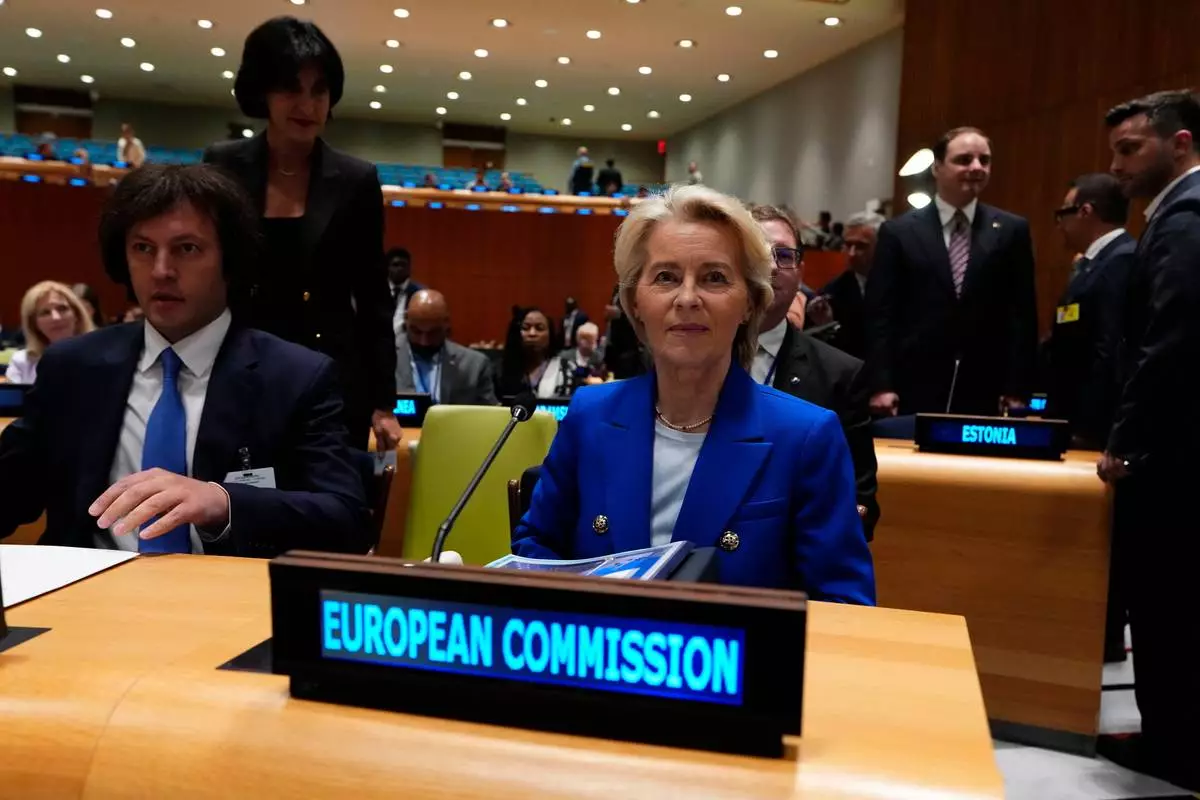
European Commission President Ursula von der Leyen attends the Partnership for Multilateralism Summit on the sidelines of the United Nations General Assembly (UNGA) at the UN headquarters, Monday, Sept. 21, 2026. (Justin Tang/The Canadian Press via AP)
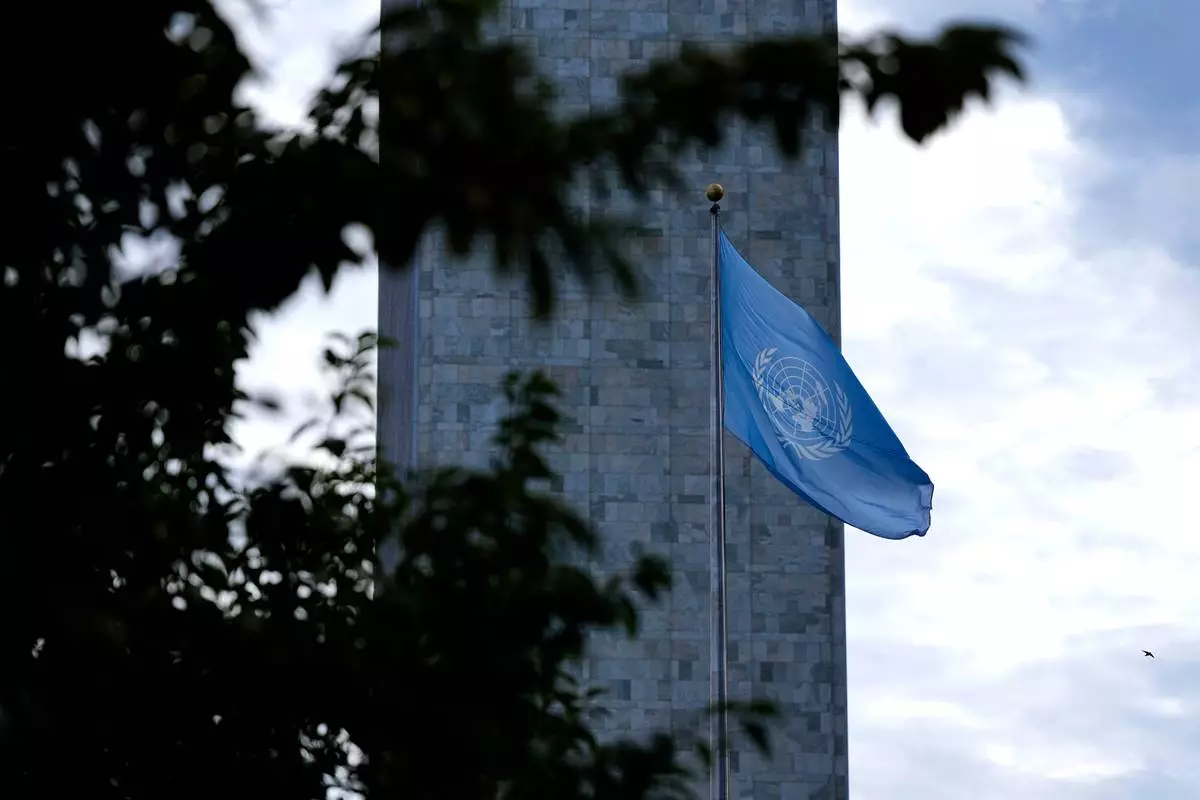
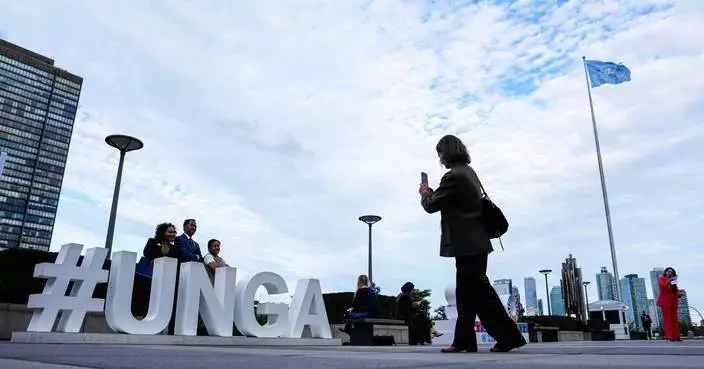
The flag of the United Nations flies during the United Nations General Assembly (UNGA) at the UN headquarters, Monday, Sept. 21, 2026. (Justin Tang/The Canadian Press via AP)
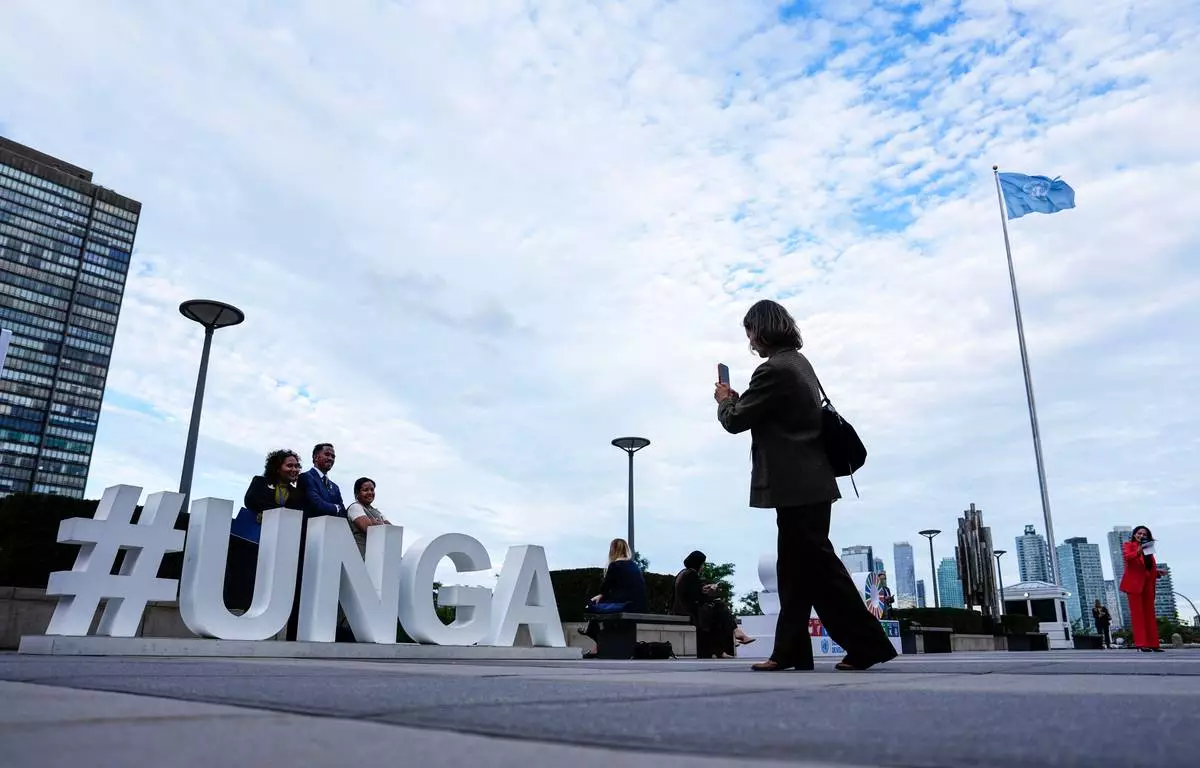
People pose as they arrive for the United Nations General Assembly (UNGA) at the UN headquarters, Monday, Sept. 21, 2026. (Justin Tang/The Canadian Press via AP)
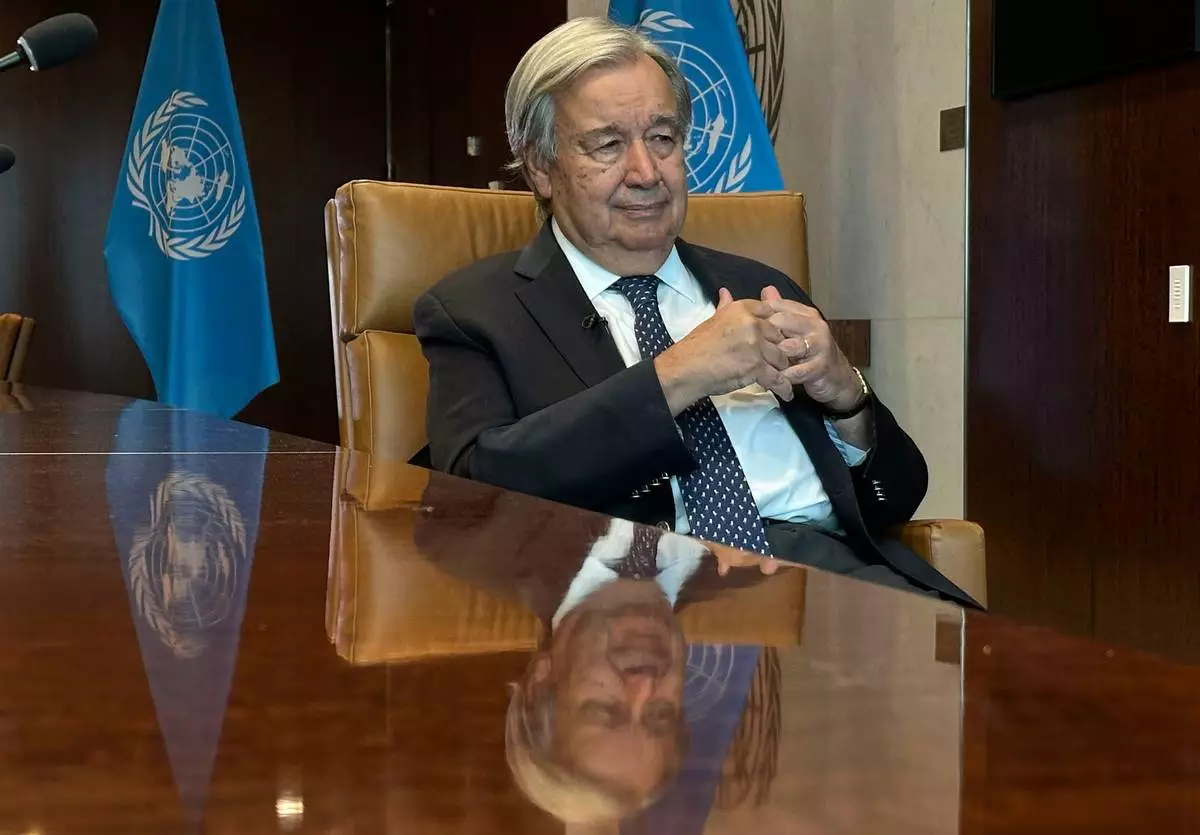
The United Nations Secretary-General Antonio Guterres speaks during an interview with The Associated Press at the United Nations headquarters, Thursday, Sept. 17, 2026. (AP Photo/David R Martin)