China on Saturday activated a Level-IV emergency response for flood and typhoon control in Jiangsu and Anhui as Typhoon Dolphin approaches, according to the Ministry of Emergency Management.
The State Flood Control and Drought Relief Headquarters and the ministry maintained a Level-III response for flood and typhoon control in Zhejiang and Fujian, as well as a Level-IV response for flood control in Heilongjiang.
Working groups have been dispatched to Zhejiang and Fujian to assist and guide local flood and typhoon control efforts.
A joint consultation involving multiple government departments and provincial-level regions was held on Saturday to assess the typhoon's development and make further arrangements for prevention and response efforts.
Typhoon Dolphin, the 13th typhoon of 2026, is forecast to make landfall along the coast between Zhejiang and northern Fujian from Sunday afternoon to Monday morning.
The typhoon is expected to bring strong winds and abundant moisture and affect a wide area. It may move slowly after landfall, bringing prolonged heavy rain and posing high risks of extreme weather and severe damage.
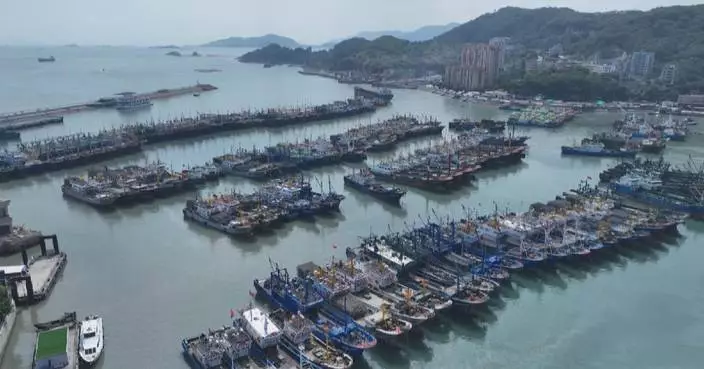
The headquarters' office on Saturday urged local authorities to evacuate all personnel working at sea, closely monitor high-risk areas, strengthen safety management at construction sites and other vulnerable locations, and ensure safety in the tourism and transport sectors.
It also called for strengthened flood control along rivers including the Huaihe River, preparations for the use of flood storage and detention areas, and the pre-positioning of emergency rescue forces to safeguard people's lives and property.
China has a four-tier emergency response system for flood control, with Level I being the most severe.
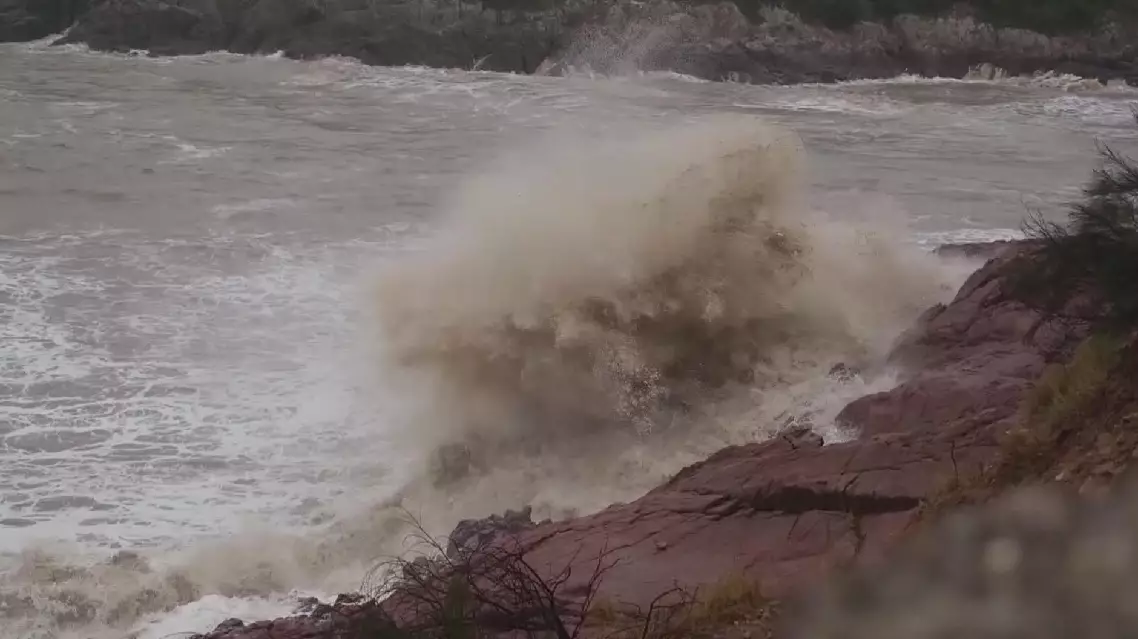
China activates emergency responses as Typhoon Dolphin approaches
Spain announced on Friday that it would temporarily restore internal border checks for travelers arriving from Italy in response to Rome's refusal to lift border controls on travelers arriving from Spain amid the recent migration crisis in the Spanish North African enclave of Ceuta.
The temporary checks at ports and airports will take effect at the start of Saturday and remain in force until Sept 7 unless circumstances change, according to a statement released by the Spanish government. The measures will include random identity and document checks.
The Spanish government said Italy had unilaterally reintroduced border checks on travelers arriving from Spain on Aug 1 without prior notification, describing the measures as "unjustified, discriminatory and contrary to the interests of the European Union (EU)."
Spain has called on Italy to withdraw the measures immediately.
Earlier Friday, the Italian government said it would maintain temporary checks on third-country nationals arriving from Spain until at least Aug. 15, citing national security and border-management concerns.
Rome said it "does not accept ultimatums or external pressure" on matters concerning national security and border management.
It also stressed that the controls do not apply to Spanish or other EU citizens traveling by air or sea, adding that Italian border authorities would seek to minimize disruption to legitimate cross-border travel.
Italian Prime Minister Giorgia Meloni announced the border control measures on July 31 following a massive influx of migrants into Ceuta. About 80,000 people entered the Spanish enclave at the end of July, nearly 75,000 of whom subsequently returned voluntarily.
Between 3,000 and 5,000 migrants remain in the enclave, overwhelming reception facilities and creating a severe humanitarian emergency, Ceuta President Juan Jesus Vivas said Thursday.
The influx has fueled tensions among EU member states over border controls and the possible onward movement of migrants within the Schengen area.

Spain to impose temporary border checks on arrivals from Italy