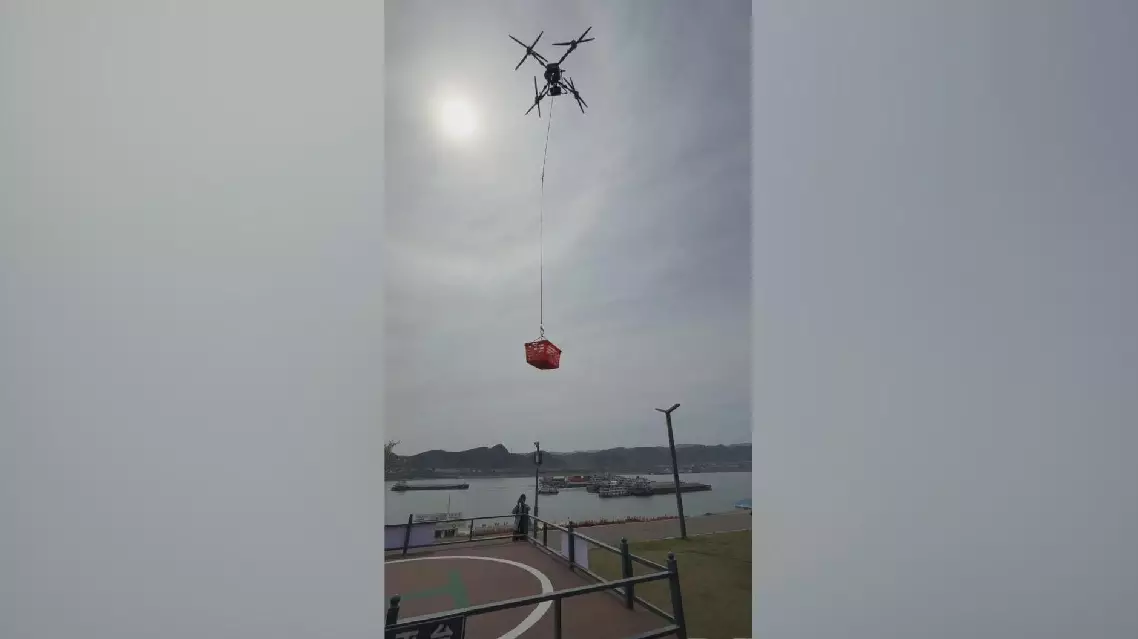
Ships sailing on the Yangtze River can now get supplies through drone delivery services.
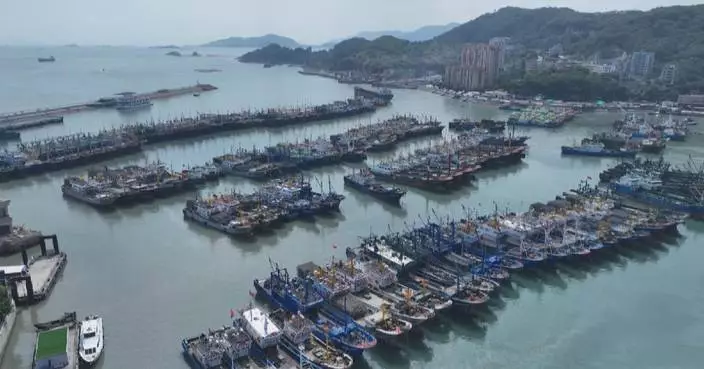
At the Linjiangping waiting anchorage in the Yichang section of the Yangtze River, over 100 vessels line up to pass through the Three Gorges Dam every day, and more than 1,000 crew members are in need of drone delivery services.
When they want something, sailors simply input the name of their ship. The drone pilot then uses the Beidou Navigation Satellite System to pinpoint the vessel's exact location on the water and delivers the items to the ship's stern.
This was not the case in the past. When there was no drone delivery service, ships in need of supplies in emergency like spare parts or medicine had to turn around and drop anchor, which meant the delay of the schedule. Now, drones can drop packages onto vessels even while they are moving downstream, without having to stop. This innovative delivery has made life a lot easier for the crews.
But the novel service did not come by without overcoming some challenges. Since most sailors on the river are in their middle ages, and are less accustomed to ordering on smartphones, the drone operators had to offer delivery services free for over a month in the beginning, so as to build user habits.
Now the service operates within a specific zone below a bridge and is strictly prohibited in areas designated for dangerous goods.
Nevertheless the limited novel drone delivery has solved practical problems for sailors and promises modern convenience to the small, floating world on the Yangtze River.
Drone delivers supplies to ships on Yangtze River
The World Tour event of the Youth Leaders Community for Global Development (YLCGD) was held in Bangkok, Thailand recently, bringing young representatives from across the globe to engage in in-depth, vibrant exchanges on digital development.
Representatives from China, the United States, Germany, the United Kingdom, the Philippines, Indonesia and other countries exchanged views on topics including opportunities and risks in the digital era at a workshop on the "Digital South" initiative.
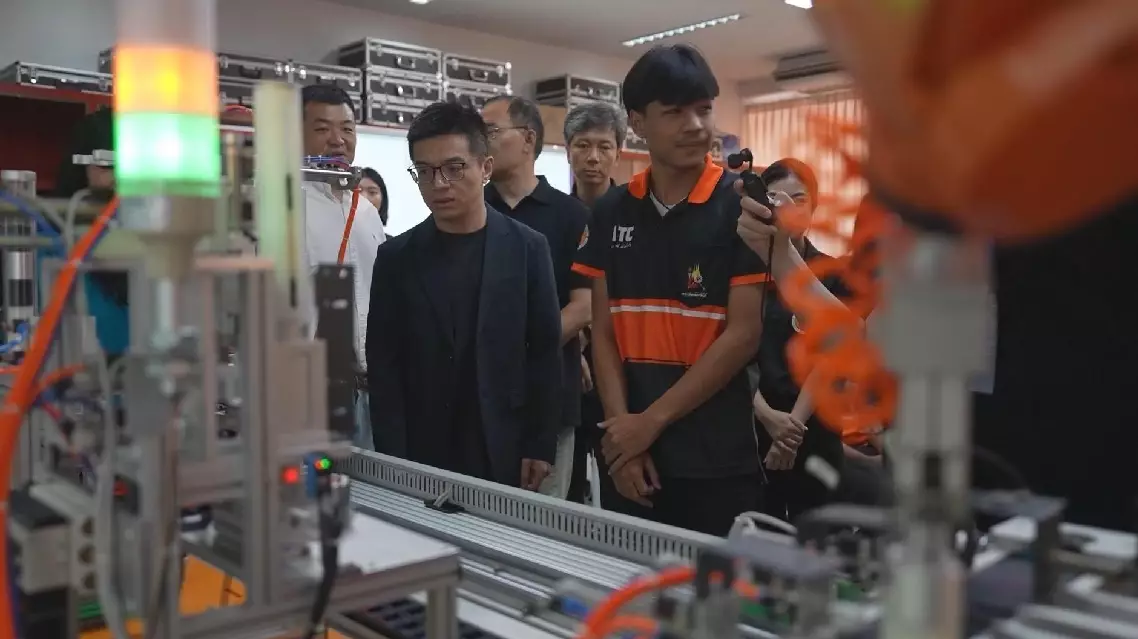
They also visited the Chinese Academy of Sciences Innovation Cooperation Center (Bangkok) and toured Ayutthaya Technical College, home to the first Luban Workshop established overseas by China.
"We are learning with robots, and AI is getting more involved. It's becoming more and more integrated. We are learning skills that can help us understand the future better," said Phumiphak Phongsanong, a student from Ayutthaya Technical College participating in the event.
Gathering at the United Nations Economic and Social Commission for Asia and the Pacific (UNESCAP), participants discussed how the next generation can help narrow digital gaps through innovation, education and international cooperation.
They agree that as artificial intelligence expands, so do concerns over a widening digital divide.
While some countries race ahead, others still struggle with access to technology, connectivity and digital skills -- gaps that continue to hold back sustainable development.
"I think there is still a chance that the digital divide will widen because access is still very limited and also we still need to increase the knowledge of the youth and other stakeholders in using AI tools for the issues that we are facing right now," said Sheryl Rose Reyes, a remote sensing expert of the UNESCAP's Space Applications Section.
It's part of China's Global Development Initiative, or GDI, which promotes cooperation on sustainable development, including digital connectivity and capacity building.
"I think China can play a leading role because China is currently very advanced in terms of AI and other technologies. So I think China can, in addition to investing more in research and development and innovation, it can also share its knowledge to other developing countries," said Hu Chaoyi, Associate Economic Affairs Officer of the UNESCAP's ICT and Development Section.
For participants here, closing the digital divide isn't simply about expanding access to technology. It's about ensuring more people have the skills to use it. As artificial intelligence reshapes economies, initiatives like these are aiming to make digital development more inclusive and turning international cooperation into practical opportunities for the next generation.
Youth leaders gather in Bangkok to discuss Youth responsibilities in digital era