JAKARTA, Indonesia (AP) — Indonesia intensified efforts Monday to combat a growing number of wildfires across the archipelago, deploying helicopters, hundreds of firefighters and disaster personnel as blazes spread through a popular national park in East Java and peatlands in Sumatra during an unusually dry season, officials said.
East Java authorities said the largest blaze is burning in Bromo Tengger Semeru National Park in East Java province, where about 743 hectares (1,836 acres) have been scorched.
Dry weather and strengthening El Nino conditions raised the risk of more forest and land fires during the peak dry season, Indonesia's Forestry Ministry said in a statement Sunday.
It said the fire has burned large areas of dry grassland, vegetation and protected edelweiss flowers as flames have spread to the Penanjakan area, a popular viewpoint for tourists visiting Mount Bromo, one of Indonesia's best-known attractions. No injuries or evacuations have been reported.
Hundreds of firefighters, soldiers, police officers, park rangers and volunteers worked to contain the blaze. Authorities have closed the park to visitors until further notice.
As of Monday, at least three helicopters have been deployed for water-bombing operations over hot spots that are difficult to reach by land. Ground crews are carrying out manual firefighting, cooling operations, patrols and constructing firebreaks to prevent the flames from spreading further.
“We continue to coordinate efforts to address and anticipate forest and land fires,” said Forestry Minister Raja Juli Antoni while visiting the park Sunday. He urged the public to avoid activities that could spark new blazes, including discarding cigarette butts and clearing land by burning.
The Bromo fire comes as several other wildfires have been reported across Indonesia during an unusually dry season.
More than 50 hectares (124 acres) of peatland have burned in Jambi province on Sumatra island, causing choking haze in some areas and raising concerns about worsening air quality. The largest fire has been reported in the village of Sungai Gelam in the Muaro Jambi district, where dozens of hectares of oil palm plantations owned by local residents have been destroyed. The blaze has burned since Wednesday.
About 300 firefighters and disaster personnel have been deployed to battle the fire. Officials said deep peat soil, limited water supplies, difficult access and strong winds have complicated efforts, even with three helicopters conducting aerial firefighting operations.
Indonesia’s Meteorological, Climatological and Geophysical Agency said August and September are expected to be the most critical months as dry vegetation and strong winds create favorable conditions for fires to spread rapidly.
Forest fires on Sumatra and Borneo islands often break out during dry spells. Fires are often started illegally by plantation owners or traditional farmers to clear land for planting, and those burns periodically blanket parts of Southeast Asia in hazardous haze.
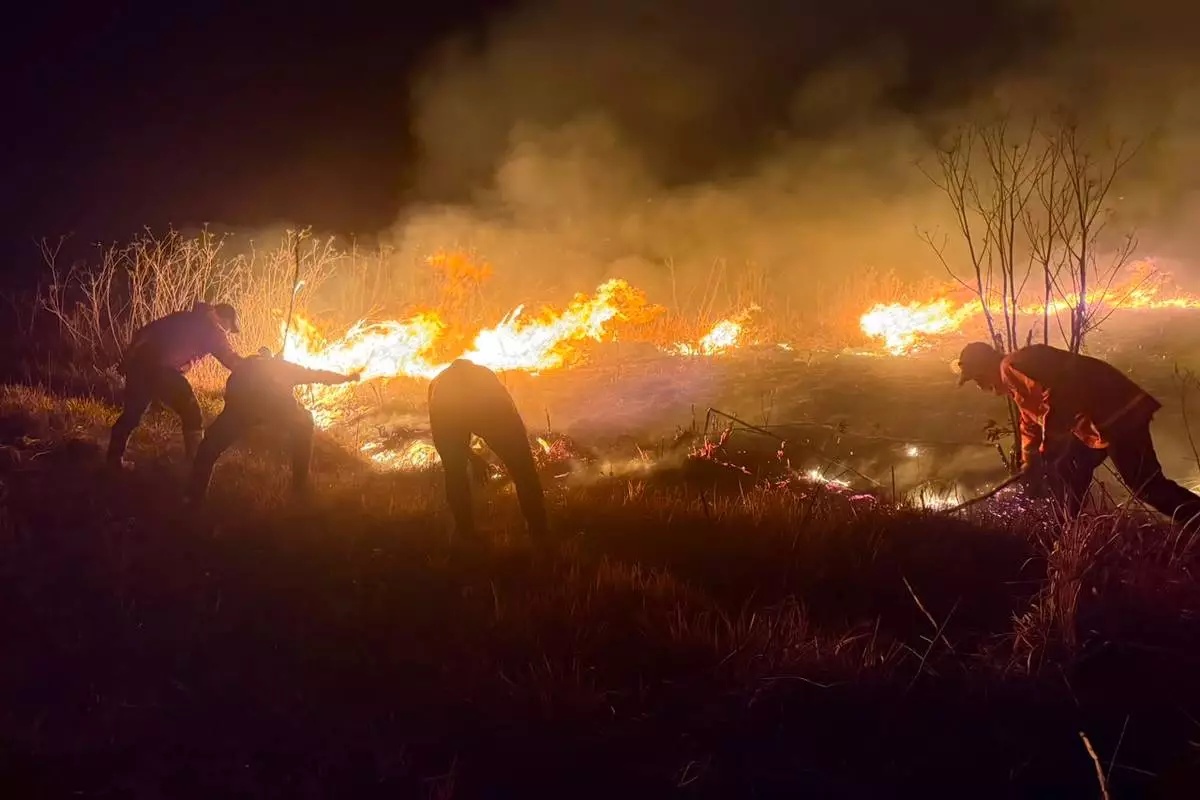
In this photo released by the East Java Regional Disaster Mitigation Agency, firefighters attempt to extinguish a wildfire that razes through Mount Bromo National Park in Probolinggo, Indonesia on Saturday, Aug. 8, 2026. (East Java Regional Disaster Mitigation Agency via AP)
WELLINGTON, New Zealand (AP) — New Zealand’s Electoral Commission launched a campaign Monday urging New Zealanders at home and abroad to register to vote or update their details in the system, warning that a legal change ahead of November’s election means voters must be enrolled in advance.
Measures enacted by government lawmakers in December and lambasted by their opponents removed a policy allowing New Zealanders aged 18 and older to enroll on election day, including when they arrived at a polling place to cast their vote.
New Zealanders must now be registered and have their addresses and other details updated in the system 13 days before election day, or they will be turned away from polling places. This year’s enrollment deadline is Oct. 25 ahead of the Nov. 7 election. They can begin voting from Oct. 26 in the country, or from Oct. 21 if they are overseas.
The country’s center-right government, which is seeking a second term in power, introduced the enrollment cut-off in a suite of changes to electoral law, which also included a ban on prisoners voting and approval for larger anonymous political donations.
Governing parties said the deadline to enroll was enacted to curb the increasing length of time taken to reach a final result after election day.
“The experience last time was by virtue of having on-the-day enrollment we ended up in a situation where it took us three weeks to count the vote, which was the longest it had ever taken us as well,” Prime Minister Christopher Luxon, leader of the National party, told Radio New Zealand in July.
Detractors, including the center-left opposition parties, said the government wanted to curb so-called special votes, which are cast by New Zealanders abroad or away from home and by those not already registered to vote on election day and counted afterward. Special votes have favored left-wing parties in modern times.
“Something that potentially disenfranchises tens of thousands of New Zealanders is not the sort of change that an individual government should make,” Chris Hipkins, leader of the opposition Labour party, told reporters in July when he pledged to reverse the measures if he became prime minister.
The Electoral Commission, an independent agency that runs New Zealand’s vote, said about 700,000 special votes were still expected. Officials predicted that even with the new enrollment deadline, reaching an election result would take 20 days after voting finished, instead of 23 days without the cut-off.
A total of 89% of those allowed to vote in New Zealand were enrolled so far, according to Electoral Commission figures. Voting is optional in New Zealand but enrollment for those eligible and living in the country is compulsory, with failure to do so punishable by a fine of 100 New Zealand dollars ($59).
There are up to 1 million New Zealanders living abroad, although it isn’t known how many are eligible to vote. Those eligible can vote from overseas by downloading ballot papers from the commission’s website, having them signed by someone else and uploading them online.
The Oct. 25 enrollment deadline also applies to overseas voters. Some people could also cast ballots in person, officials said.
“Most countries, many countries, will have our embassy and you can go along and vote there,” said Karl Le Quesne, New Zealand’s chief electoral officer.
Young people were traditionally more likely to leave their registration until nearer polling day, Le Quesne said. A campaign beginning Monday to urge enrollment before the deadline would include ads on social media, gaming and streaming platforms to target young people.
“There are still 440,000 unenrolled, of which 200,000 are aged between 18 and 25, so that’s the cohort we really need to be getting the attention of,” said Simon Moore, the commission's chair.
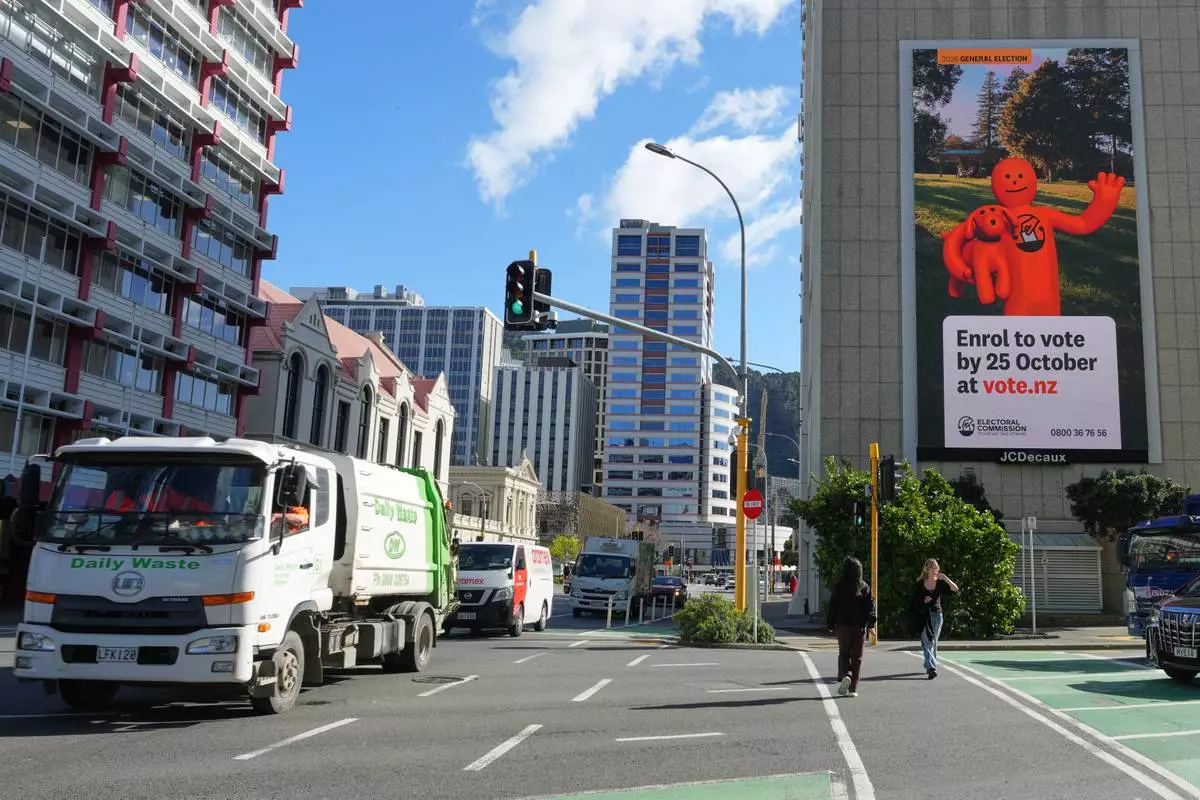
Vehicles move past an Electoral Commission billboard in central Wellington, New Zealand, encouraging voters to enroll, Monday Aug. 10 2026. (AP photo/Charlotte Graham-McLay)
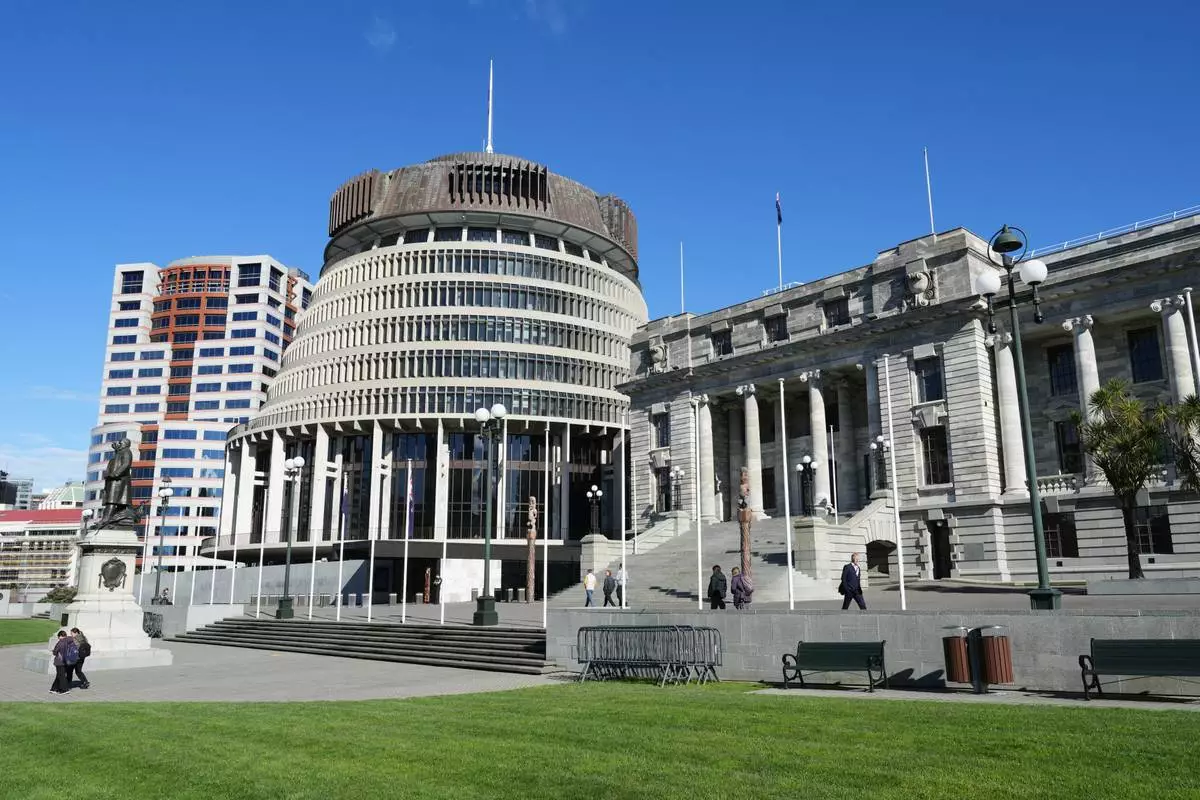
People walk past New Zealand's Parliament buildings in Wellington, New Zealand on Monday, Aug. 10 2026. (AP Photo/Charlotte Graham-McLay)
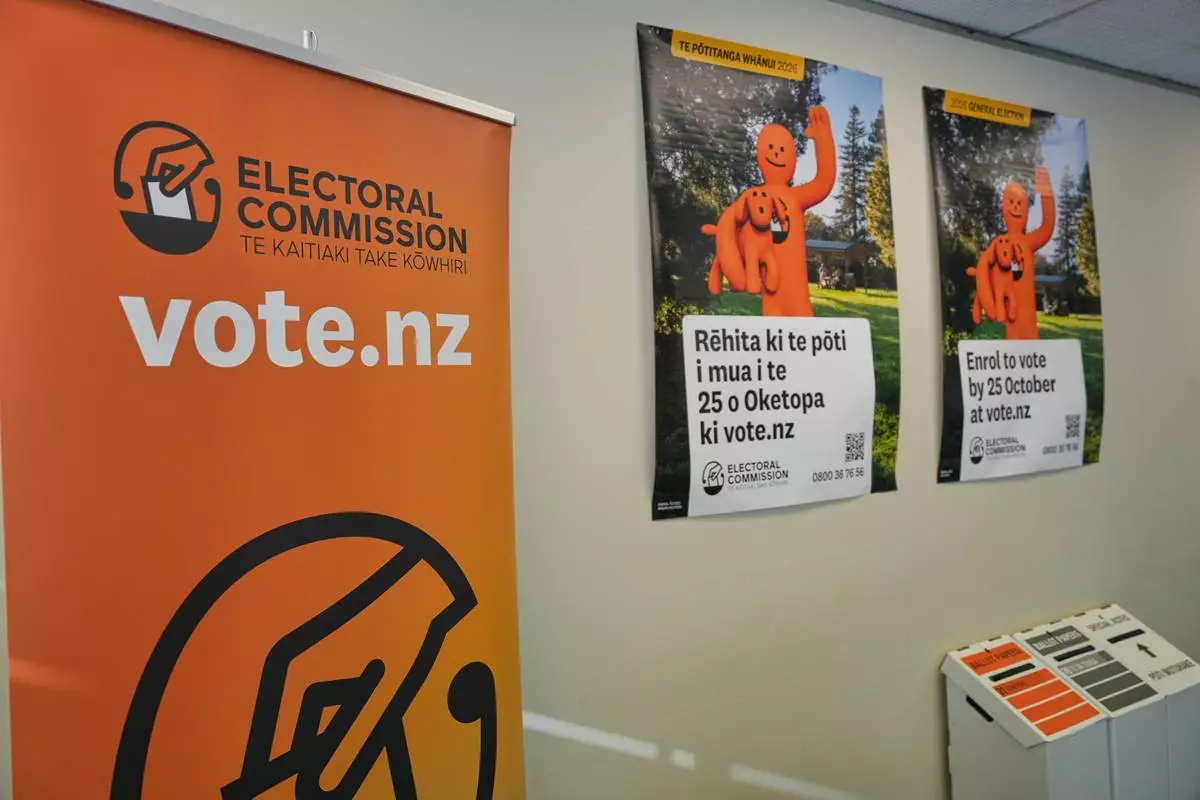
Posters encouraging voters to enrol ahead of New Zealand's elections are seen at the offices of the Electoral Commission in Wellington, New Zealand, Monday, Aug. 10 2026. (AP Photo/Charlotte Graham-McLay)
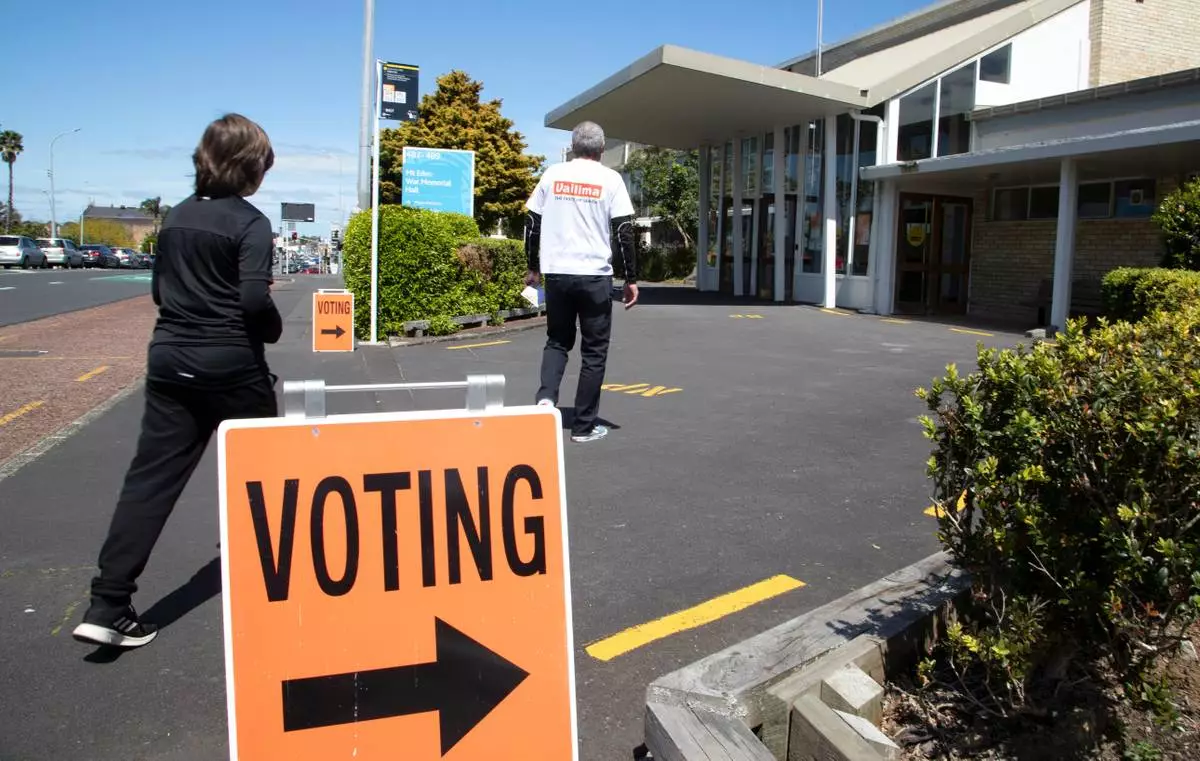
FILE - A couple arrive to vote at a polling station in Auckland, New Zealand, Oct. 17, 2020. (AP Photo/Mark Baker, File)