The Buffalo Bills won't have the NFL's newest stadium for very long.
Nine more franchises are in various stages of builds or renovations that will cost owners and taxpayers close to $20 billion.
Click to Gallery
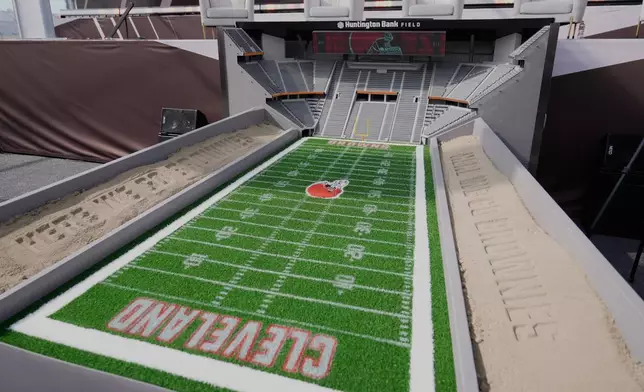
FILE - A model of the new Cleveland Browns stadium, minus the dome, is displayed before groundbreaking ceremonies in Brook Park, Ohio, April 30, 2026. (AP Photo/Sue Ogrocki, File)
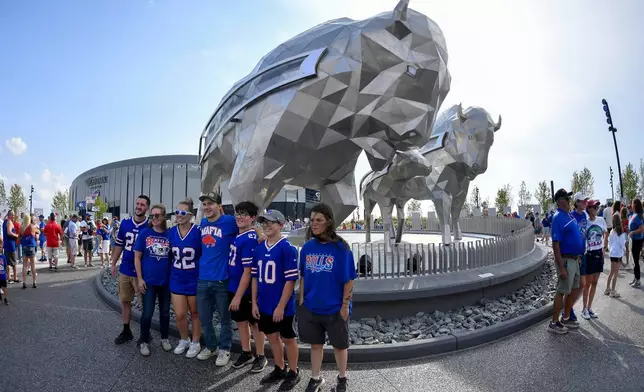
Buffalo Bills fans pose for photos outside of Highmark Stadium before practice at the team's NFL football training camp Saturday, Aug. 8, 2026, in Orchard Park, N.Y. (AP Photo/Adrian Kraus)
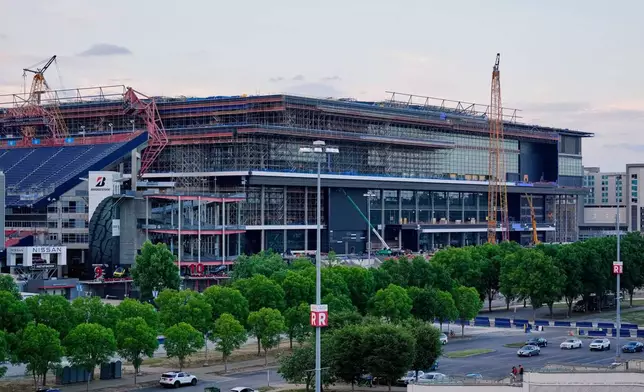
FILE - Construction continues on a new enclosed stadium for the Tennessee Titans NFL football team, May 18, 2026, in Nashville, Tenn. (AP Photo/George Walker IV, File)
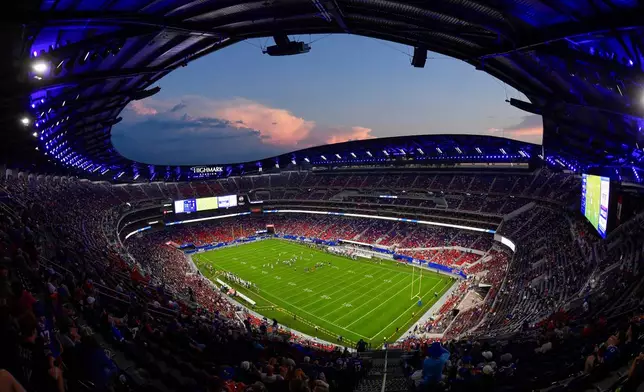
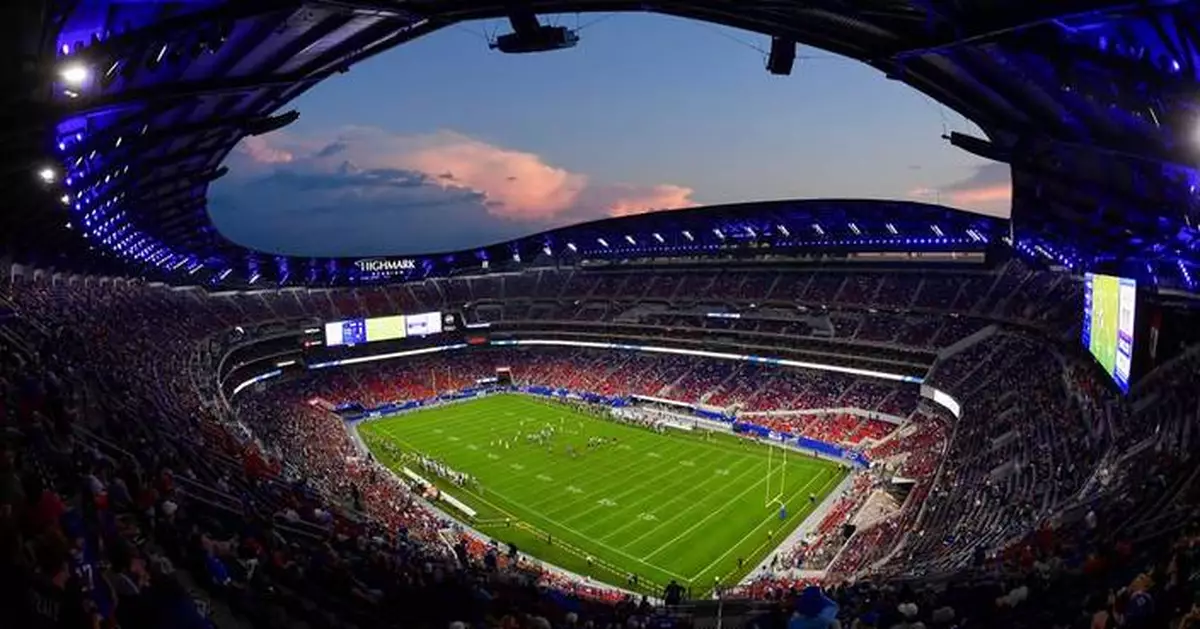
Overall view of Highmark Stadium during Buffalo Bills practice at the team's NFL football training camp Saturday, Aug. 8, 2026, in Orchard Park, N.Y. (AP Photo/Adrian Kraus)
More than a third of the league has unveiled renderings in recent months or years of their grand plans — a clear indication of how teams are reacting to a sports era in which improving the overall fan experience and catering to those in premium seating areas have become priorities. At least six of the nine upcoming remodels include some sort of dome or shade structure, and all nine plan to address luxury suites and club lounges in hopes of attracting a future Super Bowl, the 2031 Women's World Cup, college football games, concerts and other premier events.
NFL teams will unveil at least one new or revamped venue in each of the next five seasons, with Tennessee (2027), Jacksonville (2028) and Cleveland (2029) already in construction mode. Carolina (2030) and Kansas City (2031) aren't far behind.
Here’s a look at the 10 teams enjoying or closing in on major upgrades:
Venue: New Highmark Stadium.
Cost: $2.1 billion to build across the street from the one that opened in 1973 as Rich Stadium and was later known as Ralph Wilson Stadium or “The Ralph.”
Funding: New York State and Erie County contributed $850 million in public money. The rest, including $700 million in overruns, was covered by owners Terry and Kim Pegula.
Completion date: It’s done. The stadium’s first event was the Bills’ annual “Blue and Red Scrimmage” on Aug. 8.
Notable features: Kentucky bluegrass instead of artificial turf. A curved overhang covers about 60% of the 60,108 seats and reduces wind at field level.
Venue: Bank of America Stadium, which first opened in 1996 as Ericsson Stadium.
Cost: $800 million, with the total cost of the uptown project reaching $1.3 billion.
Funding: The city of Charlotte contributed $650 million to the project in 2024, with owner David Tepper kicking in an additional $150 million.
Completion date: Expected to be completed by the 2030 season.
Notable features: An open-air social patio with a shaded overhang and affordable standing room-only ticket options.
Venue: Looking to build a new stadium in Hammond, Indiana — about 25 miles from downtown Chicago.
Cost: Billions.
Funding: Indiana authorized a stadium authority backed by taxes on hotels, restaurants, tolls and admissions. The Bears would commit $2 billion to the project, keep all revenue and have the option to buy back the stadium in 40 years once Indiana taxpayers have paid off the bonds.
Completion date: Possibly in time for the 2031 season.
Notable features: None yet. The Bears have played in Illinois since their 1920 debut as the Decatur Staleys. They moved to Chicago in 1921 and called Wrigley Field home before moving to Soldier Field in 1971.
Venue: Paycor Stadium.
Cost: $470 million.
Funding: Hamilton County is contributing $350 million, and the Bengals are paying $120 million. The team originally proposed $830 million in renovations.
Completion date: Phase 1 is done. It included modernized suites and club levels as well as upgraded concessions and restrooms. Phase 2 begins in 2027 and includes new stadium seats and a new videoboard.
Notable features: The deal includes an 11-year lease, with an option for 10 more, that keeps the team downtown through at least 2036.
Venue: Huntington Bank Field.
Cost: $2.6 billion new stadium.
Funding: The Haslam Sports Group, the company founded by Browns owners Jimmy and Dee Haslam, is covering $1.76 billion along with any cost overruns. The state of Ohio committed $600 million, but those funds are on hold because of a class-action lawsuit. The city of Brook Park is chipping in $245 million through tax revenues.
Completion date: By the 2029 season.
Notable features: A domed roof. A new “Dawg Pound” that will be built at a 34-degree pitch, giving the 67,500-seat venue the feel of many European soccer stadiums.
Venue: EverBank Stadium, which opened in 1995 as Jacksonville Municipal Stadium.
Cost: $1.4 billion renovation.
Funding: The city of Jacksonville is handling $775 million, including $150 million in deferred maintenance to the stadium, and team owner Shad Khan is picking up $625 million plus any cost overruns.
Completion date: By the 2028 season.
Notable features: The 63,000-seat, open-air stadium includes a translucent covering that’s the equivalent of “wearing shades in the sun.” The deal comes with a 30-year lease. Jacksonville will play this season at reduced capacity and will play 2027 home games in Orlando while construction is finished.
Venue: New Arrowhead Stadium.
Cost: $3 billion domed stadium, with surrounding developments pushing the total tab to $4.5 billion.
Funding: A 60/40 split of public and private contributions, with the state of Kansas paying up to $3 billion in bonds and the Hunt family/Chiefs picking up the rest.
Completion date: By the 2031 season.
Notable features: The 70,000-seat venue would be fully enclosed and pay homage to the original Arrowhead Stadium, the Chiefs’ home since 1972. The deal includes a new training facility for the team as well as retail and entertainment space.
Venue: Raymond James Stadium, which is nearly three decades old.
Cost: $1 billion renovation, with roughly $500 million allocated to building a canopy covering the lower seating bowl.
Funding: The Buccaneers, owned by the Glazer family, have proposed a 1/3 private and 2/3 public funding split. The Glazers would contribute roughly $333 million while requesting the remaining $667 million from public sources through local tax revenues.
Completion date: Unknown, although the team’s lease expires after the 2027 season.
Notable features: Early discussions have the upgrades modeled after Miami’s Hard Rock Stadium, which focuses on fan comfort in Florida’s sweltering heat and humidity. Plans also call for a new entertainment area to enhance the game-day experience.
Venue: New Nissan Stadium.
Cost: $2.1 billion build next to the existing stadium, which first opened in 1999 as Adelphia Coliseum.
Funding: Roughly $840 million from the Titans, $500 million from the state of Tennessee and $760 million from bonds that will be repaid from personal seat licenses and taxes collected at the stadium as well as a 1% hotel/motel tax.
Completion date: February 2027, seven months before the season.
Notable features: The 60,000-seat venue already has been selected to host the 2030 Super Bowl. The stadium has a locker room for female coaches. Player parking is underground, and there's a stage built into one end zone.
Venue: New stadium on the site of the old RFK Stadium, the place the team called home for more than three decades. Washington has played in Landover, Maryland, since 1997.
Cost: $4 billion for the stadium, housing, green space and a sportsplex on 170 acres of land bordering the Anacostia River.
Funding: The Commanders are contributing $2.7 billion, with the city investing roughly $1.1 billion through 2032.
Completion date: Before the 2030 season.
Notable features: The 65,000-seat stadium will have a roof to make it a year-round venue for concerts and other events.
AP NFL: https://apnews.com/hub/nfl
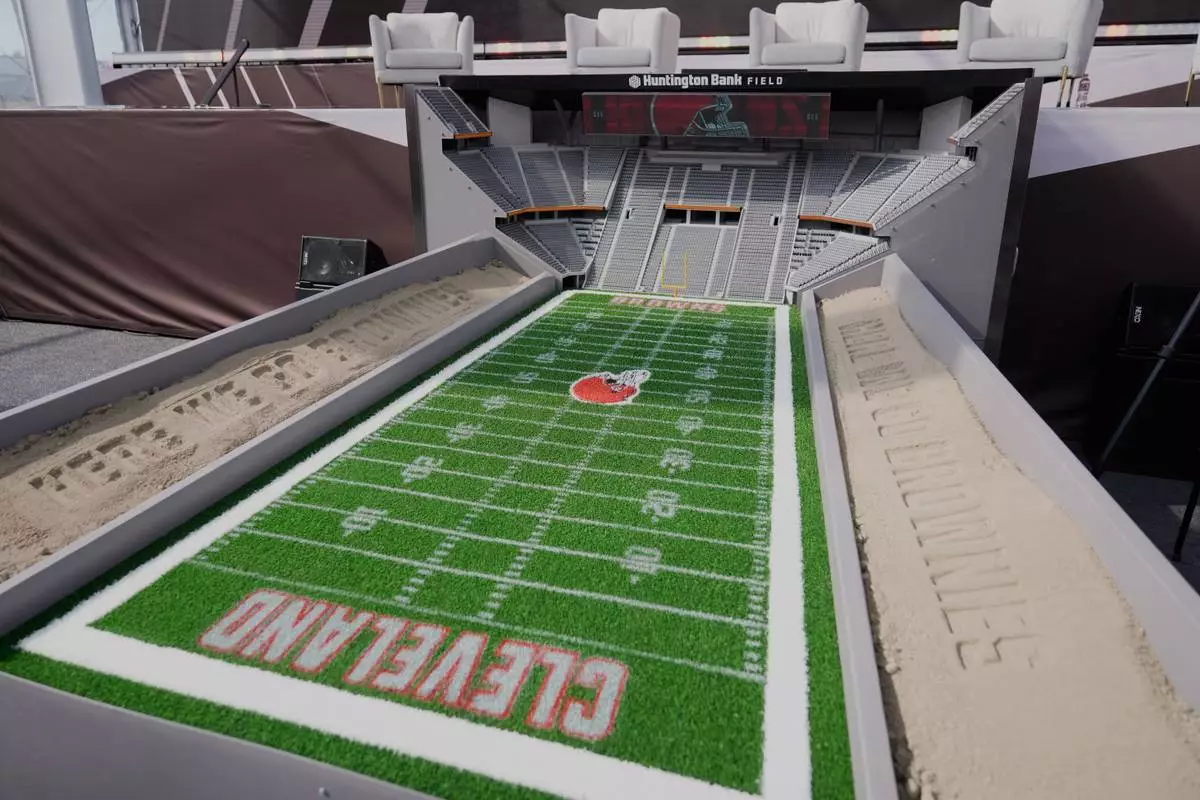
FILE - A model of the new Cleveland Browns stadium, minus the dome, is displayed before groundbreaking ceremonies in Brook Park, Ohio, April 30, 2026. (AP Photo/Sue Ogrocki, File)
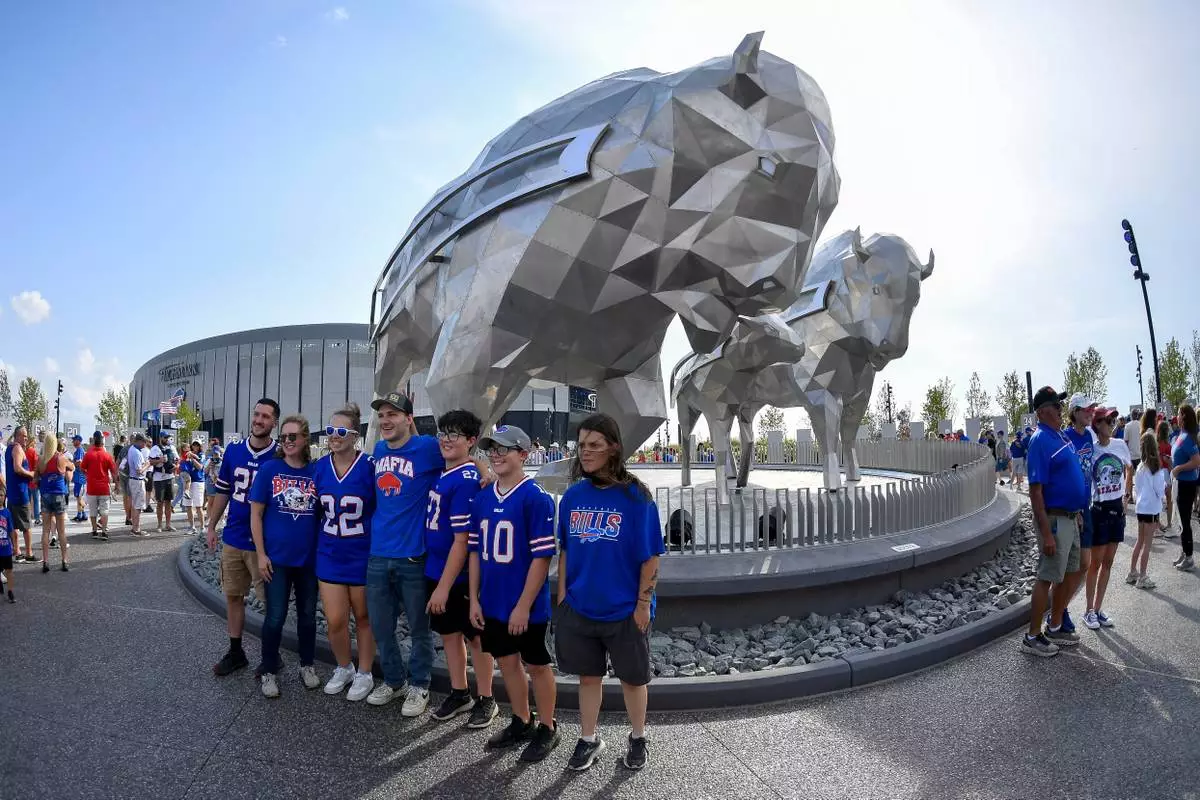
Buffalo Bills fans pose for photos outside of Highmark Stadium before practice at the team's NFL football training camp Saturday, Aug. 8, 2026, in Orchard Park, N.Y. (AP Photo/Adrian Kraus)
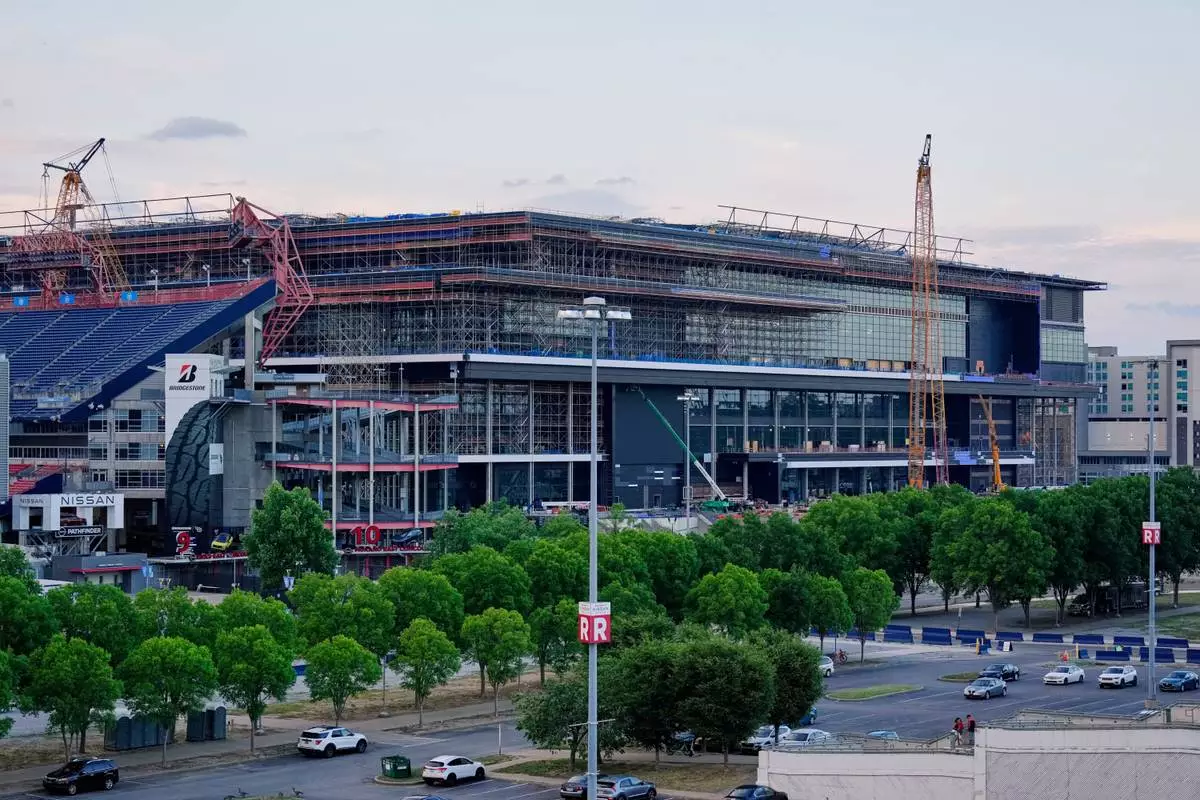
FILE - Construction continues on a new enclosed stadium for the Tennessee Titans NFL football team, May 18, 2026, in Nashville, Tenn. (AP Photo/George Walker IV, File)
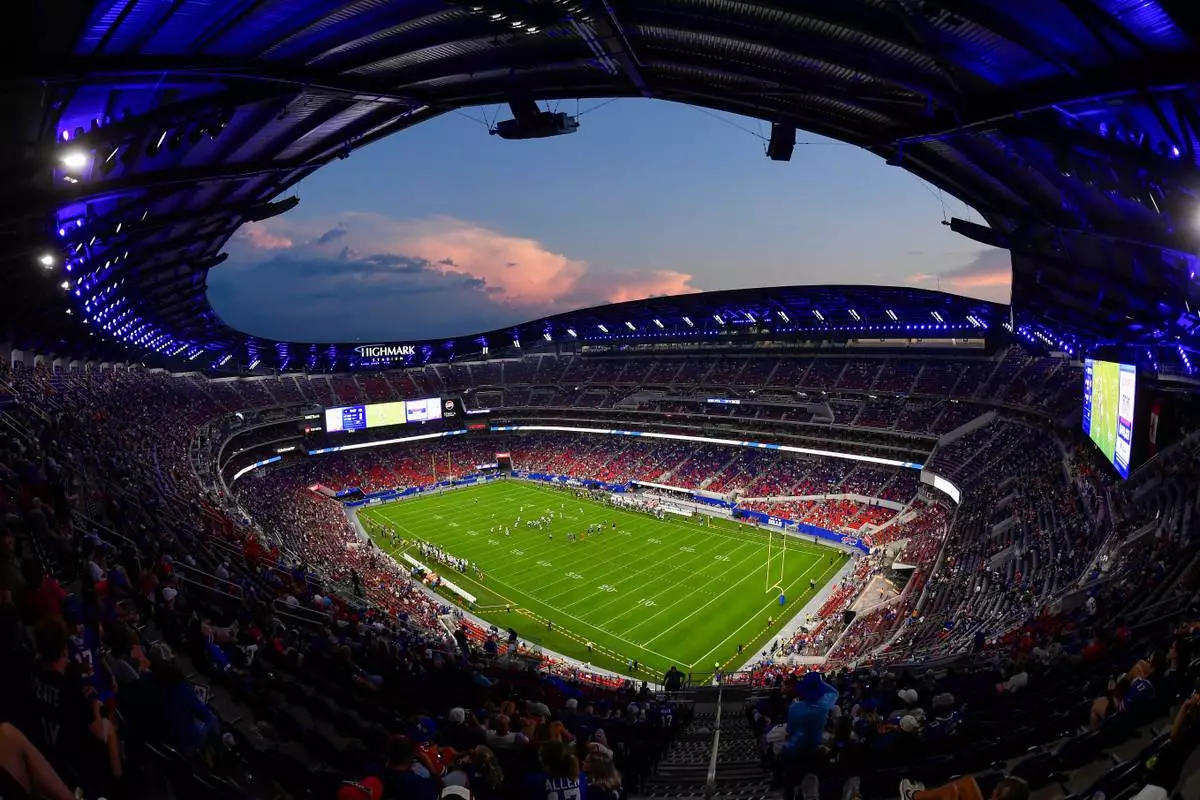
Overall view of Highmark Stadium during Buffalo Bills practice at the team's NFL football training camp Saturday, Aug. 8, 2026, in Orchard Park, N.Y. (AP Photo/Adrian Kraus)