PORTLAND, Ore.--(BUSINESS WIRE)--Aug 11, 2026--
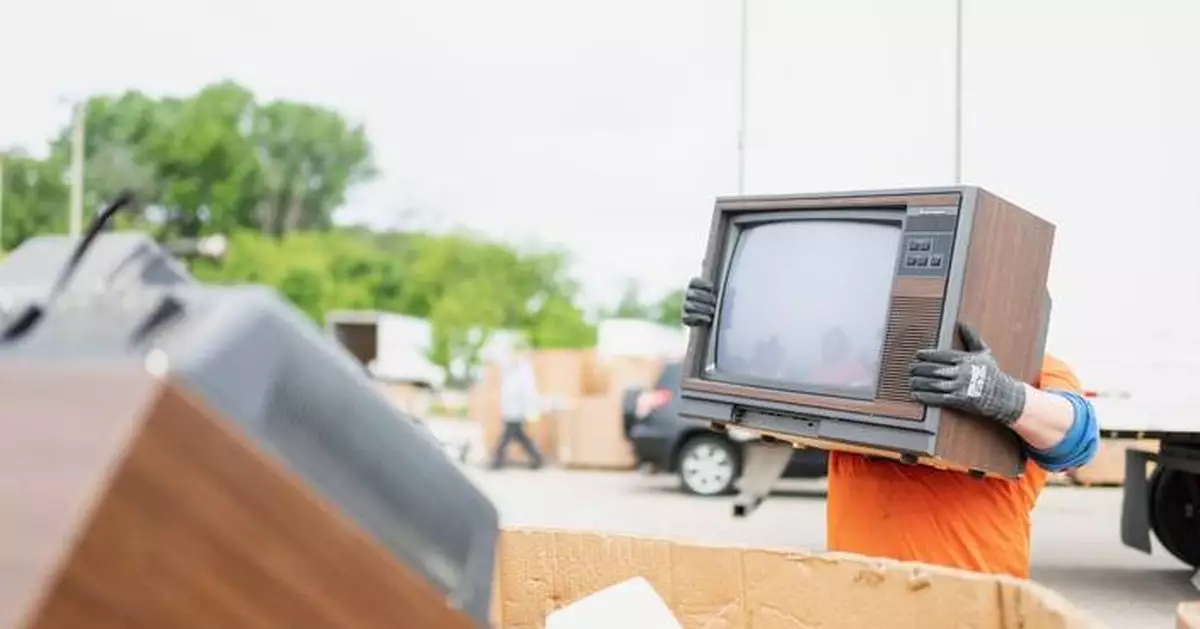
MRM, the manufacturer-funded Producer Responsibility Organization (PRO) now administering Oregon's E-Cycles Program is launching a statewide public awareness campaign to help more Oregonians recycle unwanted electronics responsibly. Following the implementation of Oregon's updated electronics recycling law in 2026, residents can now recycle an expanded list of electronic devices at no cost through the state's enhanced Oregon E-Cycles Program. The campaign highlights the program's new structure and expanded services, making electronics recycling easier and more accessible. Oregonians can learn which items are accepted and find a convenient collection site by visiting OregonEcycles.com.
This press release features multimedia. View the full release here: https://www.businesswire.com/news/home/20260811709863/en/
The campaign instructs Oregonians how to do the following:
The campaign is part of updates to Oregon's Electronics Recycling Law, which modernized the state's long-running manufacturer-funded recycling program. The program has provided free, convenient recycling opportunities for eligible electronics for more than a decade.
“Recycling electronics helps recover valuable materials for future use, conserves natural resources, and keeps electronic waste out of Oregon landfills,” says Ali Briggs-Ungerer, the Oregon PRO Manager for MRM, the Producer Responsibility Organization (PRO) now running Oregon E-Cycles. “By increasing awareness of the program, letting people know they can recycle even more devices, and making recycling information easier to find, the Oregon E-Cycles Program will make responsible electronics recycling a routine part of life for households across the state.”
The campaign builds on the existing network of collection sites and partnerships with local governments, retailers, collection sites, and community organizations that have supported the Oregon E-Cycles Program since its inception. Oregonians can learn more about the program, see which products are accepted, and find their nearest authorized collection site by visiting www.OregonEcycles.com.
The Oregon E-Cycles Program is a statewide, manufacturer-funded electronics recycling program established under Oregon law. The program provides free recycling for eligible electronic devices through an extensive network of authorized collection sites and promotes responsible electronics recycling through education, outreach, and environmental stewardship.
MRM is an environmental program management company that provides environmentally responsible, cost-efficient recycling options for consumers on behalf of manufacturers of all types of electronic equipment. MRM runs electronics recycling programs across the United States and in Canada and currently administers the Oregon Electronics Producer Responsibility Organization (PRO).
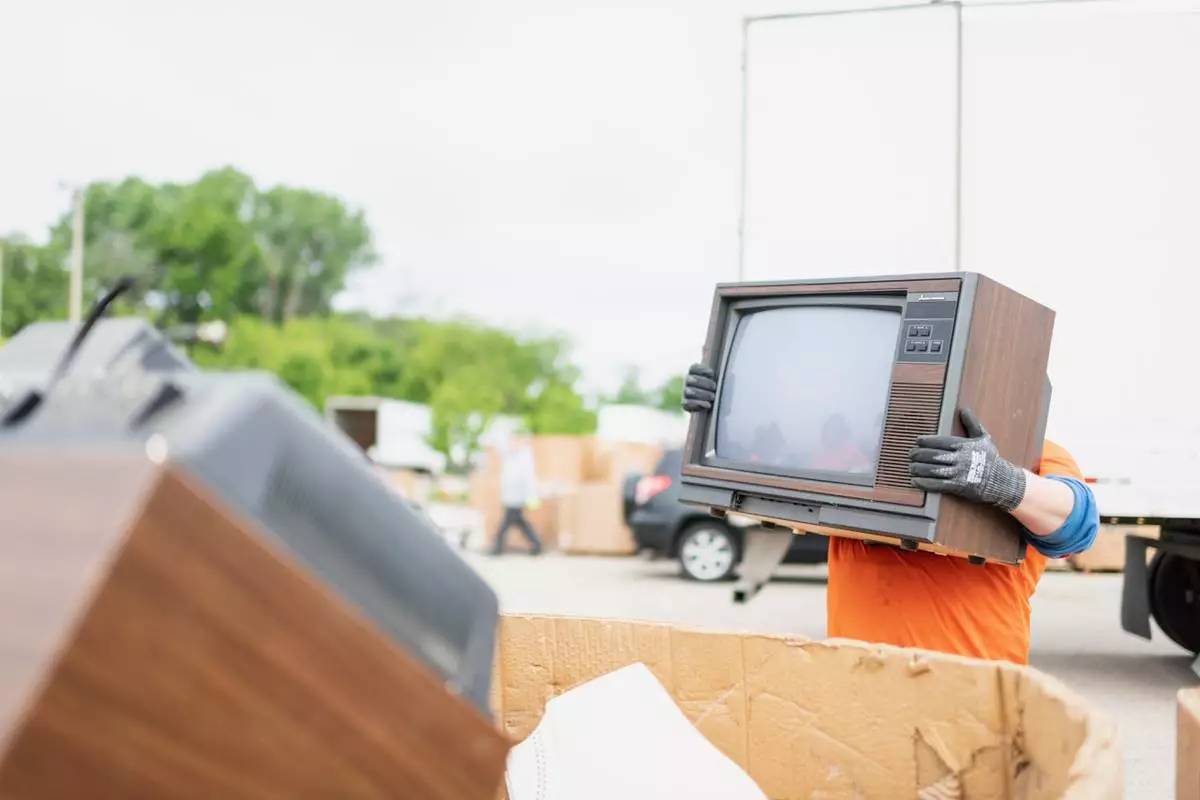
Oregon residents can now recycle an expanded list of electronic devices at no cost through the state's enhanced Oregon E-Cycles Program
PEREIRA, Colombia (AP) — Rescue crews and civilians in Colombia painstakingly searched through rubble Tuesday in the hopes of finding survivors trapped under debris after a powerful earthquake left thousands missing in dozens of cities and towns.
The 7.4 magnitude earthquake that hit western Colombia on Monday wreaked havoc, collapsing buildings, buckling roads, crushing cars and leaving devastated residents to console each other among the wreckage of their homes. Excavators and heavy machinery cleared heavy chunks of concrete, while buckets of rubble were passed hand-to-hand along a line of volunteers.
Rescue crews and volunteers picked through flattened concrete buildings in affected cities, searching for signs of life. They raised their hands to call for silence when they thought they heard someone beneath the piles of debris. At least one woman was retrieved — alive — from the rubble.
Colombian President Abelardo de la Espriella said the earthquake killed at least 181 people and left 2,595 more injured. He said at least 195 remained missing, but civilian-run databases suggest that number could be closer to 4,000.
Authorities said the deaths were concentrated in the cities of Cali, Pereira, Manizales and Quibdo, but local leaders and families worried about casualties and damage in rural areas, from where very little information has emerged. Aid agencies consider the first 48 to 72 hours crucial for retrieving people alive, though that threshold can be extended if they have access to food and water.
De la Espriella said more than 1,000 homes were destroyed and yet more damaged.
Standing near the remains of his brother’s collapsed apartment building in Pereira, Jairo Vargas said he made the 220-kilometer (135-mile) drive from Medellin, hoping to find him alive.
“I’m absolutely certain he’s here. Absolutely certain,” Vargas said, adding that his brother’s car was still parked outside. But he fears his sibling did not survive.
“The debris surrounding my brother is soft,” he said, as heavy machinery rumbled nearby. “It’s possible that it’s protecting him, but we can’t hear any noises anymore. I don’t know. I have little hope.”
The earthquake presents the first major test for first-time officeholder de la Espriella, who entered office just days before the natural disaster. The leader, who split the country in recent elections, now seeks to unite Colombia in its disaster response.
That challenge was particularly notable in Choco, the region at the quake’s epicenter. It is one of Colombia's poorest and most neglected regions, often beset by warring armed groups. Much of Choco is accessible only by boat, through the jungle or by airplane.
Sterling Palacios, a religious and environmental leader in the region, said Choco's capital and smaller communities along the Atrato River were devastated. Homes were reduced to rubble and aftershocks continued to rumble, terrifying residents who slept in the streets overnight.
The Colombian Geological Service said it has documented more than 100 less powerful aftershocks since the initial quake.
“There are towns where people have lost everything, where people have died, where homes have been destroyed,” he said. “We don’t have a full panorama of the damage, but we know it’s been massive.”
De la Espriella traveled to Quibdo in Choco on Monday night where he announced he was mobilizing “the entire military and police apparatus,” as well as deploying engineers, rescue workers and search dogs.
“Choco will never again be the ‘land of the forgotten,’” he said.
Palacios said the government's response has so far been “concentrated in the capital,” and that authorities were flying the wounded from Quibdo to hospitals in the city of Medellín.
The biggest challenge, he said, remains towns in rural areas only reachable by boat — journeys that can take hours or days. That response is also complicated by a toxic slate of armed groups warring for control who, during the COVID-19 pandemic, blocked healthcare workers from traveling to remote areas.
“It's a risk and it's very difficult to predict” what could happen, he said, adding it could take weeks to fully assess the devastation.
Families posted information about missing loved ones on citizen-run websites.
Dana Carolina Zamora posted an image of her missing 60-year-old uncle, Miguel Ángel Zamora, cradling his dog. The farmer was living in a rural area of El Cairo, not far from the quake's epicenter in San Jose Del Palmar.
Local authorities said 80% of El Cairo, a town of about 7,000 people, was damaged. Zamora said her uncle lived in a traditional house of sticks and mud.
“We are afraid. We hope that is not the case, that he is all right and that it is only a communication failure. But we haven’t heard anything from him,” Zamora said.
The earthquake left many people unnerved after back-to-back quakes devastated neighboring Venezuela in late June, destroying hundreds of buildings and killing more than 6,300 people.
Mónica Sánchez, who lives in Pereira, one of the worst-hit cities, said when the quake happened a wall collapsed inside her clothing factory. Sánchez and her 12 employees escaped just in time.
“It was shocking — the city fell down around us,” she said.
On Tuesday, rescue workers pulled a woman alive from the rubble. Diana Troncoso lay on a stretcher, dusty and scraped up, with her eyes closed. Observers burst into applause as she emerged, but search teams raised their hand to call for quiet so they could continue their search for survivors.
Pereira and Cali enforced curfews Monday night to prevent looting, and private vehicles were banned from the roads of Pereira so ambulances, police and rescue workers were able to navigate what's left of the roads.
The U.S. State Department has announced it would provide $15.5 million for emergency shelter, food and other aid. Governments across Latin America have also lined up to help.
“This has been a tragedy for the whole city, for thousands of families,” Pereira Mayor Mauricio Salazar told local media, his voice quavering. “But here we are, and we will continue forward with the hand of God.”
Suarez reported from Bogota, Colombia, and Janetsky reported from Mexico City. Associated Press reporter Manuel Rueda in Bogota contributed.
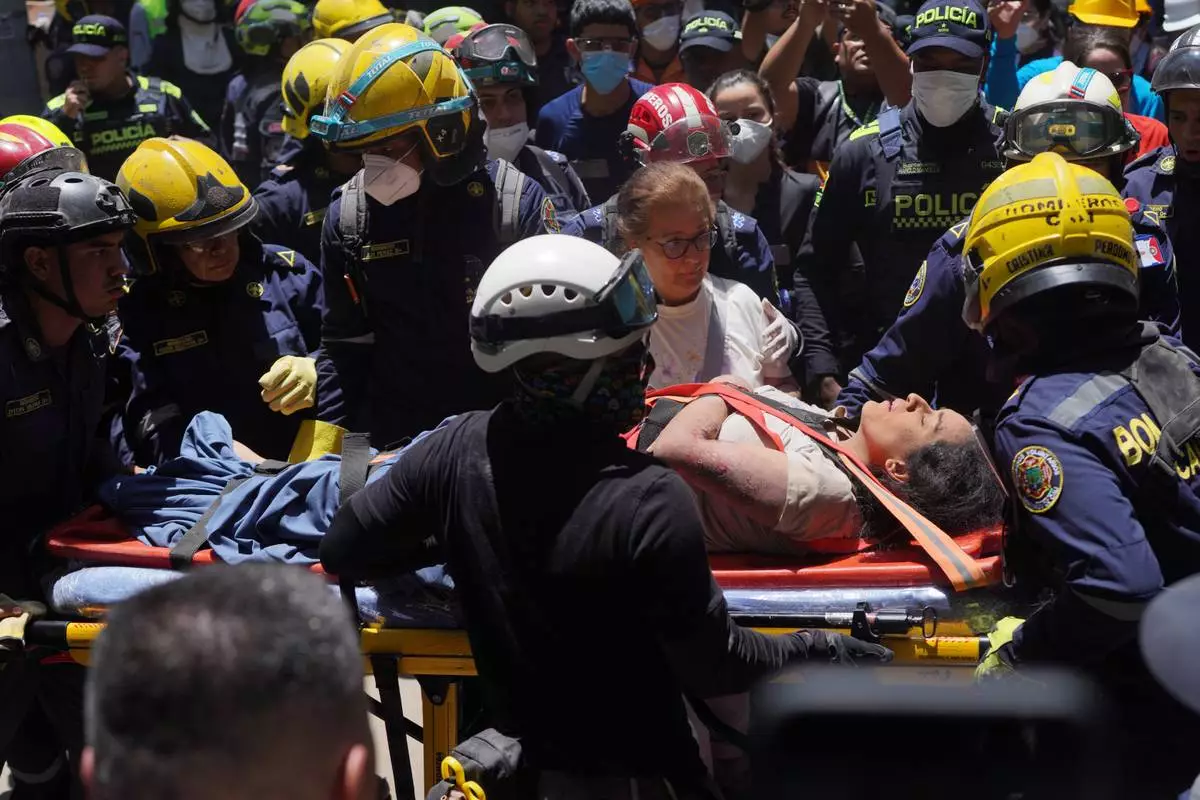
Rescue workers carry Diana Troncoso after pulling her from the rubble the day after an earthquake struck Cali, Colombia, Tuesday, Aug. 11, 2026. (AP Photo/Ivan Valencia) CORRECTION: Changes city to Cali, not Pereira.
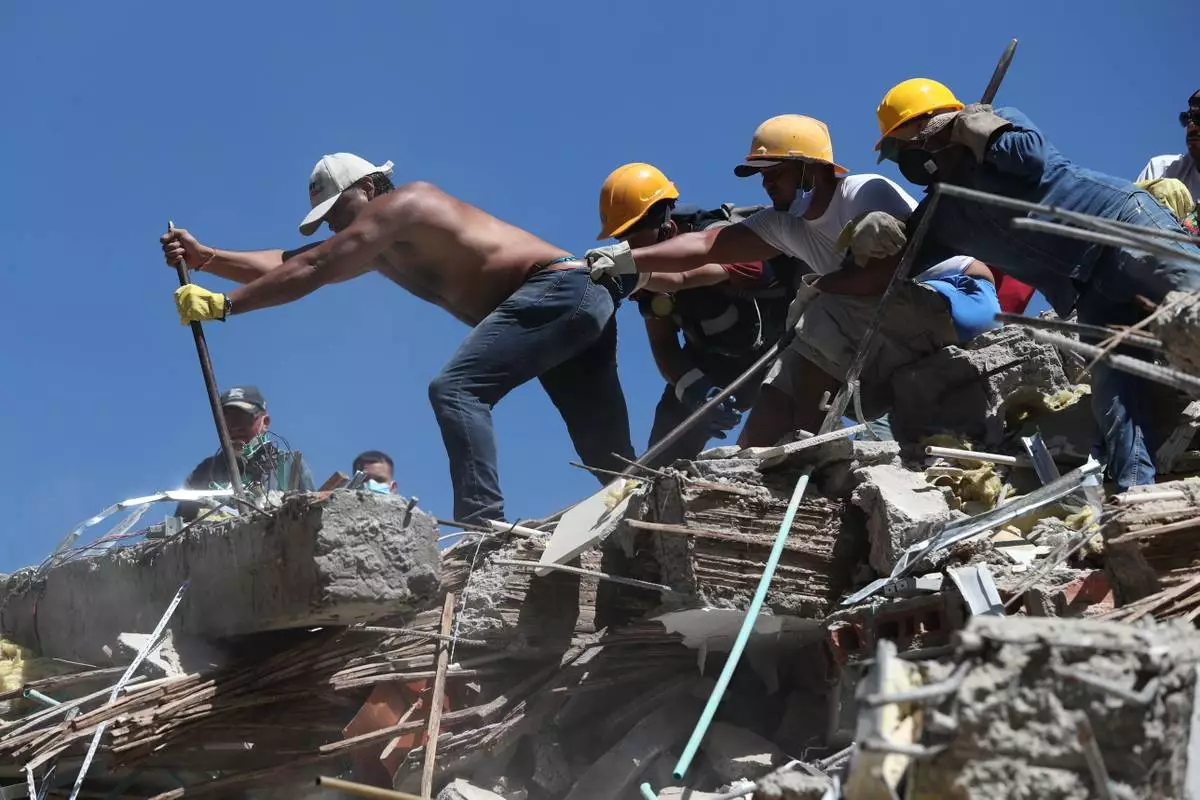
Residents and rescue workers search through the rubble after an earthquake struck Cali, Colombia, Monday, Aug. 10, 2026. (AP Photo/Santiago Saldarriaga)
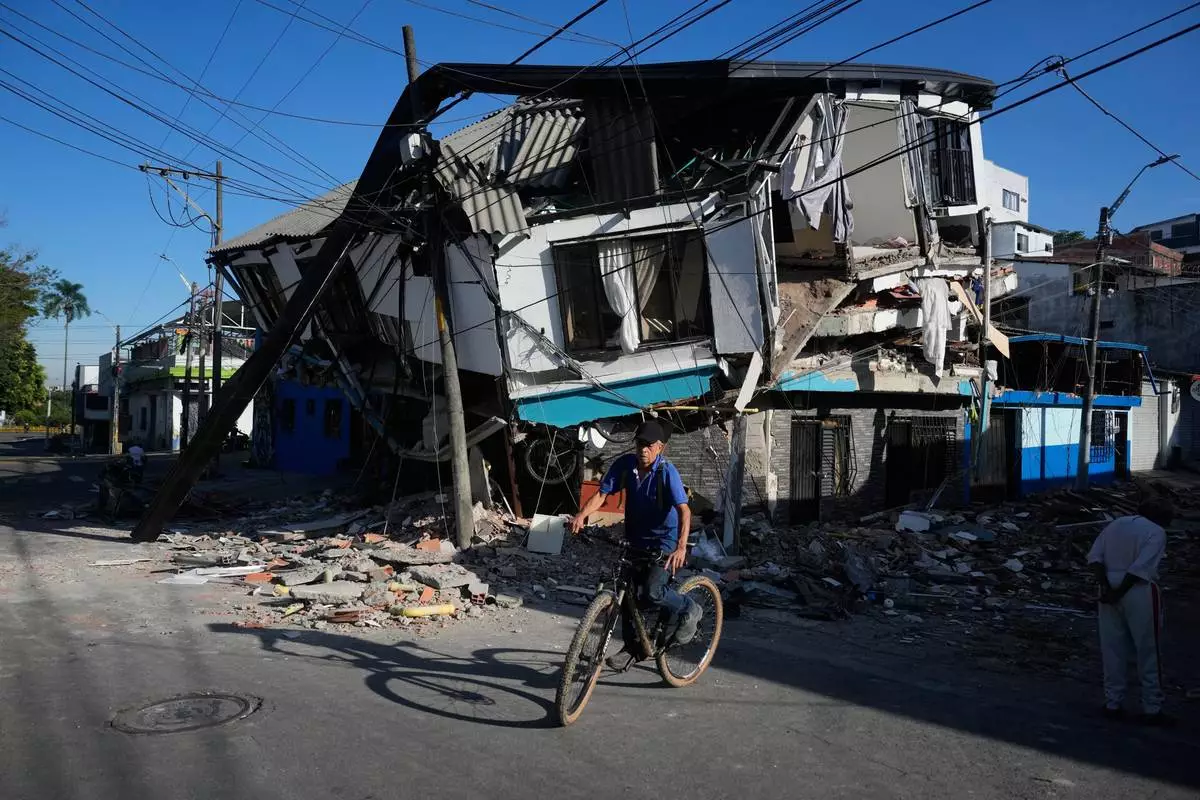
A neighbor rides past damaged homes a day after an earthquake struck Pereira, Colombia, Tuesday, Aug. 11, 2026. (AP Photo/Fernando Vergara)
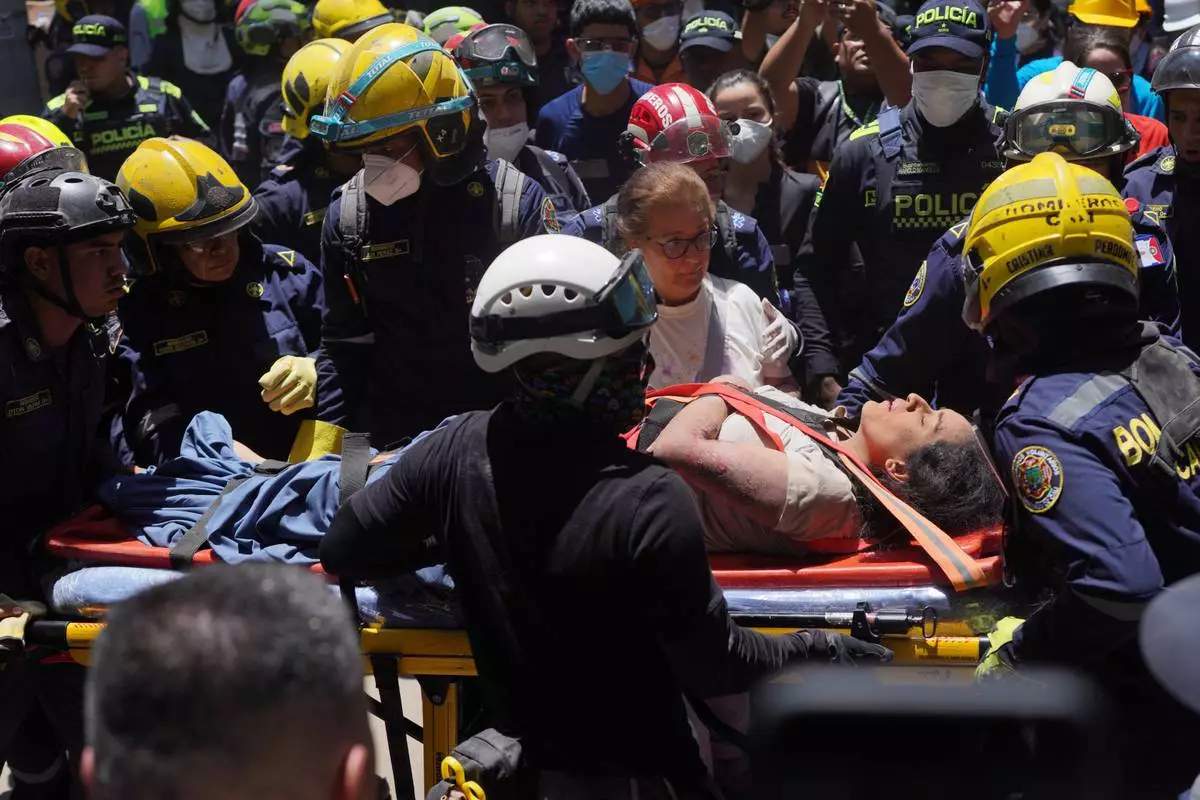
Rescue workers carry Diana Troncoso after pulling her from the rubble the day after an earthquake struck Pereira, Colombia, Tuesday, Aug. 11, 2026. (AP Photo/Ivan Valencia)
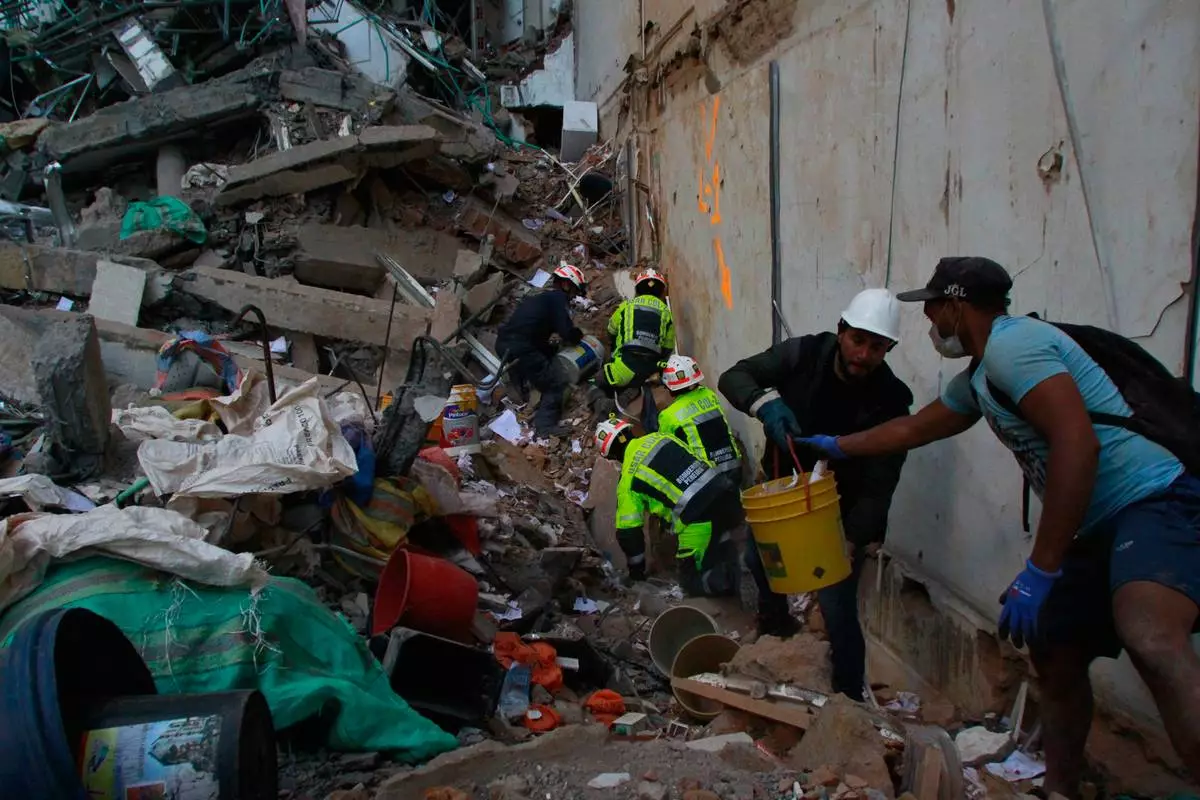
Rescue workers and volunteers clear debris the day after an earthquake struck Pereira, Colombia, Tuesday, Aug. 11, 2026. (AP Photo/Miguel Angel Lopez)
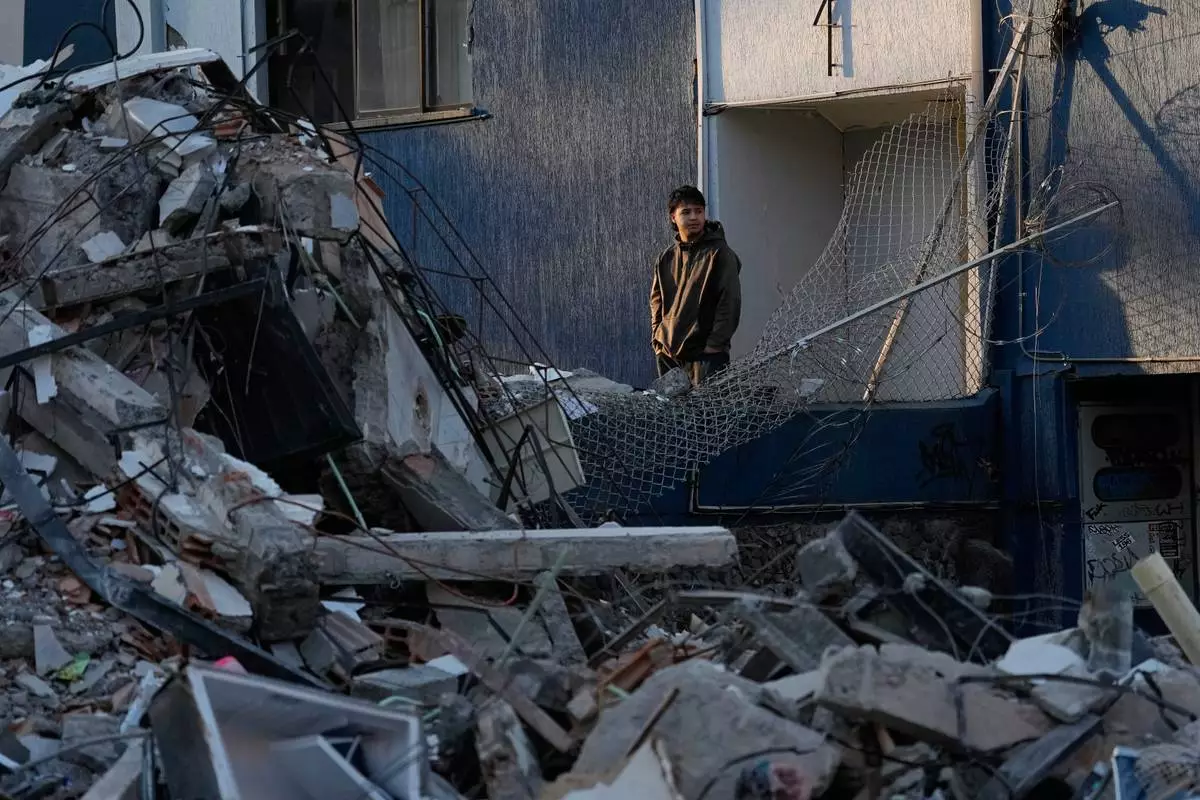
A neighbor looks at a collapsed building the day after and earthquake struck Pereira, Colombia, Tuesday, Aug. 11, 2026. (AP Photo/Fernando Vergara)
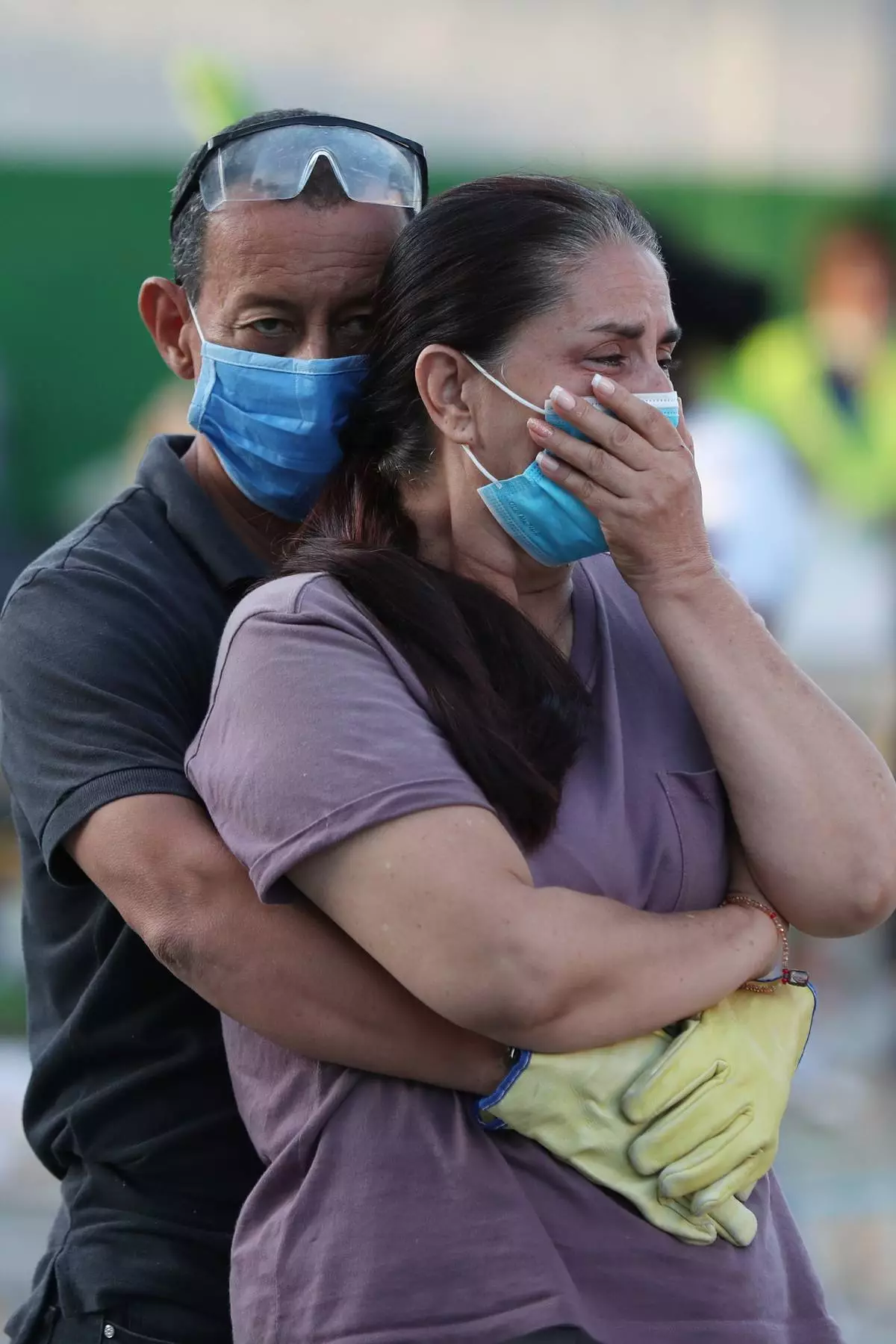
Residentes embrace as rescue workers search through the rubble of their damaged home the day after an earthquake struck Cali, Colombia, Tuesday, Aug. 11, 2026. (AP Photo/Santiago Saldarriaga)
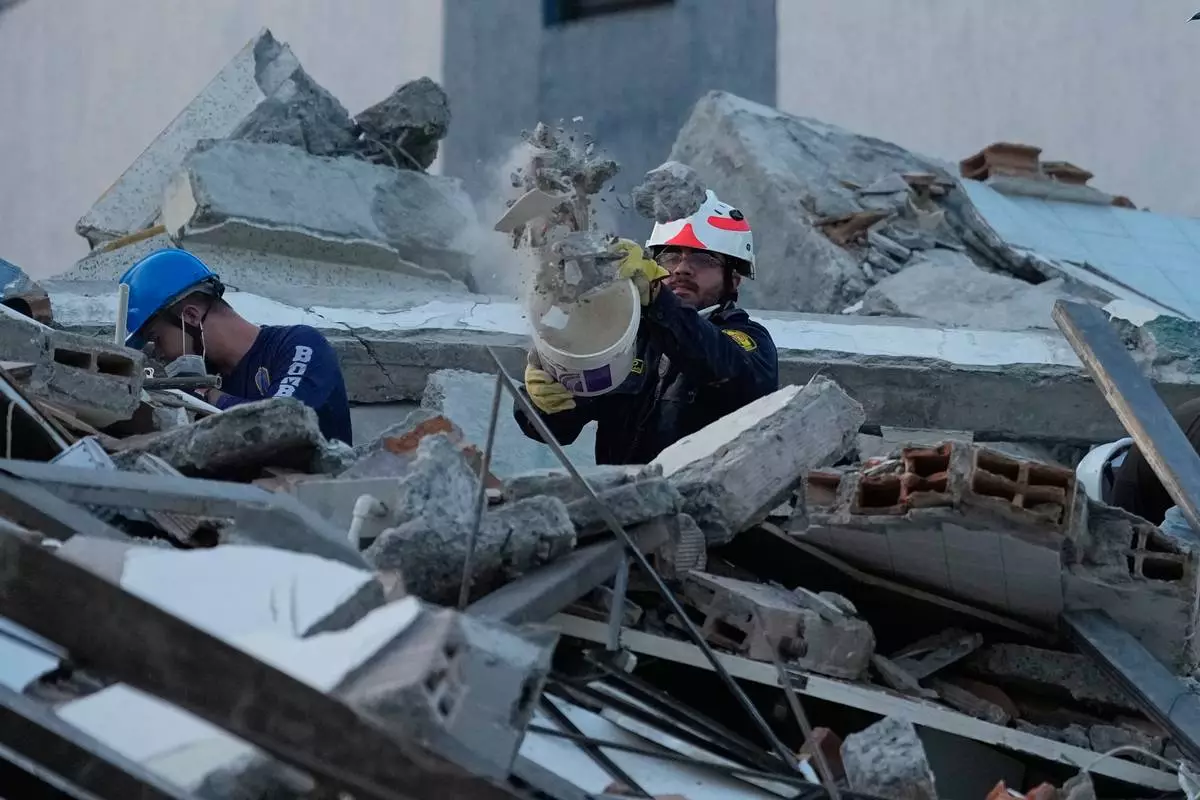
Rescue workers clear debris the day after an earthquake struck Pereira, Colombia, Tuesday, Aug. 11, 2026. (AP Photo/Fernando Vergara)
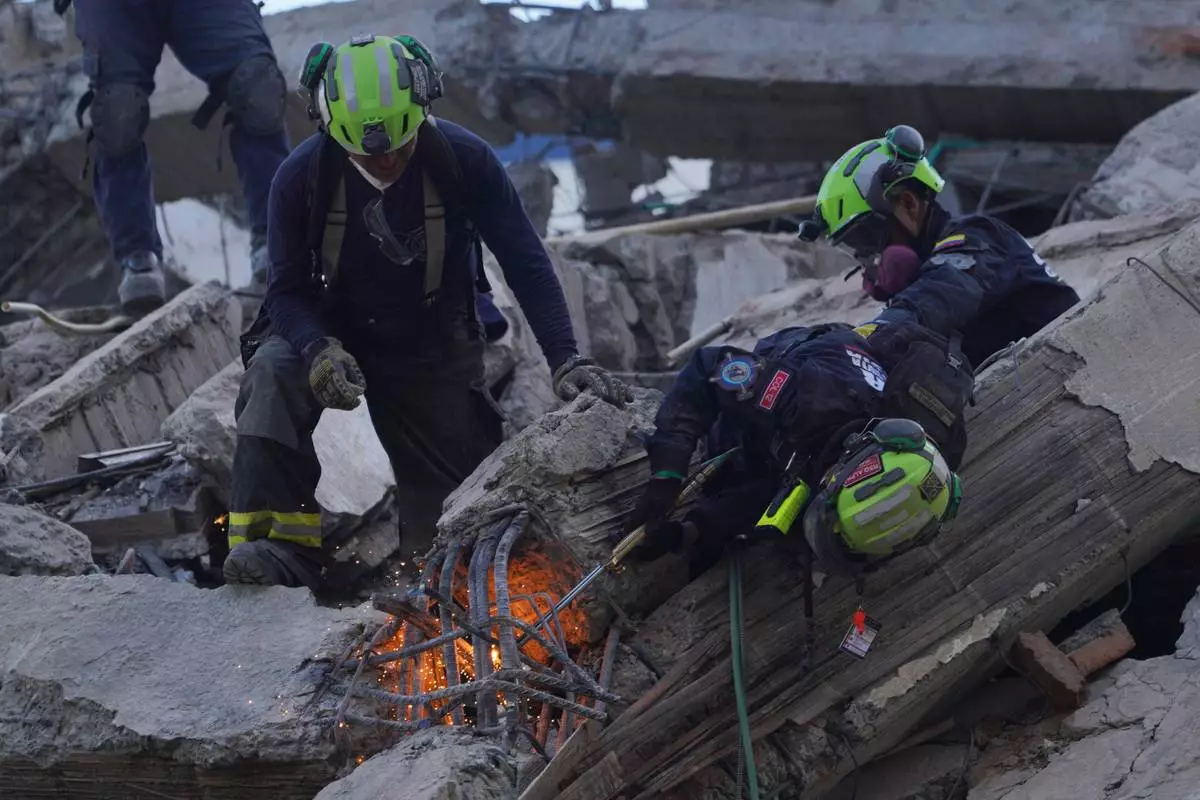
Rescue workers cut through debris as they search for survivors the day after an earthquake struck Cali, Colombia, Tuesday, Aug. 11, 2026. (AP Photo/Ivan Valencia)
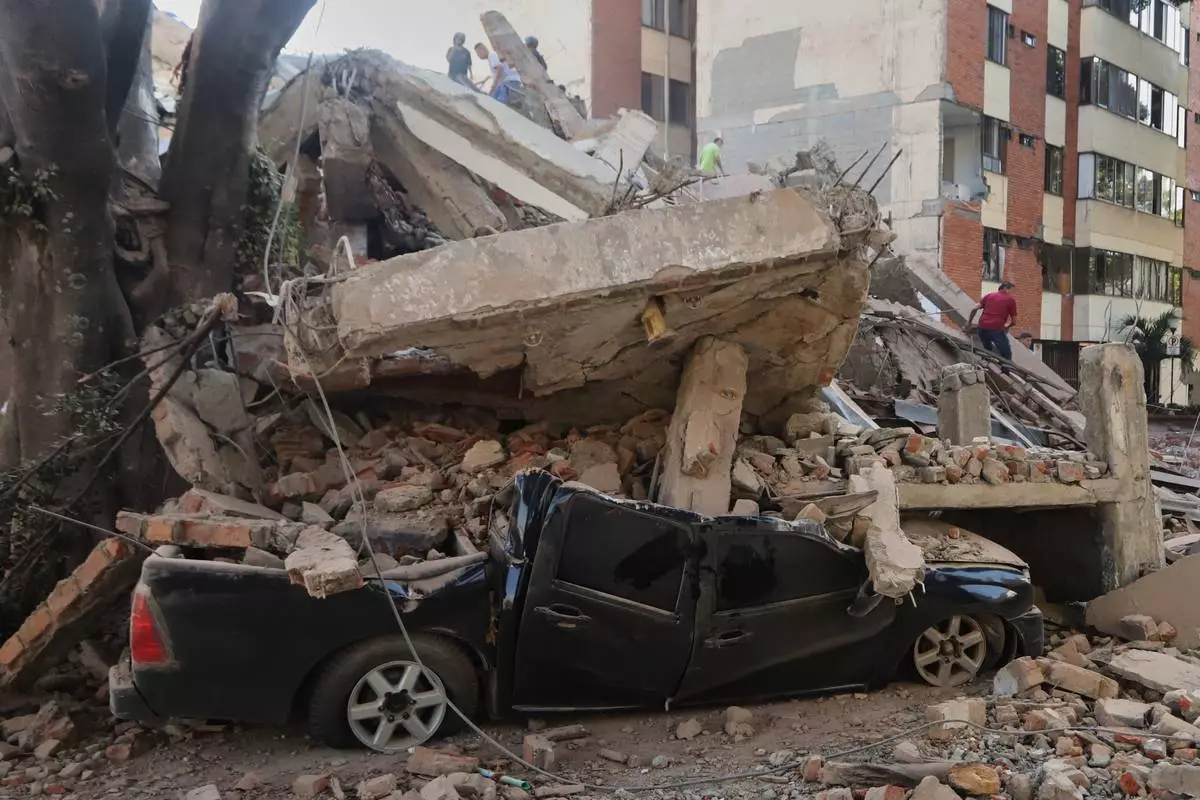
A vehicle is crushed by debris after an earthquake struck Cali, Colombia, Monday, Aug. 10, 2026. (AP Photo/Juan Diaz)
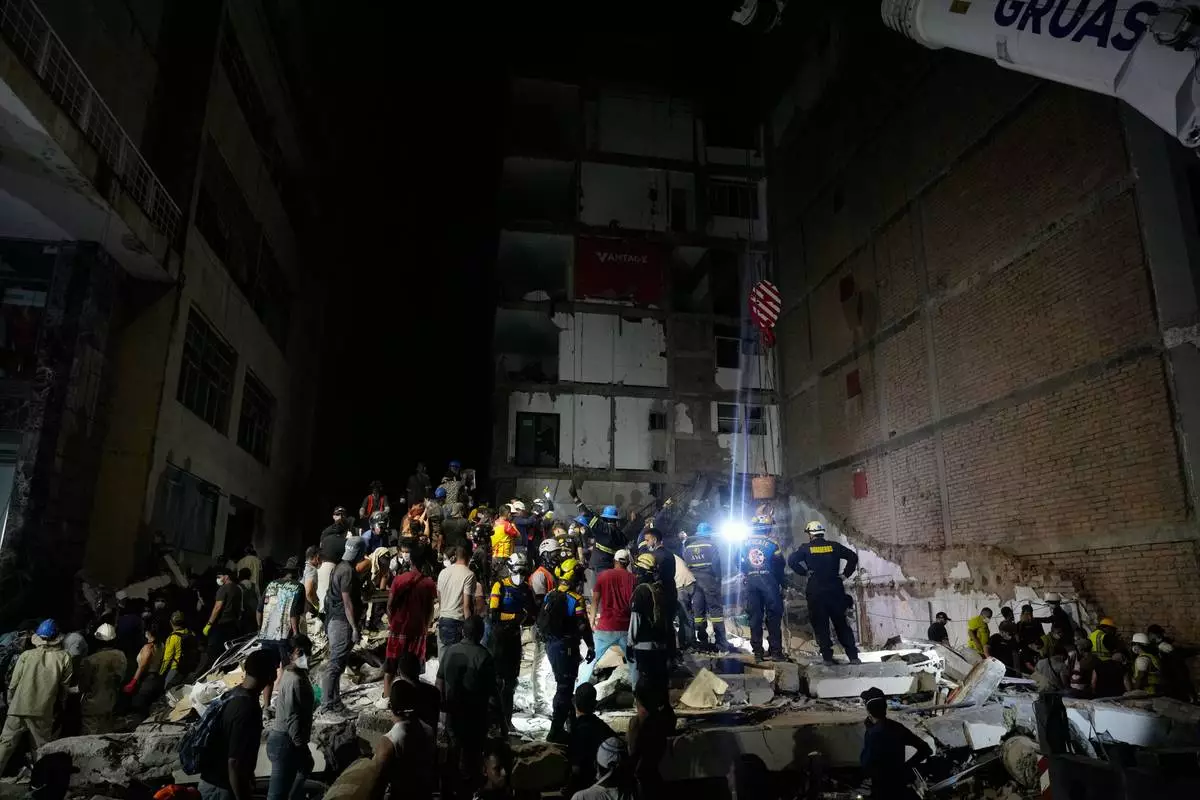
Rescue workers and residents search through the rubble after an earthquake struck Pereira, Colombia, Monday, Aug. 10, 2026. (AP Photo/Fernando Vergara)
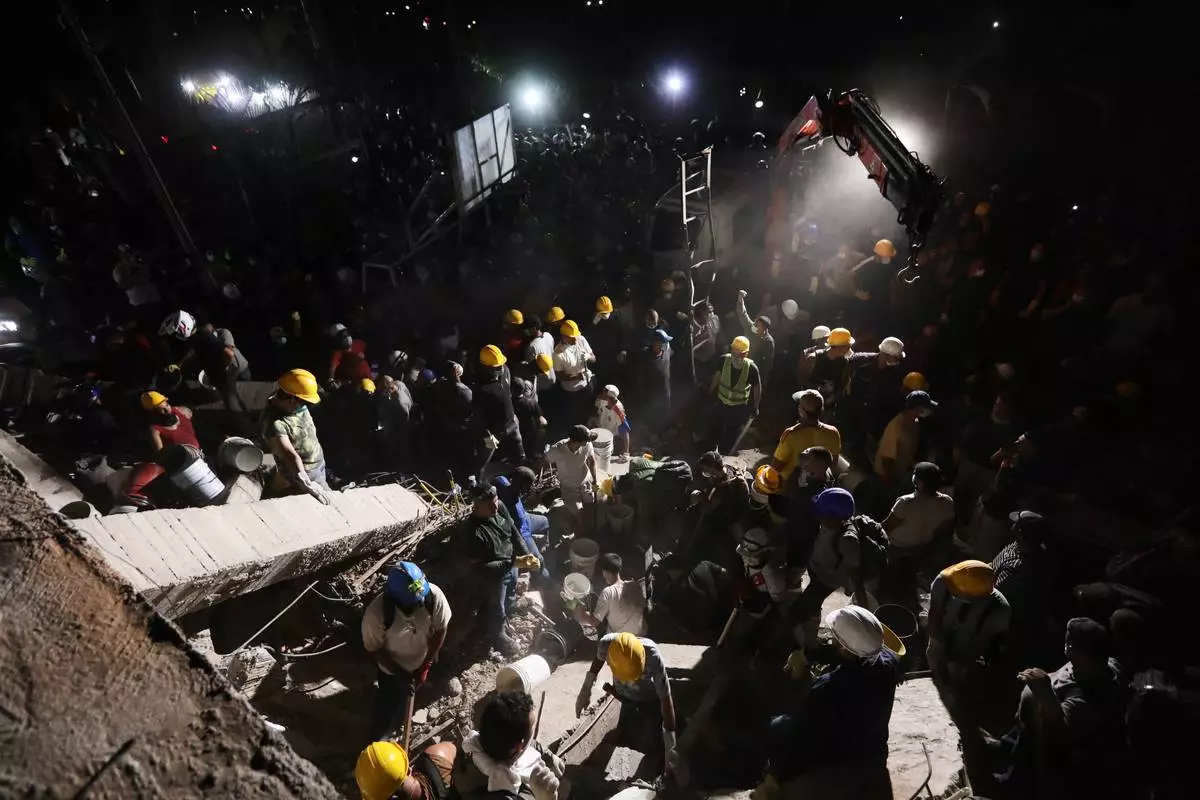
Rescue workers and residents search through the rubble after an earthquake struck Cali, Colombia, Monday, Aug. 10, 2026. (AP Photo/Santiago Saldarriaga)
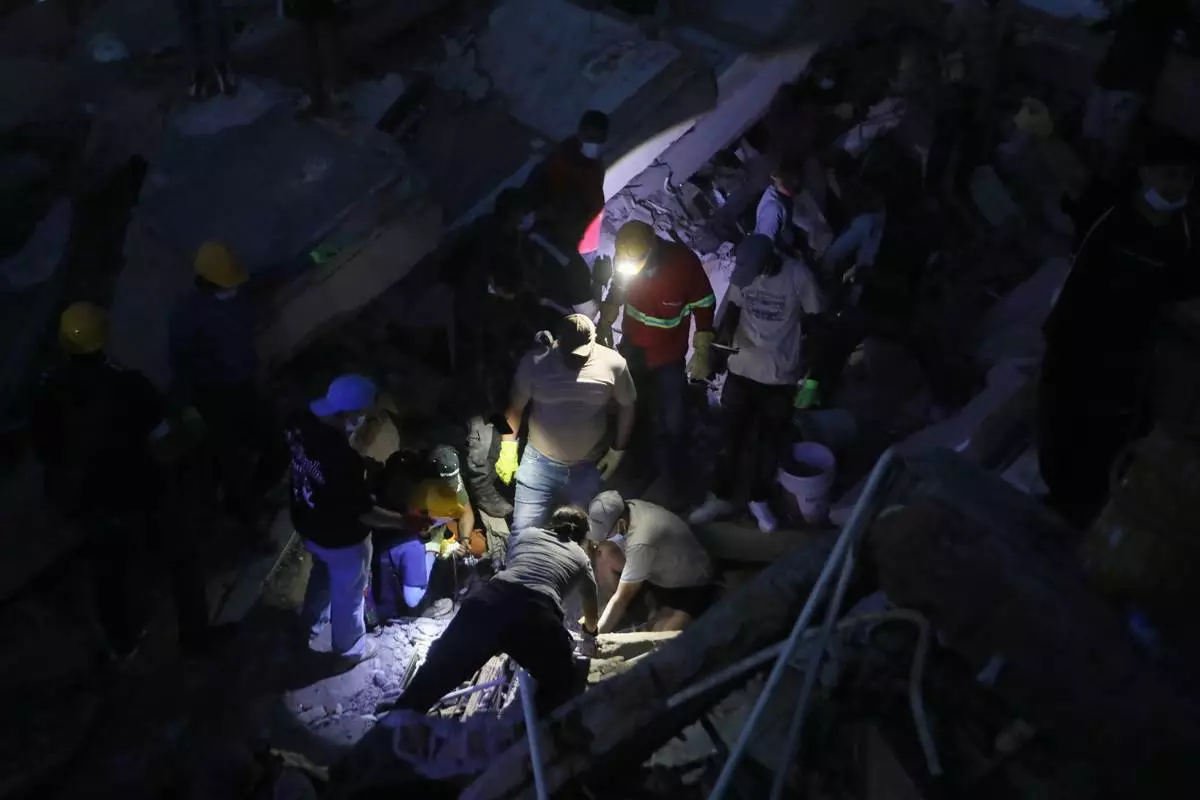
People search through the rubble after an earthquake struck Cali, Colombia, Monday, Aug. 10, 2026. (AP Photo/Santiago Saldarriaga)