
Recently, the United Nations Office on Drugs and Crime (UNODC) released a report highlighting a fundamental restructuring of Southeast Asia's criminal ecosystem. Drug trafficking and telecom fraud are converging at an accelerating pace, forging a transnational criminal economy built on mutual sustenance—where fraud revenues fund narcotics operations, and drug syndicates offer territorial protection for scam enterprises.
As drug manufacturing labs and scam compounds in the Lancang-Mekong River basin develop a symbiotic relationship, they pose a novel, compound threat to regional security and China’s border stability.
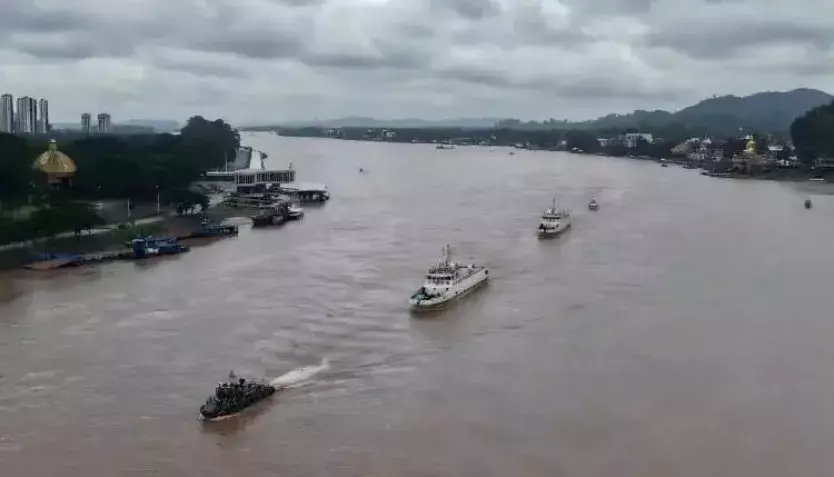
The 167th Joint Mekong River Patrol and Law Enforcement Operation conducted by China, Laos, Myanmar, and Thailand.
The Formation of a Closed-Loop "Narcotics-Fraud" Symbiosis
Drug production and telecom fraud were once distinct criminal supply chains. Today, they have merged into a closed-loop criminal ecosystem: narcotics generate steady cash flow, while fraud schemes supply fresh recruits and money-laundering channels—crystallizing into a highly sophisticated operational model.
Shared Personnel and Infrastructure
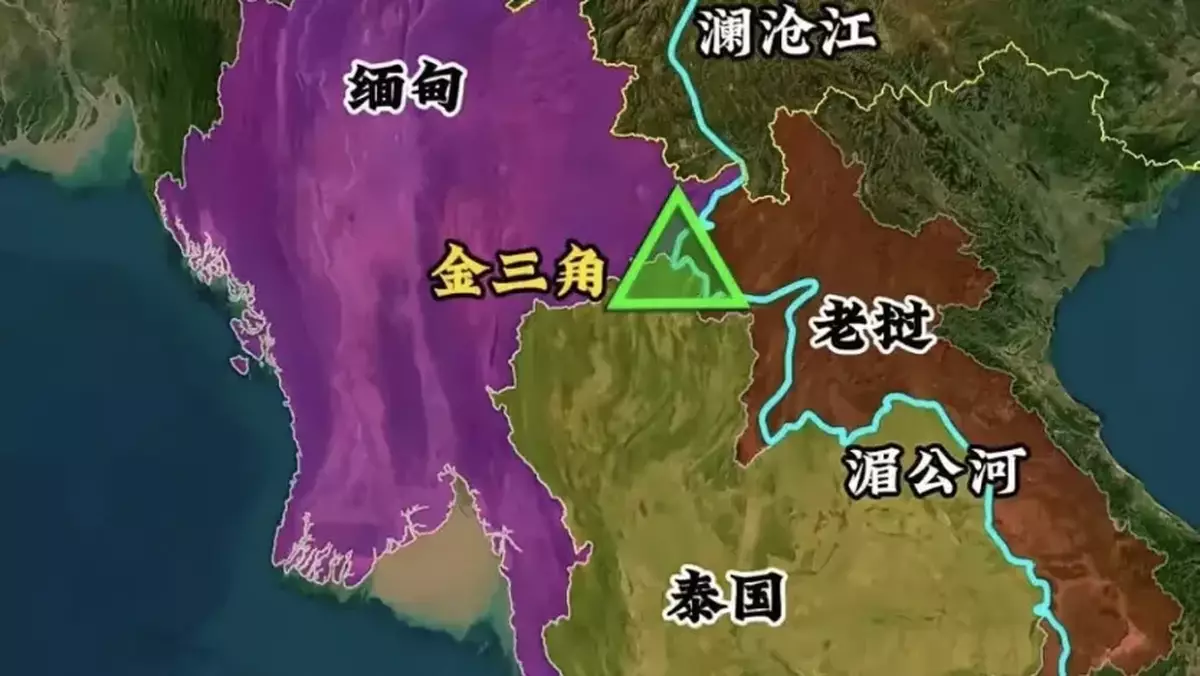
In regions such as Kokang in northern Myanmar, Myawaddy in Karen State, and the Golden Triangle Special Economic Zone in Laos, drug labs and scam compounds are co-located and operated within shared zones. "Multi-crime hubs" have become the standard setup for illicit compounds across the Lancang-Mekong borderlands.
By sharing vital infrastructure—such as electricity, high-speed internet, and logistics networks—these entities amortize protection costs, lower operational overhead, and pool illicit resources. Personnel flow fluidly across operations, taking on dual roles in both scamming and drug trafficking.
This co-located model allows scam compounds to secure narcotics locally to control their workforce, while enabling drug syndicates to leverage the compounds’ armed security to mitigate trafficking risks.
Unified Command Under Single Syndicates
The nexus between drugs and fraud is predominantly driven by unified criminal syndicates featuring a highly integrated organizational hierarchy. Operating like corporate enterprises, they feature a centralized executive board at the top that oversees functional units—such as scam operations, drug trafficking divisions, and armed security enforcement—to seamlessly allocate personnel, capital, and materiel. Having evolved from initial drug operations to fraud-driven expansion, key decision-makers now holistically manage a diversified portfolio of illicit enterprises, including narcotics, telecom fraud, and illegal gambling.
Capital circulates fluidly between these two sectors, mutually reinforcing each other to form a closed financial loop. This setup significantly enhances the stealth, mobility, and resilience of their operations, vastly boosting the syndicates' capacity to absorb risk and scale up.
Cross-Technology Integration
From fraud scripts and fund transfers to drug orders, cross-border transactions, and money laundering, all stages now rely on automated and smart digital tools to maintain end-to-end anonymity, deliberately evading conventional tracing, tracking, and asset-freezing protocols.
By leveraging advanced tech stacks—specifically deepfake AI face-swapping, darknet communications, and Starlink satellite terminals—these syndicates severely hamper law enforcement efforts in digital forensics, evidence collection, and targeted takedowns.
Interwoven and Compounding Risks
This convergence transcends the impact of traditional single-category crimes, inflicting far more complex systemic shocks on regional security.
Erosion of Southwest Border Security
Northern Shan State sits directly along the border with Yunnan. Amid surging drug production and falling prices, the incentives and scale of cross-border trafficking have spiked markedly. Previously, Chinese border control focused primarily on counter-narcotics efforts. Today, authorities must confront a multifaceted wave of criminality spawned by this synthesis: mobile scam outfits, lured or trafficked victims, and laundered illicit proceeds—all exploiting the same cross-border channels as drug networks.
As traditional control frameworks face this hybrid threat, the cost and complexity of border enforcement will rise drastically.
Severe Socioeconomic Hazards
Victims lured or coerced into these compounds endure unlawful detention, severe physical abuse, and forced labor, resulting in widespread human tragedy.
Inside the compounds, narcotics are pervasive; criminals use drug dependency to control workers and captives, forcing them into long hours of grueling illegal labor. This spawns secondary crises, including cross-border drug addiction, local drug distribution, and violent crime.
Simultaneously, certain border communities have grown chronically reliant on the shadow economy, entrenching vested interests that reject legitimate businesses. This severely complicates grassroots governance, making it exceptionally difficult to reform the distorted border economy in the short term.
Undermining National Financial Stability
Illicit capital flows heavily through underground banks, trade-based money laundering, and cryptocurrencies, keeping vast sums of illicit money beyond state regulatory oversight and disrupting national financial systems. The blending of drug and fraud proceeds conceals the origin and nature of these funds, posing unprecedented challenges for anti-money laundering (AML) tracking and asset freezing.
In particular, the widespread use of cryptocurrencies enables fast, frictionless, and anonymous cross-border transfers, delivering shockwaves to foreign exchange controls and allowing systemic financial risks to accumulate.
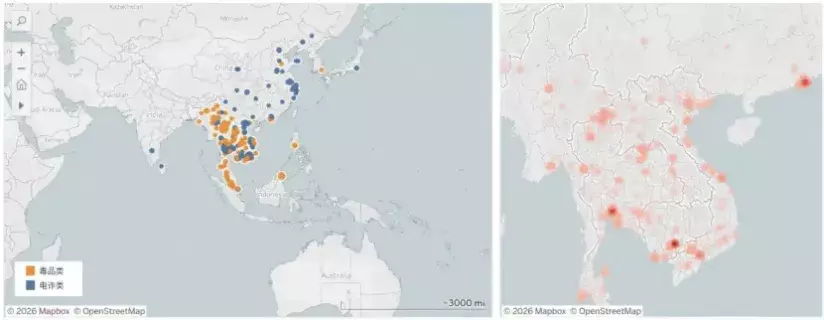
Regional distribution and crime heatmap of drug- and fraud-related offenses in Lancang-Mekong countries during the first half of 2026.
The drug-fraud nexus in the Lancang-Mekong region represents a formidable challenge to regional development and a critical battleground for China's peripheral diplomacy and governance. Evolving from the "Narcotics Empire" to the "Fraud Empire," and now to this integrated hybrid form, criminal networks are continuously upgrading their operations.
Bound by shared mountains and rivers, the six Lancang-Mekong nations share a common destiny. In combating transnational hybrid crimes, no nation can stand alone. Only through multilateral coordination and a strategy addressing both symptoms and root causes can we truly stem the spread of this emerging cross-category criminal threat.
Jiu Wan Li: The High Ground
** 博客文章文責自負,不代表本公司立場 **