
On July 23, local time, the Office of the United States Trade Representative (USTR) issued a notice citing Section 301 of the Trade Act of 1974, using the pretext of so-called "forced labor" to impose tiered tariffs on 60 countries and regions worldwide.
From the "Liberation Day Tariffs" launched in April 2025, to Section 122 this past February, and now Section 301, the Trump administration has exhausted every means to prolong the effectiveness of U.S. tariff policies, delivering a fresh round of shocks and challenges to the global economic and trade order.
Click to Gallery
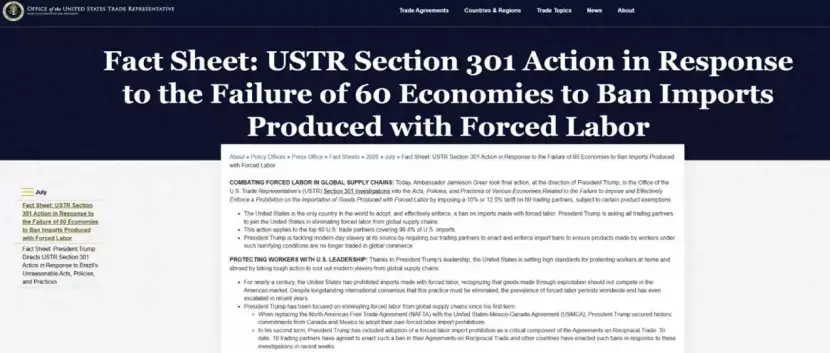
Announcement on the official USTR website.
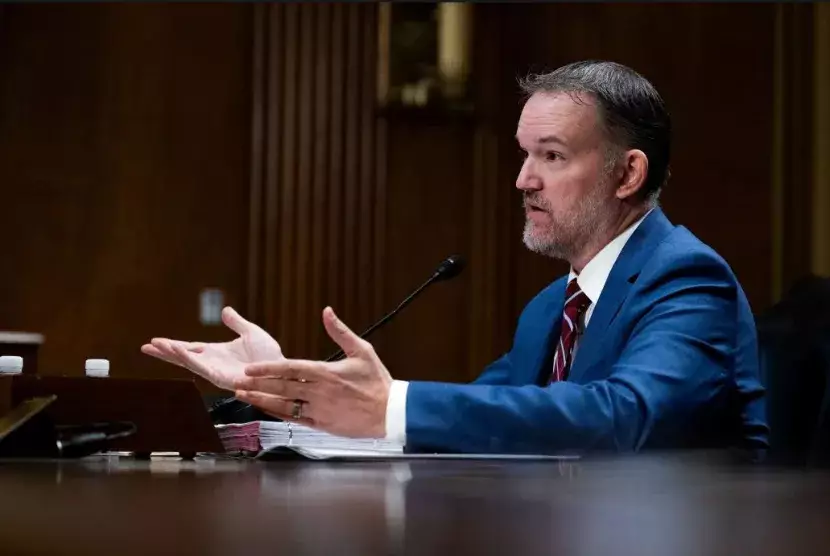
On July 22, the U.S. Trade Representative testified at a hearing.
Announcement on the official USTR website.
Tariff Repackaging with a Seamless Transition
This U.S. tariff adjustment is meticulously designed, with a seamless transition between old and new policies—a clear sign that the White House has gone to great lengths to implement Trump's tariff agenda.
Precision Timing in Legal Transition
In February of this year, the U.S. Supreme Court ruled that the "reciprocal tariffs" imposed by the Trump administration under the International Emergency Economic Powers Act (IEEPA) were unconstitutional.
On the very day of the ruling, the Trump administration invoked Section 122 of the Trade Act of 1974, citing "balance of payments imbalances" to impose a 10% temporary tariff on all countries.
However, Section 122 grants the president tariff authority for only 150 days, with no possibility of extension. In other words, this temporary tariff would automatically expire on July 24.
To that end, the USTR initiated a replacement plan as early as March, launching two parallel Section 301 investigations: one targeting so-called "overcapacity," and the other directly aimed at "forced labor," covering the 60 economies in this round.
Ultimately, the "forced labor" investigation was completed in just five months—solely to ensure a seamless transition between the old and new policies.
At the same time, Section 301 has no statutory constraints on tariff rates or implementation duration, subject only to a mandatory review every four years.
This means the Trump administration can escape the "temporary" nature of high tariff barriers and legally pursue tariff policies over the long term.
On July 22, the U.S. Trade Representative testified at a hearing.
Precisely Calibrated Tariff Scope
This round covers approximately 99% of U.S. foreign trade volume, effectively bringing nearly all major trading partners into the tariff net, with differentiated rates based on unilaterally determined U.S. criteria.
- Tier 1 includes 17 economies—Canada, the UK, Mexico, and others—subject to a 10% tariff. The U.S. claims these economies have already implemented so-called "forced labor control measures," thus qualifying for lower rates.
- Tier 2 includes the EU, Japan, South Korea, Taiwan (China), and others. They are not subject to a standalone 12.5% tariff; instead, their Most-Favored-Nation (MFN) rates are stacked with Section 301 tariffs. As a result, the final applicable rates for these economies are capped between 10% and 12.5%.
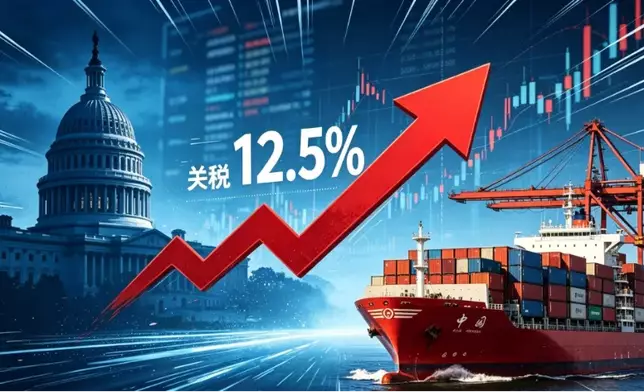
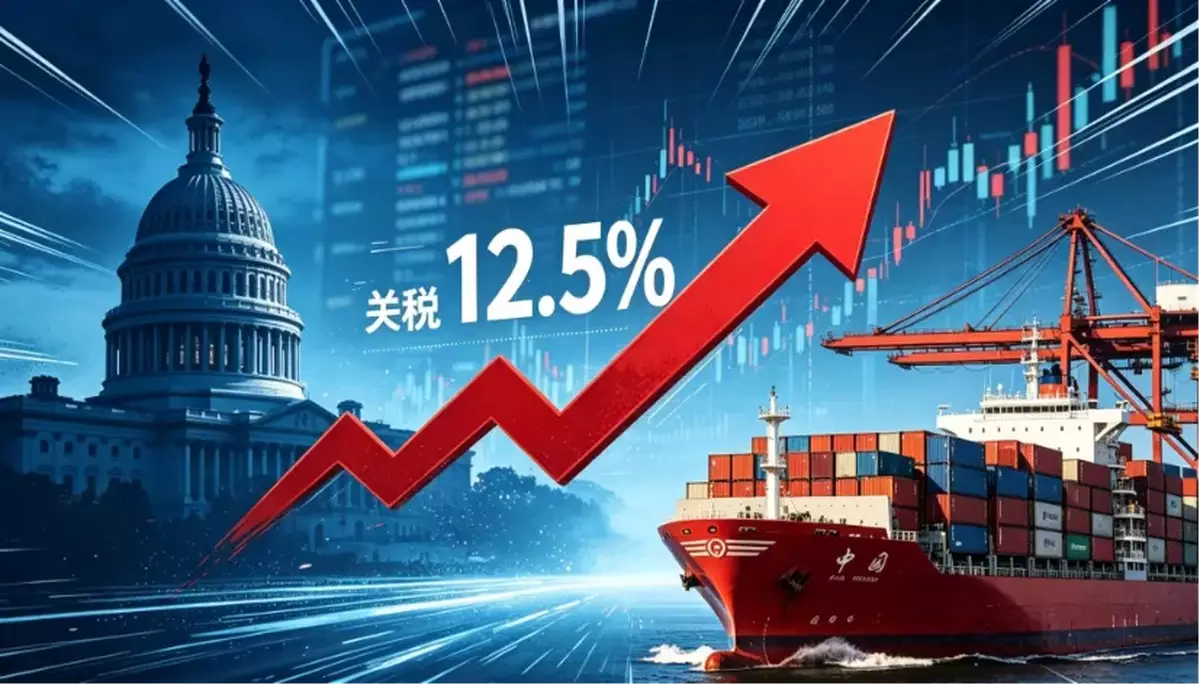
- Tier 3 includes 38 economies—China, Brazil, Thailand, and others—subject to a 12.5% tariff. The U.S. alleges that these economies have not implemented "forced labor" bans, thus incurring higher rates.
This classification standard, determined at the USTR's sole discretion, is rash and absurd. "Forced labor" is nothing more than a veneer for the Trump administration's protectionist trade agenda.
Carefully Curated Exemption List
This tariff scheme also includes an exemption list, with all waivers concentrated in strategic goods indispensable to the U.S.
Minerals, pharmaceuticals, aviation components, and basic industrial raw materials are exempt from the new tariffs. This arrangement is heavily self-serving: by keeping upstream raw material imports tariff-free, the U.S. stabilizes domestic prices while shifting the entire tax burden onto foreign products.
Additionally, Cambodia, Indonesia, Malaysia, and Bangladesh can receive tariff exemptions on apparel and textiles, up to the value of U.S. cotton and textile raw materials they import. This is designed to encourage these four countries to buy more U.S. textile materials for their garment processing industries.
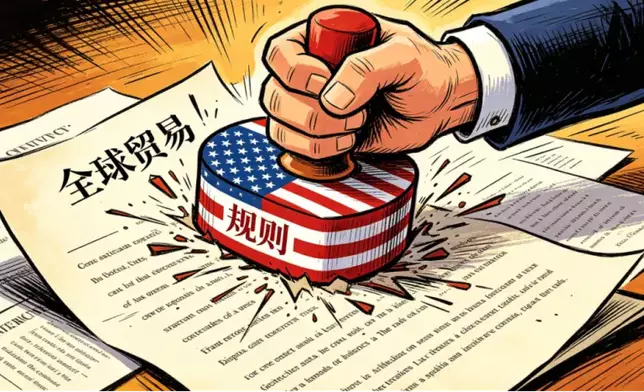
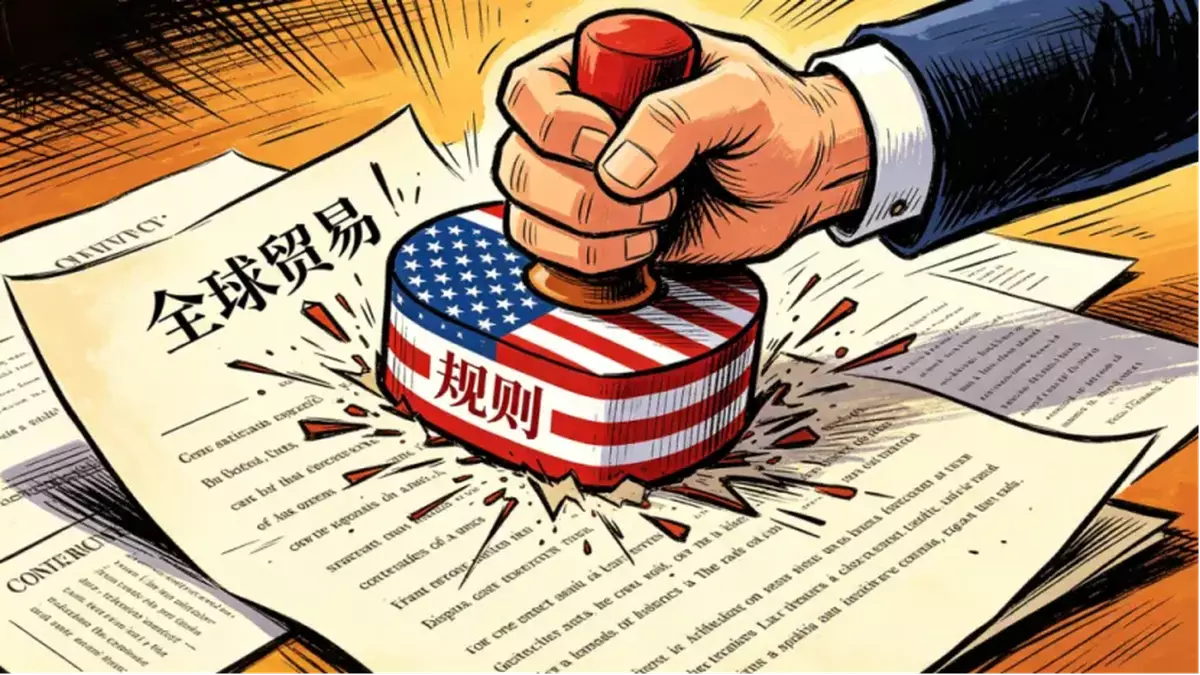
The Trump administration's tariff plan may appear legally grounded, but in reality, it places domestic law above multilateral trade rules. At its core, it remains the same "America First" hegemonic logic.
Interlocking Interests and Calculations
By switching tariff legal instruments, the U.S. has transformed temporary tariff measures into institutionalized tariff weapons, underpinned by complex interests and strategic calculations.
Pressuring International Trading Partners
- For allies, the U.S. has not granted exemptions, merely setting relatively lower rates to maintain a semblance of unity within the alliance system. The tiered tariff structure allows the U.S. to both coerce allies into making concessions on market access, rules of origin, and geopolitical issues, and to reinforce its control over the alliance system through economic means. Moreover, for U.S. allies to secure lower rates, they must amend domestic laws to align with U.S. standards and submit to verification.
- For China, the timing of this new Section 301 tariff carries strong overtones of strategic maneuvering. Although recent China-U.S. economic and trade teams have maintained communication, differences persist on issues like market access. This comes as high-level talks between the two sides are scheduled to resume, making the U.S. move a clear bid to gain additional bargaining leverage.
Consolidating Domestic Electoral Support
With the U.S. midterm elections approaching and the manufacturing reshoring narrative heating up, tariffs have become a highly cost-effective political tool.
On one hand, during the implementation of Section 122 tariffs, the federal government collected approximately $8 billion per month—a significant incremental revenue source for the Trump administration. By extending tariff policies, the administration can sustain this revenue stream to support domestic fiscal spending.
On the other hand, Trump continues to showcase his "America First" toughness to voters, thereby shoring up support among conservative constituencies. The core message is unmistakable: no matter what judicial rulings may obstruct, the administration's resolve to maintain high-pressure tariffs and uphold "America First" will never waver.
A Prelude to Further Actions
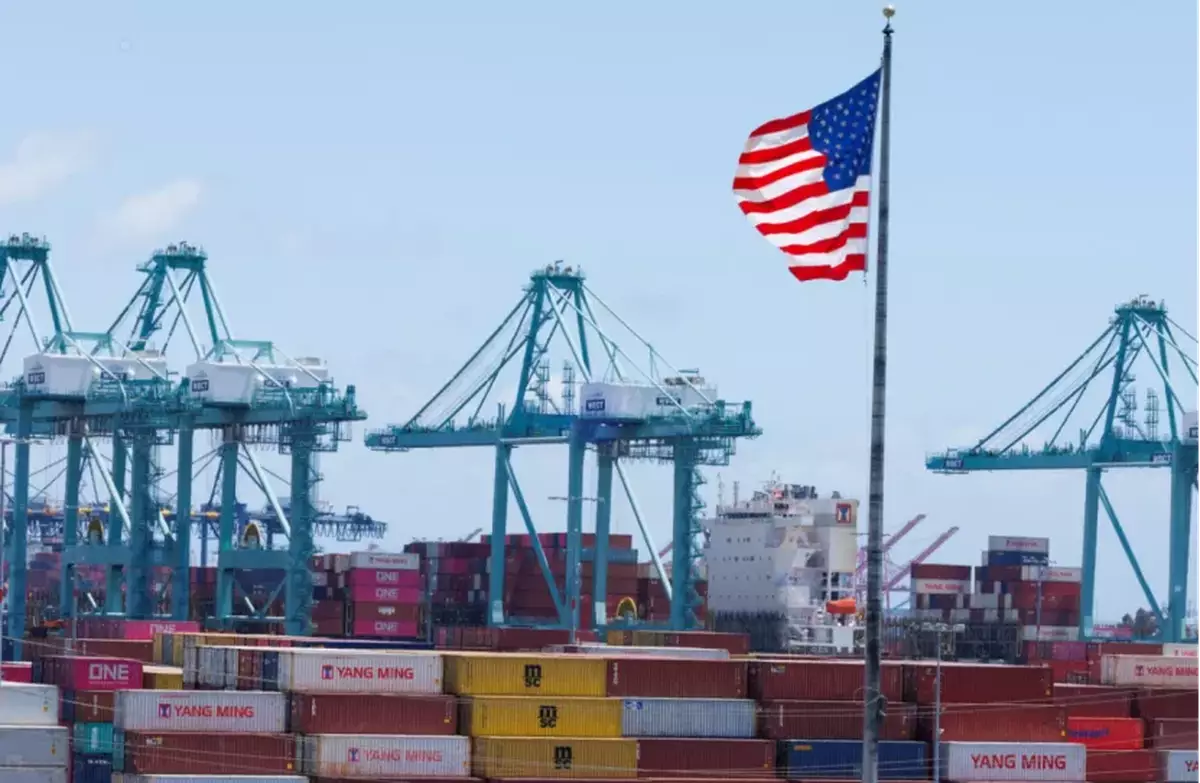
This round of Section 301 tariffs under the "forced labor" pretext is only the beginning. Another Section 301 investigation targeting so-called "industrial overcapacity" is still underway, and more targeted tariff barriers in key industries—steel, automobiles, new energy, and others—cannot be ruled out in the future.
This U.S. tariff policy reveals two clear trajectories: for high-tech, new energy, and other industrial commanding heights, the U.S. will continue tightening imports to curb the industrial upgrades of major competitors; for consumer goods like apparel and home furnishings, exemption policies are designed to alleviate domestic inflation and create breathing room.
The Trump administration has changed tariff justifications time and again, but its essence—wielding tariffs as a weapon and pursuing trade protectionism—has never changed. Such unilateral actions that undermine the international economic and trade order cannot resolve its own deep-seated structural problems and will ultimately backfire.
In an era of deep global economic integration, a zero-sum game leads nowhere. Only through equal consultation and mutual benefit can trade differences be genuinely resolved.
Jiu Wan Li: The High Ground
** 博客文章文責自負,不代表本公司立場 **