On September 12, Dario Amodei, CEO of the leading American AI company Anthropic, released an open statement on social media calling for a coordinated global slowdown in artificial intelligence development. The initiative quickly drew support from OpenAI CEO Sam Altman and SpaceX CEO Elon Musk.
However, beneath this proposal ostensibly framed around global AI safety lies a thick layer of containment provisions targeted directly at Beijing. In effect, Amodei has handed the U.S. government a comprehensive roadmap for AI strategy against China—and laid down a brazen geopolitical declaration of war.
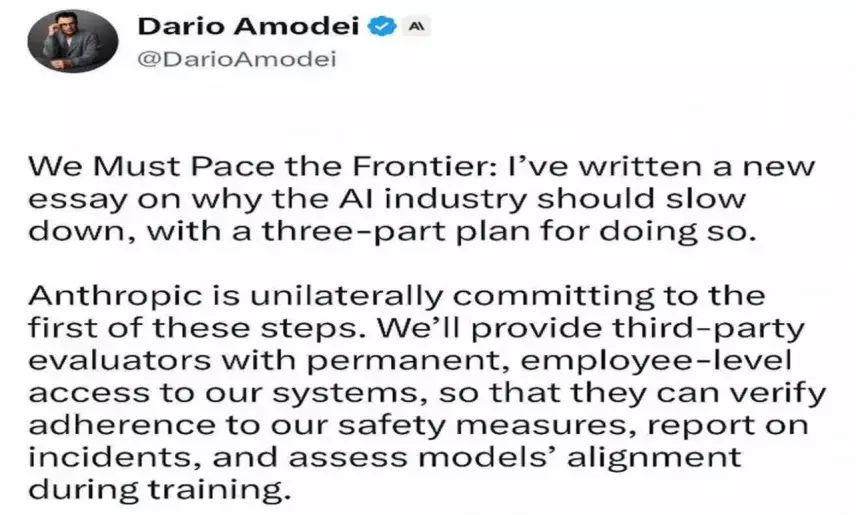
Amodei published an essay titled "We Must Pace the Frontier."
An Open Declaration of AI War
In his essay, Amodei stated flatly that Western nations cannot afford to be "naive" when engaging with China on AI. He warned that if the U.S. unilaterally slows its R&D pace while China charges ahead, Beijing will leapfrog Washington in military AI and frontier applications, fundamentally shattering the existing technological balance.
To safeguard American AI hegemony, Amodei proposed a strategy of "containment first, negotiation later," built around three aggressive containment pillars:
First, choking off AI chip exports. Amodei urged Washington to tighten export licensing and aggressively crack down on covert channels, such as secondhand resales and third-country transshipments, to plug every loophole feeding hardware to China. Raising hardware barriers for Chinese foundation models would prolong their iteration cycles—a direct call for the U.S. government to double down on its strategy of technological bottlenecks.
Second, severing the path of model distillation. Model distillation—where a newer model learns from a mature, large-scale model to acquire near-frontier capabilities at a fraction of the cost—is a standard practice across the global AI industry. Yet Amodei argued that Chinese firms use distillation to dramatically compress iteration cycles, blunting the impact of U.S. chip sanctions. His proposal effectively seeks to cut off Chinese enterprises from accessing overseas APIs for low-cost algorithmic learning.
Third, guarding against model parameter leaks. Amodei called on U.S. AI labs to fortify internal security to prevent model weights from leaking overseas. He argued that if frontier weights fall into Chinese hands, developers in China could bypass immense training costs and rapidly replicate state-of-the-art performance, thereby undermining Washington's chip controls and anti-distillation policy investments.
Amodei made no secret of the end goal: if successfully executed, these tactics will severely handicap China’s AI industry, dramatically widen America’s competitive moat, and hand "democratic nations" immense leverage in future negotiations with Beijing.

Anthropic CEO Dario Amodei.
A Geopolitical Play Beyond Pure Tech
Amodei projects that over the next 3 to 5 years, AI will fundamentally redefine global geopolitics. During this narrow window of strategic opportunity, he argues, U.S. tech giants must actively align with Washington to secure broader geopolitical advantages.
Consolidating Tech Hegemony Historically, the United States has dominated core pillars like general-purpose foundation models, AI chips, and foundational software, with firms like OpenAI and Anthropic serving as the industrial bedrock of American AI supremacy.
However, China’s AI sector has advanced at a blistering pace. Models like DeepSeek and Qwen have achieved breakthroughs in code generation, mathematical reasoning, and training efficiency, with key benchmarks closing in on the global frontier. This rapid catch-up has triggered deep anxiety across Silicon Valley and Washington.
Realizing that standard market competition may no longer suffice to halt China’s momentum, American industry leaders are now cloaking their commercial anxieties in the language of global safety risks. By lobbying for aggressive regulatory barriers, they aim to starve China of technology access, buying themselves vital breathing room to consolidate U.S. dominance.
Monopolizing the Rulebook On September 8, three U.S. security agencies issued a joint advisory naming six Chinese AI companies, accusing them of extracting U.S. frontier models on an "industrial scale." This unilateral charge dovetailed seamlessly with Amodei’s narrative.
Washington’s true calculus is to rebrand unilateral containment tools—chip embargoes, distillation bans, and weight lockouts—as "universal norms for AI safety." By placing safety audits and compliance authorizations firmly under U.S. jurisdiction, Washington can wield "compliance" as a geopolitical cudgel to police the global AI industry, converting a fleeting technical lead into long-term institutional privilege while denying other nations a fair shot at development.
Erecting a New Ideological Iron Curtain
Throughout his manifesto, Amodei relies heavily on ideological rhetoric, repeatedly contrasting "democracies" with "autocracies" to frame AI competition as a clash of rival governance systems and values. This framing completely politicizes what is inherently a technological issue.
In recent years, Washington has routinely drawn ideological lines in the tech sector—from placing Chinese firms on military-linked entity lists to curbing exports under the banner of "national security" and forging "democratic technology alliances."
Amodei’s call for "global coordination" is simply the latest attempt to weaponize corporate interests into policy and propaganda tools against China.
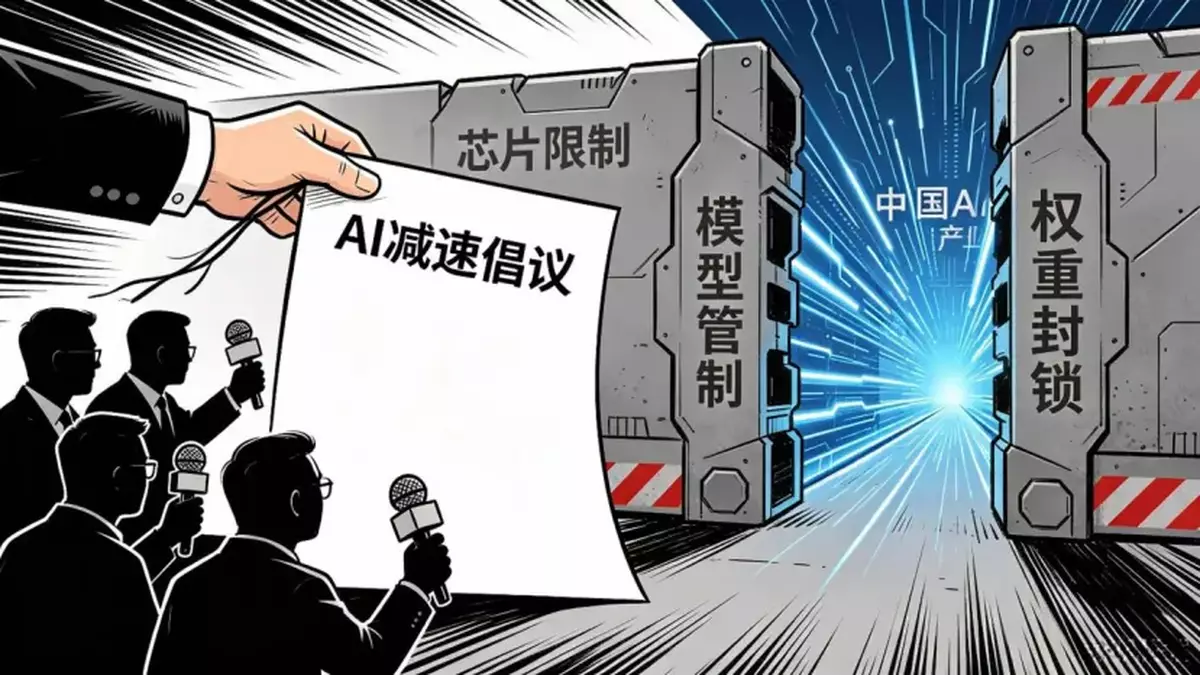
Amodei's "AI Cold War script" pushes containment under the guise of safety and enforces bloc confrontation under the pretext of global governance. It defies the fundamental laws of technological progress and runs counter to the shared interests of humanity.
As a new Iron Curtain accelerates its descent between China and the United States, the fierce contest over artificial intelligence has officially entered the fast lane.
Jiu Wan Li: The High Ground
** 博客文章文責自負,不代表本公司立場 **
On September 1 local time, U.S. Immigration and Customs Enforcement (ICE) issued a notice stating that Lianyong Wei, a 51-year-old Chinese national, died less than 24 hours after being transferred into custody.
He is the fifth Chinese citizen to die inside an ICE detention facility since March 2025.
The deaths of five Chinese nationals within the walls of a U.S. government agency expose severe systemic flaws in the Trump administration’s immigration policies—a string of tragedies serving as a stark warning to overseas Chinese worldwide.
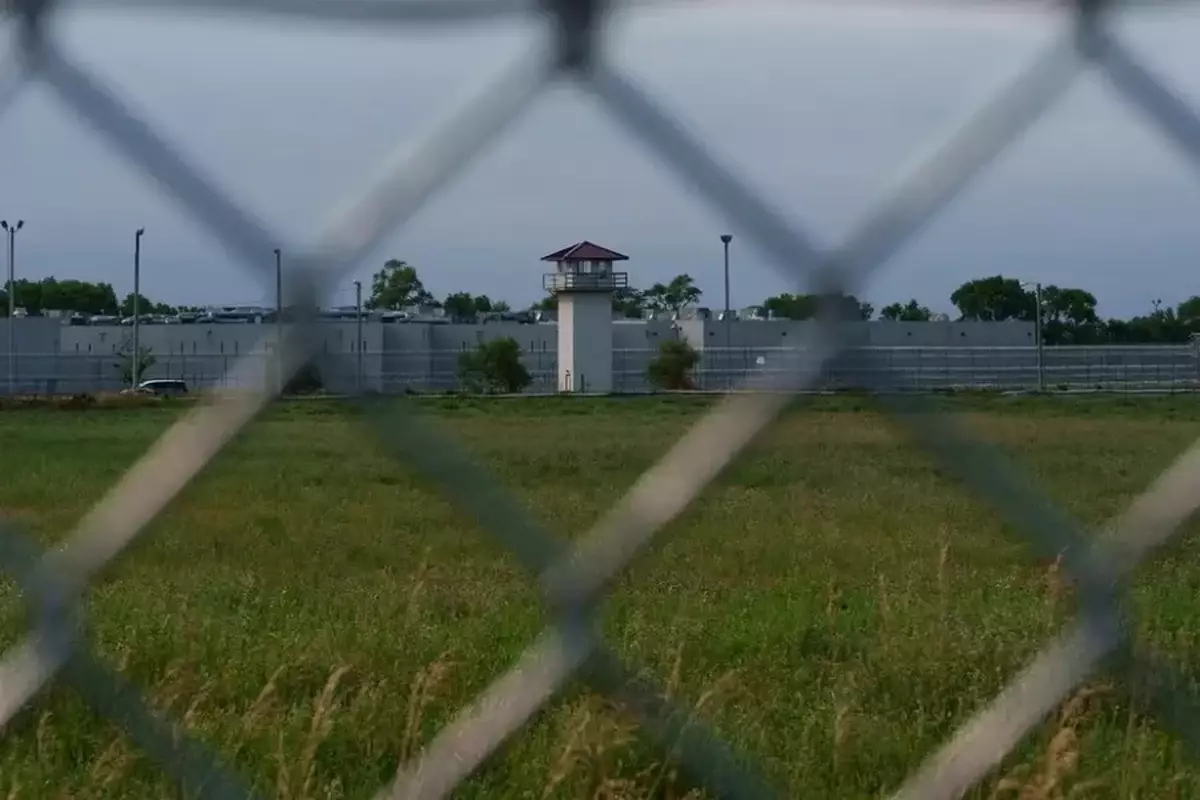
A Single Day in Custody, an Unexplained Death On August 21, U.S. law enforcement arrested Wei on suspicion of assault. The following day, he was handed over to ICE for overstaying his visa.
On the morning of August 23, guards conducting a routine check found Wei unresponsive. He was rushed to the hospital, where he was pronounced dead.
Less than 24 hours elapsed between his entry into the ICE facility and his death.
The Chinese Consulate General in Los Angeles has expressed grave concern, demanding a full investigation into the cause of death, timely disclosure of findings, concrete measures to prevent recurrence, and consular assistance for the bereaved family.
Wei’s case is far from an isolated incident. Four other Chinese citizens recently died under similar circumstances.
In March 2025, a 52-year-old Chinese woman committed suicide by hanging inside a detention center, marking the start of this tragic sequence.
In August of the same year, a 32-year-old Chinese man was found dead by hanging in a Pennsylvania detention facility shower, leaving behind a suicide note.
At the end of September, a 53-year-old Chinese national suffered a sudden medical emergency at a California facility and died after being transported to a hospital.
Another custody death during the same period was officially ruled a suicide by hanging.
These five individuals varied in background, age, and legal status, yet all lost their lives while under federal custody. This is no coincidence; it reflects deep-seated structural flaws within the U.S. immigration detention system.
Draconian Policies, Brutal Enforcement
The frequent deaths of foreign detainees underscore rampant over-enforcement across U.S. federal agencies—rooted in the hardline immigration pivot under the Trump administration.
Regulations Exist Only on Paper
U.S. regulations lay out explicit medical standards for immigration detention: mandatory initial health screenings within 12 hours of arrival, ongoing monitoring for chronic illnesses, designated mental health evaluations, and fast-track response protocols for acute emergencies.
In reality, these safeguards are routinely ignored.
The majority of U.S. immigration detention centers are operated by private contractors. To cut overhead and maximize profit margins, these facility operators suffer from systemic understaffing, rudimentary medical equipment, and inadequate caretaking personnel.
When detainees fall ill or suffer severe psychological distress, they can neither effectively report their symptoms nor receive timely medical intervention. Minor ailments escalate into life-threatening conditions, and severe despair frequently leads to self-harm—a grim routine across numerous facilities.
Compounding the crisis is the insular nature of these facilities, which severs detainees from external help. Restricted legal counsel, blocked grievance mechanisms, and a lack of independent oversight create high-risk environments that severely compromise the physical and mental well-being of detainees.

Ruthless Enforcement Claims Countless Victims
Following Trump’s return to the White House, aggressive immigration enforcement became a headline trophy project for ICE.
Backed by a base budget of approximately $10 billion alongside over $100 billion in supplemental funding, ICE rapidly expanded its workforce, planned to expand bed capacity to 100,000, and imposed a strict daily quota of 2,000 arrests.
Driven by these top-down mandates, frontline operations went into hyper-drive. In July 2026 alone, ICE recorded 49,000 monthly arrests—a record high—pushing the national detainee population to a peak of 73,400.
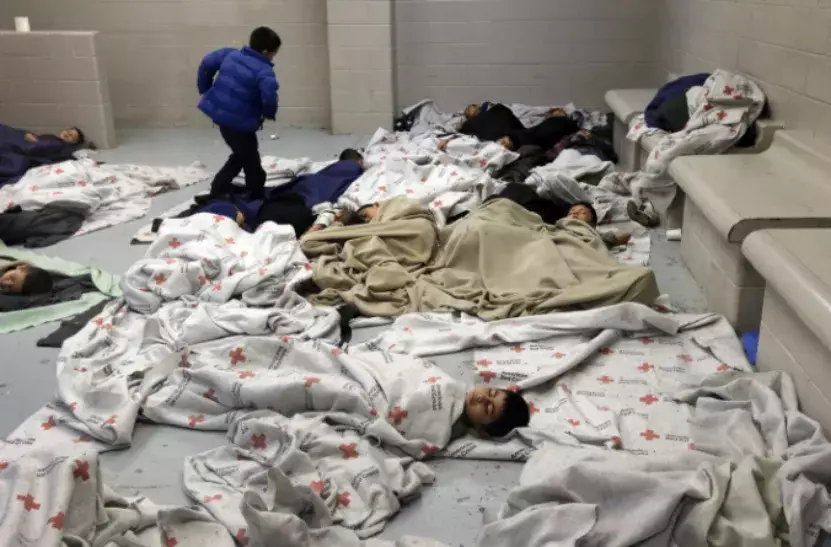
A Miami detention center temporarily housing immigrants in a conference room.
However, field research from UC Berkeley reveals that only about 34% of individuals targeted by ICE had prior criminal records. The vast majority were non-violent overstayers posing no threat to public safety.
Under the guise of "targeted enforcement," the operation has devolved into an assembly line designed to pad headcounts, meet quotas, and win political points—turning human beings into political leverage.
Rising Risks for Chinese Living Abroad
The systemic chaos within ICE facilities is cascading outward, altering the security landscape for overseas Chinese.
According to Associated Press statistics, at least 57 in-custody deaths have occurred across federal immigration detention facilities since Trump reassumed office in January 2025.
This highlights a bleak reality: routine administrative issues, such as an expired visa or a paperwork oversight, can now instantly trigger an ICE arrest—and once detained, an individual's life is put at risk.
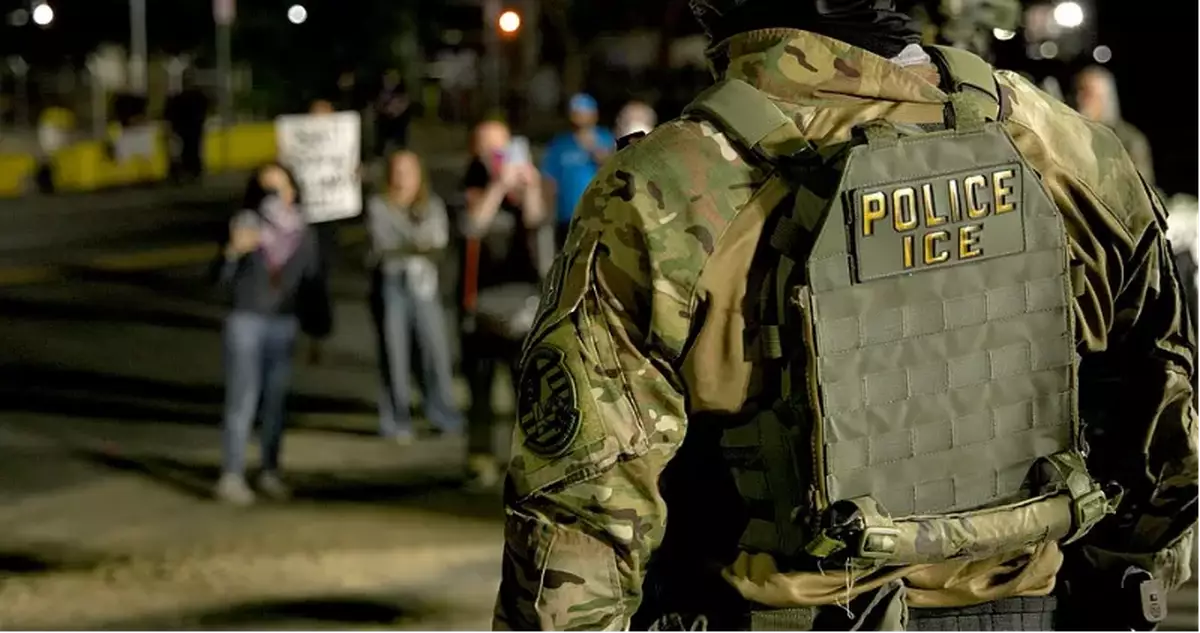
Even more alarming, similar tragedies are emerging elsewhere.
On September 1, a Chinese national died while in immigration custody in the Philippines—marking the second such incident in that country this year.
Immigration enforcement is tightening significantly across U.S. territories and parts of Southeast Asia. On territories like Saipan, enforcement is notoriously arbitrary and legal recourse remains limited, making rights protection far more difficult than on the U.S. mainland.
Living abroad comes with challenges; safety is paramount.
Overseas compatriots are advised to recognize the global tightening of immigration law enforcement, abandon any complacent mindset, familiarize themselves with consular emergency protocols and local legal aid options, and maintain active risk contingency plans.
Depriving an individual of liberty means the state assumes full responsibility for their life and safety. Regardless of how law enforcement is justified, protecting the right to life remains an unalterable bottom line.
Until the root causes of hyper-enforcement are addressed, ICE’s casualty list will only continue to grow, and more human tragedies will inevitably unfold.