
On August 21, the Court of First Instance of the High Court of the Hong Kong Special Administrative Region delivered its verdict in the case involving the Hong Kong Alliance in Support of Patriotic Democratic Movements of China (hereinafter "the Alliance"), Lee Cheuk-yan, Ho Chun-yan, and Chow Hang-tung, who were charged with "subversion of state power." The Alliance, as a corporate defendant, along with its former chairman Lee Cheuk-yan and former vice-chairwoman Chow Hang-tung as individual defendants, were found guilty. Former vice-chairman Ho Chun-yan, who had pleaded guilty prior to the trial, was also convicted.
This landmark ruling marks the first complete judicial determination of the offense of "subversion of state power" since the implementation of the Hong Kong National Security Law (NSL). It fully demonstrates the spirit of the rule of law in Hong Kong and the impartial authority of its judicial system under "one country, two systems."
Click to Gallery

From left to right: Ho Chun-yan, Lee Cheuk-yan, and Chow Hang-tung.
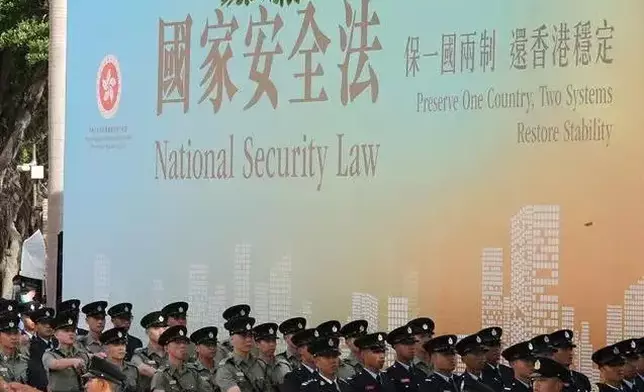

The High Court of Hong Kong.

From left to right: Ho Chun-yan, Lee Cheuk-yan, and Chow Hang-tung.
A Checkered Record: The Alliance Crosses Legal Red Lines
Founded in 1989, the defendant organization, the Alliance, had long engaged in activities endangering national security under the guise of "patriotism" and "democracy."
Reactionary Platform and Defamation of Fundamental State Systems For years, the Alliance openly promoted its so-called "Five-Point Platform," aggressively advocating extreme political positions in an attempt to overthrow the fundamental state system established by the Constitution. Through annual rallies, publications, and online mobilization, it continuously advanced anti-China and chaos-inciting narratives. During the 2019 extradition bill unrest, it seized the opportunity to incite and amplify hostility among Hong Kong residents toward the Central Authorities and the HKSAR Government.
Defiance Continued After National Security Law Came into Effect On June 30, 2020, the Law of the People's Republic of China on Safeguarding National Security in the Hong Kong Special Administrative Region (Hong Kong National Security Law) officially took effect, explicitly criminalizing "subversion of state power." Rather than reining in its actions, the Alliance intensified its defiance. Peddling fallacies such as "achieving justice through illegal means," it continued to incite the public, refused to amend its platform, openly declared it "would not back down," continued organizing unlawful assemblies, promoted confrontation, and persistently colluded with external forces.
The Gavel Falls: Irrefutable Evidence of Criminal Conduct
In the face of the egregious acts committed by the Alliance and its core members, the High Court rendered a fair and just verdict based on facts and anchored in the law.
First Conviction for the Offense, Filling a Gap in Judicial Practice Article 23 of the Hong Kong National Security Law explicitly defines the offense of "subversion of state power"; however, there had previously been no case involving a full trial and conviction for this specific charge. Following an open trial, the court elaborated in detail on the constituent elements, modes of conduct, and criteria for determining mens rea (guilty intent), establishing a clear judicial framework for identifying acts of "inciting others to organize, plan, commit, or use illegal means to subvert state power." This ruling fills a practical gap in the application of the NSL, providing a valuable precedent for future law enforcement.
Clear Legal Principles: Delineating the Boundaries of Freedom of Speech Another landmark aspect of this case lies in its clear demarcation between freedom of speech and subversive incitement. The closing arguments decisively refuted the Alliance's specious claims regarding freedom of speech, clarifying that its long-promoted platform and slogans were not mere political expression, but deliberate attempts to provoke hostility, cause division, and subvert the fundamental system of the state. Such conduct far exceeds the scope of speech protected by the Basic Law and the NSL, constituting the objective act of inciting subversion through "illegal means."
Establishing this legal boundary is of profound significance for Hong Kong society to correctly understand "one country, two systems" and the proper relationship between freedom and the rule of law.
Rigorous and Impartial: A Transparent Judicial Process The case was lawfully investigated by the National Security Department of the Hong Kong Police Force, prosecuted by the Department of Justice, and adjudicated by the Court of First Instance of the High Court. The entire process was open, transparent, and procedurally rigorous, ensuring that the rights of both the prosecution and the defense were fully protected. Furthermore, adhering to the principle of non-retroactivity, the court strictly limited the criminal liability of the Alliance and the other defendants to the period between July 1, 2020 (when the NSL came into effect) and September 8, 2021 (when the Alliance announced its dissolution), fully reflecting the rigor and fairness of Hong Kong's judicial process.
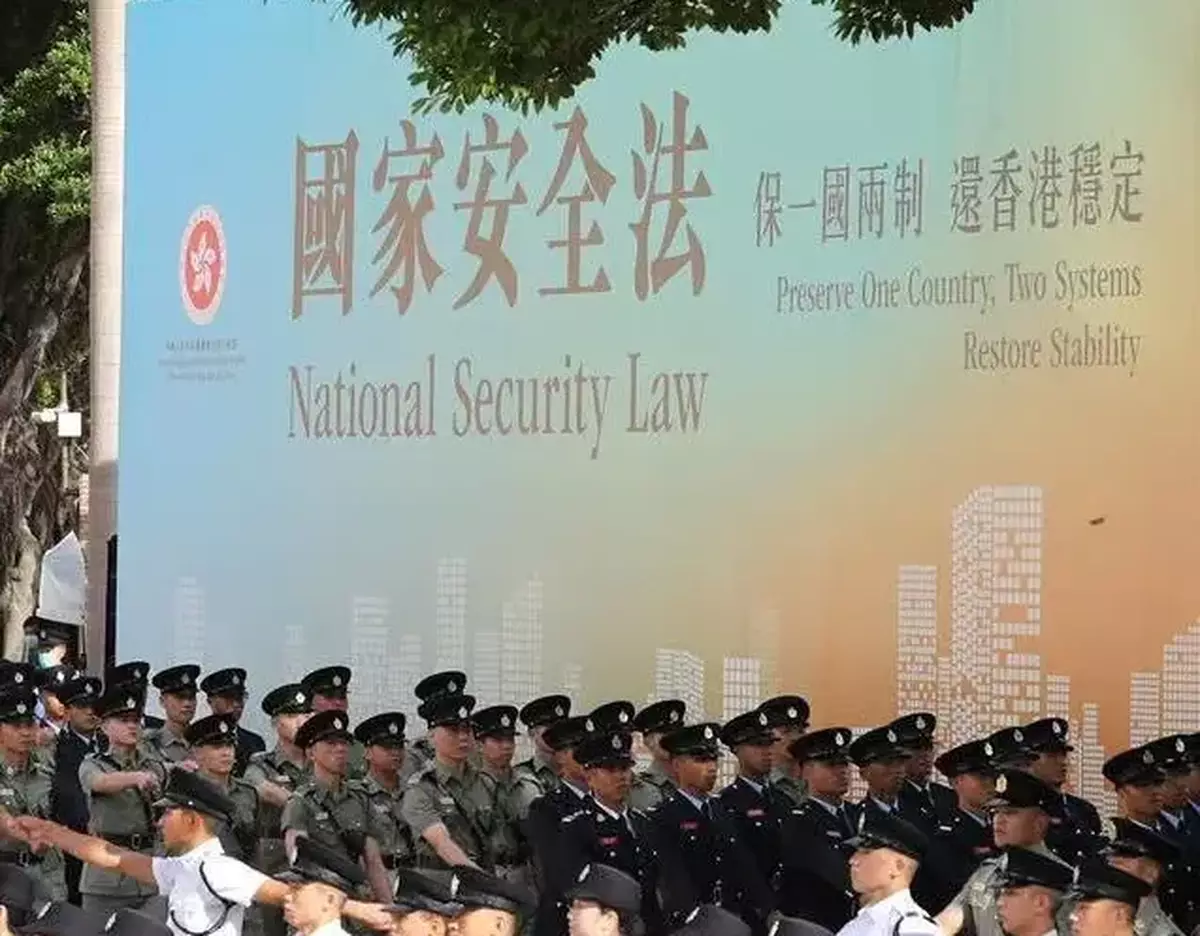
The High Court of Hong Kong.
Justice Served: The Authority of the Rule of Law Stands Firm
The verdict in this case is not only a delivery of justice in an individual trial, but also a clear signal to the international community that Hong Kong's rule of law is inviolable and that "one country, two systems" enjoys solid legal protection.
Effectively Upholding the Authority of the National Security Law In its judgment exceeding 200 pages, the court provided a systematic exposition on the constitutional order, the leadership of the Communist Party of China, and the fundamental state system. This fundamentally eliminated any legal loophole for attempts to subvert state power under the pretexts of "democracy" and "freedom." The judgment not only serves as a strong deterrent against potential acts endangering national security, but also provides authoritative judicial guidance for all sectors of Hong Kong society to accurately understand the NSL and consciously safeguard national security, fully demonstrating the spirit of the rule of law.
Ensuring the Steady and Sustained Implementation of "One Country, Two Systems" Safeguarding national sovereignty, security, and development interests is the supreme principle of the "one country, two systems" policy, and the trial of this case represents a concrete judicial application of this principle. From the enactment of the NSL turning the tide on turmoil, to the enactment of Article 23 legislation plugging institutional loopholes, and now to this conviction setting a judicial benchmark, Hong Kong's legal framework and enforcement mechanisms for national security have been continuously refined. This builds a solid foundation for the steady and long-term success of "one country, two systems" and provides a fundamental guarantee for Hong Kong's lasting prosperity and stability.
Rule of Law Brings Prosperity; National Security Brings Stability
The just verdict in the Alliance case represents another major milestone since the implementation of the Hong Kong National Security Law. It reaffirms that no act endangering national security will escape legal sanction, and that any attempts at external interference are doomed to fail.
Moving forward, with the comprehensive and accurate implementation of the NSL, Hong Kong will further consolidate its transition from chaos to governance and prosperity, steadily advancing along the path of safeguarding national security, enhancing public well-being, and integrating into the overall national development. The great practice of "one country, two systems" will undoubtedly shine with even greater brilliance.
Jiu Wan Li: The High Ground
** 博客文章文責自負,不代表本公司立場 **