China's wild Asian elephant population has more than doubled in about four decades, reaching nearly 400 as conservation efforts continue, according to the latest monitoring data from the National Forestry and Grassland Administration (NFGA).
The data was released on Wednesday, which marks World Elephant Day.
Wild Asian elephants, an emblematic species of the rainforest, numbered only about 150 in the 1980s in China. The animals are designated as "endangered" by the International Union for Conservation of Nature and are under first-class national protection in China. They primarily live in the southwest China's Yunnan Province near the borders of Myanmar and Laos.
From March 2020 to August 2021, the world watched with fascination as a herd of wild Asian elephants, known as the "short-nose family", wandered more than 1,300 kilometers across Yunnan. Their epic journey provided an unprecedented look at China's conservation strategies and shed light on how local communities are learning to coexist with these animals.
Over the past few years, the Asian elephant population in China has risen steadily, bucking the global decline. The development is particularly noteworthy for a species whose slow breeding cycle and endangered status make recovery especially challenging.
Since the "short-nose family" returned to its original habitat in Yunnan, China has steadily moved forward in establishing an Asian Elephant National Park in the province. Conservation efforts for the elephants' habitats in the three border regions of Xishuangbanna, Pu'er, and Lincang have been continuously strengthened, with ecological corridors gradually being connected.
Infrared cameras, drones, and smart broadcasting systems have been deployed to create a round-the-clock monitoring and early warning network, enabling authorities to track elephant movements in real time.
Meanwhile, as villagers face the possibility of elephants foraging on their crops, Yunnan has pioneered a public liability insurance scheme for at-risk farmers. Infrastructure aimed at preventing elephant intrusion and regular patrols by designated crews have also been put in place to both protect the animals and mitigate human-elephant conflict.
Zhou Chenhao, director of the Monitoring Office at the Xishuangbanna Asian Elephant Conservation Management Center, noted that highway construction in the region has strived to avoid disrupting elephant habitats.
"Each elephant herd has its own fixed route of movement. They move through the forest, and right above them is a highway overpass. We made sure that building this expressway will not destroy their habitat or block their migration corridor. While pursuing development, we are also protecting this species," he said.
Experts point out that systematic habitat protection, technology-powered monitoring, and coordinated interest-balancing mechanisms have collectively underpinned the steady growth of Yunnan's Asian elephant population. This achievement is reflected not only in the rising numbers but also in the elephants' more natural movement and social behaviors.
"We will establish the national park to coordinate and integrate conservation efforts across Pu'er, Xishuangbanna, and Lincang, so that we can more effectively protect Asian elephants and the ecosystems they rely on," said Chen Fei, director of the Asian Elephant Research Center under the NFGA.
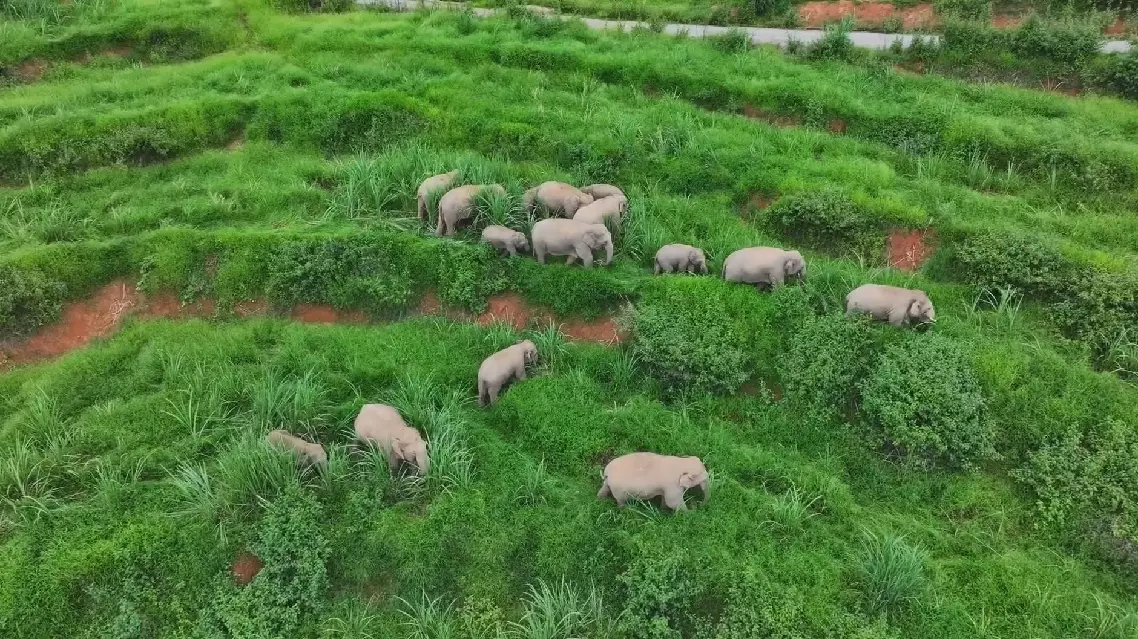
China's wild Asian elephant population nears 400 as conservation efforts pay off
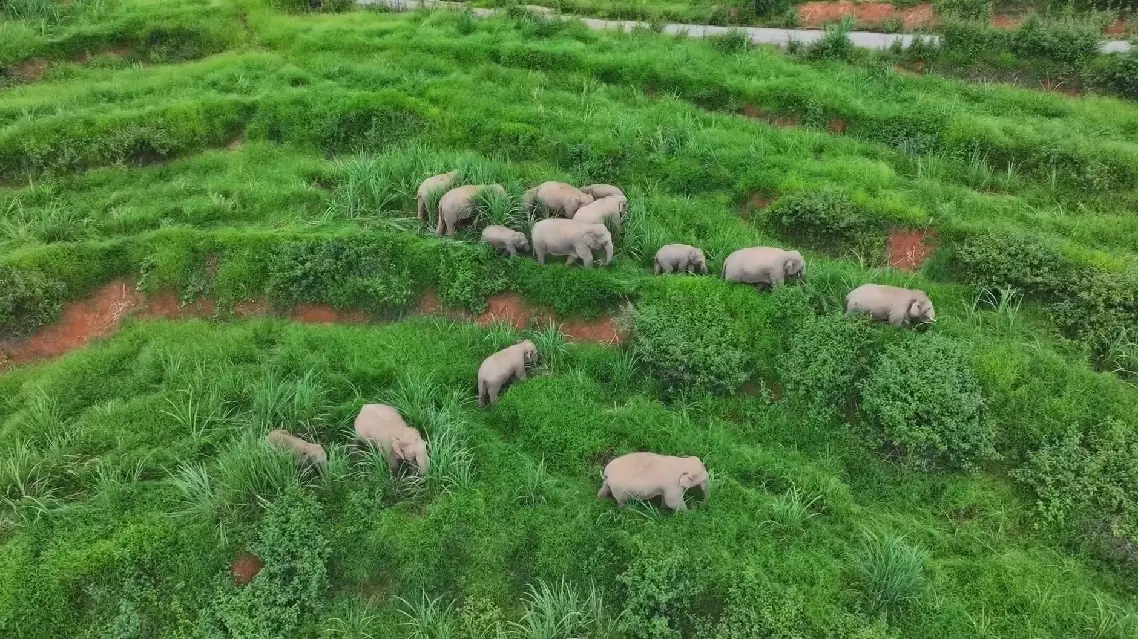
China's wild Asian elephant population nears 400 as conservation efforts pay off