Hong Kong's stock market ended lower Thursday with the benchmark Hang Seng Index down 0.17 percent to close at 25,396.51 points.
The Hang Seng China Enterprises Index shed 0.23 percent to 8,426.49 points, and the Hang Seng Tech Index gained 0.33 percent to 4,792.39 points.
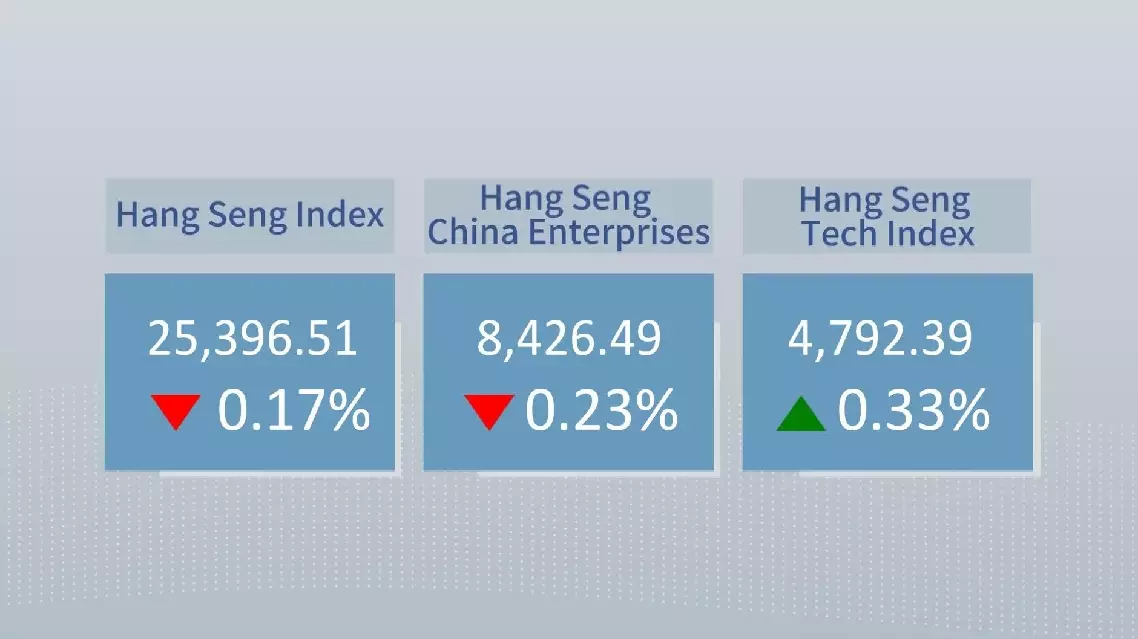
Hong Kong stocks close lower Thursday
A major drinking water reservoir in east China's Jiangsu Province, known as the Tianmu Lake, has seen its water quality restored to safe water standards after innovative ecological reforms replaced widespread pollutive shrimp farming.
The Tianmu Lake, composed of the Shahe and Daxi reservoirs, is vital to the nearly 800,000 Liyang City residents and serves as an ecological shield upstream of the Taihu Lake. However, just a few years ago, this critical water source was on the edge of a drinking water quality crisis.
At that time, intensive oriental river prawn ponds dotted the upper towns along the Tianmu Lake. Untreated agricultural runoff, especially through the Zhucao River, resulted in excessive phosphorus existence and deteriorating water quality.
"In 2021, we detected abnormal water quality in the Tianmu Lake's source area. After tracing its origin, we found prawn farming was the primary culprit. Supported by the municipal Communist Party of China (CPC) committee and government, the Tianmu Lake Township took the lead and shut down all pollutive prawn ponds," said Peng Jianxin, deputy director of Liyang City Ecology and Environment Bureau.
But shutting down the aquaculture businesses met stiff resistance, especially since Shezhu Township, dubbed 'China's top oriental river prawn town,' is a prawn trade hub for the region. Even more challenging, neighboring Anhui Province's Lingda Township, just upstream, had similar pond concentrations, making cross-border coordination essential.
Liyang City found a solution by converting the "water ecological capacity," or the lake's natural ability to absorb and process pollutants, into a tradeable resource. In 2021, the Tianmuhu Township signed a novel agreement with Lingda City in Anhui. Authorities calculated how much pollution each prawn pond represented, compensated farmers to switch away from prawn farming, and paid them annual land rents. Farmers could find new jobs, or work on newly developed high-standard farmland. Any freed-up pollution capacity is now sold to local businesses before they are allowed to develop nearby land.
"Our lush mountains and lucid waters are invaluable assets. If we measure the carrying capacity accurately, we can manage the whole watershed precisely. Any business project must buy this ecological capacity first, ensuring development doesn't compromise our vital ecological functions. The water conservation areas along the lake and the wetlands at the river estuary are a crucial foundation for safeguarding drinking water safety," said Li Hengpeng, director of the Tianmu Lake Watershed Ecological Observatory.
Remediation and repair advanced side by side. Five years of satellite data confirm prawn ponds have been reclaimed into high-standard farmland and ecological buffer zones. These terraced landscapes slow and purify runoff, intercepting pollutants before they reach the lake. Each year, the Zhucao River now removes about 4.4 tons of nitrogen and 0.4 tons of phosphorus, and the overall water quality has improved from Grade III to Grade II, safe for drinking.
With the water quality restored, Liyang City has accelerated its eco-tourism push. Since 2017, the 365 km-long Liyang Route Number One road, or the "Rainbow Road," linking over 220 rural scenic spots, threading around mountains and lakes, and skirting conservation zones, has played an essential role in transforming the local economy.
In Jiangxia Village, for example, after the "Rainbow Road" reached the community, new agricultural bases and processing companies flocked in, boosting collective village income tenfold in just over six years.
In January 2026, the Ministry of Ecology and Environment released the first list of pilot zones for building beautiful rural areas, and Liyang was among them.
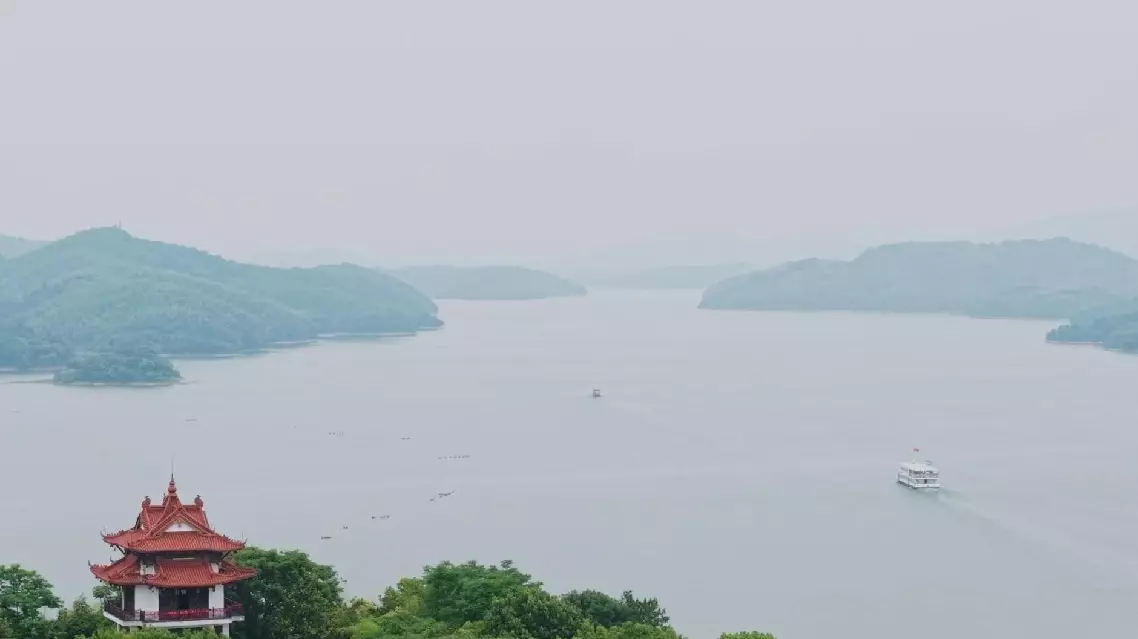
Drinking water source in east China sees water quality restoration through ecological reform