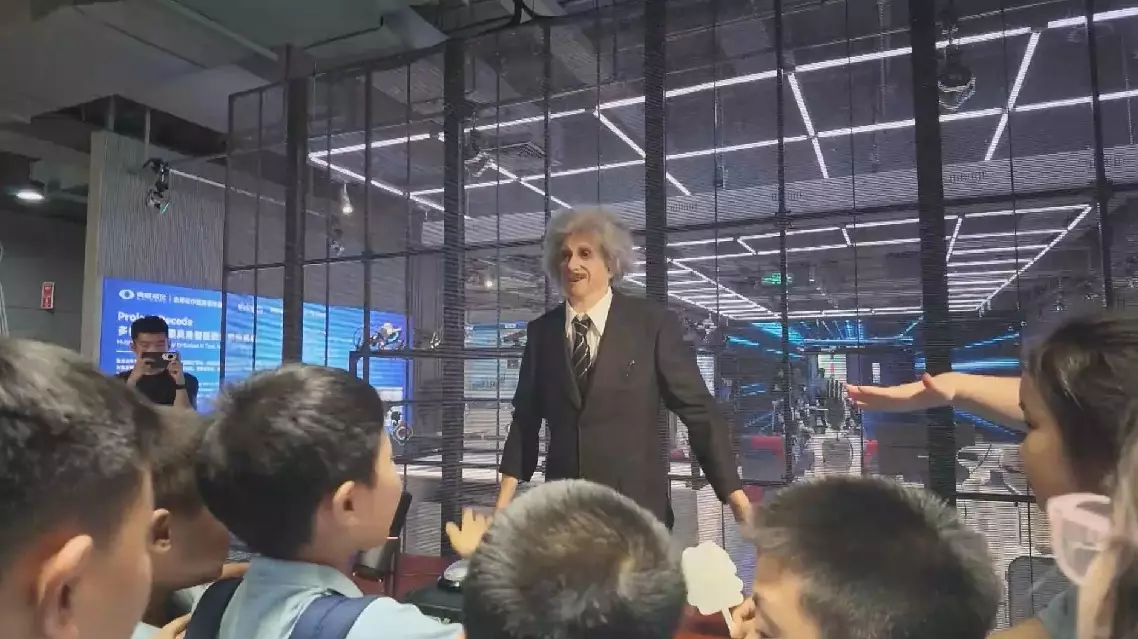
Beijing's Robot Mall, a 4,000-square-meter showroom dedicated to embodied AI robots, is pulling in crowds of domestic and international visitors this summer.
The surge coincides with a broader trend as technology-focused tourism becomes a go-to option for family outings and study tours during the peak holiday season, making it a premier stop for scientifically curious travelers in the Chinese capital.
Beneath the tourism buzz lies a highly functional commercial hub. The mall, situated in southeast Beijing's tech-heavy Yizhuang Area, operates like a full-service robot dealership, offering sales, maintenance, spare parts, and technical support.
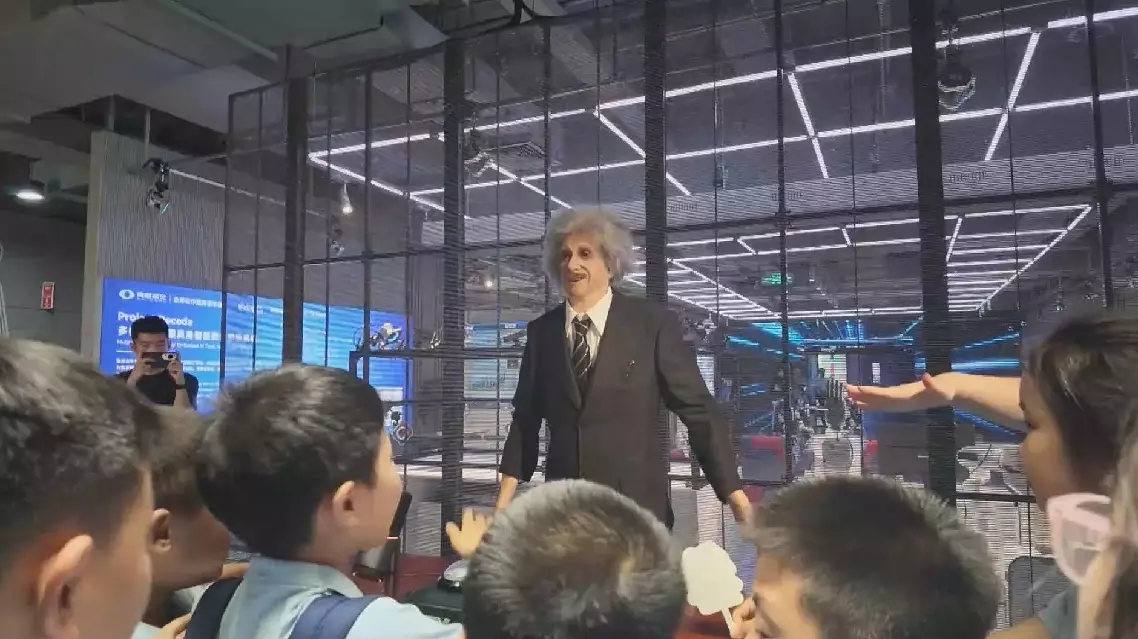
The opportunity to interact with robots up close remains the key draw for most of the visitors. More than 100 types of robots are on showcase, and around 20 allow visitors to touch or operate them.
"It feels even better than I imagined. It's pretty high-tech," said a primary school student on a study tour.
"I was very impressed by the robot. It's like you see the face, the impression and if you see just the lips of the robot in even gleaming, like, it would wet its lips. So, it looks quite similar (to a real human)," said a visitor from Germany.
The mall actively encourages public interest, especially from youth. Since the start of this summer, the number of family visitors has risen notably, while the scale of school field trips and study tours has doubled from a year earlier.
"During the summer holiday season, our number of inquiries, the number of reception sessions we host, and the number of visitors have all increased by more than 50 percent compared with last quarter. On weekends, for study-tour groups, we run about five to six sessions a day in general. Our total monthly visitor volume has also remained steadily above 8,000," said Qi Qi, head of the industrial tourism and sci-tech education project at the Beijing Yizhuang Robotics Technology Industry Development Company.
Beyond robotics, the mall's autonomous driving educational tours are also a major draw, running an average of four sessions per day. It has seen a year-on-year increase of 13 percent in summer visitors for the self-driving experience this year, which are attracting students from all across the country.
"The car drove very safely and gave me peace of mind. I think this study tour actually made me realize that artificial intelligence could be a future career path [for me]," said a high school student from east China's Jiangxi Province.
At present, Yizhuang, also known as the Beijing Economic-Technological Development Area, is home to over 300 robotics and smart manufacturing enterprises, while boasting around 20 scientific innovation venues. It has launched six premium industrial tourism routes covering such themes as robotics, smart manufacturing, commercial aerospace and autonomous driving.
The mall's popularity has fueled this commercial ecosystem. Surrounding businesses have joined in on the tech trend, including a robot-themed experience restaurant and interactive market.
"The sci-tech tourism ecosystem cluster brings in travel agencies, hotels, and even professional venue operators and study-tour institutions. This provides some specialized support for the development of the entire industrial sci-tech tourism ecosystem," said Li Tiankai, Deputy Director of Publicity and Culture Department of the Beijing Economic-Technological Development Area.
Beijing's Robot Mall becomes summer hit as curious visitors flock to tech-themed tours
Beijing's Robot Mall becomes summer hit as curious visitors flock to tech-themed tours
Beijing's Robot Mall becomes summer hit as curious visitors flock to tech-themed tours