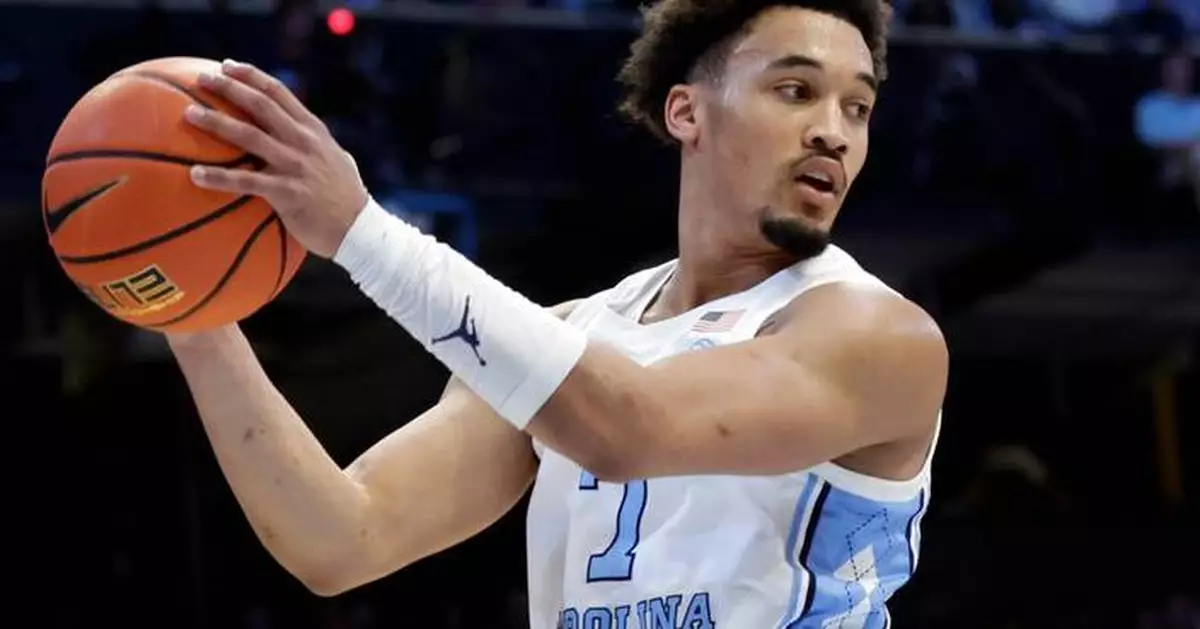
LOUISVILLE, Ky. (AP) — North Carolina guard Seth Trimble is transferring to Louisville and taking advantage of the recent preliminary injunction from a Colorado judge giving student-athletes who graduated from high school in 2022 a fifth season of eligibility for the upcoming year.
ESPN reported Wednesday morning that Trimble committed to Louisville, a social media post shared by the Cardinals.
Trimble thanked North Carolina fans in an Instagram post for “the best four years anyone could ask for.” He wrote that he gave his all to represent North Carolina every day.
“I've been considering returning to college the whole summer now, and Carolina was always in the running,” Trimble wrote. “But with a full roster at UNC, and other circumstances, I won't be able to return home and will be transferring.”
Trimble put himself into Tar Heels' lore with a 3-pointer from right in front of the UNC bench, one that swished cleanly through the net with 0.4 seconds left, to lift the 14th-ranked Tar Heels past the fourth-ranked Blue Devils 71-68 in February.
North Carolina athletic director Steve Newmark said they understand the difficult and complicated situation for everyone involved and called Trimble a true role model for his four years with the Tar Heels.
“The recent court decision in Colorado created an unusual situation for student-athletes who had completed their traditional four years of eligibility,” Newmark said. “The timing of the decision, the ongoing legal process and the circumstances surrounding our roster made that increasingly difficult to navigate.”
New North Carolina coach Michael Malone said in a statement that Trimble will always be a Tar Heel even with the guard playing elsewhere for a season.
“I have tremendous empathy for Seth because the timing of the court decision put him and our program in a difficult position as we constructed our roster,” Malone said. “None of that changes how we feel about Seth. He has represented Carolina the right way, and I’m grateful for the opportunity to get to know him and his family.”
AP college basketball: https://apnews.com/hub/ap-top-25-college-basketball-poll and https://apnews.com/hub/college-basketball
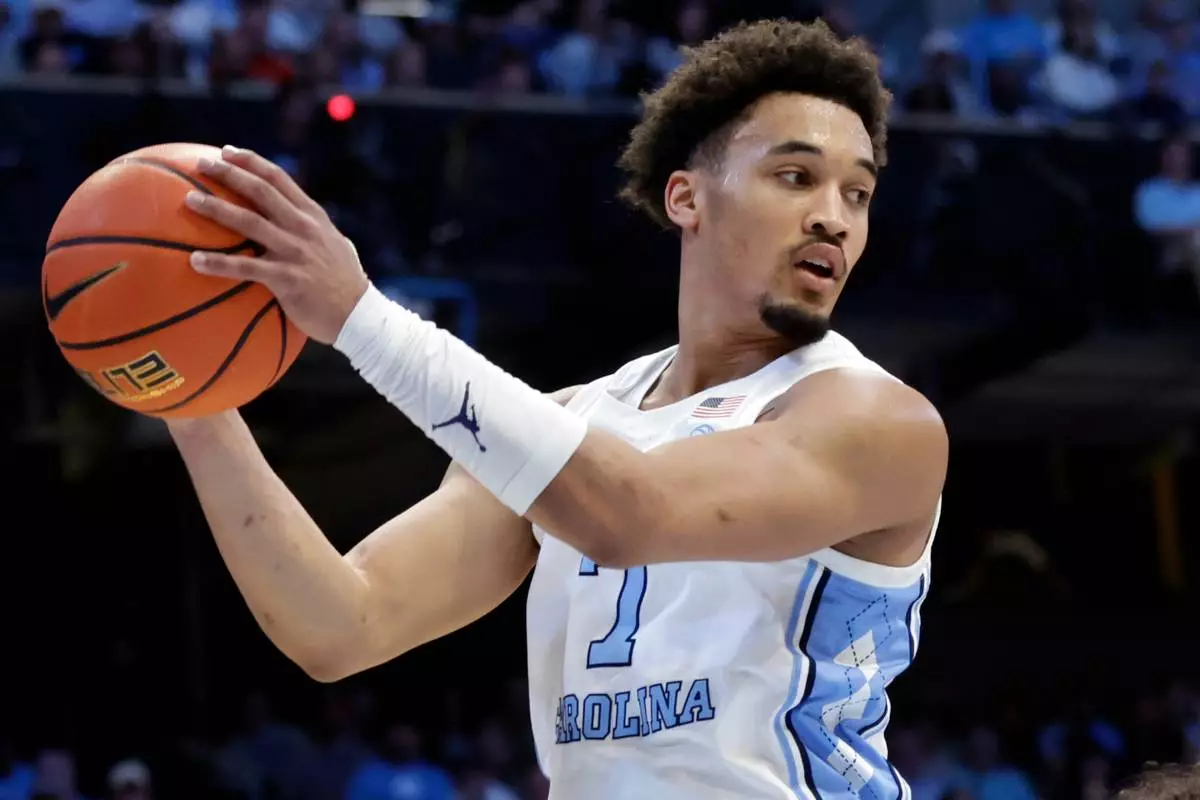
FILE - North Carolina guard Seth Trimble (7) pulls down a rebound against Virginia Tech during the second half of an NCAA college basketball game Feb. 28, 2026, in Chapel Hill, N.C. (AP Photo/Chris Seward, File)
WASHINGTON (AP) — Democrats remain mixed over what ideological direction the party should take. But across a series of closely watched primaries, they are sending a clearer message about the party’s path forward: They want change.
In marquee Senate primaries in Michigan and Minnesota, progressive candidates defeated two members of Congress with significant backing from party leaders. Wisconsin voters narrowly rejected a democratic socialist but still chose a 40-year-old county executive who is seeking to become the state’s first Black governor. And in Connecticut, voters ousted one of the longest-serving Democrats in Congress for a challenger who campaigned on generational change.
The results so far this month deliver no clear ideological mandate. Instead, they add to mounting evidence from this year’s primaries of a Democratic appetite for turnover that is cutting across the party’s traditional divisions.
“The through line between these races isn't ideology. It's impatience with this political system that feels disconnected from the urgency voters feel,” said Lis Smith, a national Democratic strategist. "The demand for change is much broader than the demand for socialism.”
The immediate challenge for Democrats is whether they can harness the frustration fueling revolts against their own party and turn it against Republicans in November. Beyond that looms the 2028 presidential race, when a new generation of leaders will compete to shape a changing Democratic Party.
“If leaders in our party don’t recognize that we need to make changes, then the changes are going to come from the ground up,” Luke Bronin, a former mayor who defeated 14-term Connecticut Rep. John Larson in Tuesday’s primary, said in his victory speech. “That’s a message our party needs to hear.”
Progressive leaders touted Tuesday’s results as further proof that their message is working after victories in Minnesota and Michigan.
“What we are seeing is that people are sick and tired of establishment politics and establishment policies,” Sen. Bernie Sanders told The Associated Press on Wednesday, pointing to a string of progressive victories around the country.
In Wisconsin, Democratic socialist Francesca Hong had hoped to also ride the wave of recent progressive victories to the Democratic nomination for governor. Instead, she narrowly lost to Milwaukee County Executive David Crowley, a more moderate Democrat who had the backing of outgoing Gov. Tony Evers.
Hong’s defeat also came after a number of her past comments resurfaced, including support for defunding the police and a call to cancel Thanksgiving, which she said was a joke. Unlike El-Sayed, Hong didn't receive the backing of some of the nation’s most prominent progressive leaders, including Sanders and Rep. Alexandria Ocasio-Cortez.
Sanders said Wednesday that he didn’t endorse Hong because his team lacks the resources to “get involved in every single race. Period. And that’s about it.” He nevertheless praised her “very strong grassroots campaign” for getting “a whole lot of people excited.”
The result illustrates a tension for the party’s ascendant left flank. Candidates running on populist economic messages have found growing success with Democratic voters. But some positions associated with the progressive movement’s recent past remain vulnerabilities — particularly among voters worried about electability in November.
“A lot of Democrats are traditionalists on things like culture issues. This is not about culture, it's about economics. It's about corruption,” said David Axelrod, who was an adviser to President Barack Obama. “The closer that candidates hew to those issues, the larger the base they're going to be able to accumulate.”
That tension was evident Tuesday for Sarah Atkins Hoggatt, 61, who said she agreed with Hong on some issues but worried that Hong’s deeply progressive politics and the democratic socialist label would make it harder for her to defeat Republican Tom Tiffany. She voted for Crowley.
“I didn’t vote my heart,” Atkins Hoggatt said.
Progressives scored a much clearer victory in Minnesota, where Lt. Gov. Peggy Flanagan resoundingly defeated centrist Rep. Angie Craig. Craig had the backing of House Democratic Leader Hakeem Jeffries and other prominent Democrats, while Flanagan was supported by Sanders and Sen. Elizabeth Warren.
Flanagan, similar to El-Sayed in Michigan, highlighted her opponent's support from wealthy donors while also attacking her vote for a Trump-backed immigration bill that became a liability after immigration agents shot and killed Renee Good and Alex Pretti in Minneapolis.
As in Michigan, the winning progressive candidate was significantly outspent.
“Super PACs spent over $80 million trying to defeat El-Sayed and Peggy Flanagan," Sanders said. "They lost both elections. I think what people are saying is, we’re sick and tired of billionaires and their super PACs buying elections.”
Flanagan is 46 years old. Crowley is 40. And El-Sayed is 41. But nowhere was the demand for generational change more explicit Tuesday than in Connecticut.
Bronin, 47, defeated the 78-year-old Larson — who was first elected to Congress in 1998. A central theme of Bronin’s campaign was the need for a new generation of leadership in Washington.
Larson became the seventh Democratic House incumbent to lose a primary this year, many of them to younger challengers. The defeated incumbents and the Democrats replacing them span ideological lines, making the wave of losses difficult to explain simply as a shift to the left.
The push for generational turnover has taken on greater urgency since 2024, when concerns about President Joe Biden’s age ended his reelection campaign and forced Democrats into a reckoning over aging leadership.
That sentiment was evident among voters in Larson’s district. Dan Schnaidt, a 73-year-old Democrat, said he appreciated Larson’s service but believed it was time to move on.
“It’s time for new blood, for new ideas,” Schnaidt said.
While Hong fell just short in Wisconsin, the strength of her insurgent campaign highlighted another force reshaping Democratic politics: younger voters.
Cody Chandler, a 35-year-old software engineer, voted for Hong and called her “probably the most exciting candidate I’ve seen.” Unlike in elections past, Chandler said, he voted for the candidate he most wanted to win rather than the one he considered most electable.
That support showed up geographically. Hong won Madison, home to the University of Wisconsin’s flagship campus, by nearly 7 percentage points, though it wasn't a big enough of a margin to help her win the nomination.
A similar pattern helped propel El-Sayed to victory a week earlier in Michigan.
El-Sayed won Washtenaw County, home to the University of Michigan, by nearly 25 percentage points and Ingham County, home to Michigan State University, by 23 points. He also won Grand Rapids, with its large population of younger, college-educated voters, by nearly 26 points.
Jordan Snyder, a 20-year-old Michigan voter who supported El-Sayed, said she backed him because of his progressive positions and because she viewed him as someone she could trust, rather than “someone who I feel could be bought and sold.”
“People are feeling like a lot of the people that they’ve trusted that have been in government haven’t really been living up to expectations,” Snyder said.
——-
Associated Press reporters Scott Bauer in Madison, Wisconsin, Tim Sullivan in Hudson, Wisconsin and Susan Haigh in Hartford, Connecticut, contributed to this report.
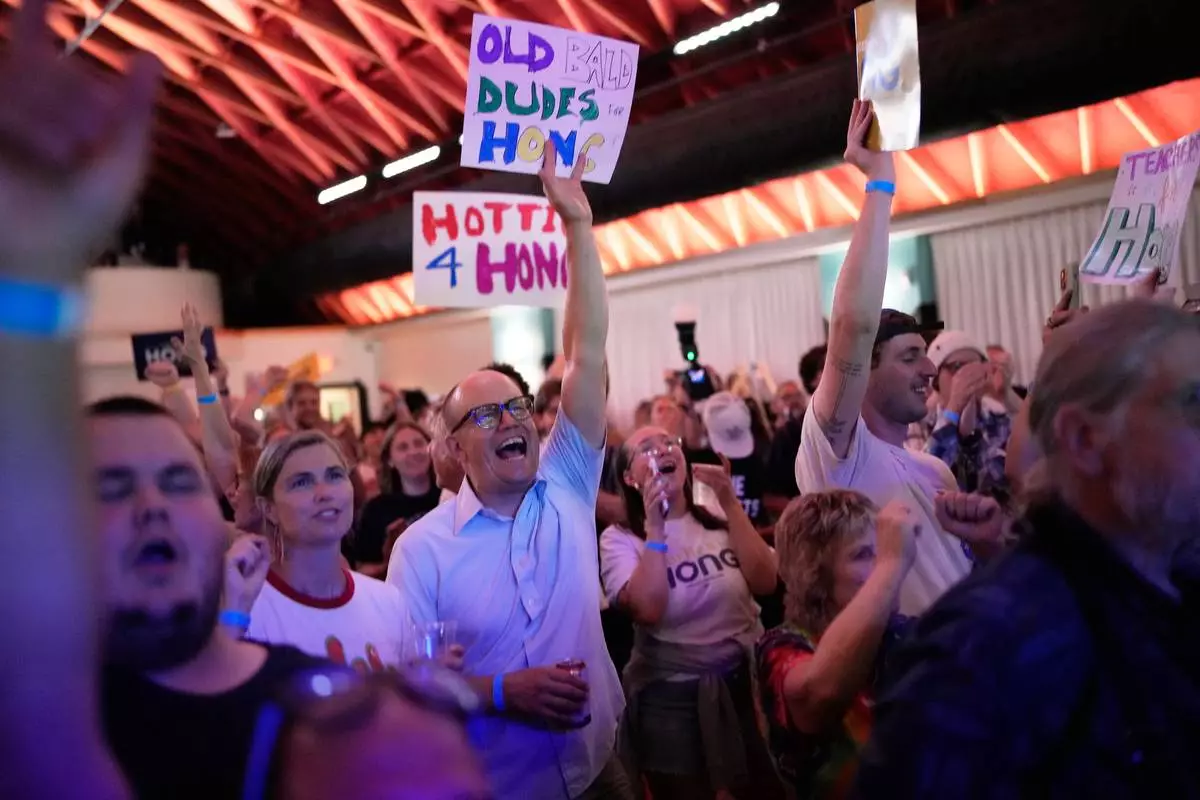
Supporters hold signs during a primary election night watch party for Democratic gubernatorial candidate Francesca Hong, Tuesday, Aug. 11, 2026, in Madison, Wis. (AP Photo/Nam Y. Huh)
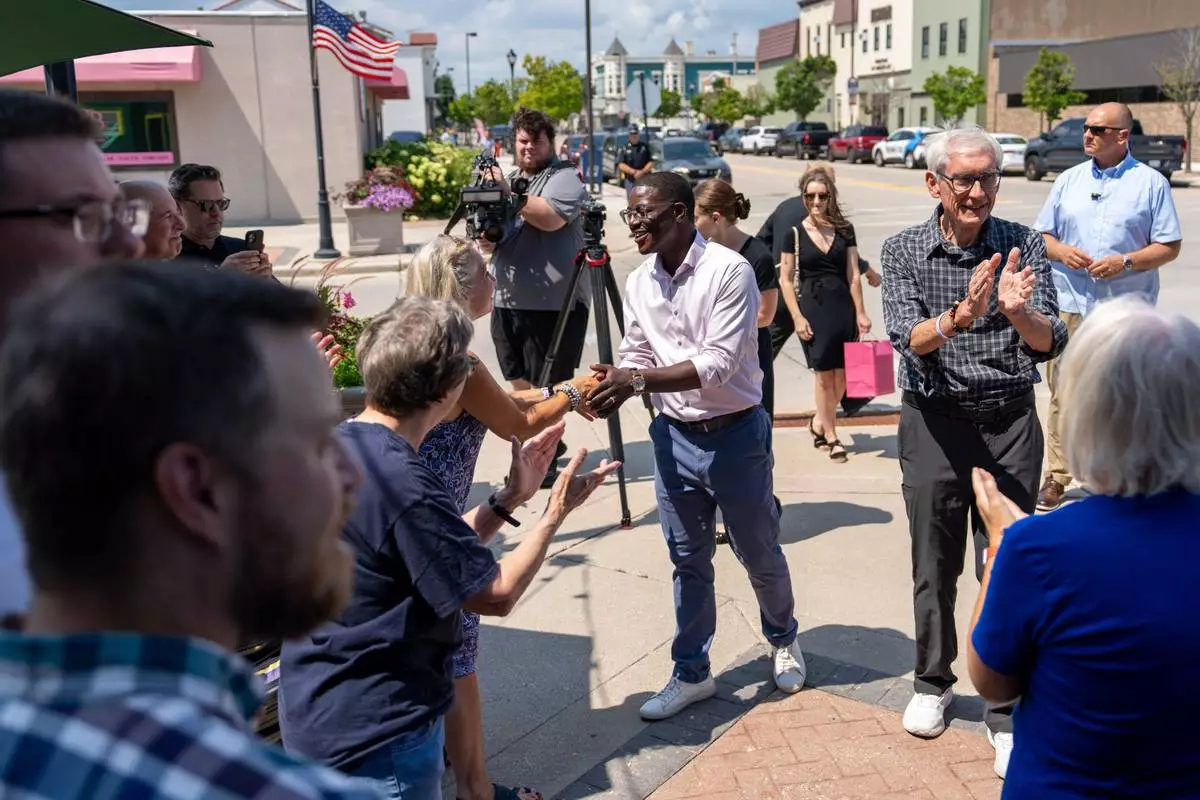
David Crowley, Democratic candidate for Wisconsin governor, shakes hands with supporters while campaigning with Wisconsin Gov. Tony Evers, right, Friday, Aug. 7, 2026, in Sheboygan, Wis. (AP Photo/Kayla Wolf)
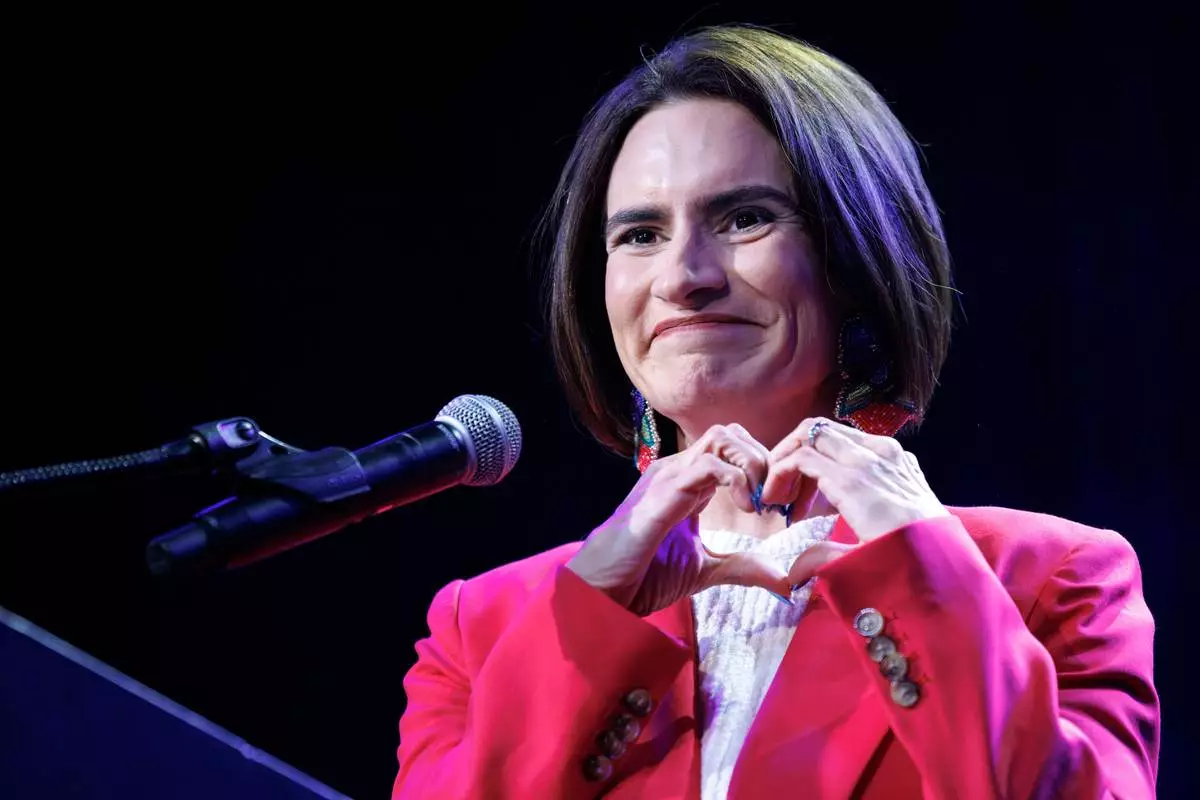
Minnesota Lt. Gov. Peggy Flanagan, a Democratic candidate for U.S. Senate, attends an election night event on Tuesday, Aug. 11, 2026, in Minneapolis. (Kerem Yücel/Minnesota Public Radio via AP)
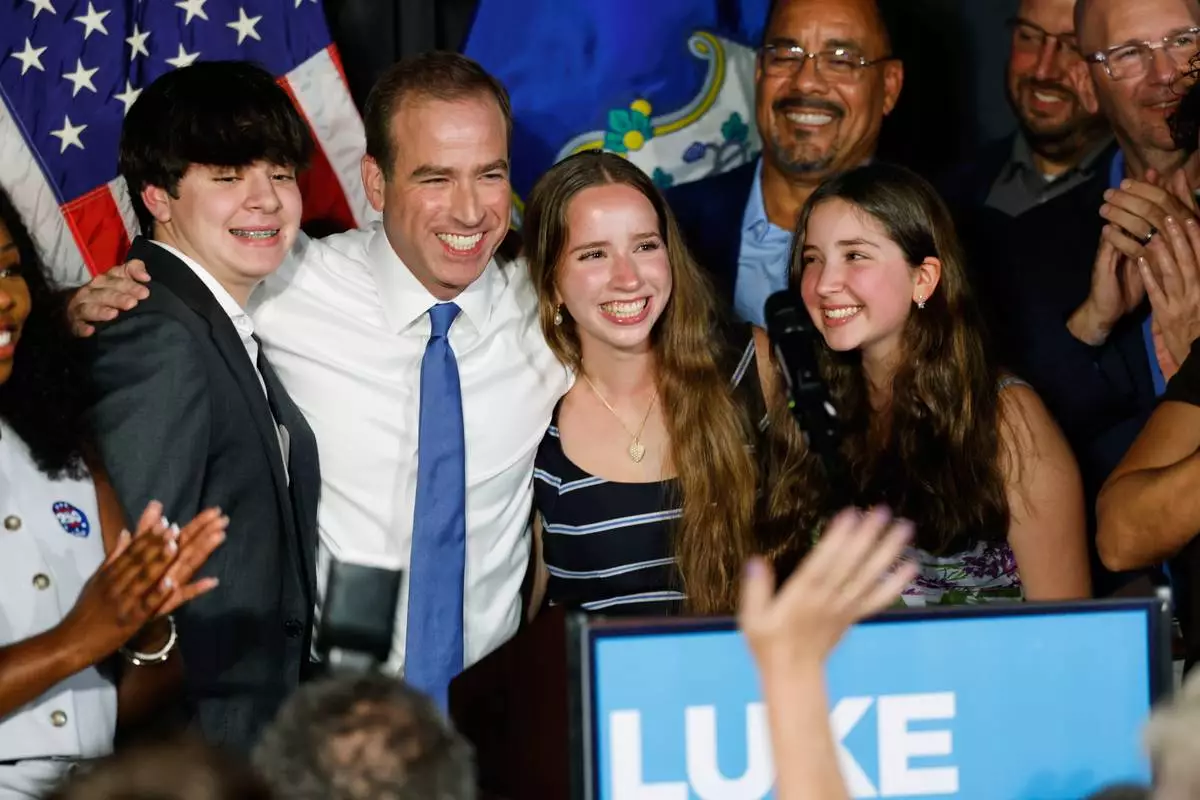
Luke Bronin, former Hartford mayor and Democratic candidate for Connecticut's 1st congressional district, stands on stage with his children during an election night watch party Tuesday, Aug. 11, 2026, in Hartford, Conn. (AP Photo/Rusty Jones)
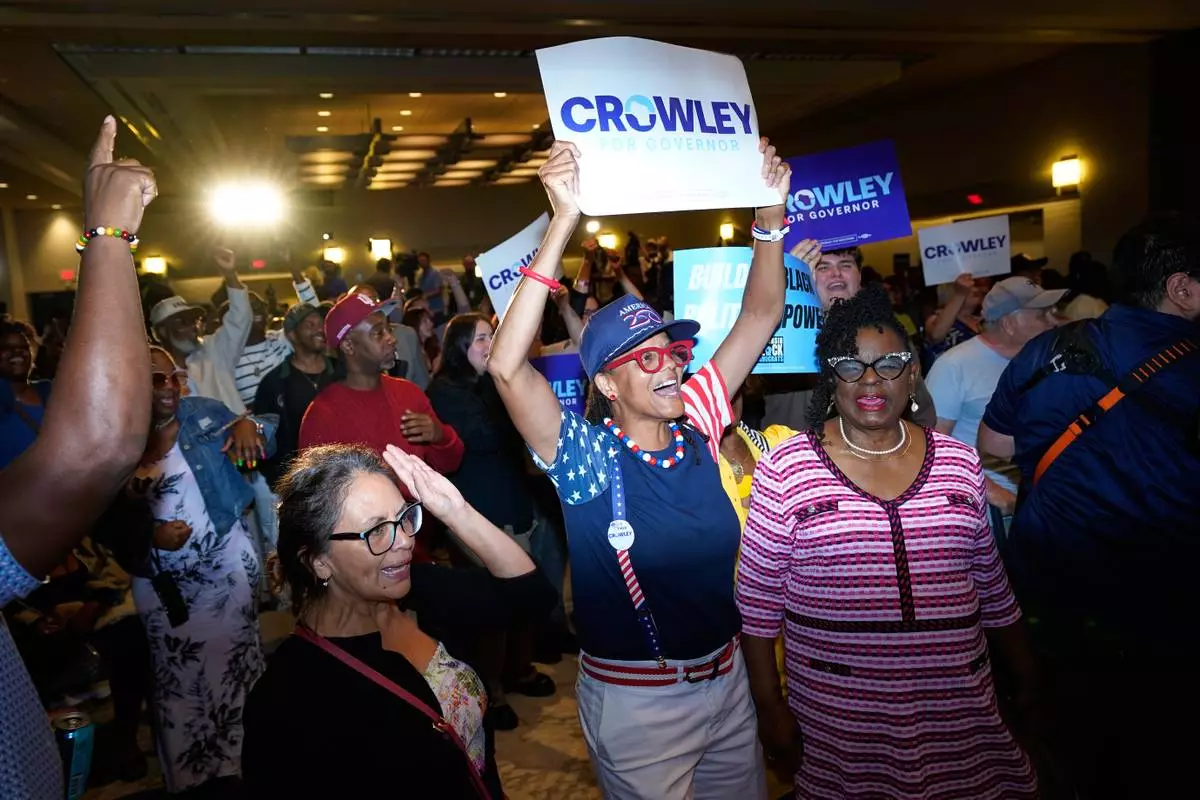
Supporters react to election results coming in during a primary election night watch party for Democratic gubernatorial candidate David Crowley, Tuesday, Aug. 11, 2026, in Milwaukee, Wis. (AP Photo/Kayla Wolf)