CALABASAS HILLS, Calif.--(BUSINESS WIRE)--Aug 12, 2026--
The Cheesecake Factory Incorporated (NASDAQ: CAKE) has been recognized as one of the 2026 PEOPLE Companies That Care ®, according to PEOPLE magazine and Great Place to Work ®. The Cheesecake Factory ®ranked 30 on the list, which is largely determined by a confidential employee survey that measures the organization’s culture and ability to care for their employees, their families and the communities where they operate.
This press release features multimedia. View the full release here: https://www.businesswire.com/news/home/20260812912043/en/
Earning a spot on the list means that The Cheesecake Factory has surpassed rigorous benchmarks, establishing itself as one of the best companies to work for in the country.
“The Cheesecake Factory is honored to be named to the PEOPLE Companies That Care list for the sixth consecutive year,” said David Overton, Founder, Chairman and CEO of The Cheesecake Factory Incorporated. “Since opening our first restaurant in Beverly Hills in 1978, we have worked to create a very special company culture of doing the right thing and giving back to the communities we serve, and this award is a wonderful acknowledgment of what we continue to strive to create.”
Among The Cheesecake Factory’s signature programs that support its local communities is the Nourish Program whereby the company regularly donates excess food from its restaurants to local non-profits. Through this program the company has donated more than 10 million pounds of food to local non-profits since 2007, including more than 1 million pounds of food in 2025. In addition to helping combat hunger, the company’s Nourish Program donations help reduce greenhouse gas emissions and send less materials to landfills.
Additionally, through the sale of its specially designated cheesecakes, since 2008 The Cheesecake Factory has donated more than $7 million to Feeding America ®, the largest hunger-relief organization in the United States, dedicated to fighting hunger through a network of food banks. And through the Give Back program, sponsored by The Cheesecake Factory Oscar and Evelyn Overton Charitable Foundation, the company’s staff members can volunteer their time for fundraising and community service projects for the charities they care about the most, contributing thousands of volunteer hours to hundreds of charities across the country each year.
In 2026, The Cheesecake Factory was named one of the Fortune "100 Best Companies to Work For ® " for the thirteenth consecutive year.
For more information about The Cheesecake Factory, visit www.TheCheesecakeFactory.com
For career opportunities, visit www.cakecareers.com
About The Cheesecake Factory Incorporated
The Cheesecake Factory is a leader in experiential dining. We are culinary forward and relentlessly focused on hospitality. Delicious, memorable experiences created by passionate people – this defines who we are and where we are going. We currently own and operate 377 restaurants throughout the United States and Canada under brands including The Cheesecake Factory ®, North Italia ®, Flower Child ® and a collection of other FRC brands. Internationally, 36 The Cheesecake Factory ® restaurants operate under licensing agreements. Our bakery division operates two facilities that produce quality cheesecakes and other baked products for our restaurants, international licensees and third-party bakery customers. In 2026, we were named to the FORTUNE Magazine "100 Best Companies to Work For ® " list for the thirteenth consecutive year. To learn more, visit www.thecheesecakefactory.com, www.northitalia.com, www.iamaflowerchild.com and www.foxrc.com.
From Fortune. ©2026 Fortune Media IP Limited. All rights reserved. Used under license. Fortune ® and Fortune 100 Best Companies to Work For ® are registered trademarks of Fortune Media IP Limited and are used under license. Fortune and Fortune Media IP Limited are not affiliated with, and do not endorse products or services of, The Cheesecake Factory Incorporated.
About the PEOPLE Companies That Care List
Great Place To Work selected the 2026 PEOPLE Companies That Care List by gathering and analyzing over 1.3 million confidential survey responses from companies representing more than 7.3 million U.S. employees at Great Place To Work Certified organizations. Of those, nearly 970,000 responses came from employees at companies eligible for the list and these rankings are based on that feedback. Company rankings are derived from 60 employee experience questions within the Great Place To Work Trust Index™ Survey and essays submitted by participating companies. Read the full methodology.
About Great Place to Work ®
As the global authority on workplace culture, Great Place To Work, a UKG company, brings 30 years of groundbreaking research and data to help every place become a great place to work for all. Its proprietary platform and Great Place To Work Model help companies evaluate the experience of every employee, with exemplary workplaces becoming Great Place To Work Certified and receiving recognition on a coveted Best Workplaces list. Visit greatplacetowork.com to learn more.

The Cheesecake Factory staff members from Roseville, CA volunteer at a Give Back program event at their local food bank
MEDINACELI, Spain (AP) — Millions of people crowded cloudless cities and towns in Spain on Wednesday in search of the best views of a total solar eclipse, when the alignment of the sun, moon and Earth briefly plunged parts of the planet into darkness.
The crowds brought lawn chairs and umbrellas as they eagerly awaited the celestial spectacle, which began early in the evening. As the sky darkened, gradually at first and then quickly, people broke into applause and cheered. It was the country's first total solar eclipse in more than a century.
“It’s simply impossible to imagine,” Rosa Celiberti, a language teacher who watched from Medinaceli, a Roman-era hilltop town in northeast Spain, said with tears in her eyes. “No matter how many photos or videos you’ve seen, nothing comes even close to what it actually feels like."
Across a wide band of northern and central Spain and Portugal, millions of people enjoyed some of mainland Europe's best views of the eclipse. It also passed over slivers of Greenland and Iceland.
Totality — when the moon completely covers the sun’s light — was expected to last less than 2½ minutes, reaching its maximum duration off Iceland’s west coast. By the time it got to a small patch of Portugal and then to Spain, just before sunset, totality dwindled to a minute or so. The total eclipse then ended over the Mediterranean.
The eclipse was expected to draw at least a half-million additional visitors, Spanish authorities said. Demand for hotel rooms along the path of totality, including in the northern cities of A Coruña, Bilbao and Santiago de Compostela, soared.
The event unfolded against the backdrop of scorching summer temperatures and wildfires, and Spanish officials rolled out a large public safety campaign.
Temperatures across much of Spain climbed above 35 degrees Celsius (95 Fahrenheit) in many areas where the eclipse was observed. Some 350 official viewing sites were set up across the sparsely populated interior, and more than 33,500 law enforcement officers were deployed to observation areas and access points, the Interior Ministry said.
Only weeks ago, the most destructive wildfire in Spanish history devoured 500 square kilometers (193 square miles) and forced the evacuation of tens of thousands of people in Ávila, in central Spain. Several smaller wildfires remain active elsewhere in southern and central parts of the country.
In Reykjavik, clouds did not prevent hundreds of people from gathering in bright raincoats in front of the landmark Hallgrímskirkja church as the skies darkened.
With rain falling, the disk of the sun was barely perceptible and then, suddenly, the lights went out. Only the glow of phones held aloft could be seen.
The crowd cheered the darkness as it rained harder and roared even louder when the first light returned. They did not wait to watch the remainder of the partial eclipse and quickly cleared out of the square.
Special eclipse glasses were essential for safe viewing, even if only a sliver of the sun remained visible. The glasses are made with special filters that block solar radiation that can damage the eyes.
For months, supermarkets, department stores, museums and planetariums across Spain had sold or distributed the glasses, with many pharmacies running out of stock ahead of Wednesday.
On Tuesday evening in downtown Madrid, a long line formed outside a photo shop where a sign read, “We carry eclipse glasses.”
One woman emerged triumphantly and reassured those waiting: “He has boxes and boxes of them!”
Sverre Rud, captain of the MS Spitsbergen, was circling the waters of Rypefjord in eastern Greenland trying to make sure he was perfectly positioned for his 126 passengers to view the spectacle. All day, people came up to Rud to ask if he had nailed the right spot, with no clouds.
“I will do my best," Rud said. “I will pull out my superman powers."
The eclipse may have been startling for the passengers, who had been experiencing 24 hours of daylight on a 17-day cruise in locations mostly north of the Arctic Circle.
Suddenly, for two minutes it was dark.
Even so, the mood on the polar ship had been pure anticipation.
“Everyone is very enthusiastic,” Rud said. “When we were down for breakfast earlier, it was almost like a little bit of a Christmas Eve feeling here."
Rooms in Reykjavík, Iceland's capital, averaged more than $1,000 for Wednesday night as Icelanders prepared for their first total solar eclipse since 1954 and the first visible from the capital since 1433.
Prices were roughly double 2025 rates, according to data group Lighthouse Intelligence. Many tourists made bookings years in advance. But cloudy skies prevailed across much of the island.
Authorities expected up to 20,000 additional overseas visitors during an already busy peak tourist period. Iceland is home to fewer than 400,000 people.
The 70-room Hotel Keflavík in the Reykjanesbaer municipality was fully booked, with guests hoping to see around one minute and 45 seconds of totality.
“Eclipse time, of course, has been very demanding, and many people came to us early, like last year,” said Steinþór Jónsson, the hotel's owner and manager.
Jónsson said he had seen nothing like it since 1986, the year the hotel opened, when U.S. President Ronald Reagan and Soviet leader Mikhail Gorbachev held a summit in Reykjavík.
“When I opened the hotel, we had Reagan and Gorbachev meeting. It was very hectic here,” he said with a smile. “Besides Reagan and Gorbachev, the eclipse is the biggest.”
Associated Press journalists Teresa Medrano in Madrid; Danica Kirka and Brian Melley in London; Marco Di Marco in Reykjavik, Iceland; and James Brooks in Snæfellsnes, Iceland, contributed.
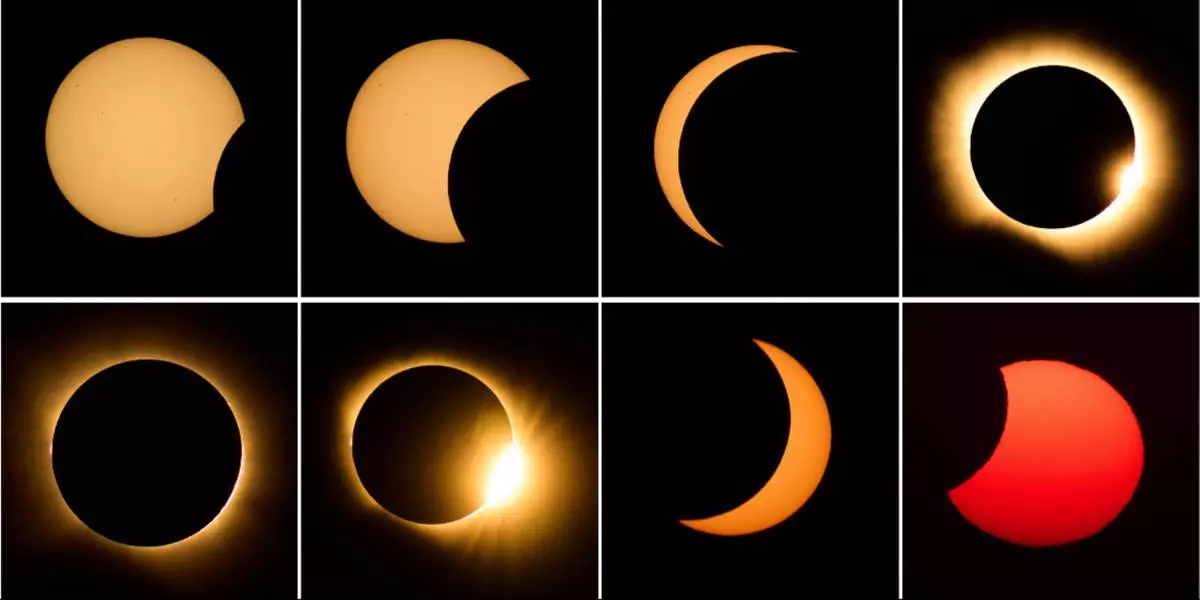
This photo combo shows the sequence of a total solar eclipse seen from Berlanga de Duero, central Spain, Wednesday, Aug. 12, 2026. (AP Photo/Bernat Armangue)

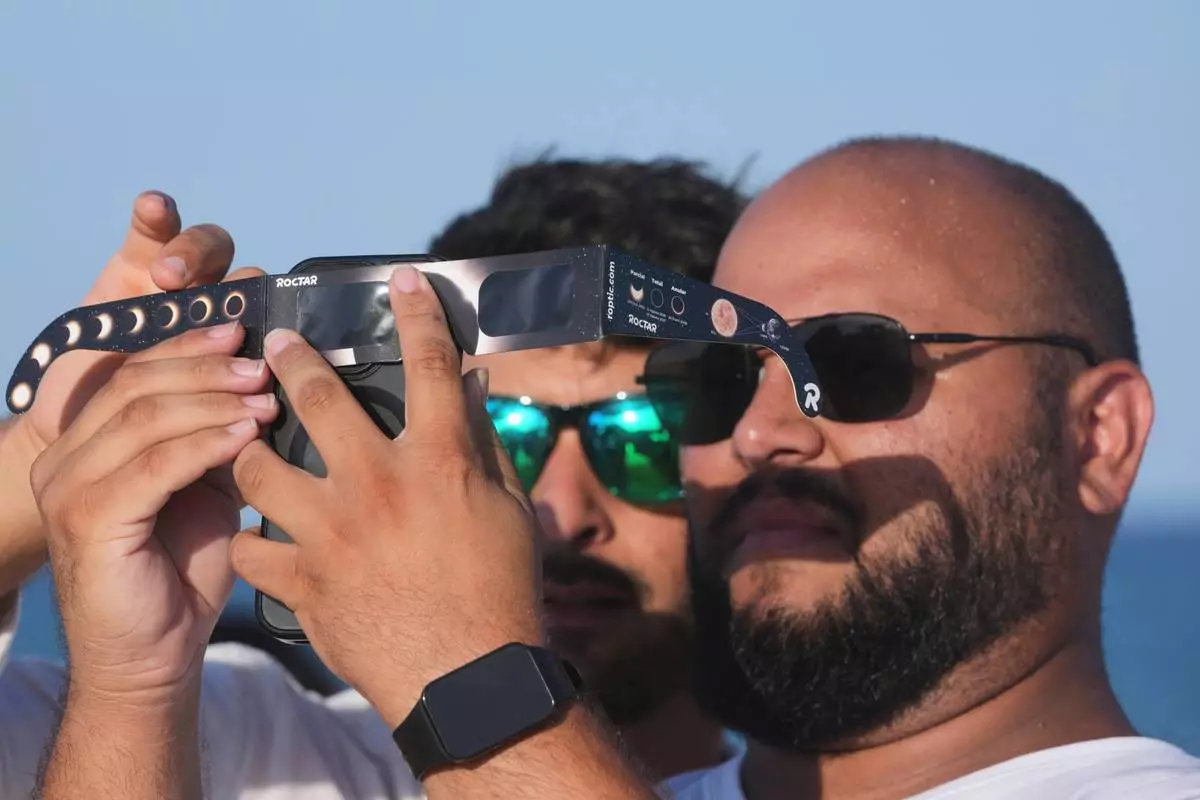
A beachgoer wearing special eclipse glasses looks up during the beginning phase of a solar eclipse at Puerto de Sagunto beach near Valencia, Spain, Wednesday, Aug. 12, 2026. (AP Photo/Alberto Saiz)
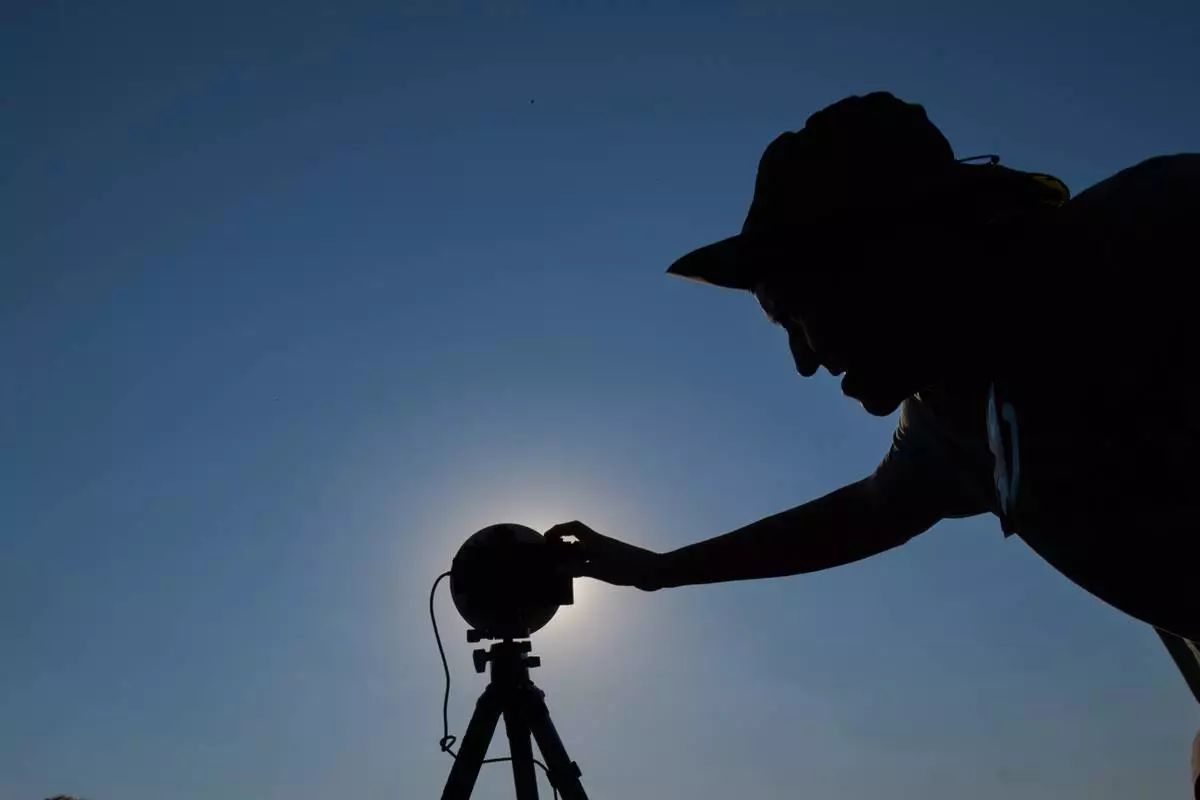
A member of the "Los Taraos" amateur astrophotography group, sets up his camera to shoot a total solar eclipse in Berlanga de Duero, central Spain, Wednesday, Aug. 12, 2026. (AP Photo/Bernat Armangue)
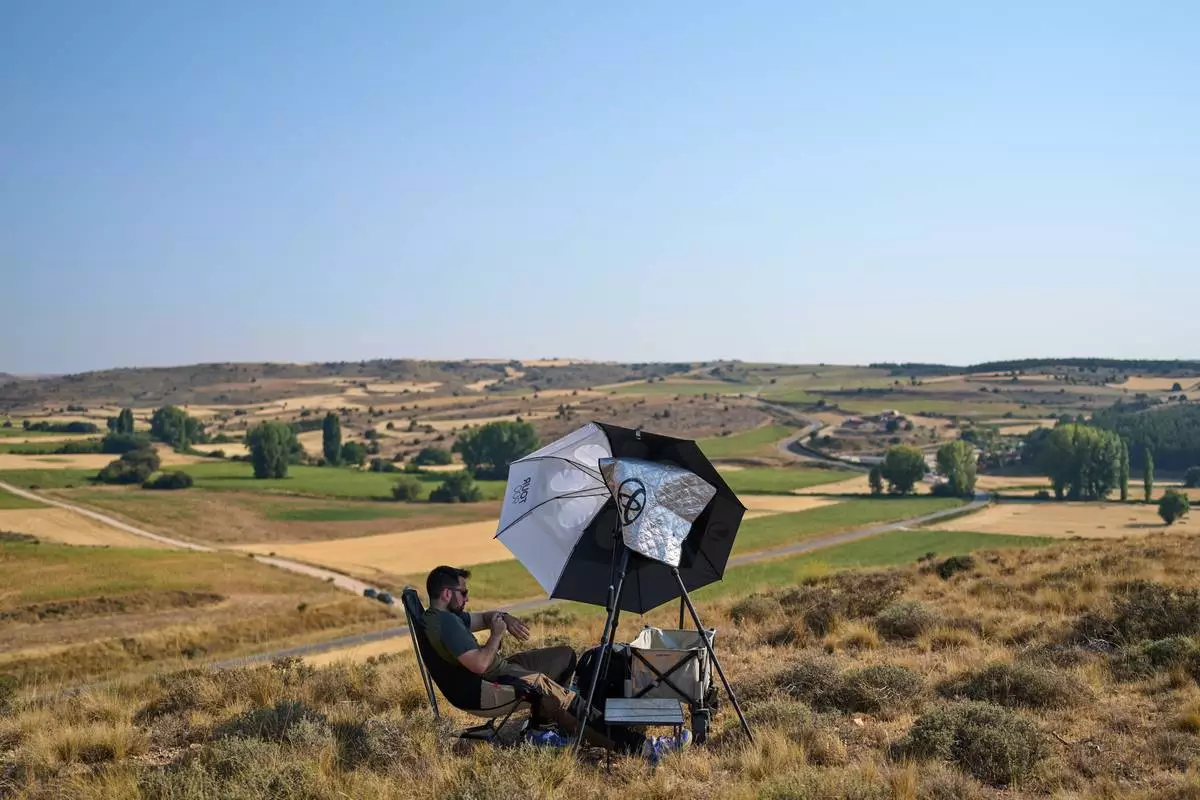
Mario Garrido, a member of the "Los Taraos" amateur astrophotography group, waits to shoot a total solar eclipse in Berlanga de Duero, central Spain, Wednesday, Aug. 12, 2026. (AP Photo/Bernat Armangue)
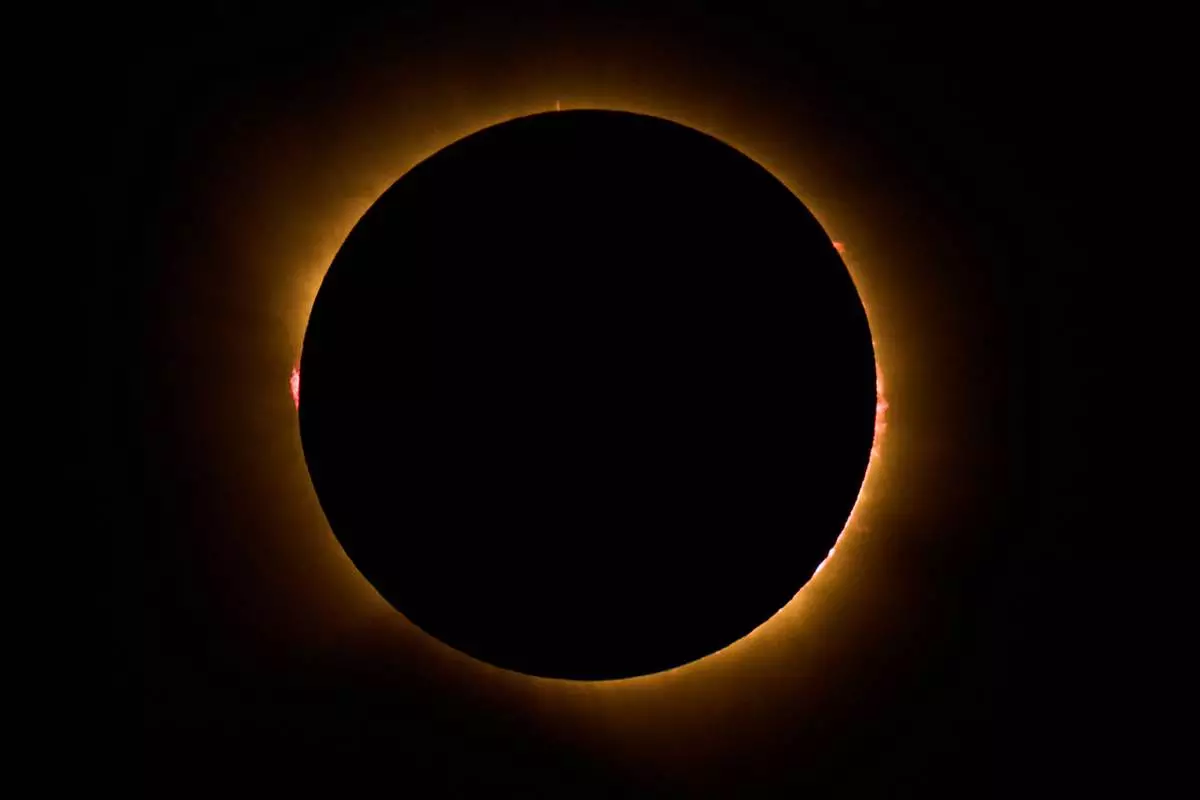
A total solar eclipse is seen from Berlanga de Duero, central Spain, Wednesday, Aug. 12, 2026. (AP Photo/Bernat Armangue)
Beachgoers gather before a total solar eclipse set to begin around sunset, at Puerto de Sagunto beach near Valencia, Spain, Wednesday, Aug. 12, 2026. (AP Photo/Alberto Saiz)
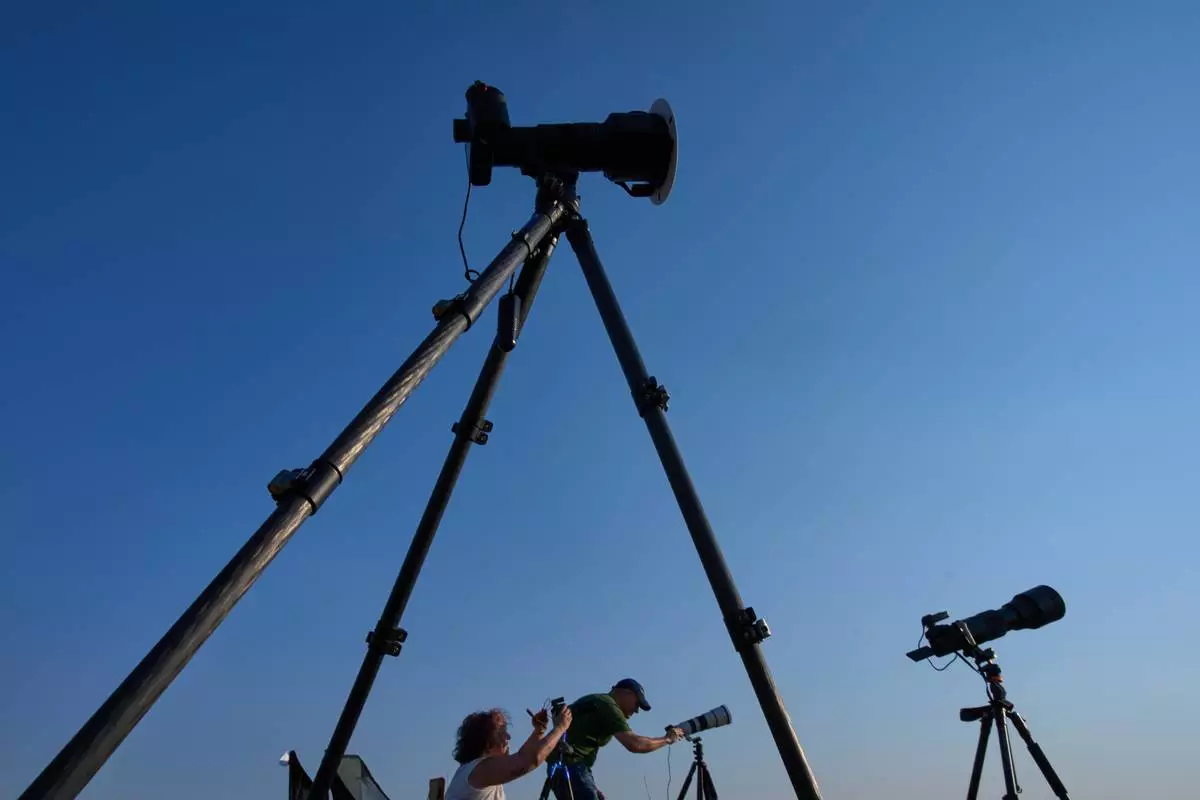
Members of the "Los Taraos" amateur astrophotography group, set up cameras to shoot a total solar eclipse in Berlanga de Duero, central Spain, Wednesday, Aug. 12, 2026. (AP Photo/Bernat Armangue)
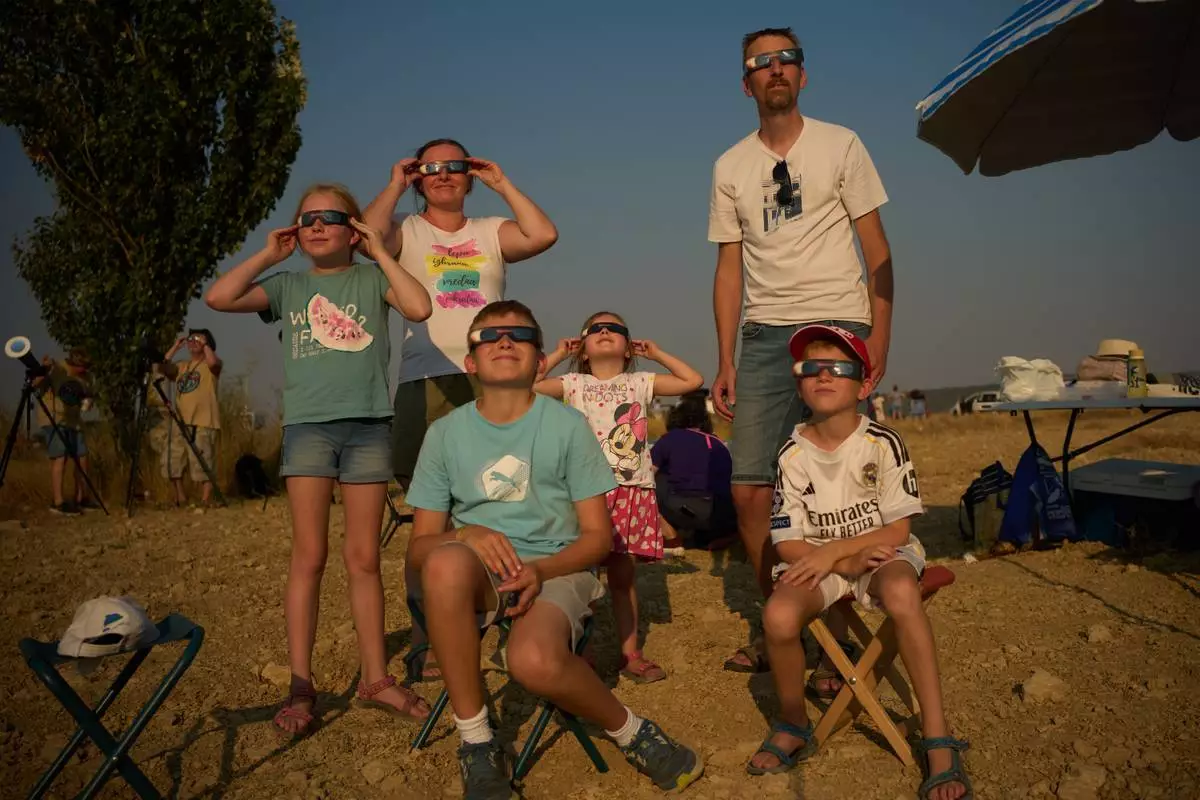
A family from Slovenia watches as the moon moves in front of the sun during a total solar eclipse in Palencia, Spain, Wednesday, Aug. 12, 2026. (AP Photo/Emilio Morenatti)
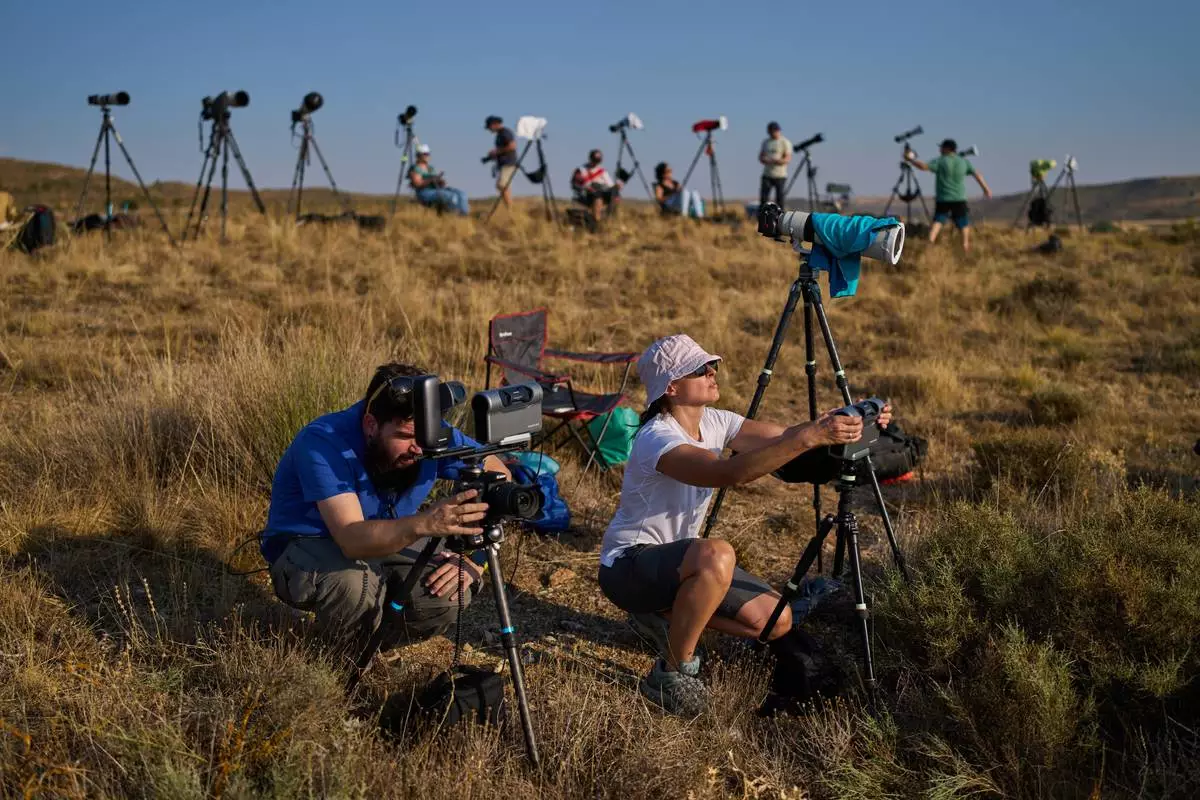
Members of the "Los Taraos" amateur astrophotography group, set up cameras to shoot a total solar eclipse in Berlanga de Duero, central Spain, Wednesday, Aug. 12, 2026. (AP Photo/Bernat Armangue)
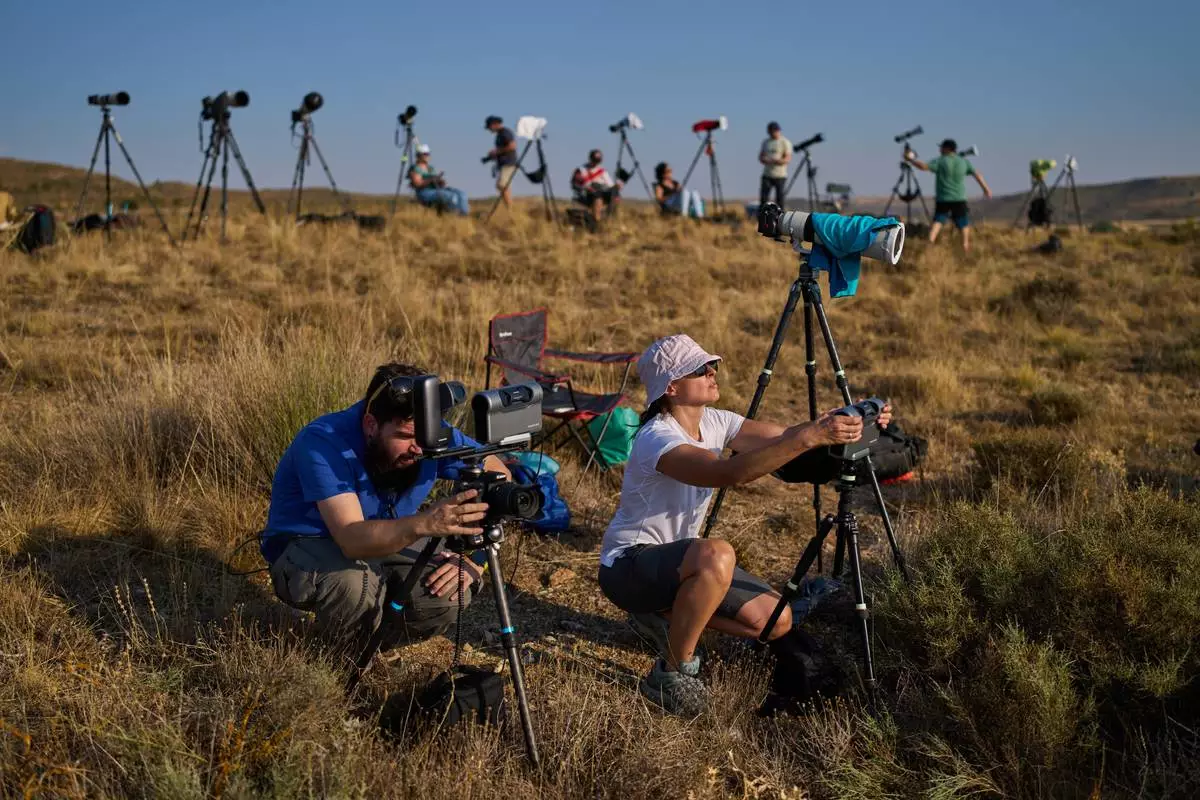
Members of the "Los Taraos" amateur astrophotography group, set up cameras to shoot a total solar eclipse in Berlanga de Duero, central Spain, Wednesday, Aug. 12, 2026. (AP Photo/Bernat Armangue)
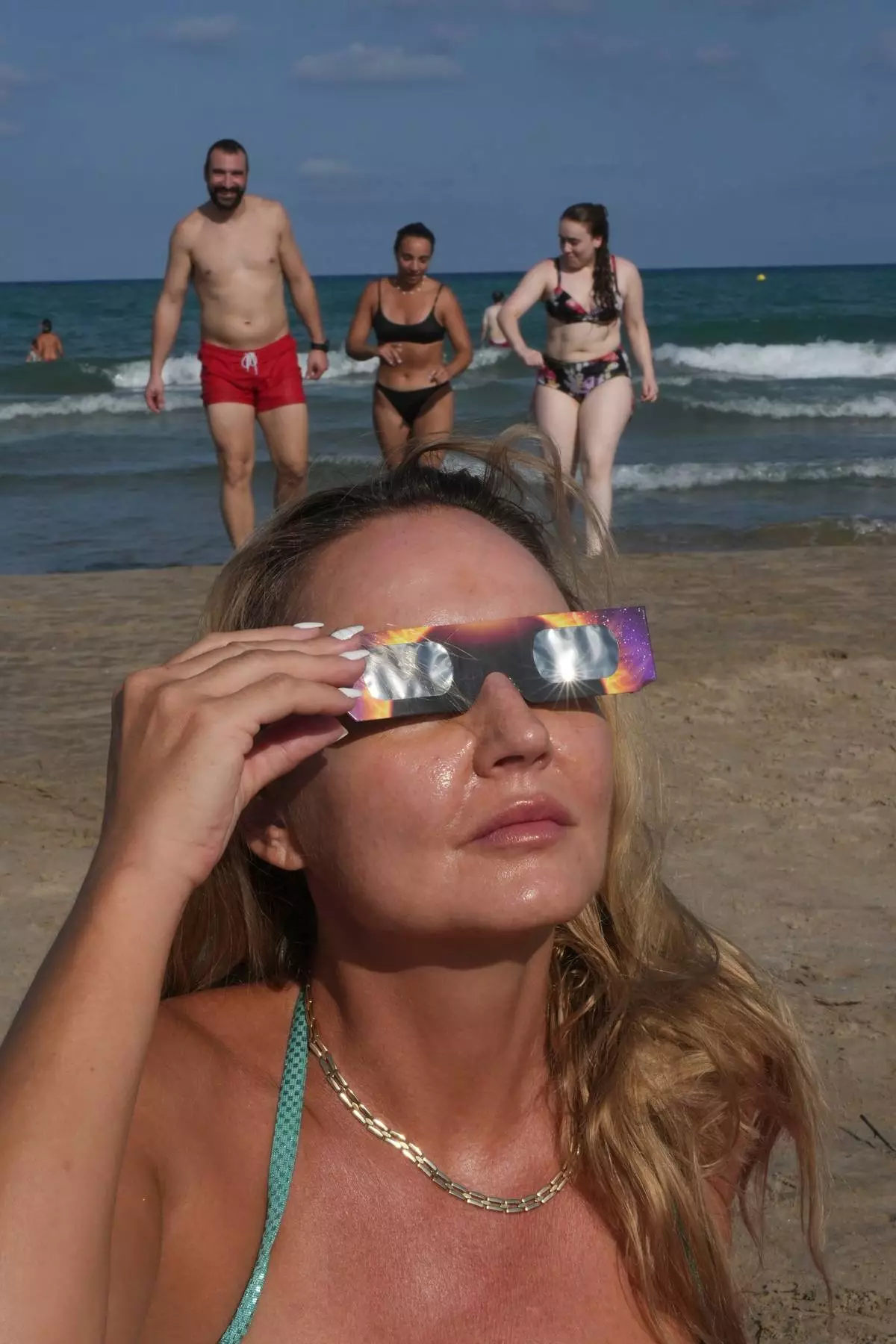
A woman wears special eclipse glasses, as beachgoers gather before a total solar eclipse which is set to begin around sunset, at a beach near Valencia, Spain, Wednesday Aug. 12, 2026. (AP Photo/Alberto Saiz)
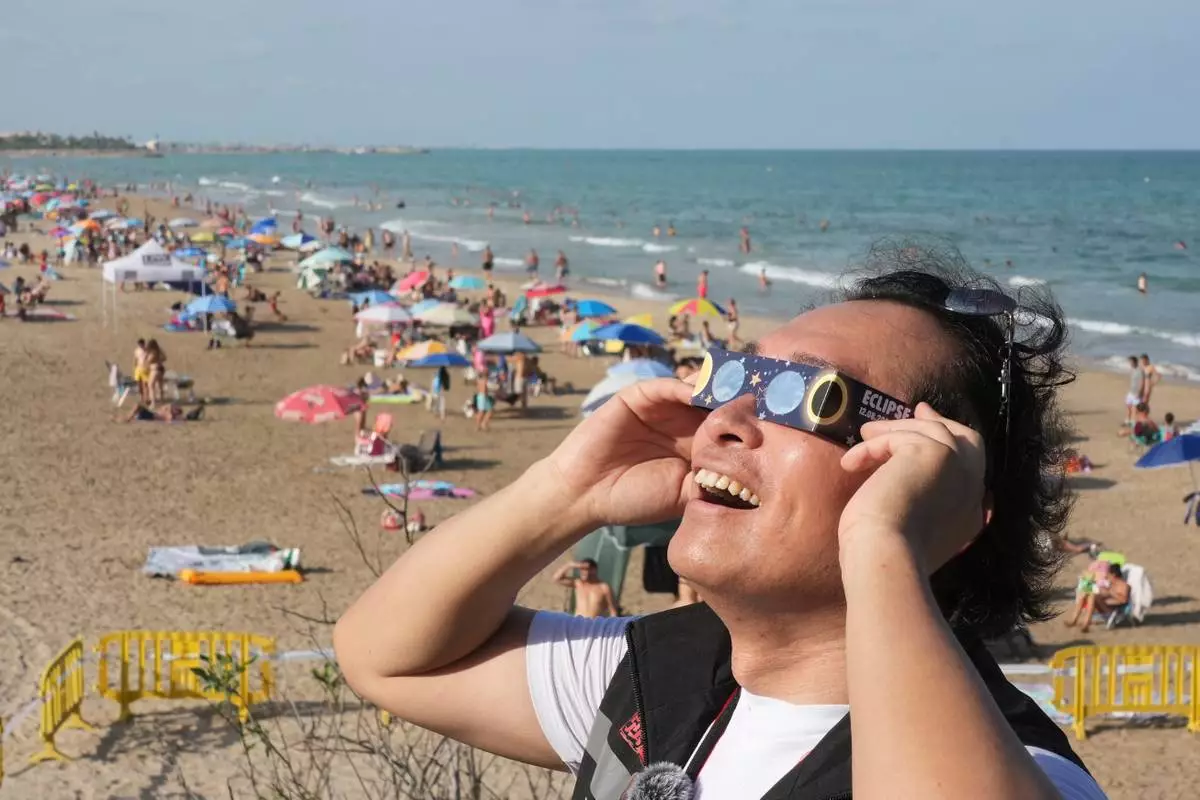
A man wears special eclipse glasses, as beachgoers gather before a total solar eclipse set to begin around sunset, at a beach near Valencia, Spain, Wednesday Aug. 12, 2026. (AP Photo/Alberto Saiz)
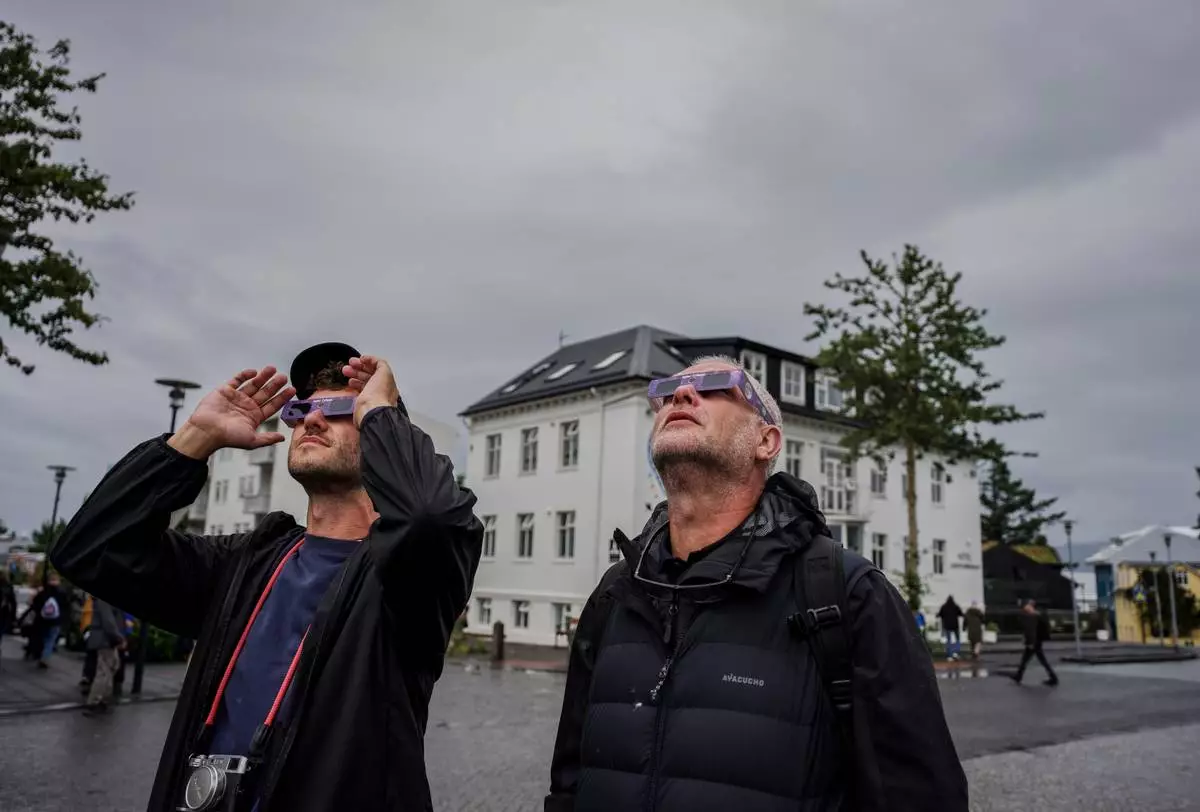
People use solar eclipse glasses to look up at the sun ahead of a solar eclipse Reykjavik, Iceland, Wednesday, Aug. 12, 2026. (AP Photo/Marco di Marco)
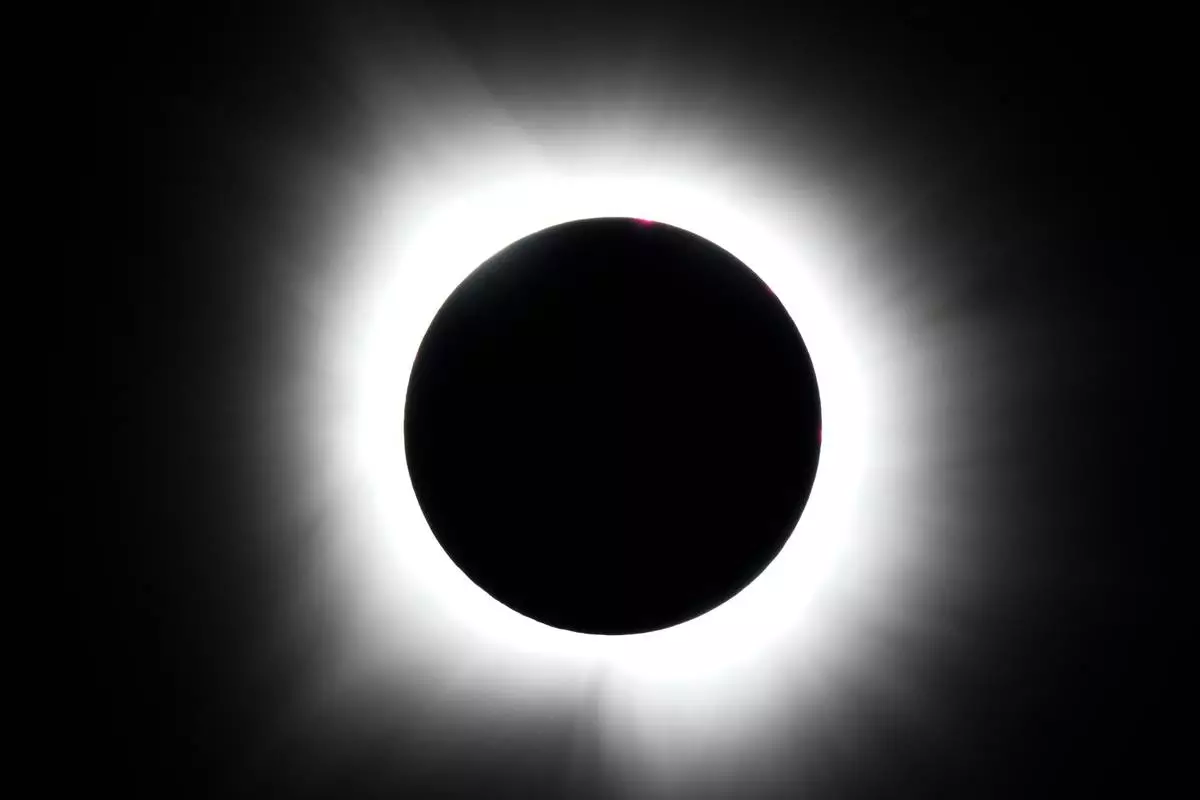
FILE -A total solar eclipse is seen from Arlington, Texas, April 8, 2024. (AP Photo/Julio Cortez, File)
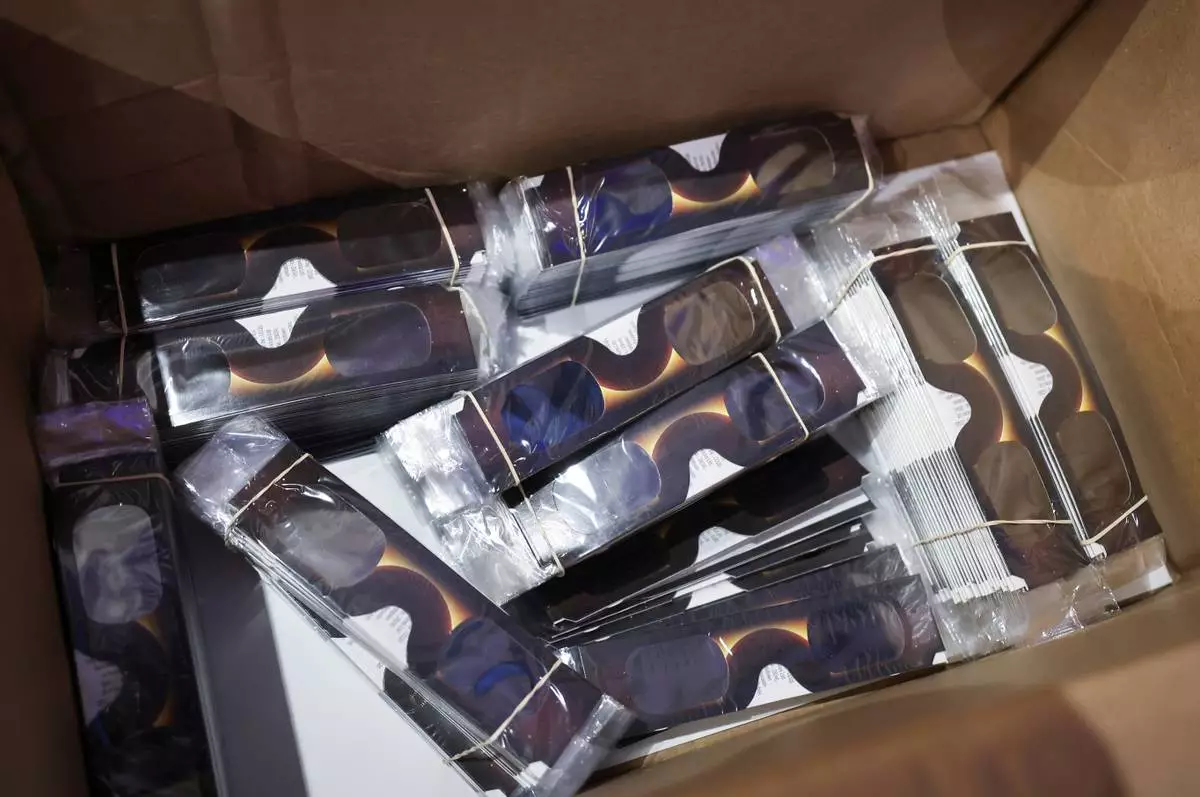
Special protective glasses for viewing the sun are stored in a cardboard box at the Hamburg Planetarium on Wednesday, Aug. 12, 2026 in Hamburg, Germany. (Christian Charisius/dpa via AP)
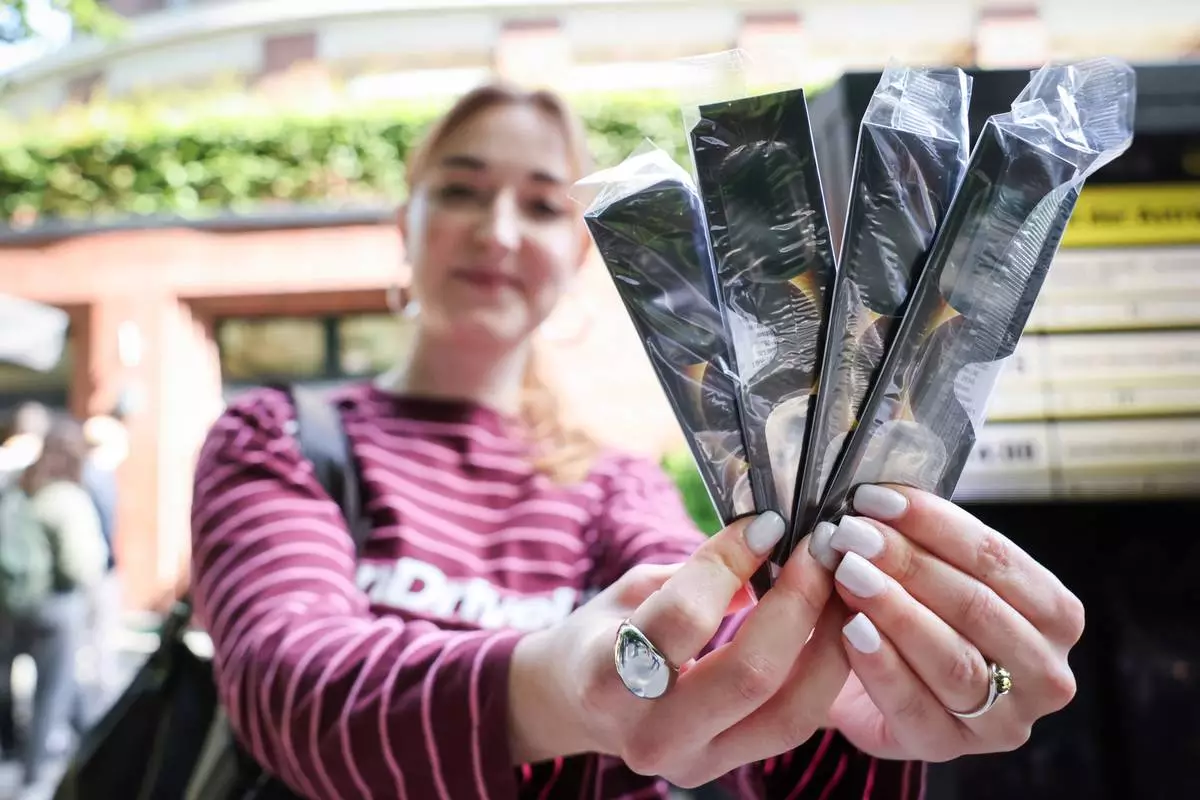
Jana Timm is holds four pairs of special solar viewing glasses that she bought at the Hamburg Planetarium to safely observe the partial solar eclipse on Wednesday, Aug. 12, 2026 in Hamburg, Germany. (Christian Charisius/dpa via AP)
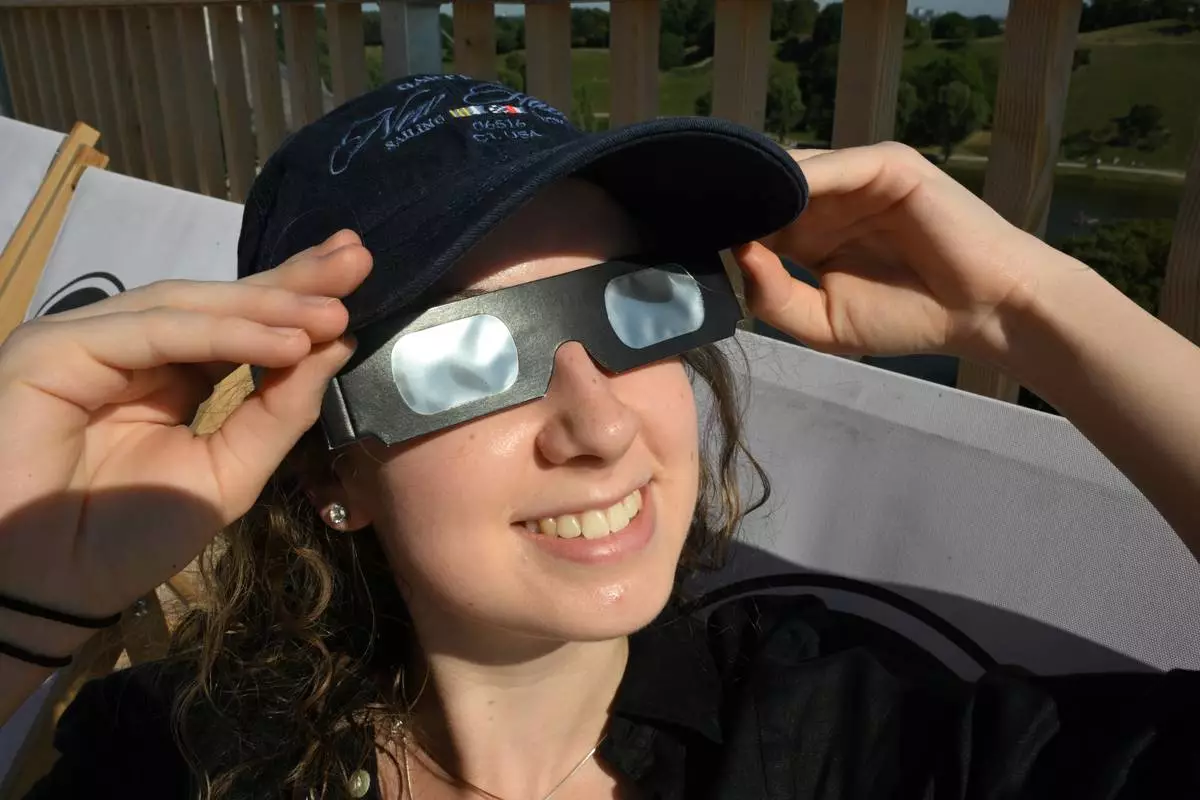
A woman wears safety goggles, as she prepares to watch the partial solar eclipse on the SAYAQ Adventure Tower in Munich's Olympic Park, on Wednesday, Aug. 12, 2026 in Munich, Germany. (Felix Hörhager/dpa via AP)