PANAMA CITY (AP) — U.S. Defense Secretary Pete Hegseth on Wednesday said the recently inaugurated government of Colombian President Abelardo de la Espriella has requested U.S. collaboration in joint military operations in Colombia to combat “narco-terrorism.”
During a meeting of the so-called Americas Counter-Cartel Coalition in Panama, Hegseth said Colombia would also join the “Shield of the Americas” initiative, becoming its 19th member. The initiative emerged from a March summit with U.S. President Donald Trump and Latin American countries that sought to join forces in fighting drug cartels. Colombia’s then-President Gustavo Petro was not invited to that meeting.
“Through the newly inaugurated president, as our president likes to say, President El Tigre, Colombia has already requested that the Department of War join Colombia in its fight against narco-terrorism, authorizing joint military operations to destroy terrorists and terror networks,” Hegseth said.
The government of de la Espriella, who was sworn in last week and is known as “The Tiger” or “El Tigre,” did not immediately comment on the announcement in Panama. But the conservative leader has previously said his administration would join the U.S. initiative.
Separately, Hegseth urged the Latin American countries at the meeting not to recognize the International Criminal Court, or ICC. The U.S. under Trump has carried out military strikes against suspected drug traffickers in the region, which have raised questions about their legality.
Hegseth argued that such efforts “are entirely legal under international humanitarian law.”
It remains unclear from Hegseth’s statements what measures, if any, the international court has taken to hinder U.S. operations in the region.
He urged the nearly 20 countries in attendance to abandon the ICC and reject its attempts to strip their governments and courts of their “sovereignty.” The Trump administration is pushing a campaign to dismantle the international court in retaliation for arrest warrants issued against senior Israeli officials over the war in Gaza and investigations into U.S. personnel in Afghanistan.
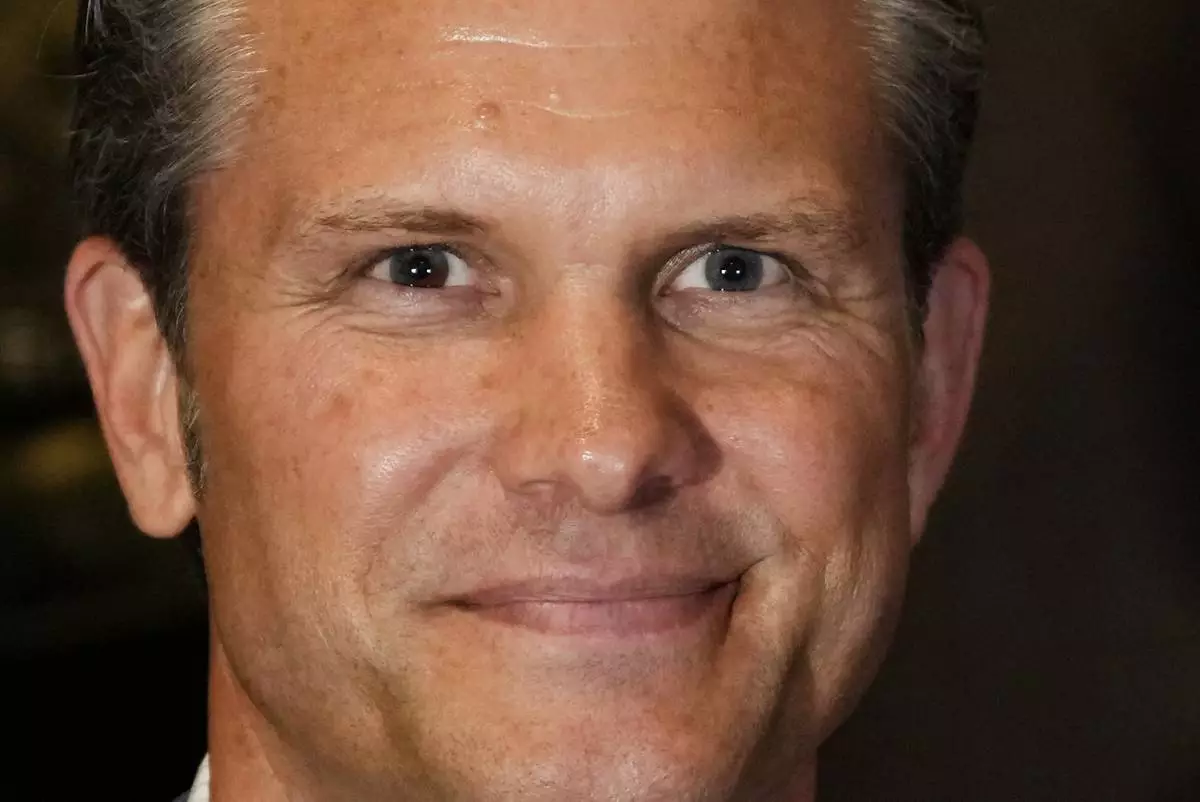
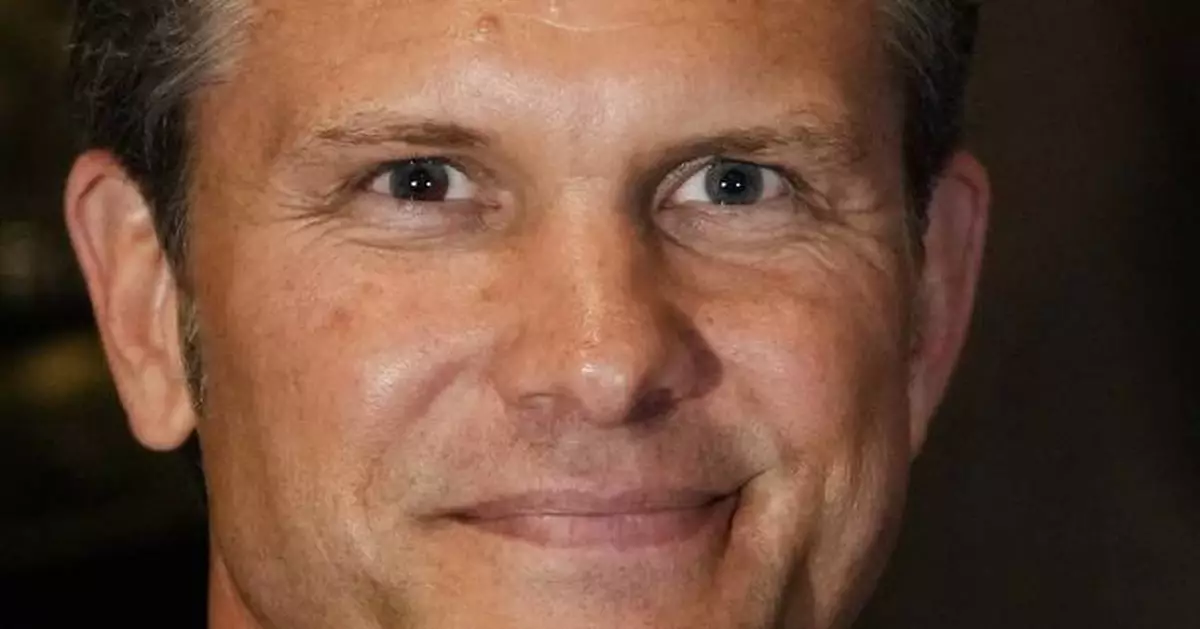
U.S. Defense Secretary Pete Hegseth smiles during a forum of The Americas Counter Cartel Coalition in Panama City, Wednesday, Aug. 12, 2026. (AP Photo/Matias Delacroix)
RIO DE JANEIRO (AP) — Corruption is a top concern for many Brazilian voters ahead of the Oct. 25 runoff between far-right candidate Flávio Bolsonaro and left-leaning Luiz Inácio Lula da Silva. But experts say its greatest impact may not be on which candidates voters choose, but on whether they decide to sit out of the election altogether.
In the minds of many Brazilians, both candidates are associated with graft. Bolsonaro is under investigation for corruption, money laundering and tax evasion, while Lula spent 19 months in prison on corruption and money laundering charges that were later annulled.
For those who strongly support either candidate, such alleged ties will do little to curb their enthusiasm. But experts say that a generalized perception of corruption can increase abstention and anti-incumbency sentiment, potentially benefiting Bolsonaro, who received 2.2 million more votes than Lula in the first round.
Here’s a look at how corruption could impact Brazil's presidential runoff.
During the first round, many lined up to cast their votes wearing either red hats and T-shirts — signaling support for Lula’s party — or the yellow and green of the Brazilian flag adopted by Bolsonaro’s movement, reflecting the polarization gripping the country.
Supporters of Bolsonaro and Lula are highly distrustful of the other side and view their opponents as a threat. Such voters are less likely to give weight to allegations of corruption, experts say.
“We have a great ability to filter information that goes against our beliefs,” said Nara Pavão, a political science professor at the Federal University of Pernambuco. “People don’t want to discover the truth about their candidates, they want to beat the opponent.”
Camila Tobji de Aquino, a 19-year-old student of pedagogy and psychology, thinks that corruption is a cross-partisan issue and a significant problem in Brazil. But her main concern is what she sees as the threat Flávio Bolsonaro poses to democracy.
“If I were to vote only for a candidate not tied to any corruption, I would vote blank,” she said. “But that’s not the choice Brazil is facing. For me it’s a question of being able to vote in the next election.”
A wide-ranging scandal involving politicians and judges at Brazil’s Supreme Court dominated headlines ahead of the presidential election, placing corruption at the heart of public debate.
Justice Alexandre de Moraes, who chaired the legal case that put former President Jair Bolsonaro in prison for his attempted coup, is suspected of having ties to the former head of the failed Banco Master bank, as is Flávio Bolsonaro. Both have denied wrongdoing.
For many Brazilians, the Banco Master scandal stirs up memories of Operation Car Wash, the largest corruption and money-laundering investigation in Brazilian history that ensnared dozens of politicians after it was launched in 2014.
Repeated corruption scandals may drive up abstention and affect undecided voters, said Laura Chelidonopoulos, who has studied corruption and is a political science PhD candidate at the University of Pittsburgh. “People become disenchanted with politics,” she said. “They have less motivation to actually choose between one of these two sides.”
More than 33 million people, or 21% of the electorate, did not vote on Oct. 4, the highest first-round abstention rate since 1998. First-round abstention has risen gradually since 2006, according to data from Brazil’s electoral court.
José Tainan, a 36-year-old kitchen assistant from Rio de Janeiro's Penha complex of favelas, said he struggled to remember when he last voted in an election, but thinks it was probably for Lula back in the 2000s.
He cited corruption as the top reason why he stopped voting.
“There are no good options. Neither one of them suits me. I would rather justify why I didn’t vote,” he said.
Voting is mandatory for citizens aged 18 to 70. Those who fail to vote without a valid reason face a small fine.
Matusalem Aguiar, a 54-year-old taxi driver from Rio's impoverished Belford Roxo municipality, said he would prefer that only candidates with clean records be allowed to enter politics. Still, he will disregard the graft investigations faced by Bolsonaro and vote for him anyway.
“There needs to be a change,” Aguiar said, as he waited for his next passenger in downtown Rio. “Some people have a lot of power and they’re not managing the country in the right way.”
Follow AP’s coverage of Latin America and the Caribbean at https://apnews.com/hub/latin-america

Brazilian President Luiz Inacio Lula da Silva, left, who is running for reelection, gestures as he speaks to opposition presidential candidate Sen. Flavio Bolsonaro during a televised presidential debate one week before the presidential runoff election in Sao Paulo, Brazil, Sunday, Oct. 18, 2026. (AP Photo/Andre Penner)
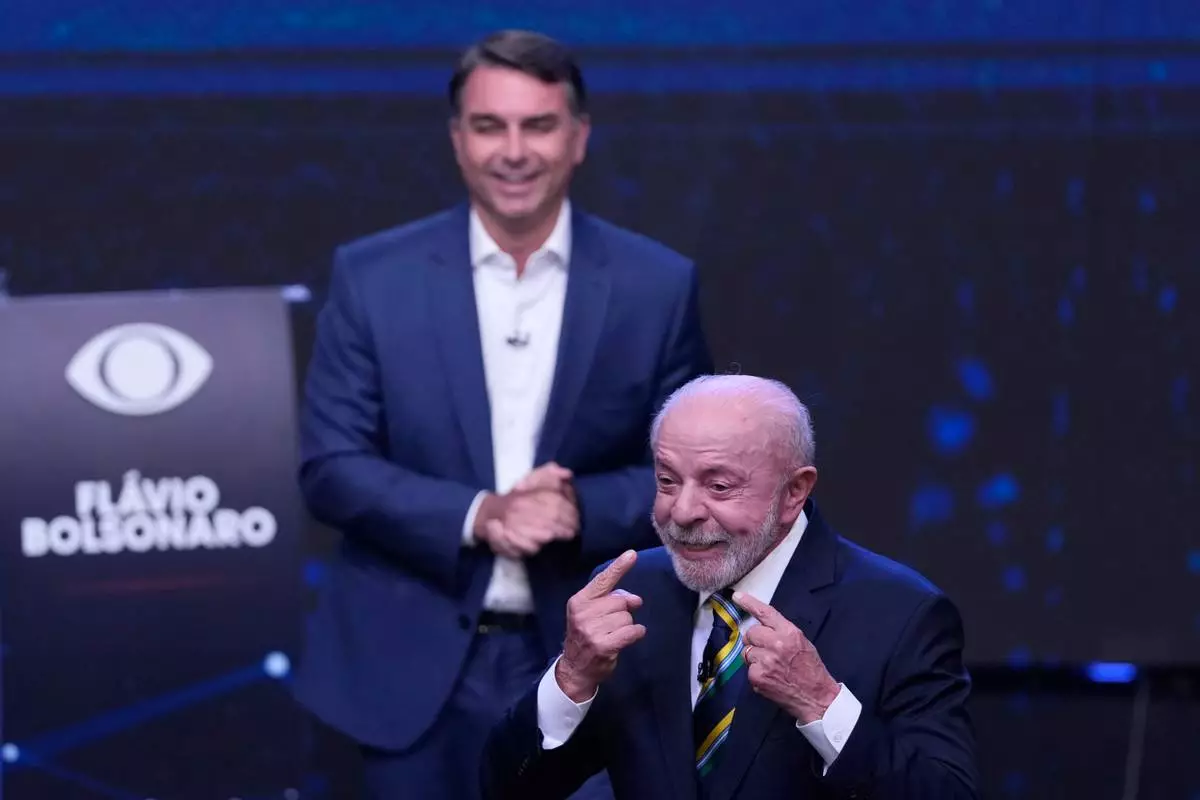
Brazilian President Luiz Inacio Lula da Silva, front, who is running for reelection, gestures toward his face as opposition presidential candidate Sen. Flavio Bolsonaro stands behind him during a televised presidential debate one week before the presidential runoff election in Sao Paulo, Brazil, Sunday, Oct. 18, 2026. (AP Photo/Andre Penner)
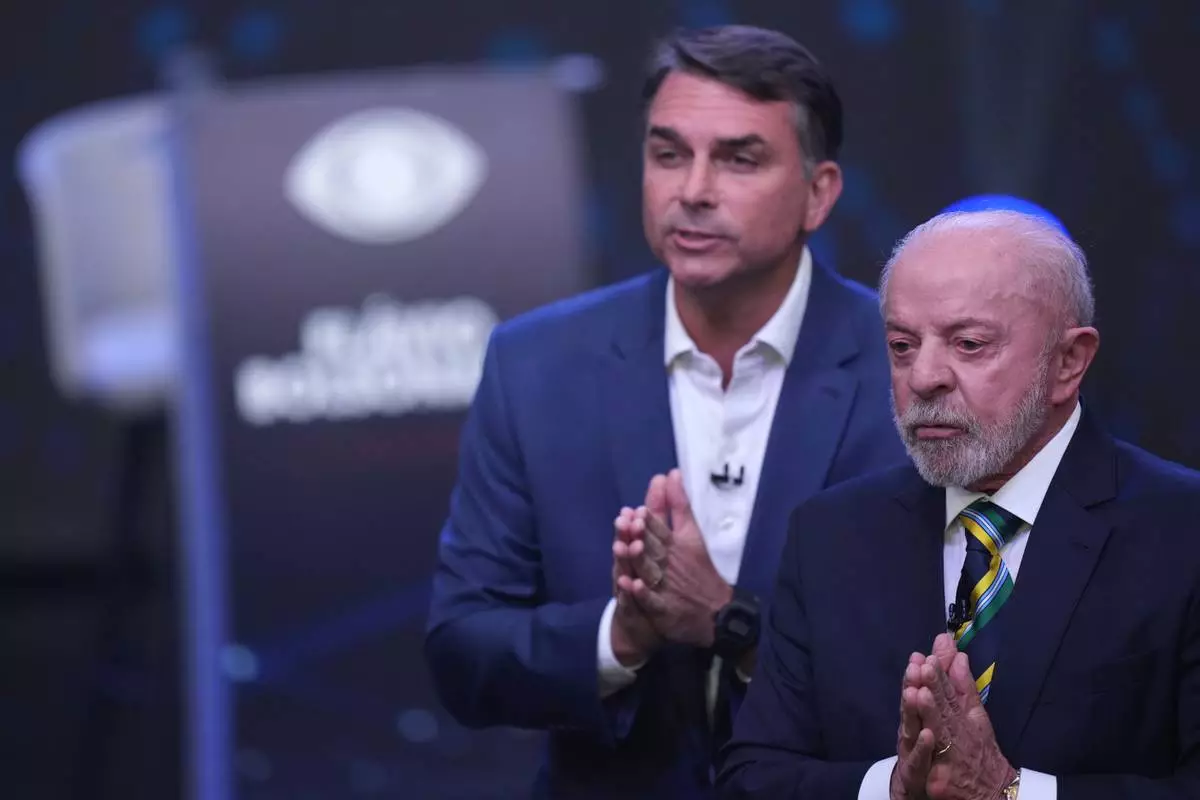
Brazilian President Luiz Inacio Lula da Silva, front, who is running for reelection, and opposition presidential candidate Sen. Flavio Bolsonaro hold their hands together during a televised presidential debate one week before the presidential runoff election in Sao Paulo, Brazil, Sunday, Oct. 18, 2026. (AP Photo/Andre Penner)
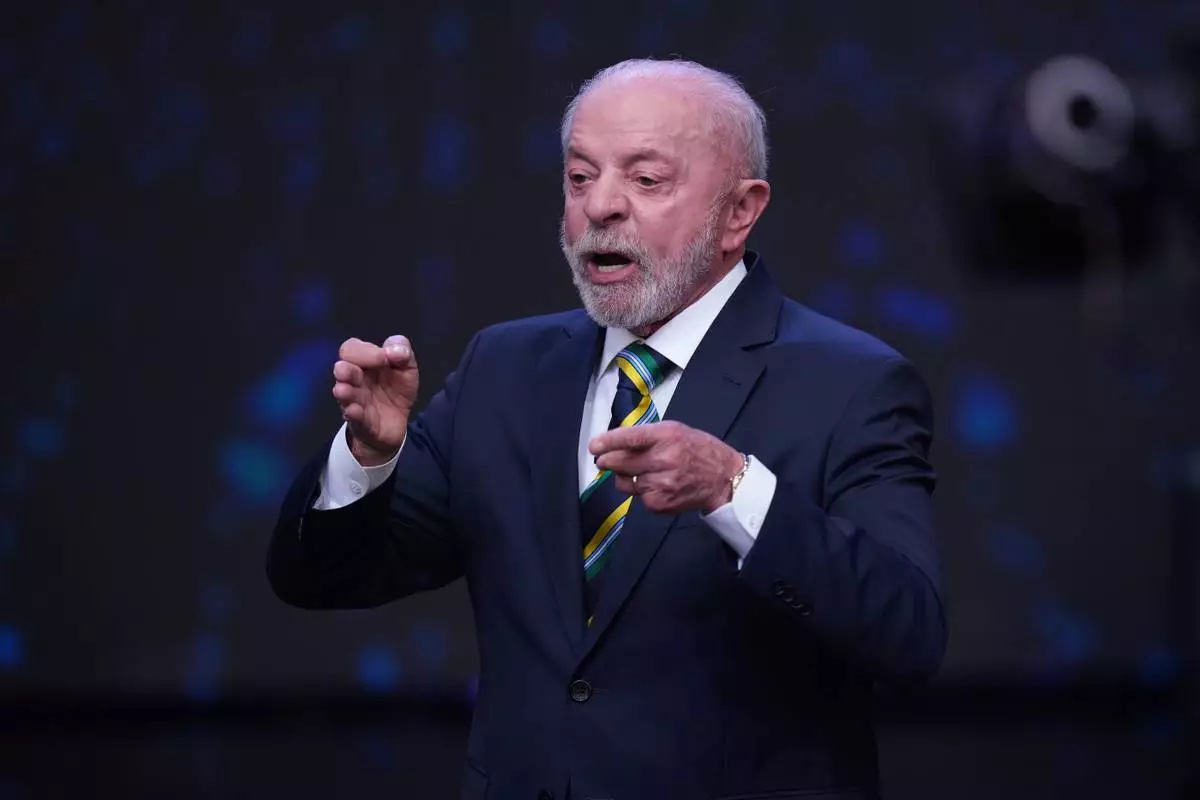
Brazilian President Luiz Inacio Lula da Silva, who is running for reelection, speaks and gestures during a televised presidential debate one week before the presidential runoff election in Sao Paulo, Brazil, Sunday, Oct. 18, 2026. (AP Photo/Andre Penner)
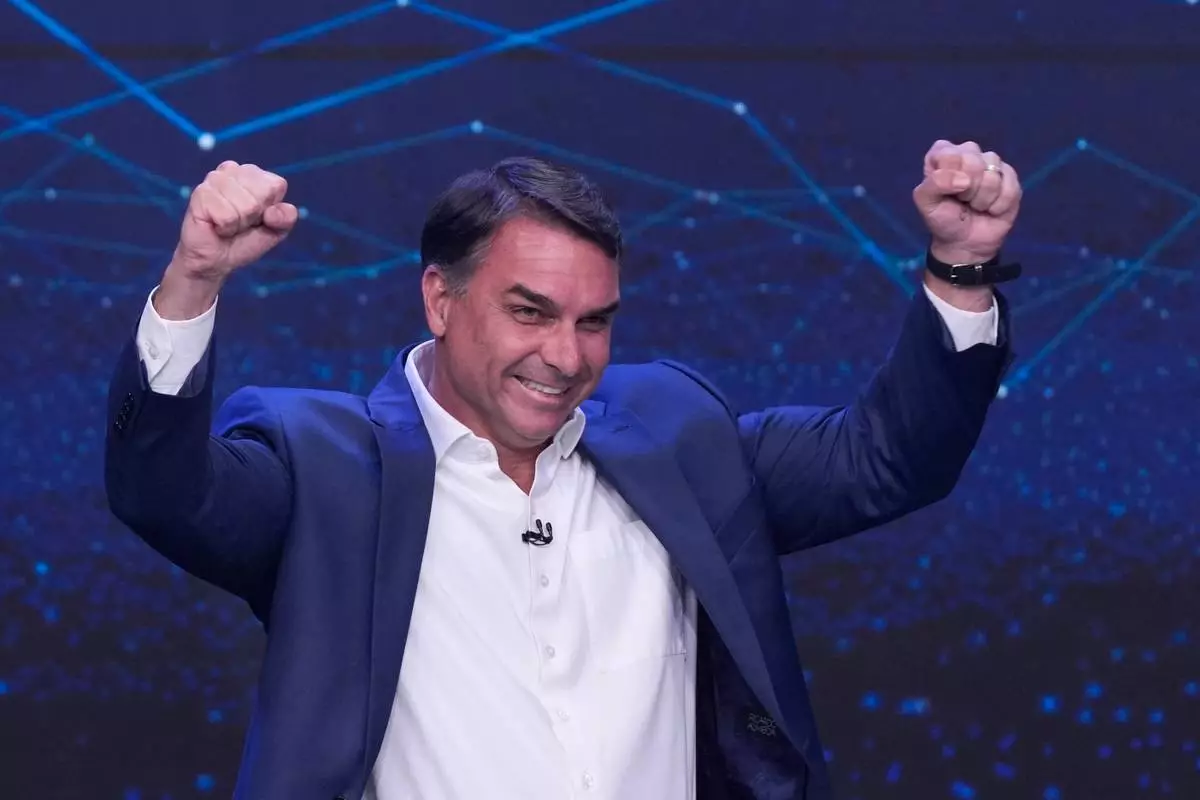
Opposition presidential candidate Sen. Flavio Bolsonaro raises his fists in celebration at the end of a televised presidential debate one week before the presidential runoff election in Sao Paulo, Brazil, Sunday, Oct. 18, 2026. (AP Photo/Andre Penner)