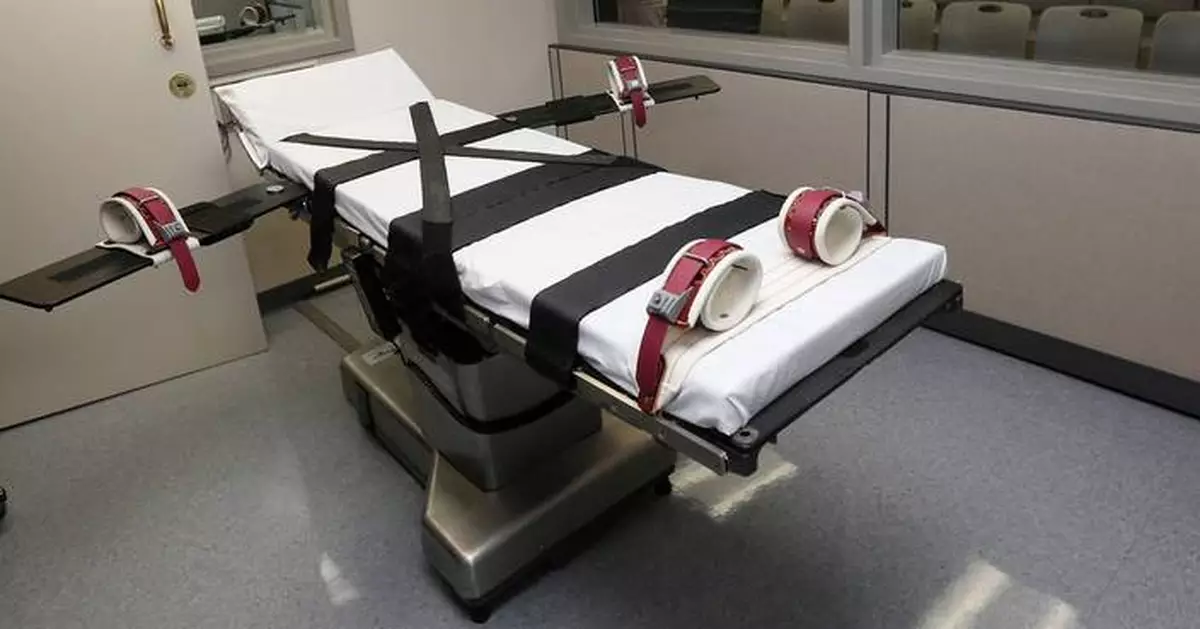
Oklahoma put a man to death Thursday for killing his girlfriend in 2003 in the first of three executions scheduled for the same day in the U.S.
In the other executions, a Tennessee man faces death for killing a motel maid and an Alabama man will be executed after dropping all his appeals in the killing of a 5-year-old girl he paid her mother to abuse.
Eleven states carried out executions in 2025 in the U.S. If the Tennessee and Alabama deaths take place, six states will have had executions in 2026.
The last time three executions were held on the same day was Jan. 7, 2010, when Louisiana, Ohio and Texas put inmates to death. Three executions were scheduled on the same day in 2018, but only one went forward after a Texas man was granted a reprieve and prison officials in Alabama had problems with the IV line.
Florida executed two men on the same day in July and has put 31 prisoners to death since the start of 2025.
Carlos Cuesta-Rodriguez, 70, died by lethal injection at 10:13 a.m CDT at the state’s penitentiary in rural McAlester.
He was the third person put to death this year in Oklahoma and the 20th under Republican Gov. Kevin Stitt, who leaves office in January after eight years.
Convicted of fatally shooting his girlfriend at their Oklahoma City home in 2003, Cuesta-Rodriguez had said he regretted killing Olimpia Fisher and didn’t ask a board for clemency.
Fisher, 43, planned to leave Cuesta-Rodriguez when he shot her in one eye and then waited about eight minutes as she screamed for help before firing the fatal shot into her other eye.
“He made her suffer because she dared to live beyond his control,” Oklahoma Attorney General Gentner Drummond told the state’s Pardon and Parole Board on July 14.
Last month, the board voted 3-1 against recommending clemency for Cuesta-Rodriguez. His attorneys had asked the board to recommend he serve life in prison, saying he had a difficult childhood in Cuba and suffered from brain damage, post-traumatic stress disorder and major depression with psychotic episodes.
Tennessee plans to execute Anthony Darrell Hines for the 1985 murder of Catherine Jean Jenkins.
Hines stabbed Jenkins to death while the 54-year-old was working as a motel maid in Kingston Springs. He was sentenced to death in 1986, won an appeal for a new sentencing hearing and was again sentenced to death in 1989.
Hines' execution date comes just three months after the attempted lethal injection of another man was called off because of a problem inserting an IV.
Hines, 66, appealed unsuccessfully to the governor and the courts, saying that the doctor who oversaw the May execution was unqualified and likely to botch his execution as well. He said his thinness and muscular atrophy after two strokes mean he could face problems with an IV as well.
During the attempted execution of Tony Carruthers, the IV team established a primary line right away but then worked for more than an hour trying to insert a backup line. Carruthers' lawyer witnessed the attempts and said the team tried to insert an IV in Carruthers’ arm, hand and foot before attempting to insert a central line.
In the end, Gov. Bill Lee called off the execution and gave Carruthers a one-year reprieve.
The state has declined to say whether the same doctor will preside over Hines’ execution. Regardless, the Tennessee Supreme Court ruled Hines had not proven the doctor was unqualified and suggested the problems were an isolated mishap.
Alabama is scheduled to execute Jeremy Williams by lethal injection for the 2021 rape and murder of a 5-year-old Georgia girl.
Williams, who pleaded guilty to killing Kamarie Holland, declined to appeal and asked for his death sentence to be carried out.
Williams, 42, raped and strangled Holland after offering her mother $2,500 for the child to perform a sex act, prosecutors said.
Williams filmed his attack on the girl and kept her body to continue to abuse, prosecutors said.
“To see on video what he did to this baby, what a grown man could do to a child, it’s shocking, it’s horrible, it’s disgusting,” Russell County District Attorney Richard Chancey said. “It’s just a level of evil.”
Williams also was a suspect in the 2005 death of his infant daughter in Alaska but charges were not filed until 2022.
Corey Holland, Kamarie’s father, said his daughter was an exuberant 5-year-old who loved princesses and made people laugh.
“She loved playing dress-up, all her little Halloween costumes and her princess stuff I got her. She liked anything girly,” Corey Holland said.
It will be Alabama’s first execution of the year if it goes forward. A nitrogen gas execution was halted in June after a federal judge ruled the method unconstitutional.
The girl's mother is serving a 20-year prison sentence after pleading guilty to sex trafficking.
Associated Press writer Jeffrey Collins contributed.

This Aug. 18, 2025, photo provided by the Oklahoma Department of Corrections shows Carlos Cuesta-Rodriguez, who was sentenced to death for the 2003 fatal shooting of his girlfriend. (Oklahoma Department of Corrections via AP)

This undated photo, courtesy of the Tennessee Department of Correction (TDOC), shows death row inmate Anthony Darrell Hines at an unknown location in Tennessee. (TDOC Communications via AP)
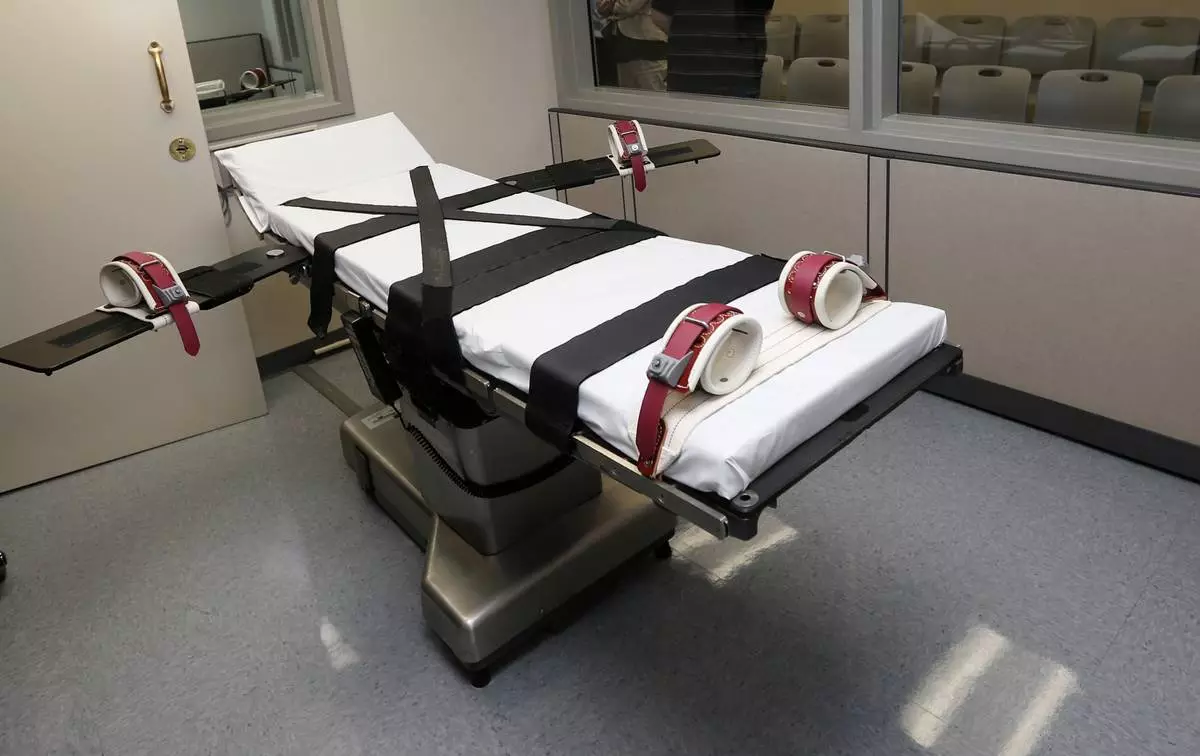
FILE - This Oct. 9, 2014, file photo shows the gurney in the execution chamber at the Oklahoma State Penitentiary in McAlester, Okla. (AP Photo/Sue Ogrocki, File)
NEW YORK (AP) — Before it was dubbed “the funeral screening,” it was just when Will Forte was going to see the movie.
“Coyote vs. Acme” was finished. Director Dave Green, inspired by “Who Framed Roger Rabbit?” had completed the editing on the Looney Tunes blend of cartoon and live action. The whole project, which takes an Ian Frazier “Shouts and Murmurs” column from The New Yorker as its source material, was an audacious comic gambit that seemed to be paying off.
Hopes were high. Audience test scores were good. But days before Forte, who stars as Wile E. Coyote’s attorney, could see “Coyote vs. Acme,” Warner Bros. canceled it. Not just the screening — the movie. The studio hadn’t delayed it or sent it to streaming. They were canning it altogether.
“I just thought: ‘Well, they’re canceling the movie. It’s gotta be bad,’” Forte recalls.
Forte and his wife, suspecting the movie must have turned out poorly, joined the cast and crew to say goodbye to the film no one else was going to see.
“That was when the real emotions started,” Forte says. “It was everything I wished the movie could have been and more. It was so special, which made it so frustrating and so devastating. The confusion was amped up, then frustration, then just searing anger.
“Then it made even less sense,” he adds. “We all looked around, like, ‘What’s happening here?’”
The abrupt termination of “Coyote vs. Acme” sent shockwaves through Hollywood. Everyone in the movie business is accustomed to sudden, painful twists of fate. But the wholesale elimination of a finished film faster than you can say “Meep! Meep!” was something new.
David Zaslav, chief executive of Warner Bros., was intent on pivoting away from the straight-to-HBO Max projects of his predecessor. The expected marketing spend — roughly $30-40 million — for releasing “Coyote vs. Acme” wasn’t worth it to the studio. It was better, the studio said, to take a tax write-off on the $70 million production. Along with two other releases — “Batgirl” and “Scoob! Holiday Haunt” — “Coyote vs. Acme” was put in mothballs.
But nearly three years after that “funeral screening,” the movie is, like its ever-undaunted protagonist, back from the dead. After an outcry, Warner Bros. put “Coyote vs. Acme” up for sale. Ketchup Entertainment, an independent distributor that last year released the Looney Tunes movie “The Day the Earth Blew Up,” picked it up for about $50 million. On Aug. 28, “Coyote vs. Acme” will finally see the light of day.
It’s been a dizzying turn of events for everyone involved. Eric Bauza, who voices Daffy Duck, Bugs Bunny and others in the film, didn’t really believe it until he saw “Obsession” at his local cinema.
“Upon exiting the theater, there in a little marquee box was the poster for ‘Coyote vs. Acme,’” Bauza says. “It hit me: This is going to be seen by people.”
In a recent interview, Green was still in disbelief.
“I must be dreaming,” said Green. “It’s a total surprise I’m sitting here talking to you today.”
The filmmakers and their new distributor have leaned into the project’s tortured history, promoting it as “the film ACME didn’t want you to see.” More than that, “Coyote vs. Acme” now has a newfound meta quality. The premise of the film is that Coyote, after suffering years of defective products, takes Acme to court. Like the drama surrounding the film, it's an underdog victimized by a big corporation.
“I couldn’t help but look at the movie in a completely new way because there are meta crossovers between the story and what the movie had come to represent,” Green says. “It almost felt like we had written the movie after the news had broken.”
When “Coyote vs. Acme” was canceled, its fate became a rallying cry. Filmmakers like Christopher Miller, Phil Lord, Daniel Kwan and Daniel Scheinert championed it as too good to disappear. Even politicians, like Democratic Rep. Joaquin Castro of Texas, urged the Justice Department to investigate Warner Bros.'s decision.
Bauza, a veteran voice actor, pushed the hashtag #ReleaseCoyoteVsACME on social media. His most dramatic effort, though, was at the Annie Awards in 2024. There, he drew hearty applause for making that case from the podium — in the voice of Daffy Duck.
“He’s the go-to cartoon character above anyone else when it comes to begging and pleading,” Bauza says. “It seemed appropriate.”
So many people came out fighting for the film that Green never felt alone throughout the ordeal.
“I would open my phone one day and see someone dressed in a Wile E. Coyote costume outside of the studio protesting with a sign in the rain — these kinds of things you couldn’t believe,” says Green.
At the same time, the entire episode suggested a dark new chapter in the movie business that has left many involved with “Coyote vs. Acme” shaky. This wasn’t a young filmmaker getting turned down on their first film. It was two years of work on one of Warner Bros.’ most iconic franchises — a movie even produced by DC Studios chief James Gunn.
“I don’t know what their judgment was,” says Bauza. “Did they even know or were they just looking at numbers? It’s tough looking in from the outside, thinking: ‘If that’s how the Looney Tunes are being treated, what about my story?’”
“The pipeline has changed,” he adds. “How we get to the finish line is different.”
“Coyote vs. Acme” was greenlit when studios were trying to find their way through the pandemic and theaters were struggling to stay afloat. But Green’s film now arrives at a much different point in time. Theatrical is thriving thanks in large part to the visions of filmmakers, from Christopher Nolan to Curry Barker.
For Green, that “Coyote vs. Acme” is finally having its day in the court of public opinion is a sign of Hollywood returning to its foundations.
“The film business, as much as it might not feel that way, is led and dictated by artists and filmmakers and actors and writers wanting to create,” says Green. “There will be nothing able to take that want away from creators. As long as we keep creating, there will be a movie business.”
Forte is still struggling to find a happy ending. The movie’s initial cancellation felt, he says, “cruel and heartless.”
“The downside is: Trust no one,” says Forte. “And the positive is: Don’t give up hope. And that’s the one I think I will keep.”

Eric Bauza poses for a portrait to promote the film "Coyote vs. Acme" on Tuesday, June 9, 2026, in Los Angeles. (AP Photo/Chris Pizzello)
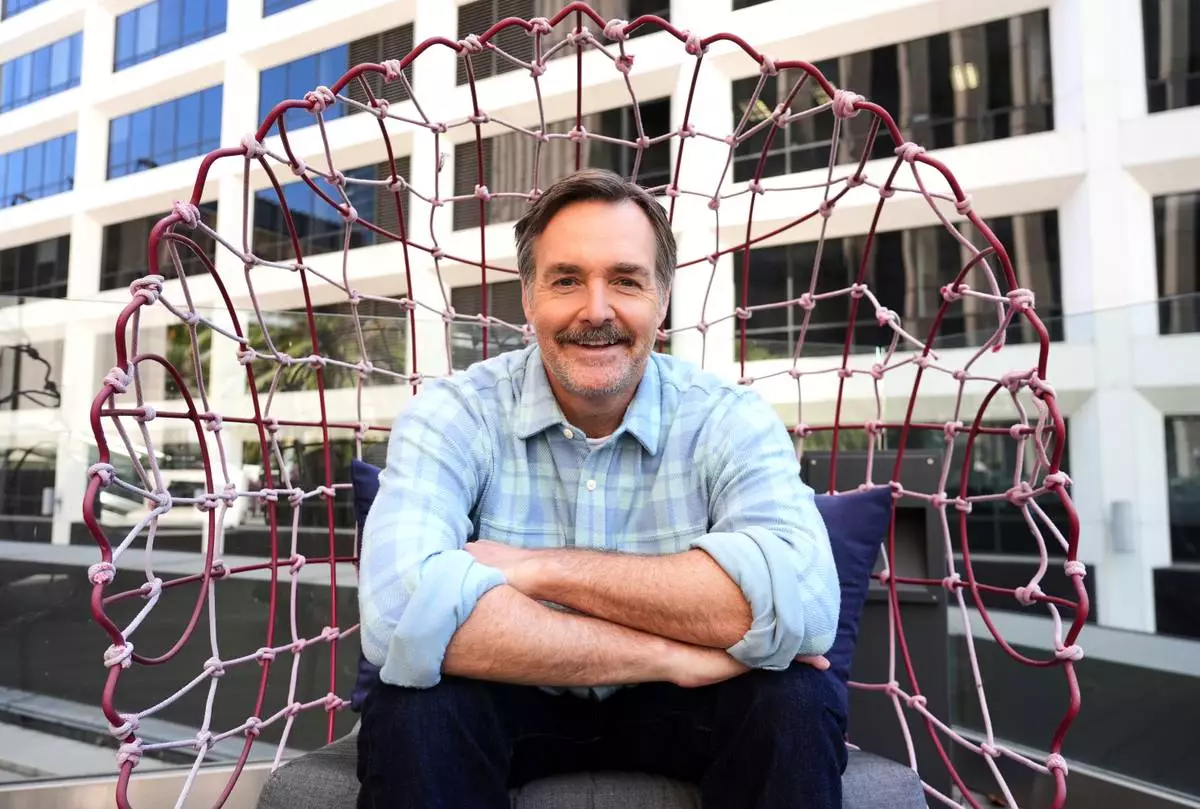
Will Forte poses for a portrait to promote the film "Coyote vs. Acme" on Tuesday, June 9, 2026, in Los Angeles. (AP Photo/Chris Pizzello)

Director Dave Green, center, poses for a portrait with Will Forte, left, and Eric Bauza to promote the film "Coyote vs. Acme" on Tuesday, June 9, 2026, in Los Angeles. (AP Photo/Chris Pizzello)