Clashes between Iran-backed Houthi rebels and government forces in Yemen raged overnight Thursday as renewed violence continues to spread and feed growing fears that the country's civil war could reignite and create a new front in the Middle East war.
Here’s a look at the latest developments in the Iran war and the wider Middle East. Full coverage can be found here.
At least one government soldier was killed and another critically wounded in clashes between Houthi rebels and the military in the mountainous province of Taiz, Yemeni military officials told The Associated Press.
The fighting came as part of a spate of recent attacks by the Houthis on government-held areas across the country. Dozens of government troops have been killed in attacks since last week, the Yemeni military said.
Elsewhere, several tribal leaders in the central province of Marib said the Yemeni army artillery targeted overnight Houthi movements.
The Houthis have been hitting government-held areas with drones and missiles, saying they have been targeting military forces and warehouses. They have also been attacking oil facilities in neighboring Saudi Arabia, which supports the Yemeni government, and the kingdom’s shipping in the Red Sea.
On Tuesday, they hit a commercial ship in the Bab el-Mandeb strait, killing six people.
With the Strait of Hormuz effectively shut down by Iran, there has been a renewed focus on the Red Sea and Bab el-Mandeb strait at Yemen’s southern tip, which is an alternate route for Saudi Arabia to ship its oil.
Three Pakistanis were among the dead in the ship attack, and Indonesia's Foreign Ministry said Thursday that one of its nationals was missing after the attack and two were wounded.
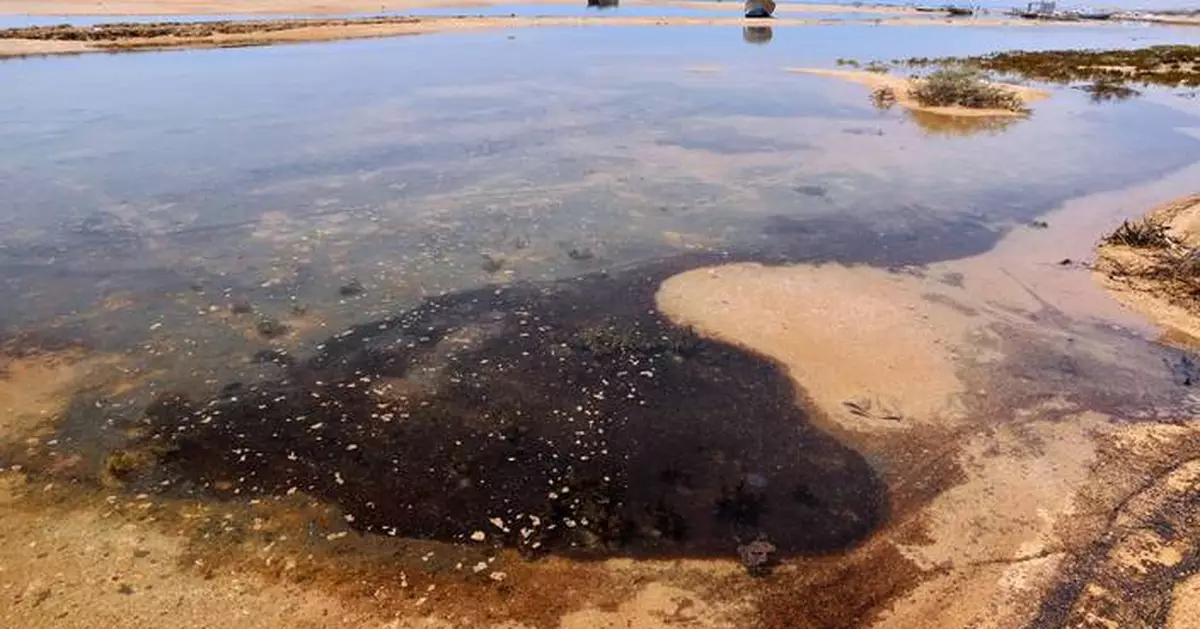
Iran was working to clean up an oil spill off Qeshm Island, which lies off the Iranian mainland in the Strait of Hormuz, highlighting the environmental damage being caused by the ongoing conflict with the United States and Israel.
Iranian Foreign Ministry spokesperson Esmail Baghaei suggested Iran should receive compensation for its efforts to control the spill, writing on X that anyone who “benefits from commercial shipping through the Strait of Hormuz is obligated, both legally and morally, to take action to compensate for — and remedy — the environmental damage.”
Images distributed by Iran's semiofficial news agency ISNA showed oil damage to Qeshm's beaches.
Iran has not said how the spill was caused, but the firm TankerTrackers.com posted satellite images on X saying it appears an Iranian attack on a bulk carrier off Oman was behind it. The spillage then drifted across the strait to Iran, the company said.
In his post on X, Baghaei asked who should be responsible for compensation.
“The countries that benefit from the cheap energy exported from our region? The shipping insurance companies?” he asked. “Or the aggressors and their partners who have turned the Persian Gulf and the Sea of Oman into an arena for military operations and testing of highly destructive weapons?”
Oman is in the middle of responding to another spill in the Arabian Sea, coming from a tanker grounded off its southern coast, well away from the Strait of Hormuz. No party has claimed responsibility for the incident and the cause of a reported explosion has not been revealed.
Environmental experts said an oil spill has been spreading quickly in recent weeks from the partially submerged tanker off the shores of Qabiliyah Island, endangering a marine protected area there.
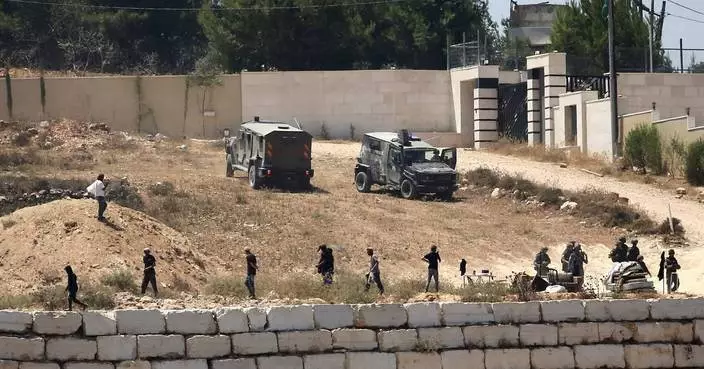
The U.S. ambassador to Israel condemned a siege by Israeli settlers of a Palestinian-American family’s home in the Israeli-occupied West Bank, calling it a “horrific act of terror.”
Mike Huckabee’s remarks on X represented an unusually sharp rebuke from the Trump administration of the latest episode during a spike in clashes between settlers and Palestinians in the region.
Starting Sunday, settlers targeted three homes in the village of Qusra, throwing stones and trapping occupants from leaving despite dwindling supplies.
On Thursday morning, Qusai Abu Rida — the brother of the Palestinian-American homeowner who had holed up in the house with his own teenage son to defend it — said they were moved by Israel’s military to another home but still cannot leave the area.
—
Click here for full AP coverage on developments in the West Bank.
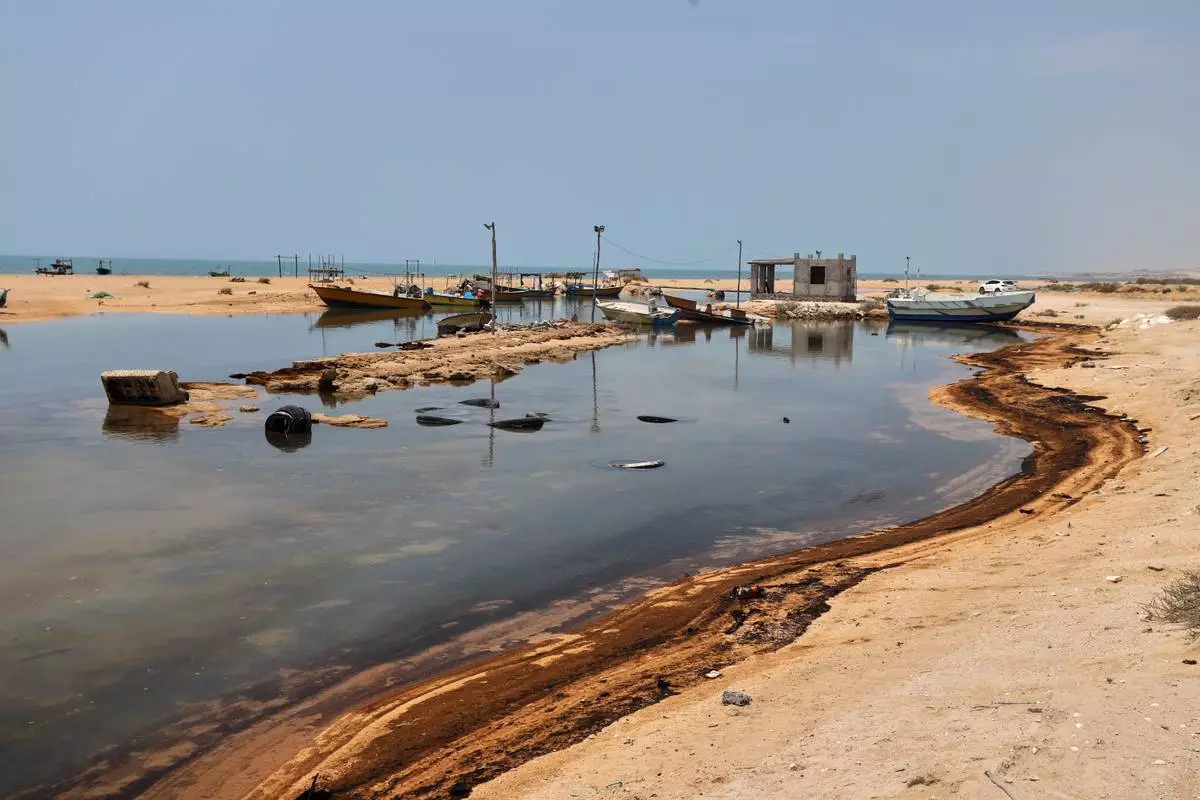
Oil residue lines the shore near fishing boats on Qeshm Island, Iran, Thursday, Aug. 13, 2026, amid ongoing wartime attacks on vessels and infrastructure in and around the Strait of Hormuz, though the spill's source has not been independently determined.(Amirhosein Khorgooi/ISNA via AP)
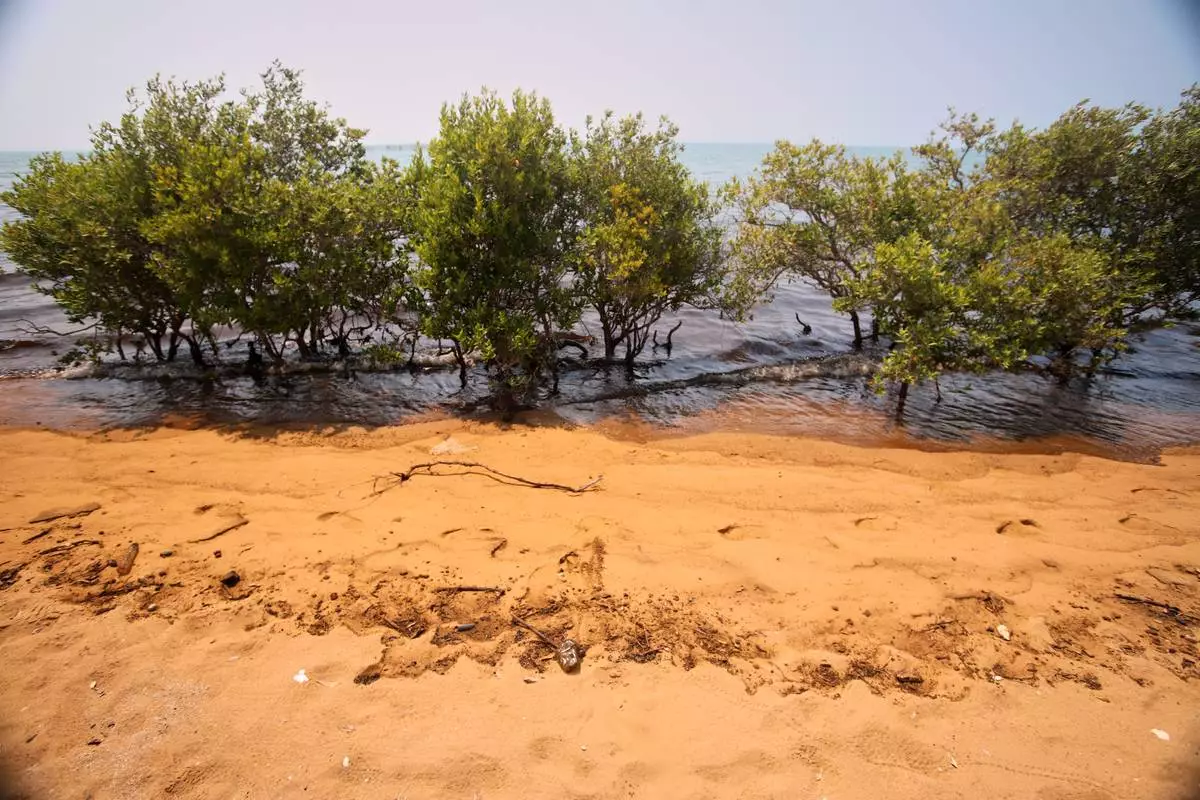
Dark oil residue stains the water and shoreline around mangrove trees on Qeshm Island, Iran, Thursday, Aug. 13, 2026, amid ongoing wartime attacks on vessels and infrastructure in and around the Strait of Hormuz, though the spill's source has not been independently determined.(Amirhosein Khorgooi/ISNA via AP)
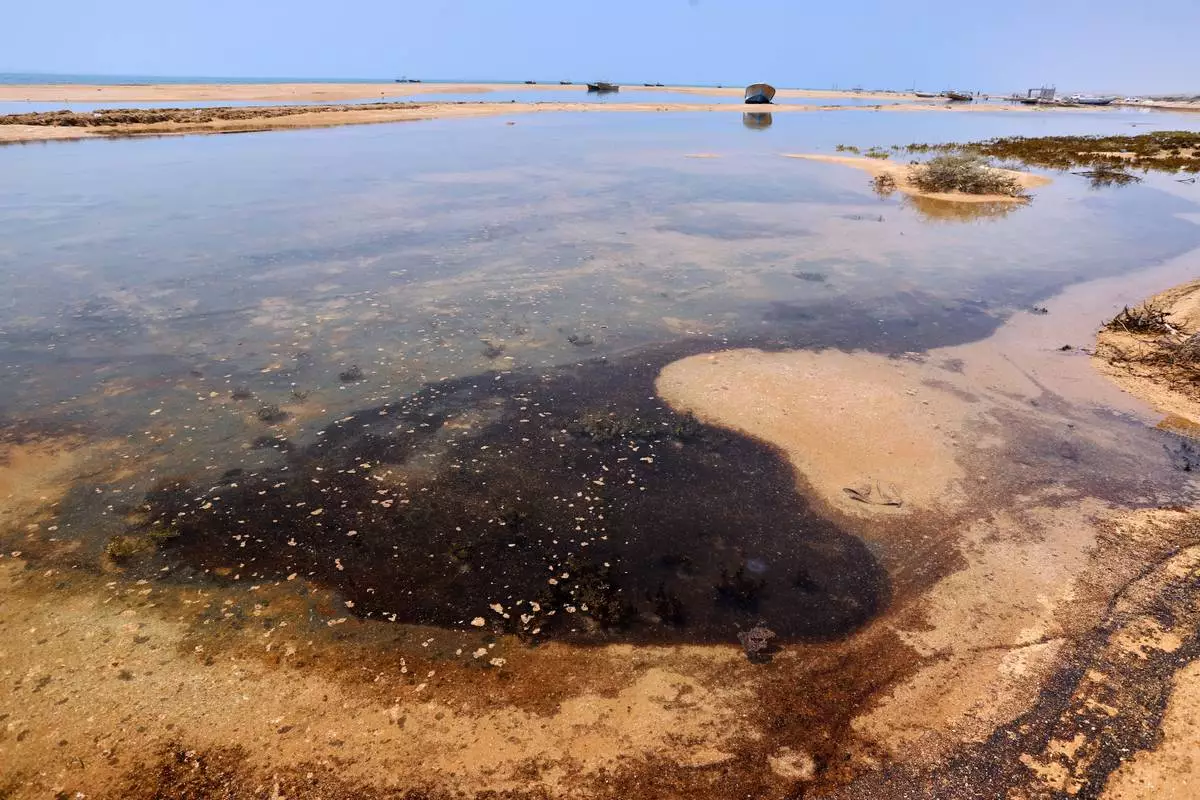
Dark oil residue collects in shallow coastal waters on Qeshm Island, Iran, Thursday, Aug. 13, 2026, amid ongoing wartime attacks on vessels and infrastructure in and around the Strait of Hormuz, though the spill's source has not been independently determined.(Amirhosein Khorgooi/ISNA via AP)
LUSAKA, Zambia (AP) — Zambians cast votes Thursday in a presidential election that will test whether President Hakainde Hichilema ’s economic reforms were enough to overcome widespread frustration over the cost of living.
Around 8 million people in the southern African country of 22 million are registered to vote in the one-day election. Voters will also choose members of Parliament and local government councilors. Results are expected Monday, according to the electoral commission.
Voters bundled in thick jackets against the morning chill began forming long lines before dawn outside polling stations across Lusaka, the capital.
Some huddled around small makeshift fires while election officials arranged ballot boxes, checked voter lists and prepared polling stations.
European Union election observers watched the proceedings at one polling station in the capital. A local election observer said confusion over voter rolls, inadequate directions and poor crowd management at some polling stations caused delays and frustration that could discourage some people from voting.
Mathias Ngoma, in his 70s, said he has voted in every election he could because “it’s the only voice I have.”
“I braved the cold to choose leaders I am hoping will make things better in our constituency,” he said.
The election is widely seen as a referendum on Hichilema’s handling of the economy. He came to power in 2021 and is seeking a second term. He argues he inherited an economy in crisis and has overseen the restructuring of Zambia’s massive foreign debt, presided over economic growth and courted investors.
Hichilema says he needs another five years to create jobs, improve infrastructure and expand public services.
Many Zambians say they don’t feel the benefits as unemployment, food prices and an unstable electricity supply continue to strain household budgets.
Hichilema faces 13 other candidates, and his strongest challenger, analysts say, is Brian Mundubile, a politician who leads an alliance of opposition parties.
Mundubile has campaigned on promises to tackle the rising cost of living, improve agriculture, and restore freedoms while accusing Hichilema’s government of undermining democratic institutions.
Beene Siloka, a first-time voter, said casting her ballot was a proud moment despite some initial confusion about where to wait in line.
“I’ve cast my vote, and I’m proud,” she said. “It’s my first time voting, and we’re looking forward to greater things for Zambia.”
The election is being closely watched abroad because Zambia is a major copper producer seeking to sharply increase production of the metal, which is critical to electric vehicles, renewable energy and power grids.
China is Zambia’s largest foreign investor and has extensive mining interests in the country, while the United States has sought a greater role as Washington looks to diversify supplies of critical minerals and reduce its reliance on China. Hichilema has courted investment from both China and Western partners, including the U.S., as he seeks to increase annual copper production to 3 million metric tons by 2031.
Security and political tensions rose in the final days of the campaign. Police deployed additional officers and warned against violence, disruptions at polling stations and the circulation of false results.
Before casting his ballot, Hichilema urged Zambians to vote peacefully. “Today, the future of our nation is in your hands,” he wrote on X. “Please vote peacefully, respect one another and remember that we are One Zambia, One Nation.”
Opposition parties have accused Hichilema’s government of using state institutions to target political rivals, allegations the government rejects.
Amnesty International said ahead of the vote that Zambia had experienced a “growing pattern” of authoritarian practices that threatened freedoms of expression, assembly and the media, concerns the government has rejected.
The opposition's Tonse Alliance said a law enforcement raid on its offices days before the election was politically motivated.
Hichilema spent four months in jail on treason charges when he was an opposition leader under former President Edgar Lungu, whom he defeated in 2021.
Lungu remained an influential political figure until his death in South Africa last year. A prolonged dispute between his family and the government over his funeral and burial added to tensions ahead of the election.
A presidential candidate must win more than 50% of the vote to avoid a runoff.
Zambia has long been regarded as one of southern Africa’s more stable democracies, with a history of largely peaceful transfers of power. Hichilema’s victory in 2021 marked the country’s third transfer of power to an opposition candidate since multiparty democracy was restored in 1991.
Polls are expected to close at 1600 GMT.
Associated Press video journalist Alfonso Nqunjana in Lusaka, Zambia, contributed to this report.
AP Africa news: https://apnews.com/hub/africa AP Africa news: https://apnews.com/hub/africa
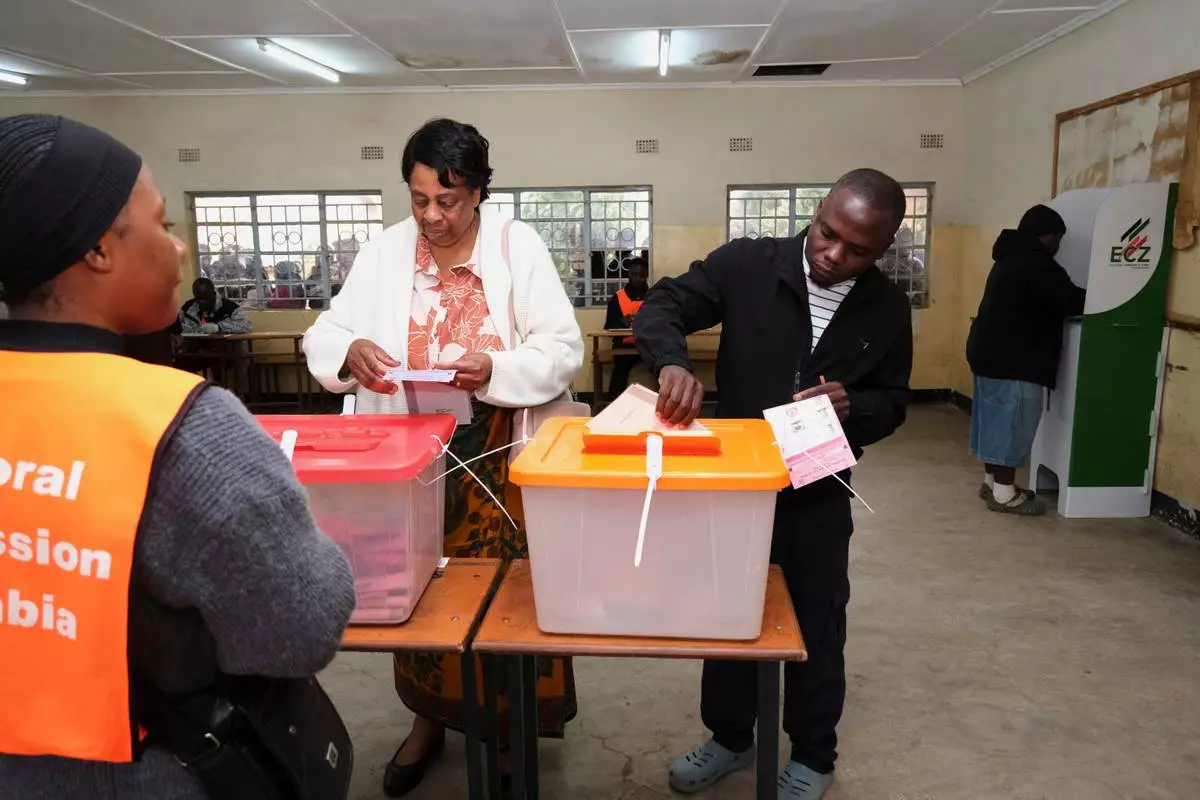
Zambians cast their vote at a polling station during a presidential election in Lusaka, Zambia, Thursday, Aug. 13, 2026. (AP Photo/Anita Reed)
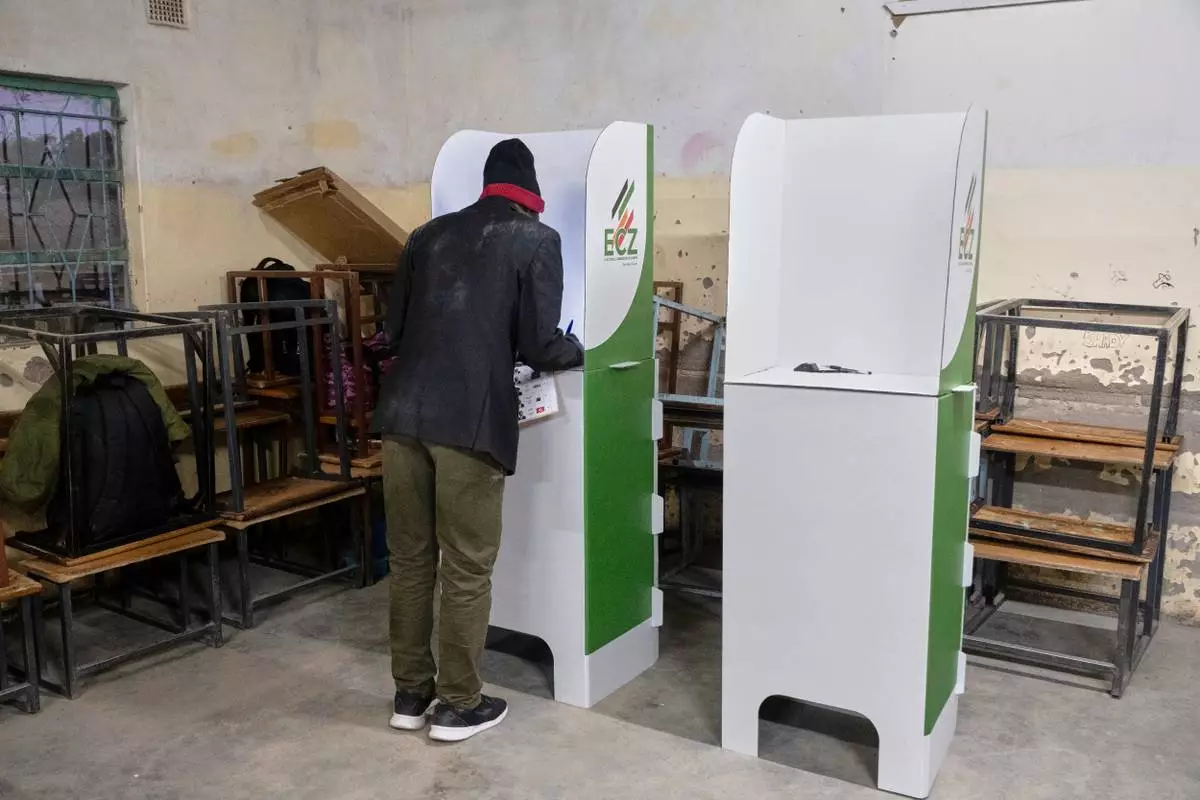
A man is seen in a voting booth at a polling station during a presidential election in Lusaka, Zambia, Thursday, Aug. 13, 2026. (AP Photo/Anita Reed)
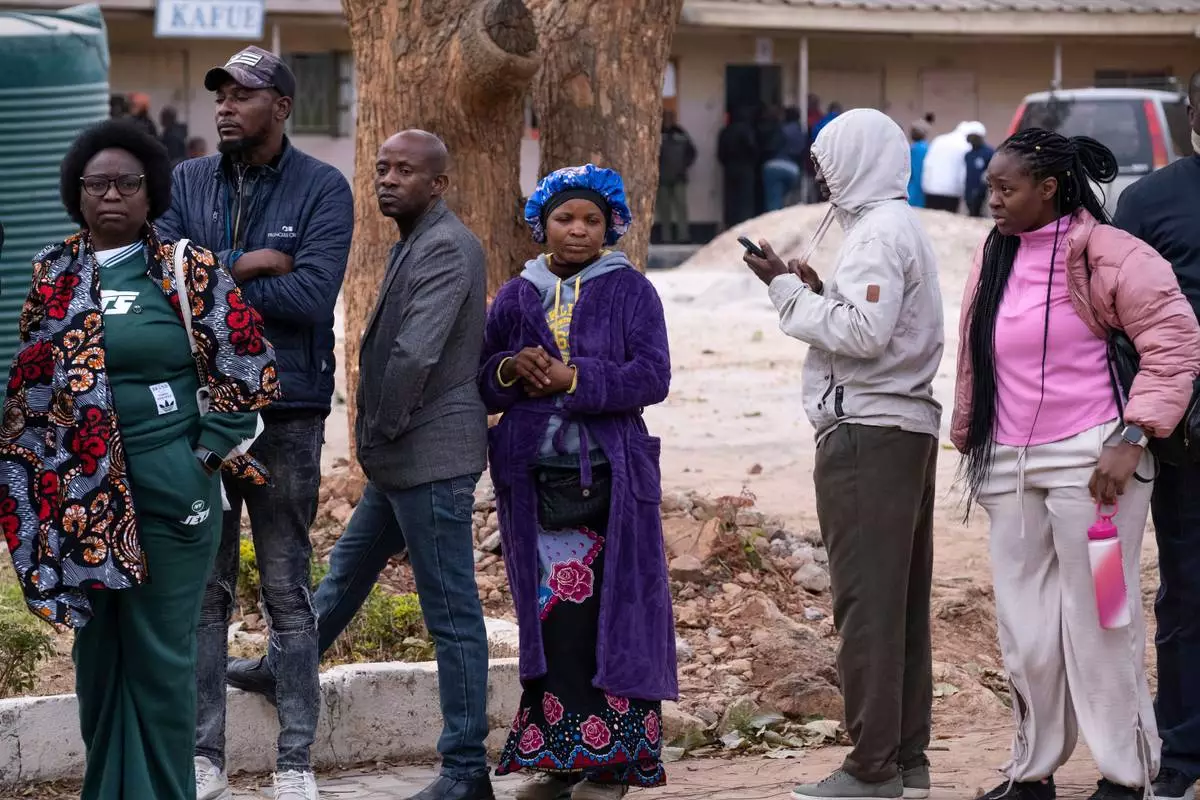
People queue up outside a polling station during a presidential election in Lusaka, Zambia, Thursday, Aug. 13, 2026. (AP Photo/Anita Reed)
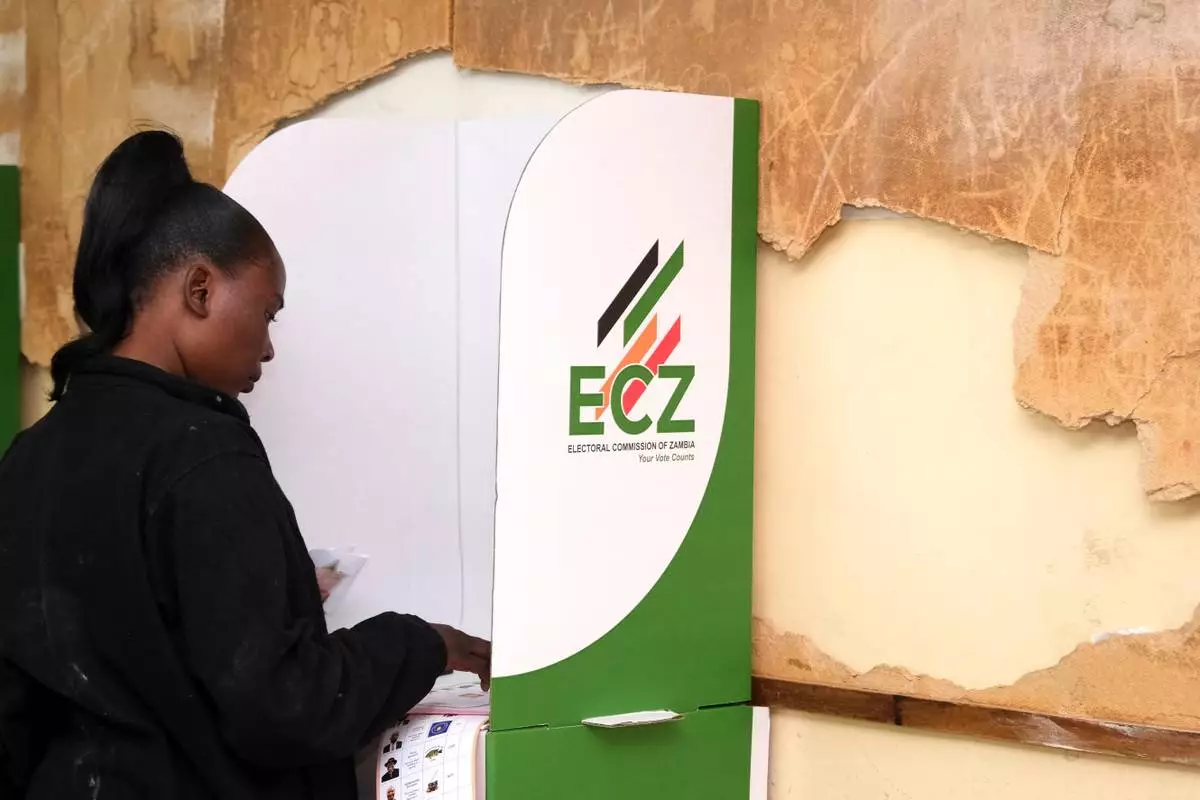
A woman is seen in a voting booth at a polling station in Lusaka, Zambia, Thursday, Aug. 13, 2026. (AP Photo/Anita Reed)
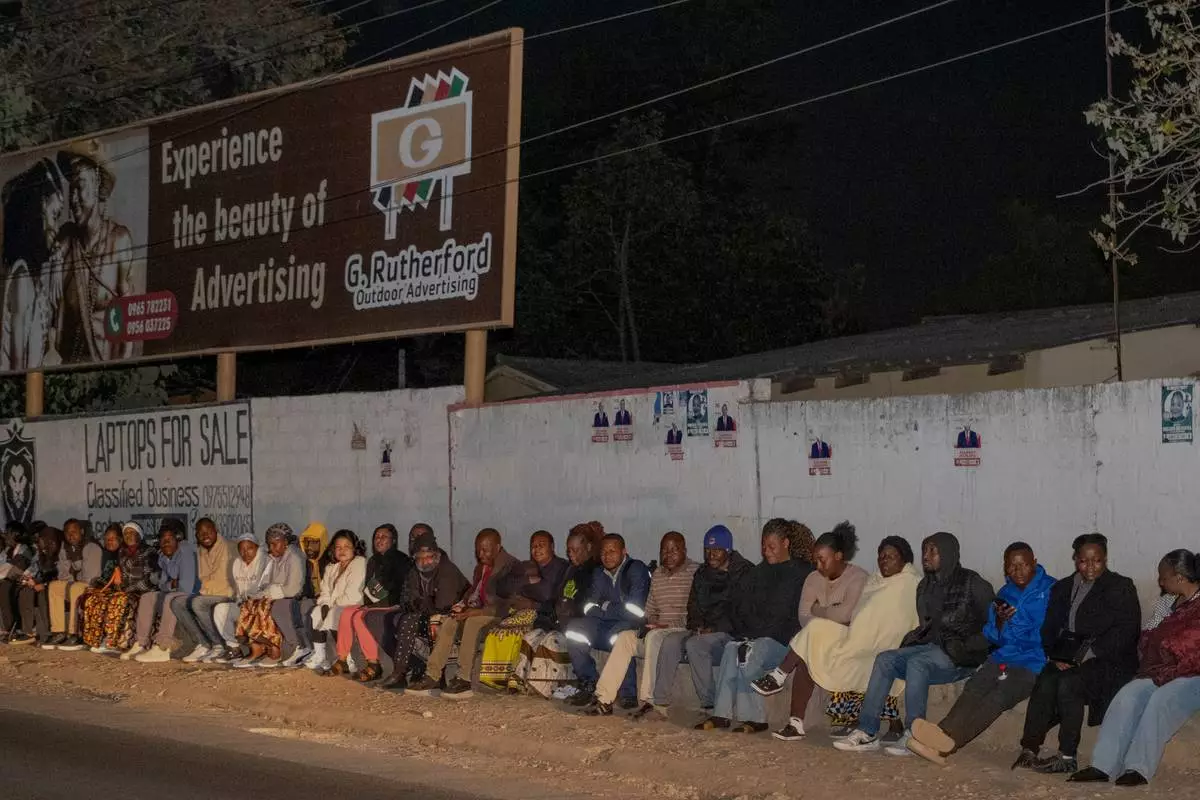
Zambians queue outside a polling station on the outskirts of Lusaka, Zambia, Thursday, Aug. 13, 2026. (AP Photo/Anita Reed)
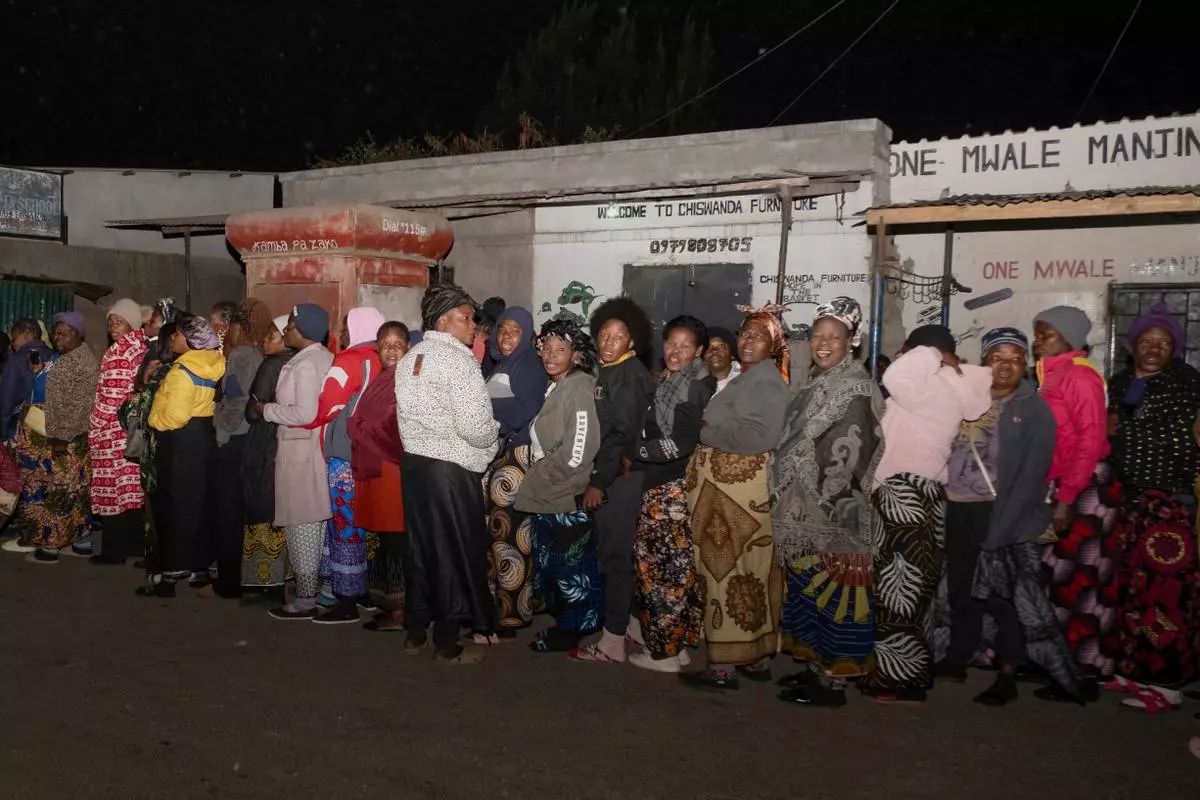
Zambians queue outside a polling station on the outskirts of Lusaka, Zambia, Thursday, Aug. 13, 2026. (AP Photo/Anita Reed)
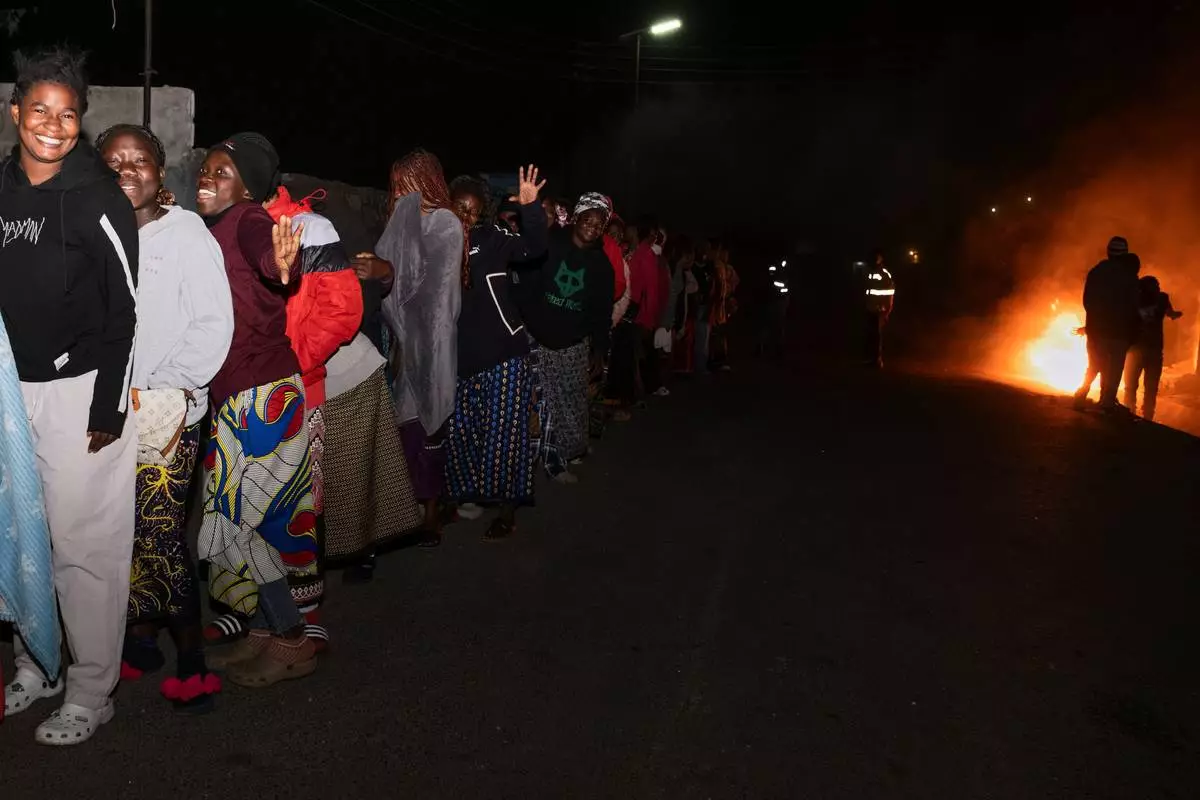
Zambians queue outside a polling station on the outskirts of Lusaka, Zambia, Thursday, Aug. 13, 2026. (AP Photo/Anita Reed)
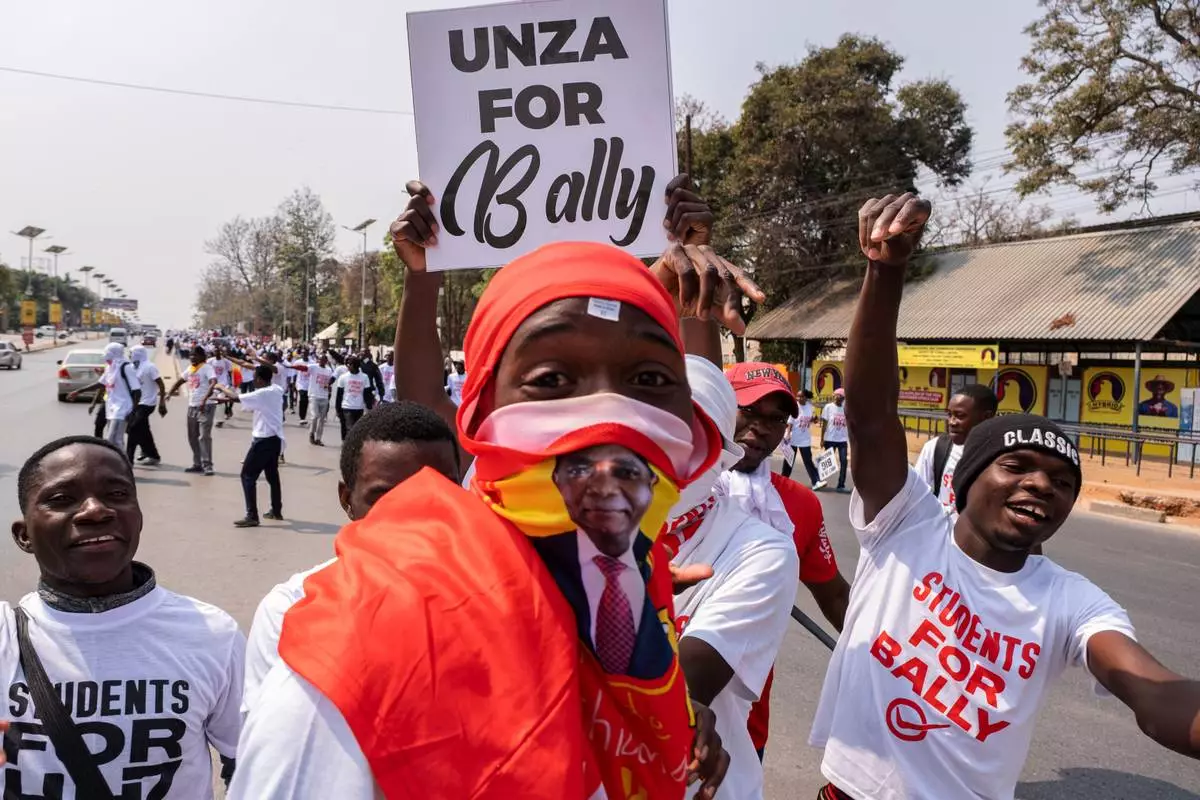
Supporters of Zambian incumbent President and United Party for National Development (UPND) presidential candidate Hakainde Hichilema campaign on the street in Lusaka, Zambia, Monday, Aug. 10, 2026. (AP Photo/Anita Reed)
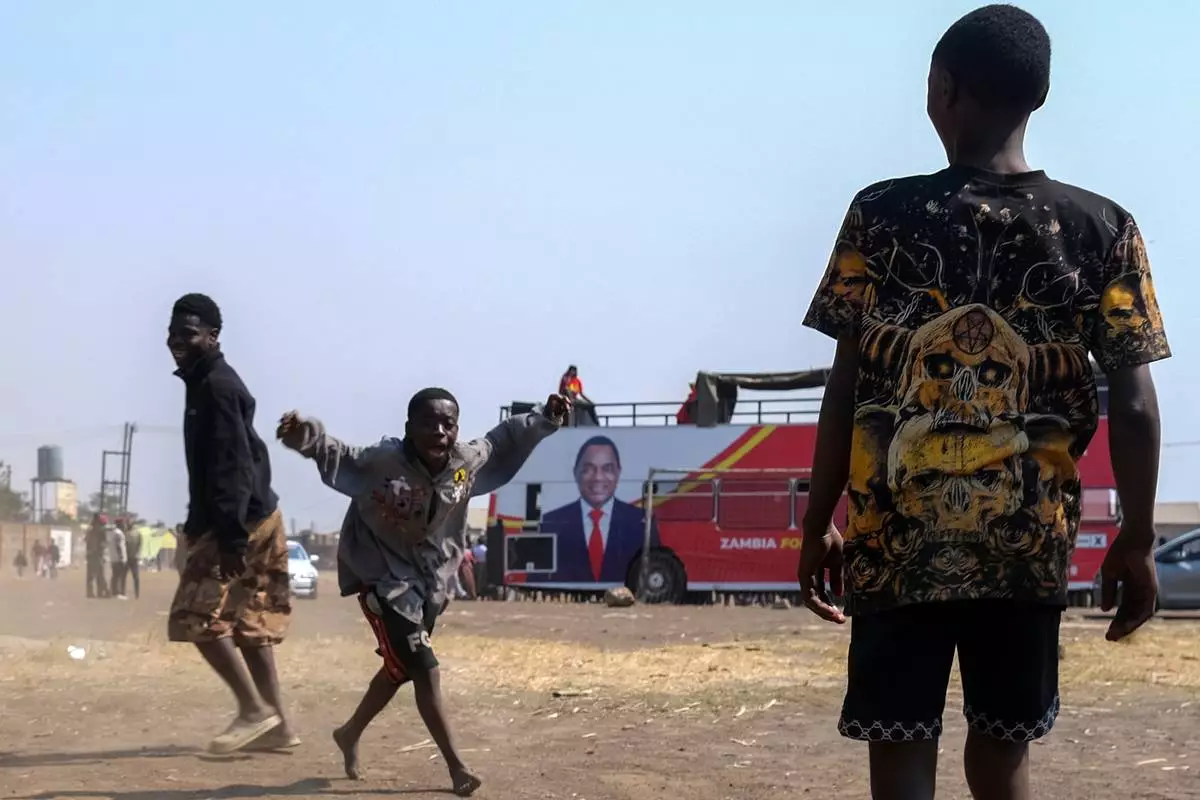
Supporters of Zambian incumbent President and United Party for National Development (UPND) presidential candidate Hakainde Hichilema attend a campaign rally on the outskirts of Lusaka, Zambia, Saturday, Aug. 8, 2026. (AP Photo/Anita Reed)