Los Angeles (AP) — California 's prison system has systematically failed to protect incarcerated women from sexual abuse and harassment by guards, the U.S. Department of Justice said Thursday.
The federal investigation also found that California's corrections department failed to provide victims with a safe way to report sexual abuse and harassment without retaliation. On top of that, staff who were tasked with investigating the misconduct were often themselves accused of sexual abuse or harassment.
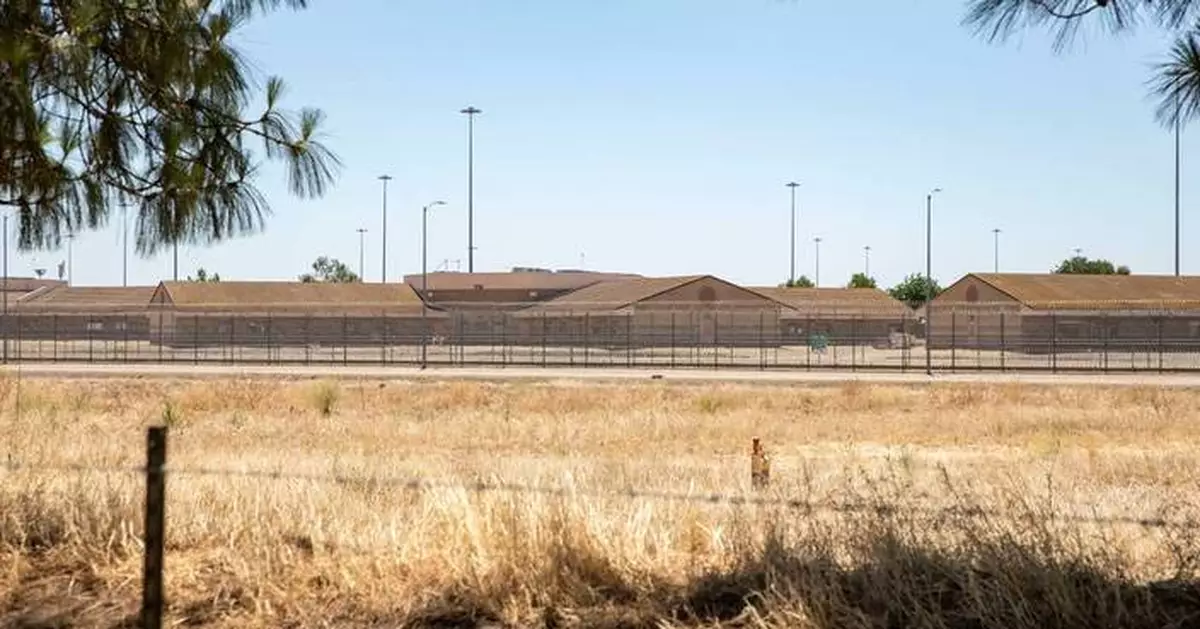
The investigation, which began during the Biden administration, focused on two state prisons: the Central California Women’s Facility in Chowchilla and the California Institution for Women in Chino. It uncovered numerous instances where guards regularly sexually abused incarcerated women. In at least one instance, a guard was convicted of rampant abuse over roughly a decade and sentenced to 224 years in prison.
The California Department of Corrections and Rehabilitation did not respond to an email seeking comment.
Women were told to report misconduct on an online system that wasn’t confidential and that the accused officers had access to, according to Harmeet K. Dhillon, assistant attorney general for the Justice Department's Civil Rights Division.
Dhillon said that women are “fully aware of this gap in confidentiality, and this serves as a deterrent from women reporting this misconduct.” She named at least one sergeant whose job it was to investigate misconduct who was himself sentenced to 15 years in prison after pleading guilty to receiving child sexual abuse images on the job.
“The upshot of our investigation is that California’s prison system, when it comes to women, has inadequate systems in place to deter, detect, and hold accountable rampant sexual misconduct and assault on female prisoners,” Dhillon said at a news conference held in Los Angeles on Thursday.
The Associated Press in previous years exposed similar patterns of rampant abuse by federal prison staff against women held in Dublin, California, a facility that at the time was nicknamed the “rape club.” The prison was closed following the AP investigation.
The federal government on Thursday gave California's prison system 49 days to remediate the conditions that enabled the rampant abuse, warning that a failure to do so could result in civil litigation.
The measures include expanded camera coverage, enhanced confidential reporting channels and strengthened investigative protocol.
U.S. Attorney Bill Essayli, who was appointed by President Donald Trump as the top federal prosecutor in Los Angeles, said California has to take action.
“The State must confront the persistent failure of its own employees to prevent and address sexual abuse at these facilities,” Essayli wrote in a statement, “and the systemic breakdowns that have permitted these conditions to persist.”
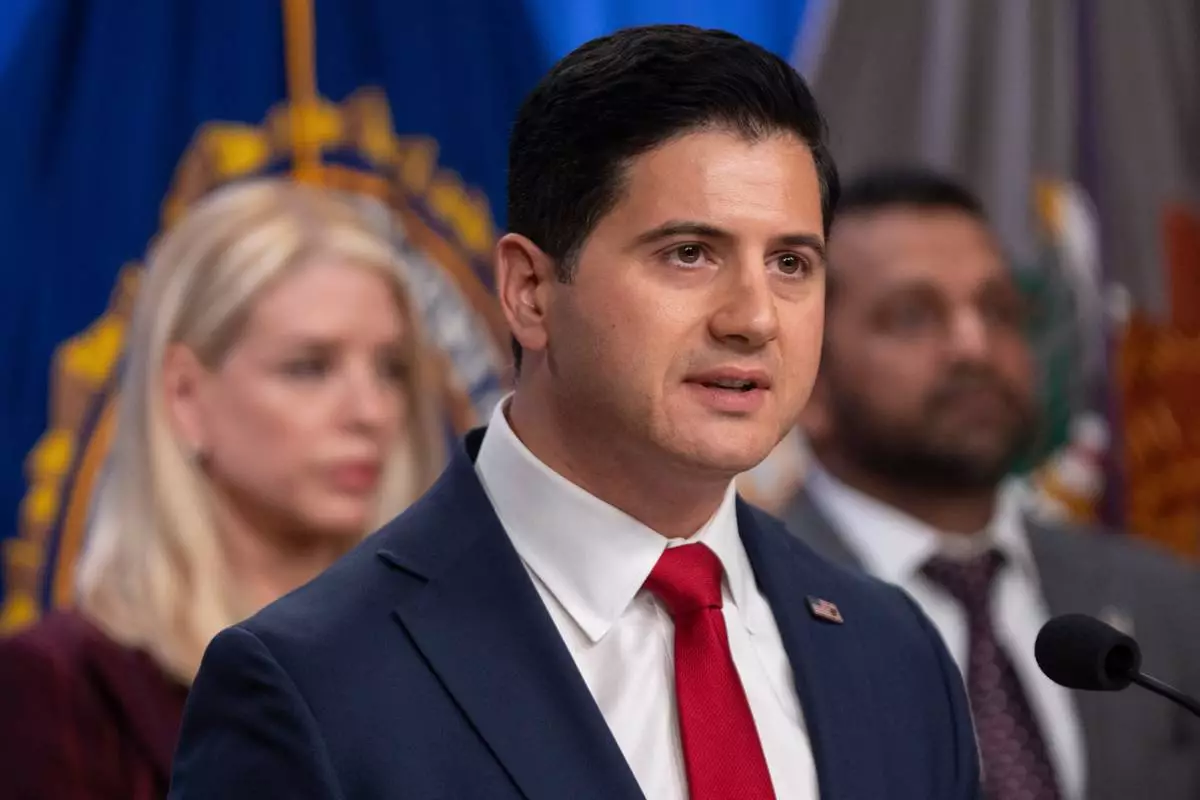
FILE - Bill Essayli, acting U.S. Attorney for the Central District of California, speaks with reporters during a news conference at the Department of Justice, Nov. 19, 2025, in Washington. (AP Photo/Mark Schiefelbein, file)
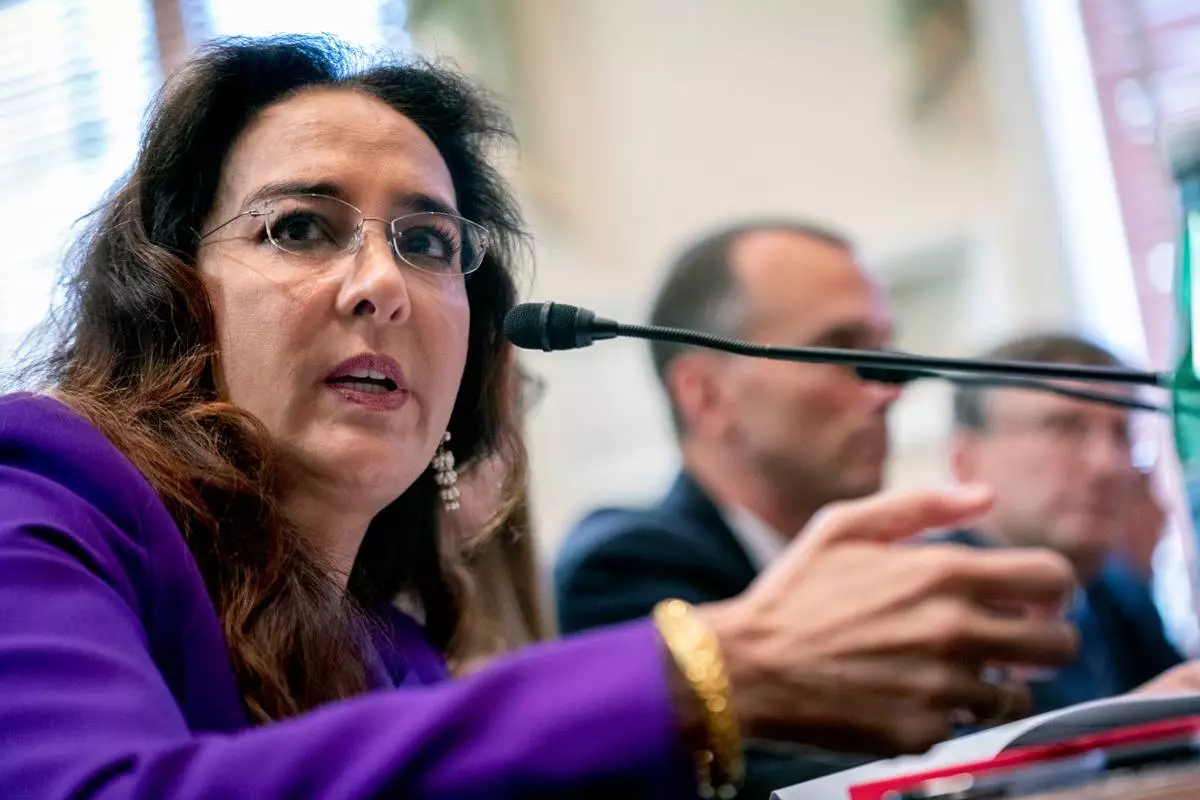
FILE - Former Trump campaign lawyer Harmeet Dhillon appears at a House Committee on House Administration hearing on "American Confidence in Elections: Protecting Political Speech" on Capitol Hill in Washington, May 11, 2023. (AP Photo/Andrew Harnik, file)
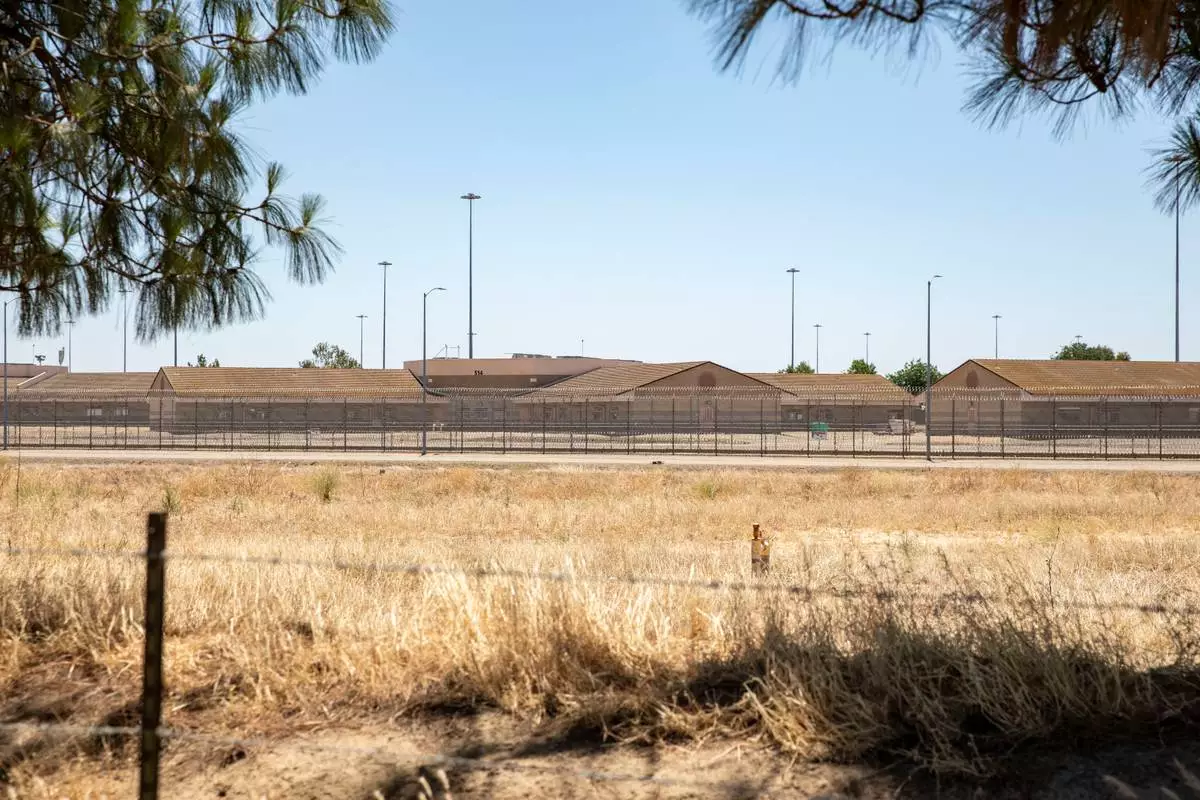
FILE - Exterior views of the Central California Women's Facility prison in Chowchilla, Calif., on June 25, 2026. (Dan Hernandez/San Francisco Chronicle via AP, file)
Tennessee and Oklahoma put inmates to death within 30 minutes of each other Thursday as U.S. states planned to execute three men by lethal injection in one day for the first time since 2010.
The Tennessee man was executed for killing a maid at a motel in 1985 and the Oklahoma man for killing his girlfriend in 2003. In Alabama, a man is scheduled to die later for killing of a 5-year-old girl he paid her mother to abuse.
Having three executions is one day is a coincidence in scheduling, but it also reflects a trend of increased executions in the U.S. Eleven states executed a total of 47 people in 2025, the highest number since 2009. Twenty-one inmates have been put to death this year with nearly a dozen more scheduled.
The last time three executions were held on the same day was Jan. 7, 2010, when Louisiana, Ohio and Texas put inmates to death. Three executions were scheduled on the same day in 2018, but only one went forward after a Texas man was granted a reprieve and prison officials in Alabama had problems with the IV line.
Florida executed two men on the same day in July and has put 31 prisoners to death since the start of 2025.
Carlos Cuesta-Rodriguez, 70, died by lethal injection at the state’s penitentiary in rural McAlester, Oklahoma. He was the third person put to death this year in Oklahoma.
Cuesta-Rodriguez turned his head to look at his two relatives who attended and mouthed “I love you” but said he had no last words.
His breathing was labored for several minutes before he was pronounced dead at 10:13 a.m. CDT.
Convicted of fatally shooting his girlfriend at their Oklahoma City home in 2003, Cuesta-Rodriguez had said he regretted killing Olimpia Fisher and told a board he didn't want clemency. His attorneys said he had a difficult childhood in Cuba and suffered from brain damage and post-traumatic stress disorder.
Fisher, 43, planned to leave Cuesta-Rodriguez when he shot her in one eye and then waited about eight minutes as she screamed for help before firing the fatal shot into her other eye.
Fisher’s daughters, Cinthya Allen and Katya Wallis, said in a statement they hope the execution brings awareness to preventing domestic violence and they honor their mother by "raising our families to reflect the love and faith in God that she taught us.”
Anthony Darrell Hines was executed by lethal injection in Tennessee for the 1985 murder of Catherine Jean Jenkins. He was pronounced dead at 10:43 a.m. CDT.
Hines stabbed Jenkins to death while the 54-year-old was working as a motel maid in Kingston Springs.
Hines said “not right now, thank you” when first asked if he had final words, then said, “Tell my son hello" before he died. Hines' son witnessed the execution. He reconnected with his father four days ago after not seeing him since he was 3 years old.
About four minutes after the curtain to the death chamber opened, Hines asked his spiritual adviser: “How long do I have?” Not long afterward, witnesses heard groans and heavy breathing as the spiritual adviser put her hands on his shoulders and prayed over him.
After the execution, Jenkins’ son detailed how his mother was killed to reporters with only a plastic spray bottle to defend against the knife attacks.
“I hope he did suffer. I hope he felt severe pain because what he did to my mother is nothing compared to what he may have just gone through,” Dennis Jenkins said.
Hines' execution comes just three months after the attempted lethal injection of another man was called off because of a problem inserting an IV. Hines' arms and hands were covered by a sheet.
Hines, 66, appealed unsuccessfully to the governor and the courts, saying that the doctor who oversaw a May execution that was stopped as medical staff couldn't establish a backup IV line for more than an hour was unqualified and likely to botch his execution as well.
Alabama is scheduled to execute Jeremy Williams by lethal injection for the 2021 rape and murder of a 5-year-old Georgia girl.
Williams, who pleaded guilty to killing Kamarie Holland, declined to appeal and asked for his death sentence to be carried out.
Williams, 42, raped and strangled Holland after offering her mother $2,500 for the child to perform a sex act, prosecutors said.
Williams filmed his attack on the girl and kept her body to continue to abuse, prosecutors said.
“To see on video what he did to this baby, what a grown man could do to a child, it’s shocking, it’s horrible, it’s disgusting,” Russell County District Attorney Richard Chancey said. “It’s just a level of evil.”
Williams also was a suspect in the 2005 death of his infant daughter in Alaska but charges were not filed until 2022.
Corey Holland, Kamarie’s father, said his daughter was an exuberant 5-year-old who loved princesses and made people laugh.
“She loved playing dress-up, all her little Halloween costumes and her princess stuff I got her. She liked anything girly,” Corey Holland said.
It will be Alabama’s first execution of the year if it goes forward. A nitrogen gas execution was halted in June after a federal judge ruled the method unconstitutional.
The girl's mother is serving a 20-year prison sentence after pleading guilty to sex trafficking.
Associated Press writer Jeffrey Collins contributed.
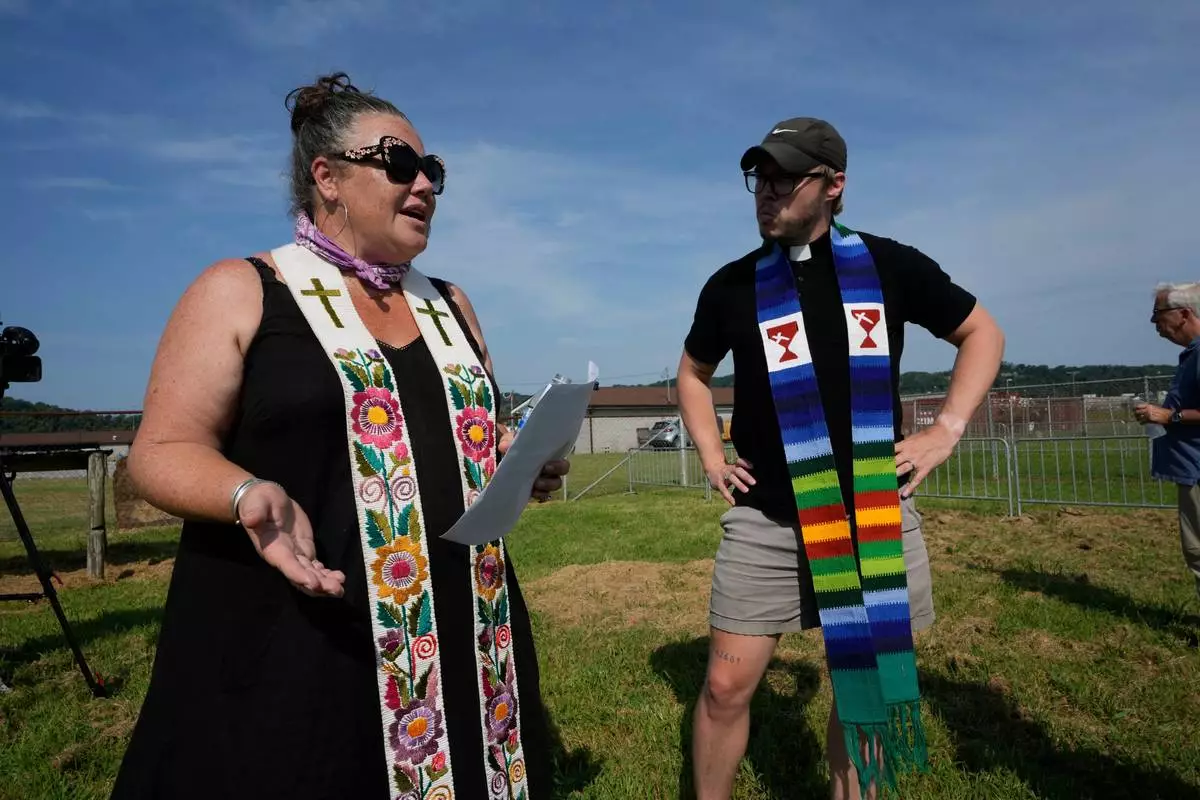
Pastor Ingrid McIntyre, left, and Pastor Wesley King talk outside Riverbend Maximum Security Institution before the planned execution of Anthony Darrell Hines Thursday, Aug. 13, 2026, in Nashville, Tenn. (AP Photo/Mark Humphrey)
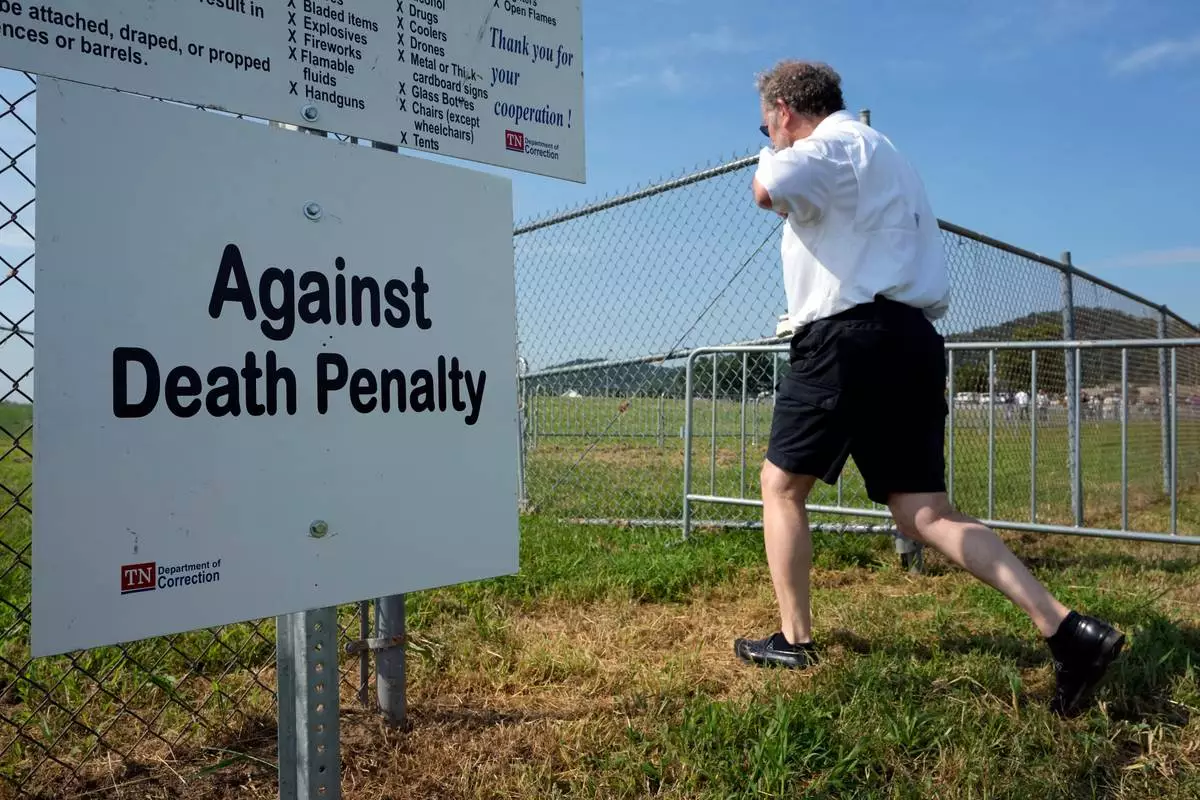
A man enters the area reserved for protesters opposed to the death penalty outside Riverbend Maximum Security Institution before the planned execution of Anthony Darrell Hines Thursday, Aug. 13, 2026, in Nashville, Tenn. (AP Photo/Mark Humphrey)
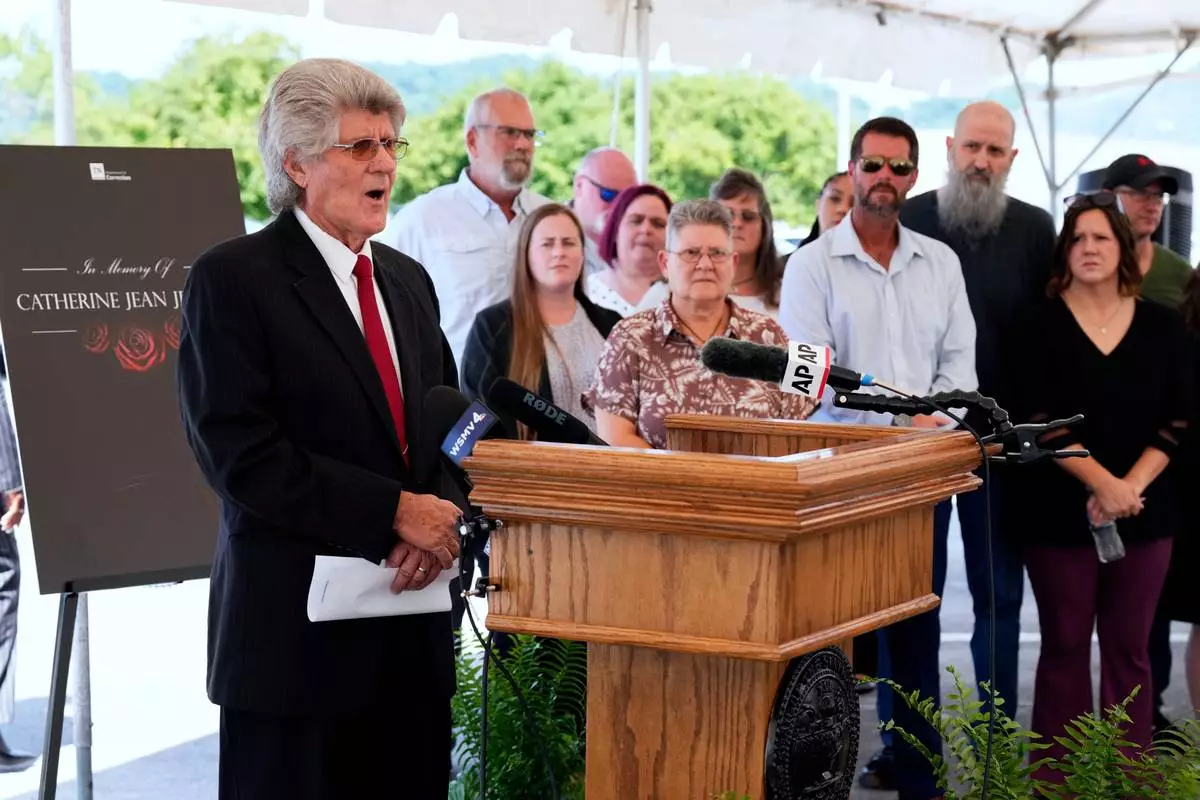
Dennis Jenkins, left, son of murder victim Catherine Jean Jenkins, speaks outside Riverbend Maximum Security Institution following the execution of Anthony Darrell Hines Thursday, Aug. 13, 2026, in Nashville, Tenn. (AP Photo/Mark Humphrey)
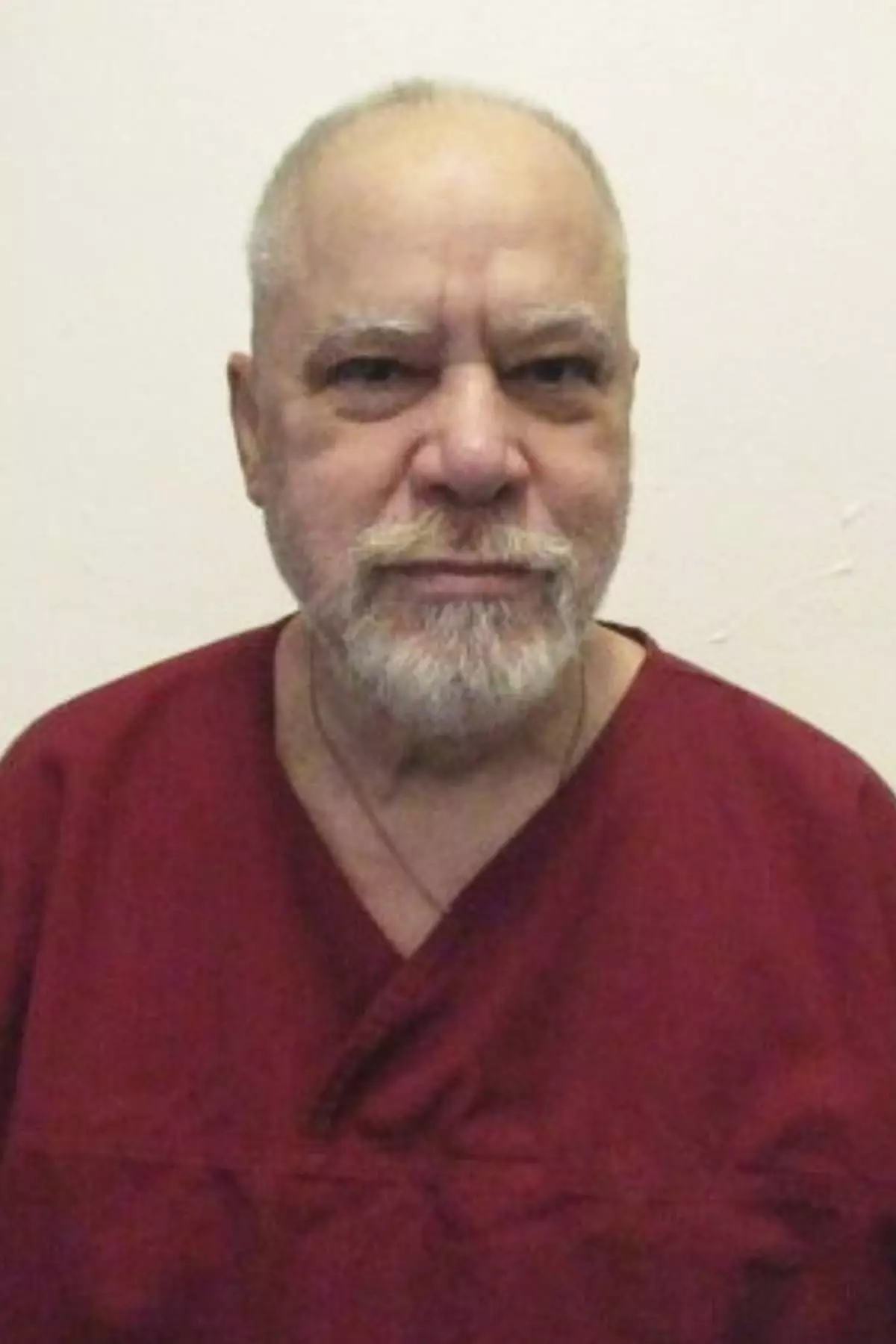
This Aug. 18, 2025, photo provided by the Oklahoma Department of Corrections shows Carlos Cuesta-Rodriguez, who was sentenced to death for the 2003 fatal shooting of his girlfriend. (Oklahoma Department of Corrections via AP)
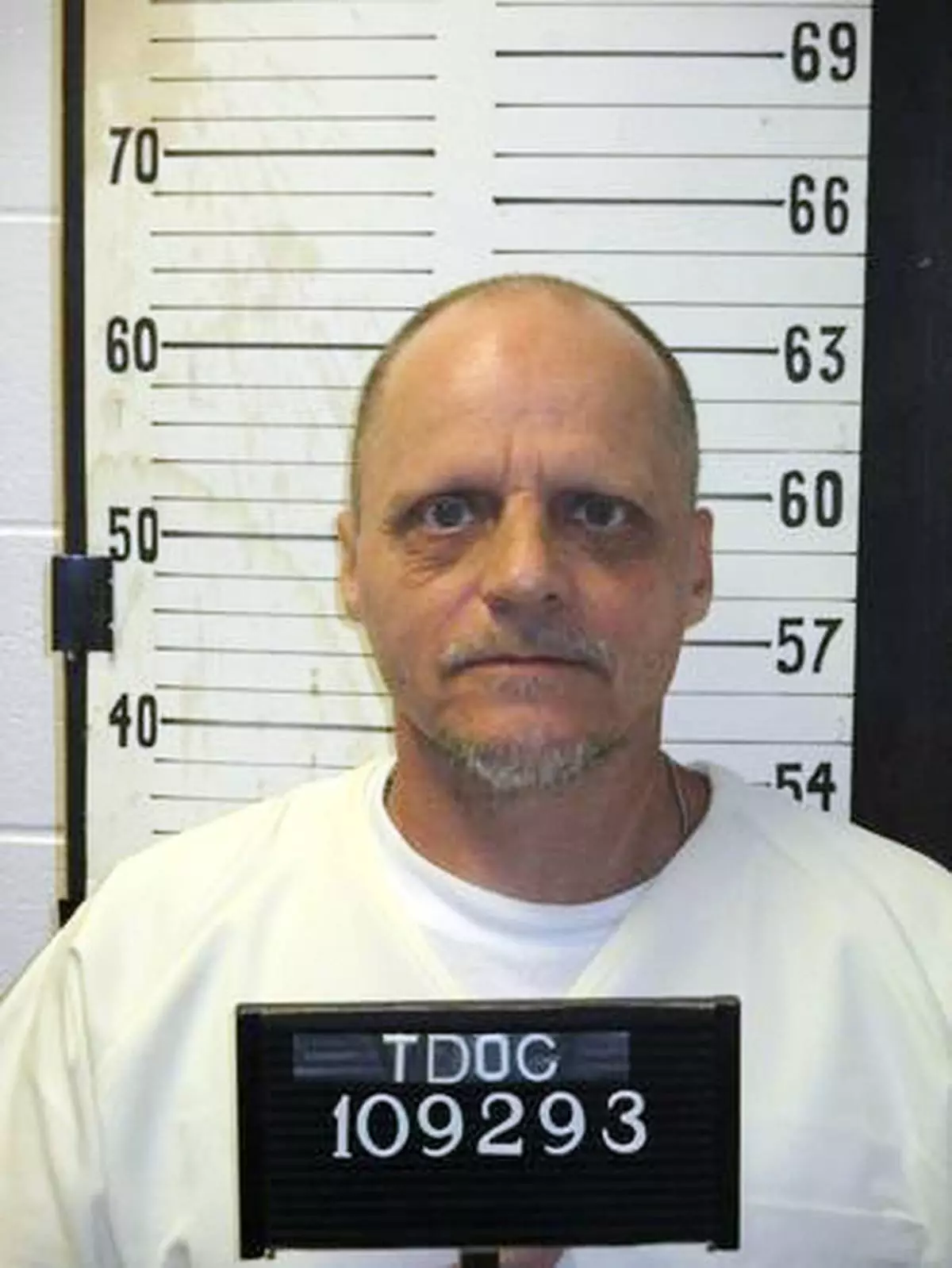
This undated photo, courtesy of the Tennessee Department of Correction (TDOC), shows death row inmate Anthony Darrell Hines at an unknown location in Tennessee. (TDOC Communications via AP)
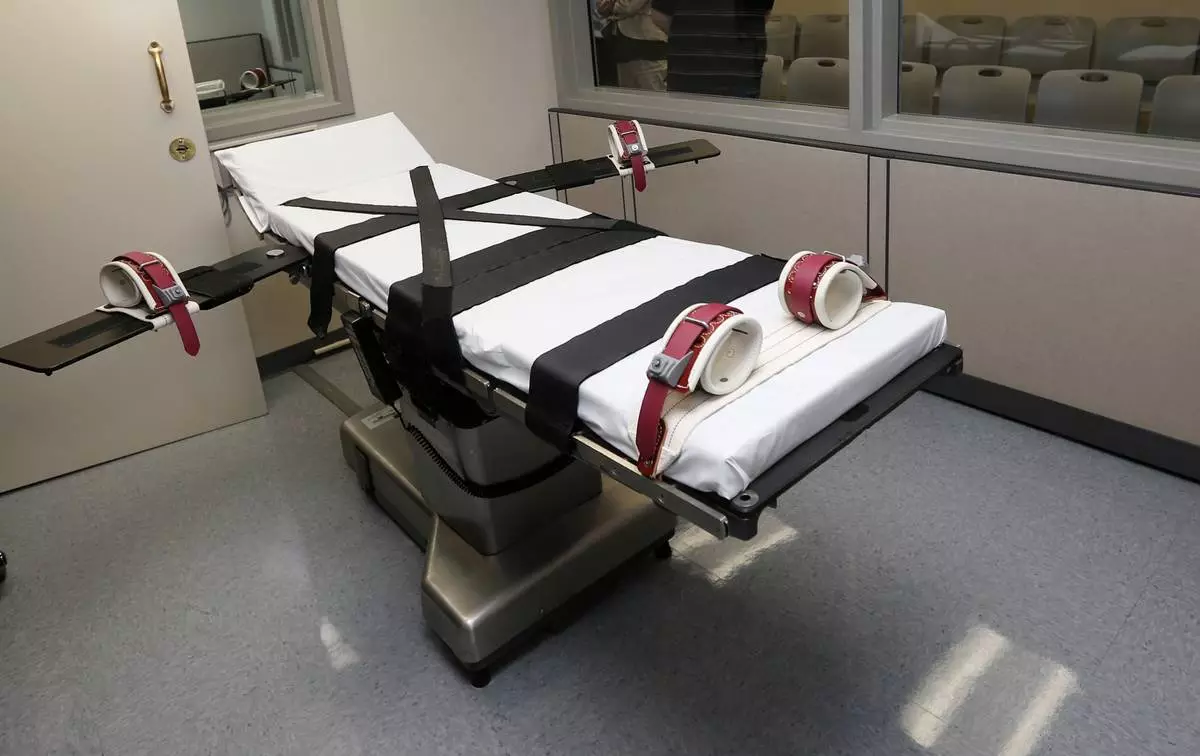
FILE - This Oct. 9, 2014, file photo shows the gurney in the execution chamber at the Oklahoma State Penitentiary in McAlester, Okla. (AP Photo/Sue Ogrocki, File)