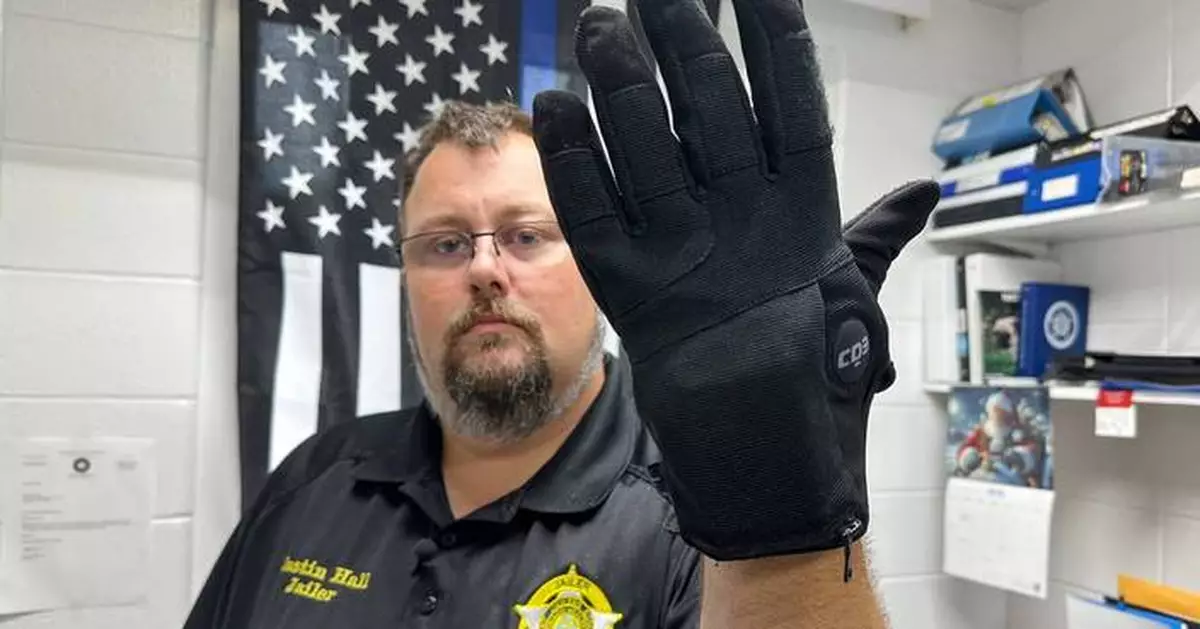
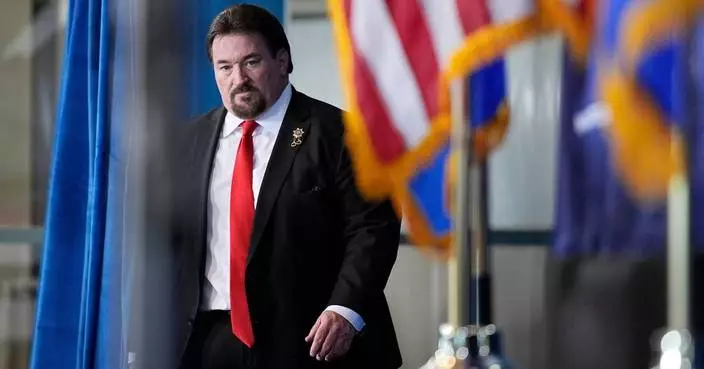
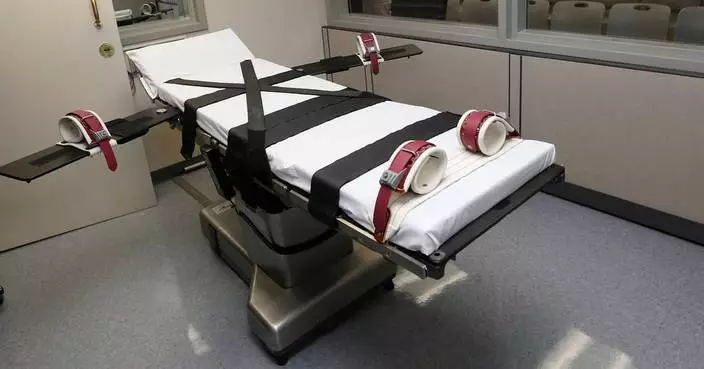
BARDSTOWN, Ky. (AP) — White House border czar Tom Homan defended Immigration and Customs Enforcement's plan to give officers gloves that deliver painful electric shocks, calling them a tool to help officers end confrontations without using deadly force.
“It’s another device to help someone get compliant when they are not,” Homan said Thursday in an interview on Fox News Channel's “Fox & Friends.” “You can't just go from 0 to 100, right, and the first thing you go for is lethal force.”
Homan's remarks were the Trump administration's first public defense of ICE's plan to spend up to $20 million to purchase thousands of “conductive distraction and de-escalation devices” for officers and agents. The devices are known as the G.L.O.V.E., which stands for Generated Low Output Voltage Emitter, and are manufactured by Compliant Technologies LLC. They have been used in recent years by some jails and police departments.
The plan has drawn intense criticism from civil rights groups, Democrats in Congress, and some use-of-force experts, who say ICE agents have been too quick to use force while carrying out President Donald Trump's crackdown on illegal immigration. At least six people have been shot and killed by immigration enforcement agents since last year, including motorists last month in Maine and Texas.
Homan argued the gloves could help avoid such encounters. He said they would give another less lethal option to ICE officers, similar to Tasers or pepper spray, for use in potentially violent situations on the streets and in detention facilities. He said that it would “be awhile” before the gloves are deployed in the field by ICE officers because the agency is still working out training protocols and other policy issues.
In Bardstown, Kentucky, Nelson County Jailer Justin Hall said Thursday that his agency began using the gloves four years ago to try to gain compliance when inmates are out of control. He said that, unlike Tasers, the shocks do not incapacitate people and make them fall or leave contact or burn marks.
Hall estimated that he had been shocked by the gloves more than 10 times during training, and the pain was intense but stops once the gloves are no longer touching skin. He said the shock gloves have been used sparingly, but are helpful as an initial deterrent when de-escalation techniques do not work.
“It’s just a safer way. It’s safer on the inmate. It’s safer on the staff. And most of the time, most of the time we get compliance,” he said. “It's been a great tool for our facility.”
Geoffrey Alpert, a criminology professor at the University of South Carolina who has written extensively about police use-of-force and tactics, said the devices should be studied more broadly to ensure departments have proper guidance on when and how they should be used. He said it might be a wiser investment for ICE to start with a smaller purchase, given how little is known about them.
“You are wholesaling these to a group of officers who may not be trained in other strategies like de-escalation or trained to interact with the public in non-enforcement ways, like most local police officers are,” he said. “User error is almost predictable at some level. The tech may be fine, but let’s take a minute and make sure that it is used in an appropriate custom and practice.”
Foley reported from Iowa City, Iowa. AP reporter Claudia Lauer contributed to this report from Philadelphia.
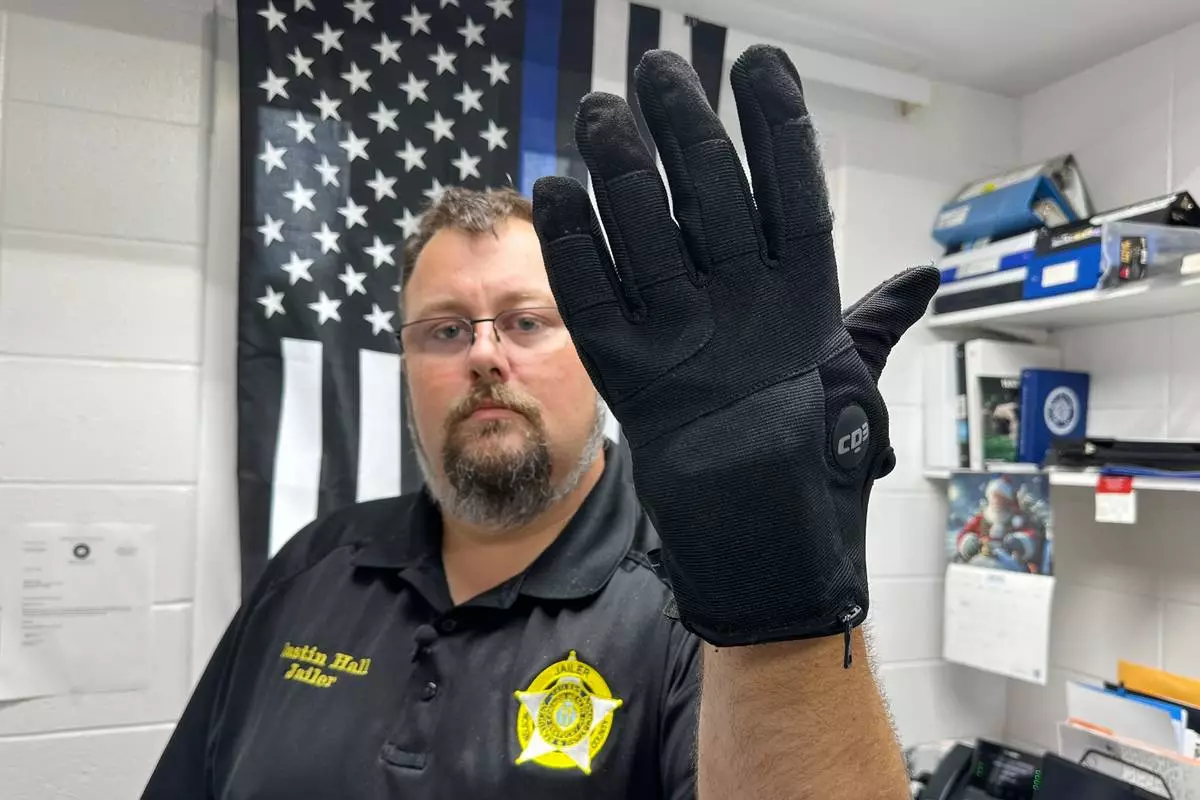
Nelson County, Ky., jailer Justin Hall shows an electric shock glove that is used at his facility, Thursday, Aug. 13, 2026, in Bardstown, Ky. (AP Photo/Dylan Lovan)
Los Angeles (AP) — California 's prison system has systematically failed to protect incarcerated women from sexual abuse and harassment by guards, the U.S. Department of Justice said Thursday.
The federal investigation also found that California's corrections department failed to provide victims with a way to report sexual abuse and harassment without retaliation. On top of that, staff who were tasked with investigating the misconduct were often themselves accused of sexual abuse or harassment.
The investigation, which began during the Biden administration, focused on two state prisons: the Central California Women’s Facility in Chowchilla and the California Institution for Women in Chino. It uncovered numerous instances where guards regularly sexually abused incarcerated women. In at least one instance, a guard was convicted of rampant abuse over roughly a decade and sentenced to 224 years in prison.
The California Department of Corrections and Rehabilitation said in a statement that it “enforces a zero-tolerance policy as mandated by the federal Prison Rape Elimination Act,” a federal law passed in 2003 designed to prevent sexual assaults in prisons.
The state agency also said that audits conducted by independent entities trained by the DOJ found the two prisons were in compliance with federal standards as recently as 2024 and 2025.
“CDCR is fully committed to supporting victims of sexual assault and ensuring safe avenues exist for both incarcerated persons and staff to confidentially report misconduct,” spokesperson Will Matthews wrote in an email.
Over the course of the DOJ investigation, the prison agency independently investigated and prosecuted both staff and incarcerated people who violated federal rape prevention laws, he added.
Emily Wonder, who works for Sister Warriors, which advocates for incarcerated women and transgender people, said state audits evaluate prison conditions based on a very “low bar” that allows abuse and neglect to slip through the cracks.
“It's not a very strong protection mechanism in general,” Wonder said. Sister Warriors, other groups and lawmakers are pushing for additional legislation to bolster protections for women, increase opportunities for reporting misconduct and improve transparency.
Federal authorities echoed that assessment on Thursday, saying that there weren’t sufficient mechanisms for victims to come forward.
Women were told to report misconduct on an online system that wasn’t confidential and that accused officers had access to, according to Harmeet K. Dhillon, assistant attorney general for the Justice Department's Civil Rights Division.
Dhillon said that women are “fully aware of this gap in confidentiality, and this serves as a deterrent from women reporting this misconduct.” She named at least one sergeant whose job was to investigate misconduct who was himself sentenced to 15 years in prison after pleading guilty to receiving child sexual abuse images at work.
“The upshot of our investigation is that California’s prison system, when it comes to women, has inadequate systems in place to deter, detect, and hold accountable rampant sexual misconduct and assault on female prisoners,” Dhillon said at a news conference in Los Angeles on Thursday.
The Associated Press has previously exposed similar patterns of rampant abuse by federal prison staff against women held in a Dublin, California, facility that at the time was nicknamed the “rape club.” The prison was closed following the AP investigation.
The federal government on Thursday gave California's prison system 49 days to remediate the conditions that enabled the rampant abuse, warning that a failure to do so could result in civil litigation.
The measures include expanded camera coverage, enhanced confidential reporting channels and strengthened investigative protocols.
The corrections department was implementing many of those changes before the federal investigation, Matthews said.
But Wonder, whose organization has participated in a state-funded working group with the corrections department since 2023, said that advocates “haven’t seen any meaningful changes” despite regular meetings and pressure from the public.
“We’ve been really frustrated, feeling like we’re spinning our wheels,” Wonder said.
U.S. Attorney Bill Essayli, appointed by President Donald Trump as the top federal prosecutor in Los Angeles, said California has to take action.
“The State must confront the persistent failure of its own employees to prevent and address sexual abuse at these facilities,” Essayli said in a statement, “and the systemic breakdowns that have permitted these conditions to persist.”
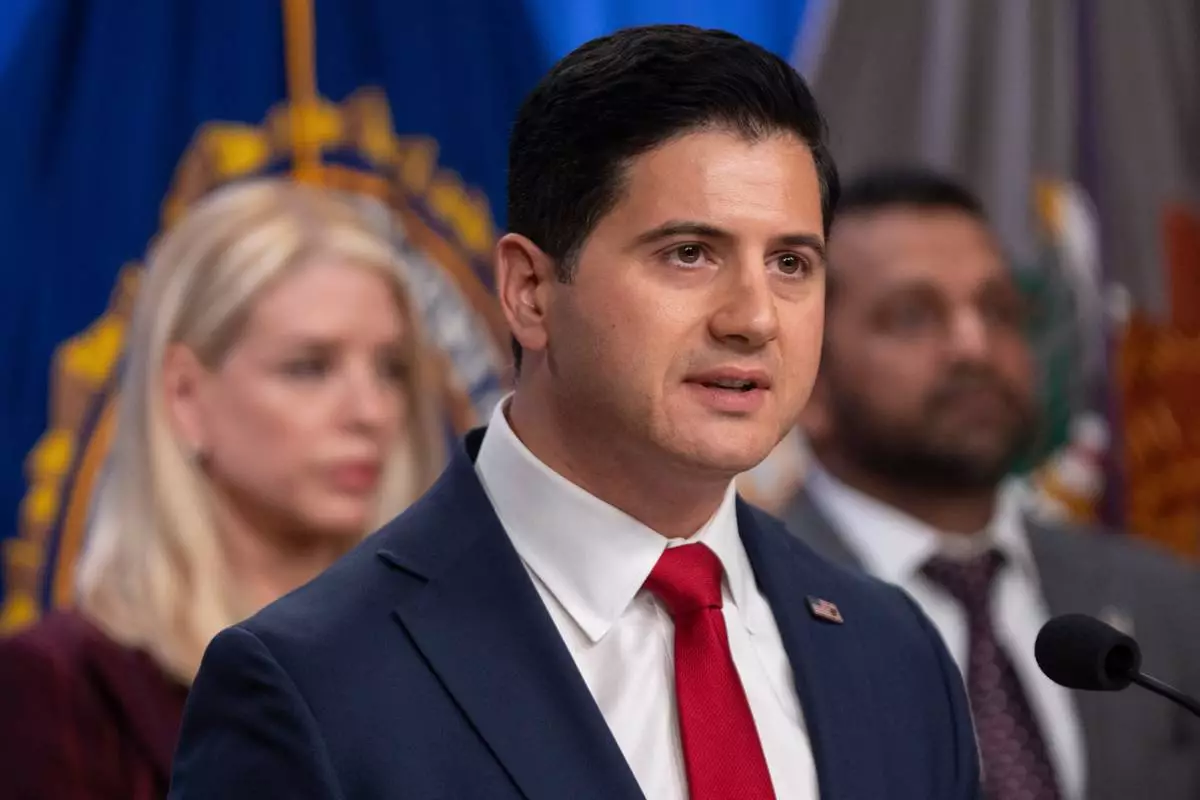
FILE - Bill Essayli, acting U.S. Attorney for the Central District of California, speaks with reporters during a news conference at the Department of Justice, Nov. 19, 2025, in Washington. (AP Photo/Mark Schiefelbein, file)
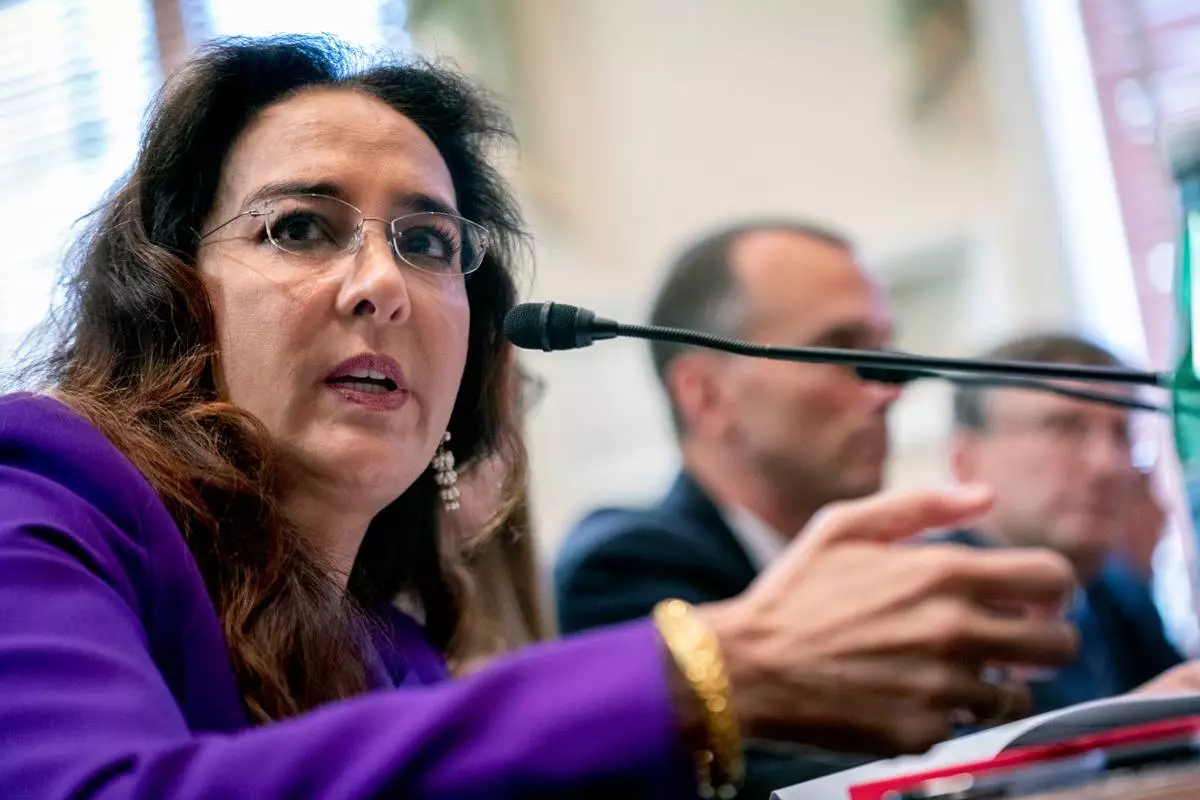
FILE - Former Trump campaign lawyer Harmeet Dhillon appears at a House Committee on House Administration hearing on "American Confidence in Elections: Protecting Political Speech" on Capitol Hill in Washington, May 11, 2023. (AP Photo/Andrew Harnik, file)
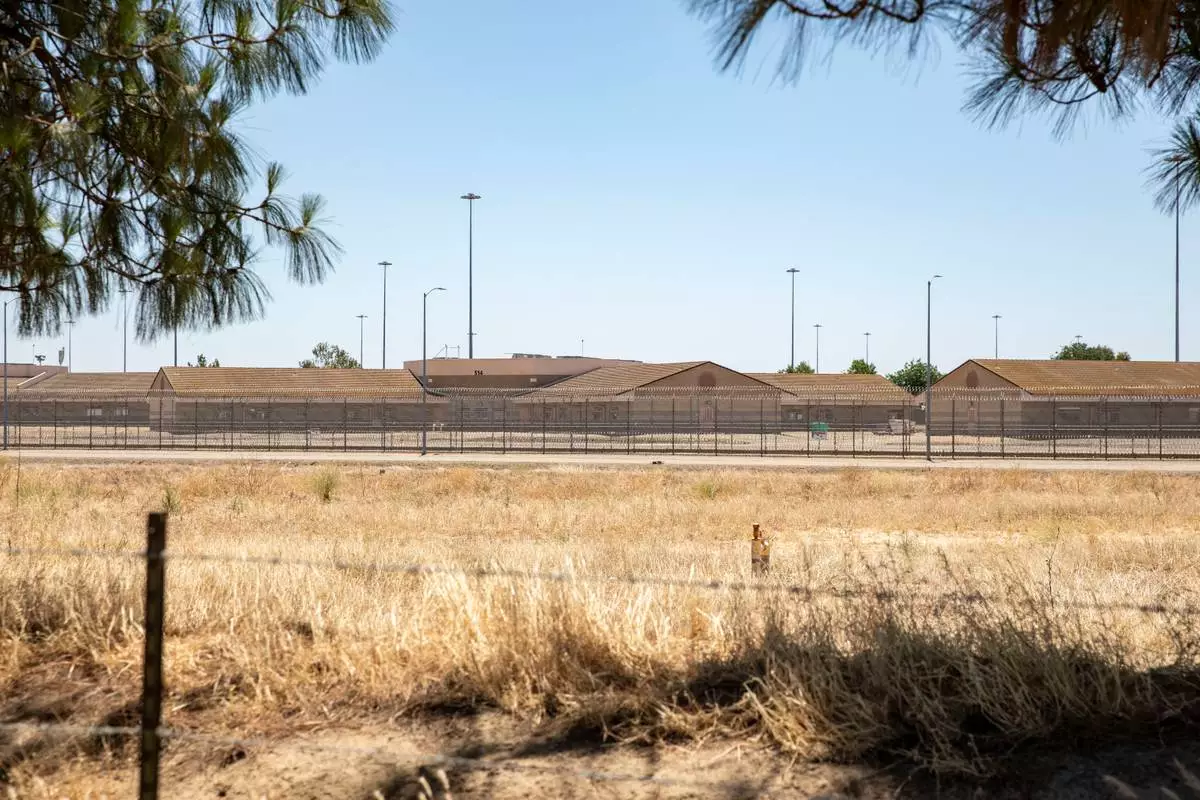
FILE - Exterior views of the Central California Women's Facility prison in Chowchilla, Calif., on June 25, 2026. (Dan Hernandez/San Francisco Chronicle via AP, file)